When choosing between high-top and low-top sneakers, one question consistently arises: which style offers superior ankle support? The answer isn’t as straightforward as many assume. While high-tops have long been associated with enhanced stability—especially in basketball and other lateral-motion sports—modern footwear technology and biomechanical research suggest that support is influenced by more than just collar height. Understanding how each design affects your feet, movement patterns, and injury risk can help you make a smarter, more personalized decision.
Anatomy of Ankle Support: What Really Matters
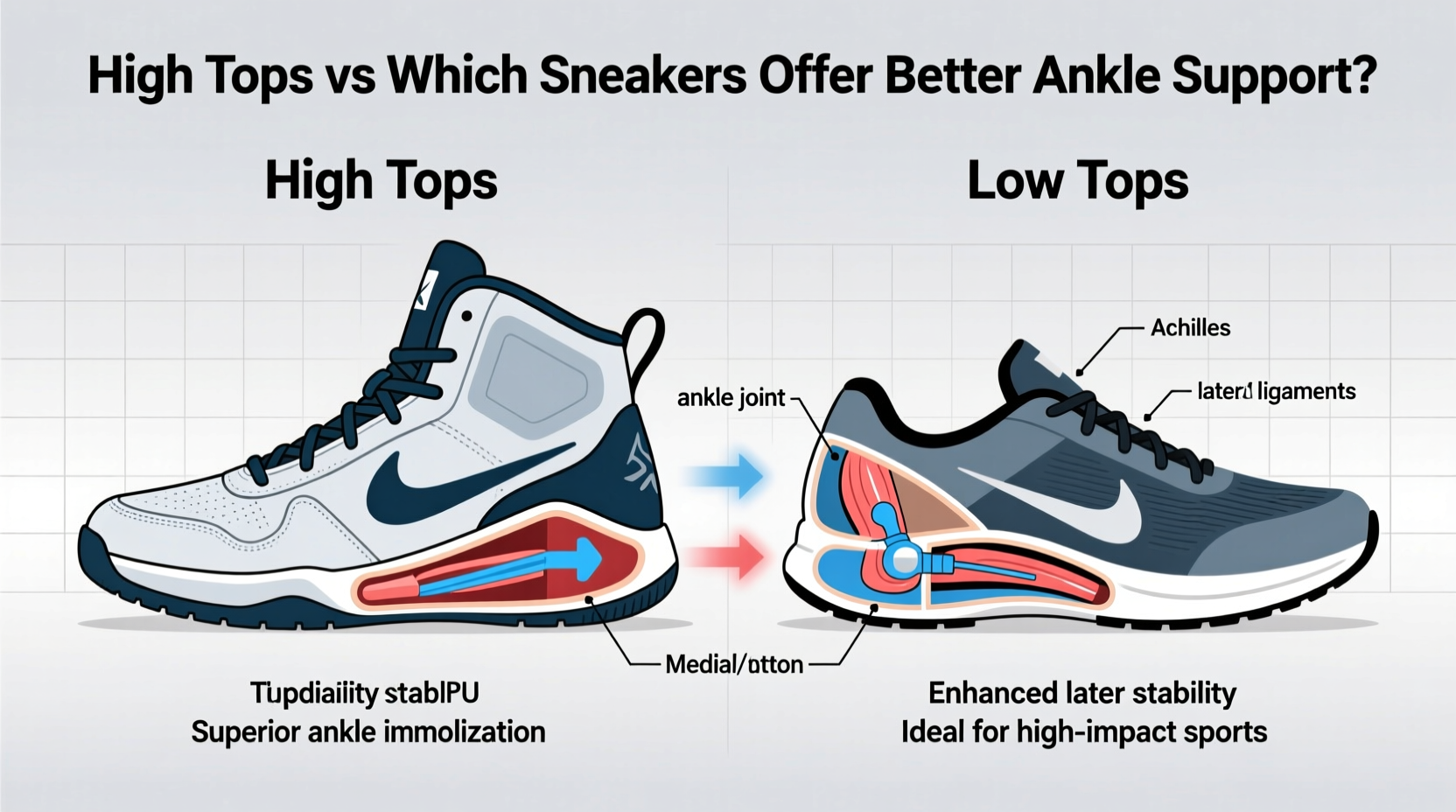
Ankle support isn't just about restricting motion—it's about controlling it. The ankle joint is designed for mobility, allowing dorsiflexion, plantarflexion, inversion, and eversion. However, excessive or sudden movements, particularly rolling inward (inversion), are common causes of sprains. Supportive footwear aims to reduce the likelihood of such injuries without compromising natural gait or athletic performance.
The upper portion of a sneaker—the part that wraps around the foot and ankle—plays a key role in containment and stability. High-tops extend above the ankle bone, offering a snug fit around the Achilles and rearfoot. Low-tops sit below the malleolus, prioritizing freedom of movement. But height alone doesn’t determine support. Factors like midsole stiffness, heel counter rigidity, lacing systems, and outsole traction often matter more than collar length.
“Ankle support is a system, not a silhouette. A well-constructed low-top with a secure heel lock and torsional stability can outperform a poorly engineered high-top.” — Dr. Lena Patel, Sports Biomechanist at Boulder Movement Lab
High-Tops: Myths and Real Benefits
High-top sneakers gained popularity in sports like basketball during the 1980s, when players believed they reduced the risk of ankle rolls. Studies from the era seemed to back this up, showing a modest decrease in acute sprains among athletes wearing high-tops. However, later research revealed nuances: while high-tops may limit extreme range of motion, they don’t necessarily prevent injuries during dynamic play.
The real advantage of high-tops lies in proprioception and psychological confidence. The extended collar provides sensory feedback, helping wearers feel more grounded during quick cuts or landings. Additionally, compression around the ankle can enhance neuromuscular awareness, potentially improving balance.
Tip: If you choose high-tops for support, ensure they’re properly laced and fit snugly around the midfoot—loose high-tops offer minimal benefit.However, there’s a trade-off. High-tops can restrict natural ankle mobility, especially in dorsiflexion, which may alter running mechanics or jumping form. For individuals with tight calves or limited ankle flexibility, this constraint could increase strain on the knees or lower back over time.
Low-Tops: Lightweight Freedom with Trade-Offs
Low-top sneakers dominate categories like running, training, and casual wear due to their lightweight construction and unrestricted movement. They allow full ankle articulation, which supports natural gait cycles and explosive propulsion. Runners and cross-trainers often prefer low-tops because they promote agility and responsiveness.
But do they sacrifice safety? Not inherently. Many modern low-tops integrate advanced engineering to compensate for reduced collar height. Features like molded heel counters, adaptive midfoot shanks, and dynamic lacing systems provide structural integrity without bulk. Brands like Nike, Adidas, and ASICS now design low-tops with injury prevention in mind, using data from athlete testing and gait analysis.
That said, low-tops offer less resistance to sudden inversion. In sports involving frequent jumping, cutting, or contact—such as basketball or volleyball—this can be a liability, especially for those with a history of ankle instability.
Comparing Performance Across Activities
The ideal sneaker depends heavily on your activity. Below is a comparison of high-tops and low-tops across different use cases:
| Activity | Best Choice | Why |
|---|---|---|
| Basketball | High-tops (or mid-tops) | Lateral movements and jumps increase inversion risk; structured uppers provide containment. |
| Running | Low-tops | Natural stride requires full ankle flexion; weight savings improve efficiency. |
| Gym Training | Depends on workout | For lifting: low-tops with flat soles. For HIIT: mid-to-high support if lateral moves are frequent. |
| Casual Wear | Personal preference | Support needs are minimal; comfort and style often take priority. |
| Trekking / Hiking | High-tops or boots | Uneven terrain demands maximum ankle control and protection from debris. |
Real-World Example: A Weekend Warrior’s Decision
Consider Mark, a 32-year-old recreational basketball player who also runs three times a week. He suffered a mild ankle sprain two years ago and now questions his footwear choices. During games, he wears high-top basketball shoes with reinforced sidewalls and a locked-down lacing system. On run days, he switches to a responsive, low-top running shoe optimized for cushioning and toe-off efficiency.
His approach reflects a balanced strategy: context-specific footwear. He doesn’t rely on one type for all activities. Instead, he matches the shoe’s support profile to the demands of the sport. This has reduced discomfort and prevented re-injury, despite playing competitively once a week.
Actionable Checklist: Choosing the Right Sneaker for Your Needs
Before buying, evaluate your lifestyle and physical needs with this checklist:
- ✅ Identify your primary activity (e.g., running, lifting, court sports)
- ✅ Assess your injury history—have you rolled your ankle before?
- ✅ Test ankle mobility: Can you squat deeply with heels flat? Limited mobility may benefit from stable, supportive uppers.
- ✅ Prioritize fit over style: Look for a secure heel, locked midfoot, and room in the toe box.
- ✅ Check for structural features: firm heel counter, midfoot shank, and responsive cushioning.
- ✅ Replace worn-out shoes: Even the best support degrades after 300–500 miles.
Expert Insight: Beyond the Collar Height
Modern sneaker design has evolved beyond simple high vs. low distinctions. Mid-top models now dominate categories like tennis and indoor training, blending the benefits of both styles. These hybrids offer moderate ankle coverage with flexible collars that move with the foot rather than against it.
Innovations like adaptive mesh uppers, internal booties, and external heel cages enhance support without sacrificing breathability or weight. Some shoes even incorporate orthotic-grade insoles or stabilizing plates to mimic the effect of ankle bracing—without the bulk.
“The future of ankle support is intelligent integration—not just height, but how the entire shoe works as a unit to guide motion and absorb impact.” — Carlos Mendez, Lead Footwear Engineer at Apex Athletic Labs
Frequently Asked Questions
Do high-top sneakers prevent ankle sprains?
They can reduce the severity of some sprains by limiting extreme motion, but they don’t eliminate risk. Proper strength, balance, and landing mechanics play a larger role in prevention.
Can I add ankle support to low-top sneakers?
Yes. Consider wearing a supportive brace or kinesiology tape during high-risk activities. Also, choose low-tops with excellent heel lockdown and a stiff heel counter for passive stability.
Are high-tops bad for my knees?
Not necessarily, but if they restrict natural dorsiflexion during running or squatting, they may alter joint loading. Individuals with limited ankle mobility should be cautious and consider gait analysis.
Conclusion: Make the Smart Choice for Your Body
The debate between high-tops and low-tops isn’t about declaring a universal winner—it’s about matching function to need. High-tops offer enhanced containment and feedback, making them valuable for sports with lateral stress and jump-landing demands. Low-tops excel in activities requiring natural motion, speed, and flexibility. The best support comes not from collar height alone, but from overall shoe design, fit, and alignment with your biomechanics.
Instead of defaulting to tradition or aesthetics, assess how you move, what you do, and what your body responds to best. Try different models, prioritize structure over hype, and remember: no sneaker replaces strong muscles and good technique. Invest in your movement literacy as much as your footwear collection.
🚀 Ready to optimize your sneaker game? Re-evaluate your current rotation, test your ankle mobility, and choose your next pair based on science—not just style.