Pearl necklaces have long symbolized elegance, refinement, and timeless beauty. From classic strands worn at black-tie events to modern layered designs in everyday wear, pearls remain a staple in jewelry collections. But as shoppers navigate options ranging from $50 to $50,000, a pressing question arises: Is the steep price difference between high-end and affordable pearl necklaces truly justified?
The answer isn’t simply yes or no—it depends on what you value: investment potential, aesthetic longevity, ethical sourcing, or occasional wearability. Understanding the factors behind pricing can help you make informed decisions that align with your lifestyle, budget, and expectations.
What Determines the Value of a Pearl Necklace?
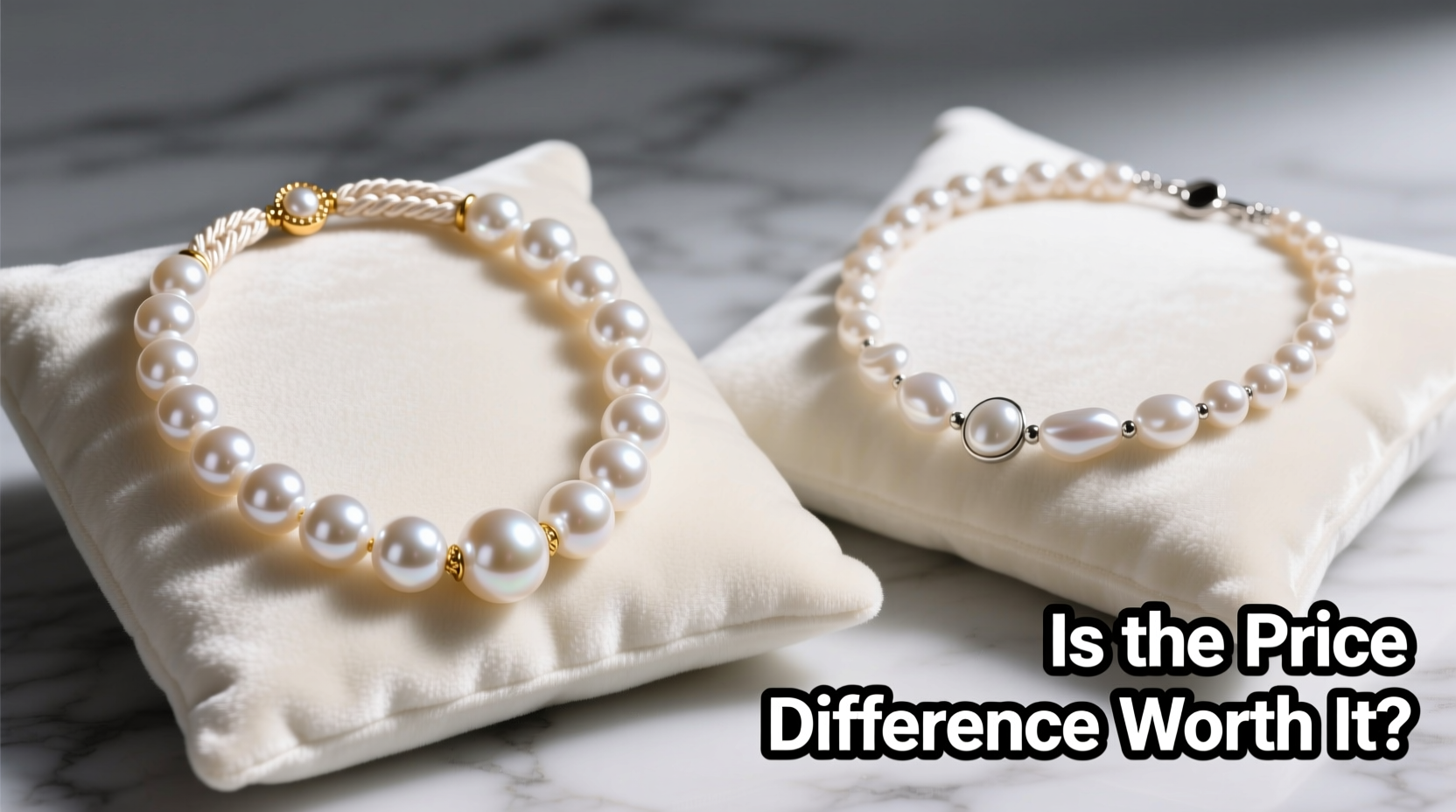
Pearl valuation is based on several key criteria—often referred to as the “Five S’s”: Size, Shape, Surface quality, Shade (color), and Sheen (luster). These elements vary significantly between natural, cultured, and imitation pearls, which directly impacts cost.
- Luster: High-end pearls exhibit a deep, mirror-like glow that reflects light sharply. Affordable versions often appear chalky or flat.
- Nacre Thickness: Premium pearls have thick layers of nacre, contributing to durability and iridescence. Thin-coated imitations chip easily and lose luster over time.
- Origin: Pearls from regions like Japan (Akoya), French Polynesia (Tahitian), or the South Sea command higher prices due to controlled farming conditions and rarity.
- Matching: A uniform strand requires hundreds of hours to assemble. Luxury brands hand-match each pearl for consistency in size, hue, and shine.
Breaking Down the Price Gap: A Comparative Table
| Feature | Affordable Pearl Necklace (~$30–$200) | High-End Pearl Necklace ($1,000–$20,000+) |
|---|---|---|
| Pearl Type | Freshwater cultured or glass/ceramic imitations | Akoya, South Sea, or Tahitian cultured; occasionally natural |
| Nacre Thickness | Thin (0.1–0.5mm), prone to chipping | Thick (2–6mm), durable and radiant |
| Luster | Moderate to low, inconsistent shine | High to exceptional, mirror-like reflection |
| Matching Uniformity | Machine-sorted, minor variations common | Hand-selected, near-perfect alignment |
| Durability | May degrade within 1–3 years with regular use | Can last generations with proper care |
| Craftsmanship | Mass-produced, synthetic silk thread | Hand-knotted with silk, secure clasp mechanisms |
| Resale/Inheritance Value | Minimal to none | Significant; often appreciates over time |
When the Splurge Makes Sense: Real-Life Scenarios
Consider Sarah, a corporate attorney preparing for her firm’s annual gala. She purchased a $180 freshwater strand online for “a nice look without breaking the bank.” After wearing it twice—once to the event and once to a client dinner—the necklace lost its sheen, and two pearls developed surface cracks. By month six, she stopped wearing it entirely.
In contrast, Maria, an art curator, invested $8,500 in a certified South Sea pearl necklace from a heritage jeweler. Ten years later, the piece remains a centerpiece of her collection. It has been re-strung once, cleaned annually, and even appraised at a 15% increase in value due to market demand for high-quality South Sea pearls.
This contrast illustrates a core principle: frequency of use and emotional significance determine whether premium pricing pays off. If a necklace is worn weekly or passed down in a family, the initial cost amortizes over years—or decades—of meaningful wear.
“Pearls are organic gems. Their longevity hinges not just on origin, but on how they’re treated. A $10,000 strand cared for poorly will dull faster than a $1,000 one maintained with diligence.” — Lena Moreau, GIA-Certified Gemologist
Smart Buying Checklist: How to Choose Wisely
Whether you're shopping for a gift, heirloom, or wardrobe staple, use this checklist to evaluate value beyond the price tag:
- Verify the type of pearls: Ask for certification or documentation if buying above $500.
- Inspect luster and surface: Look for sharp reflections and minimal blemishes.
- Check for hand-knotting: Each pearl should be separated by a tiny knot to prevent loss and friction.
- Assess the clasp: Solid gold or platinum clasps indicate higher craftsmanship.
- Ask about restringing services: Reputable sellers offer maintenance programs.
- Evaluate return policies: Especially important when buying online.
- Consider future resale: Brands like Mikimoto, Tasaki, or Black Star maintain strong secondary market presence.
Step-by-Step Guide to Evaluating a Pearl Necklace
Follow this process to assess any pearl necklace, regardless of price:
- Examine Under Natural Light: Artificial lighting can mask flaws. Step near a window and observe how light dances on the surface.
- Roll a Pearl Gently: Place the necklace on a soft cloth and roll one pearl between fingers. High-nacre pearls feel slightly gritty; coated imitations feel smooth and glassy.
- Check for Consistency: Lay the strand flat. Are sizes and colors uniform? Minor variations are normal, but drastic shifts suggest poor grading.
- Inspect the Thread: Look between pearls. Hand-knotted silk prevents damage and adds value. Machine-threaded versions use thinner, less durable materials.
- Test the Clasp: Open and close it multiple times. It should feel secure without excessive force.
- Request Documentation: For high-end purchases, insist on a gemological certificate listing origin, size, and quality grade.
FAQ: Common Questions About Pearl Necklace Value
Are affordable pearl necklaces fake?
Not necessarily. Many affordable options are real cultured freshwater pearls. However, some are imitation—made from glass, plastic, or shell beads coated to resemble pearls. Always check product descriptions for terms like “cultured,” “simulated,” or “faux.”
Can I upgrade later instead of buying high-end now?
Absolutely. Start with a quality mid-range freshwater strand ($200–$600) to learn how you wear and care for pearls. This experience informs a smarter high-end purchase later—especially useful if considering heirloom pieces.
Do high-end pearls require special care?
All pearls need gentle handling, but premium ones benefit from professional upkeep. Wipe with a soft cloth after wear, store separately from other jewelry, and have them restrung every 12–18 months if worn regularly. Avoid ultrasonic cleaners and steamers.
Conclusion: Making the Right Choice for Your Life
The price gap between high-end and affordable pearl necklaces reflects more than branding—it reveals differences in material integrity, craftsmanship, and long-term viability. For occasional wear or fashion experimentation, a well-chosen affordable strand offers excellent value. But if you seek a piece that endures, evolves with your style, and potentially becomes a family treasure, investing in a high-quality necklace is unquestionably worth it.
Ultimately, the best choice aligns with your intentions. Are you accessorizing for a moment, or building a legacy? Answer that, and the price question answers itself.
💬 Have a favorite pearl memory or care tip? Share your story in the comments—your insight could guide someone else’s perfect purchase.