In an era where convenience often trumps character, the choice between handmade and mass-produced rings has become more than just a matter of aesthetics—it’s a reflection of values. With rising interest in sustainable fashion and personalized design, many consumers are reconsidering the allure of big-brand jewelry in favor of boutique artisans. But is the premium price of a handcrafted ring truly justified? Or is it simply marketing dressed up as authenticity?
This article cuts through the noise to compare handmade and mass-produced rings across craftsmanship, materials, cost, emotional value, and long-term satisfaction. Whether you're shopping for an engagement ring, wedding band, or statement piece, understanding these differences can guide you toward a purchase that aligns with both your budget and beliefs.
Craftsmanship: Precision vs. Personality
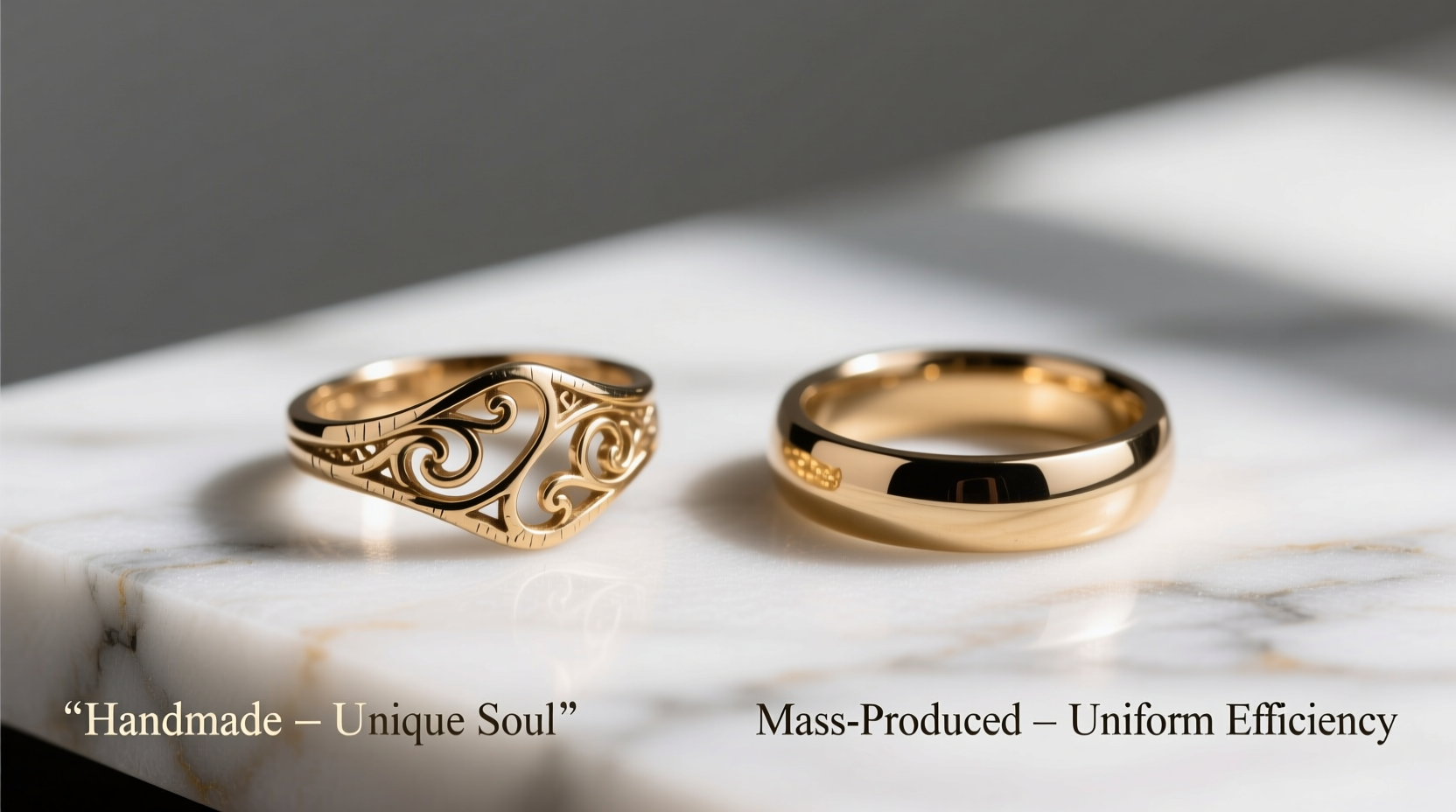
Mass-produced rings are typically manufactured using industrial techniques such as die-striking, casting from molds, and laser cutting. These methods ensure consistency and scalability, allowing brands to produce thousands of identical pieces quickly and efficiently. While this guarantees uniformity, it often sacrifices uniqueness and tactile detail.
In contrast, handmade rings are forged by skilled jewelers who shape each piece by hand—sometimes over several days. This process involves hand-soldering, forging metals, setting stones individually, and finishing with meticulous attention to texture and form. No two handmade rings are exactly alike, even if they follow the same design blueprint.
“Handmade jewelry carries the fingerprint of its maker—literally and metaphorically. It’s not about perfection; it’s about presence.” — Lila Chen, Master Goldsmith & Founder of Atelier Noveau
The imperfections in handmade rings—the subtle hammer marks, organic curves, or asymmetrical stone settings—are not flaws but signatures of human touch. For many buyers, this authenticity enhances the emotional weight of the piece.
Materials and Sustainability
One of the most compelling arguments for boutique rings lies in their sourcing practices. Independent jewelers often prioritize ethical material procurement, using recycled metals, conflict-free gemstones, and locally sourced components. Many provide full traceability, allowing customers to know exactly where their gold or diamonds originated.
Conversely, large-scale manufacturers may rely on global supply chains with limited transparency. While some major brands have adopted responsible sourcing policies, audits reveal inconsistencies, particularly in regions with weak regulatory oversight.
Tip: Ask your jeweler for documentation on metal origin and gemstone certification—especially for high-value pieces.Beyond ethics, sustainability also includes production waste. Handmade studios generate far less scrap and pollution compared to factory operations that mass-cast hundreds of units daily. Smaller batches mean lower environmental impact and reduced overproduction.
Cost Breakdown: Why Boutique Rings Cost More
It's no secret that handmade rings often come with higher price tags. But understanding what drives that cost reveals whether the investment makes sense.
| Factor | Handmade Ring | Mass-Produced Ring |
|---|---|---|
| Labor | High (individual artisan hours) | Low (automated/assembly line) |
| Materials | Premium, traceable sources | Bulk-purchased, variable quality |
| Production Scale | Single or small batch | Thousands of units |
| Markup | Lower (direct-to-consumer common) | Higher (branding, retail markup) |
| Customization | Standard or highly flexible | Limited options |
While a handmade ring might cost 30–50% more upfront, its long-term value often surpasses that of a machine-made alternative. Artisan pieces are built to last generations, not trend cycles. Moreover, because they’re less tied to branding hype, their resale depreciation tends to be slower.
A Real-Life Example: Emma and Jordan’s Engagement Ring Journey
Emma and Jordan spent months researching engagement rings. Initially drawn to a popular luxury chain, they were impressed by the brand’s reputation but unsettled by the lack of information about diamond origins. They also found the designs too generic—nothing felt uniquely “them.”
After visiting a local artisan fair, they met Sofia Reyes, a bench jeweler who specialized in custom platinum bands with reclaimed sapphires. Over six weeks, Sofia worked with them to design a ring inspired by Emma’s grandmother’s heirloom brooch—incorporating delicate milgrain edges and a hidden engraving inside the band.
The final piece cost slightly more than their original budget, but they viewed it as an investment in artistry and memory. “Every time I look at my ring,” Emma says, “I don’t just see jewelry—I see our story.”
How to Choose What’s Right for You: A Practical Checklist
Deciding between handmade and mass-produced doesn’t have to be overwhelming. Use this checklist to evaluate your priorities:
- ✅ Do I want a one-of-a-kind design or something widely available?
- ✅ Is knowing the origin of materials important to me?
- ✅ Am I willing to wait 4–8 weeks for delivery?
- ✅ Does the ring carry emotional or symbolic significance?
- ✅ Am I buying for longevity or short-term wear?
- ✅ Can I meet the jeweler or view reviews of their past work?
- ✅ Is repair and resizing support accessible long-term?
If most answers lean toward personalization, ethics, and legacy, a boutique ring is likely worth the investment. If speed, brand recognition, and immediate availability are top concerns, a well-vetted mass-produced option may suffice.
Expert Insight: The Emotional Dimension of Jewelry
Jewelry is rarely just adornment. Anthropologists note that rings, in particular, serve as powerful social symbols—marking commitments, milestones, and identity. When crafted by hand, that symbolism deepens.
“A handmade ring isn’t just purchased—it’s co-created. That collaborative energy becomes part of the object’s soul.” — Dr. Marcus Reed, Cultural Historian, University of Edinburgh
This emotional resonance translates into how people care for their rings. Owners of handmade pieces report higher attachment, more careful maintenance, and greater likelihood of passing them down. In contrast, mass-market rings are more frequently replaced or discarded after life changes.
Frequently Asked Questions
Are handmade rings more durable than mass-produced ones?
Not inherently—but because artisans often use thicker metal gauges, stronger joinery techniques, and higher-quality materials, handmade rings tend to withstand daily wear better over time. However, durability ultimately depends on design and upkeep, not just production method.
Can I customize a mass-produced ring?
Some retailers offer limited customization—like engraving or stone swaps—but structural changes (band width, profile, setting style) are usually not possible. True customization requires a made-to-order approach, which is standard among independent jewelers.
How do I verify a ring is actually handmade?
Ask the jeweler directly. Reputable artisans will explain their process, show studio photos, or even invite you to observe a session. Look for signs like slight asymmetry, hand-applied textures, or unique hallmarks. If everything looks machine-perfect and priced suspiciously low, it likely wasn’t made by hand.
Final Thoughts: Value Beyond the Price Tag
Choosing between handmade and mass-produced rings isn’t just a financial decision—it’s a philosophical one. A boutique ring represents intentionality: in design, in ethics, in connection. It reflects a desire for meaning over convenience, for individuality over conformity.
That said, mass-produced rings aren’t inherently inferior. They make fine jewelry accessible, offer reliable quality at scale, and suit those who value efficiency and familiarity. The key is awareness. Knowing what you’re paying for—and why—empowers you to choose wisely.
If you value craftsmanship, storytelling, and sustainability, a handmade ring isn’t just worth it—it’s meaningful. And in a world of fleeting trends, meaning lasts longer than any metal.
🚀 Ready to explore handmade jewelry? Visit a local artisan market, book a consultation with an independent jeweler, or start a design sketch of your dream ring today. Your story deserves to be worn.