In the evolving world of jewelry design, a quiet revolution is underway. Traditional handmade pendants—crafted by skilled artisans with hammers, torches, and years of experience—are now sharing space on digital marketplaces with sleek, mathematically precise 3D printed alternatives. As consumers navigate this shift, a critical question arises: Are 3D printed pendants truly worth it compared to their handmade counterparts? The answer isn't binary. It depends on what you value—uniqueness, affordability, sustainability, or emotional resonance.
The Artistry Behind Handmade Pendants
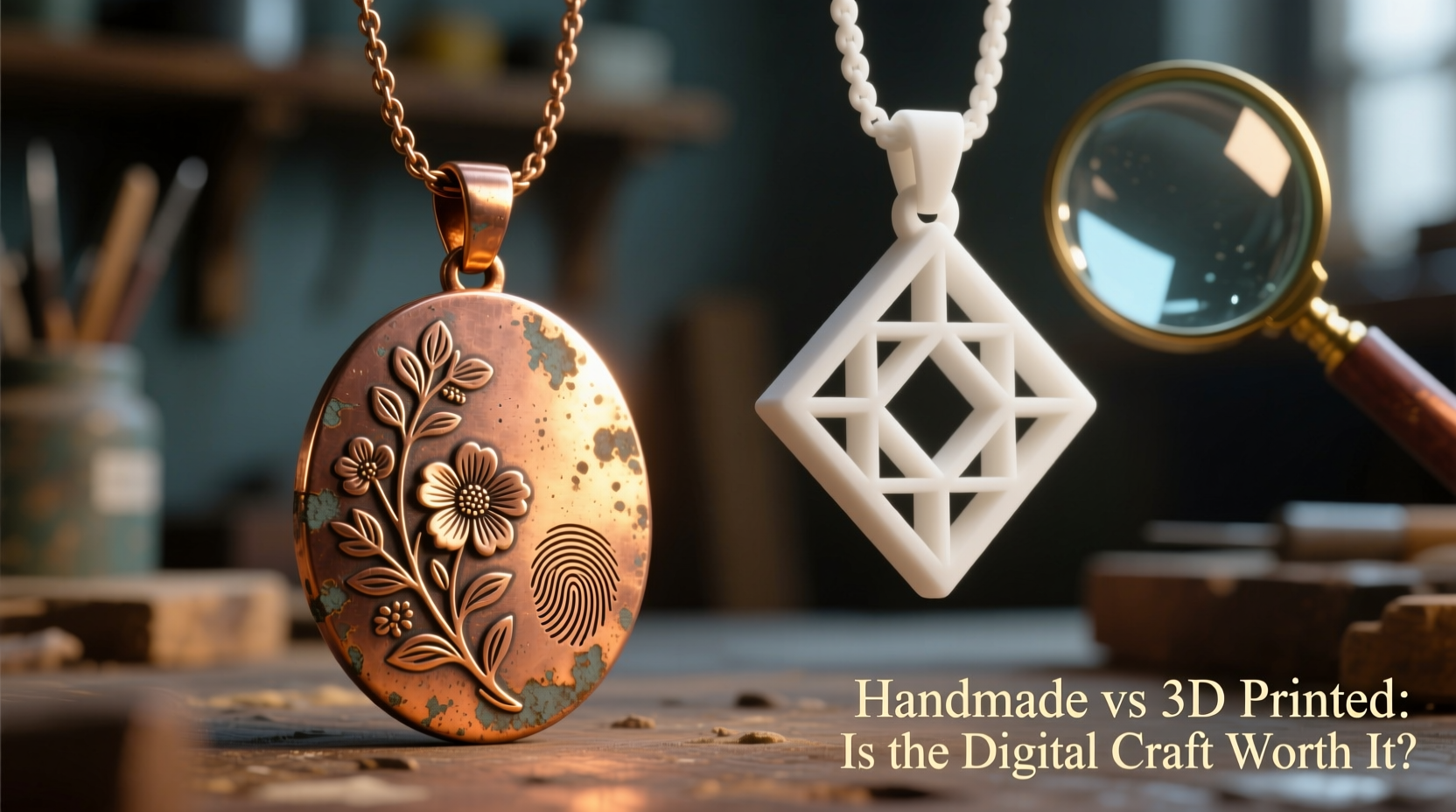
Handmade pendants are more than accessories—they’re wearable art. Each piece is shaped by human touch, often beginning as raw metal or wax, sculpted, cast, polished, and finished by hand. This process allows for organic imperfections that many collectors cherish as signs of authenticity. Artisans can incorporate textures, asymmetries, and subtle details that reflect intuition and emotion.
Because no two handmade pendants are exactly alike, they carry a sense of individuality. A pendant forged in a small studio in Santa Fe may include native symbols hand-engraved with precision tools, while one from Kyoto might feature delicate enamel work passed down through generations. These pieces often tell stories—not just of design, but of cultural heritage and craftsmanship.
“Every hammer strike leaves a trace of the maker’s intent. That energy can’t be replicated by code.” — Lila Chen, Independent Jewelry Designer and Craft EducatorTip: When buying handmade, ask about the artisan’s process. Knowing how a piece was made adds depth to its value.
The Rise of 3D Printed Pendants
3D printing, or additive manufacturing, builds objects layer by layer using digital models. In jewelry, this technology enables intricate geometries that would be nearly impossible to achieve by hand—think latticework, fractal patterns, or interlocking components printed as a single unit.
Designers use CAD (Computer-Aided Design) software to create models, which are then sent to resin or metal printers. Materials range from biodegradable PLA and photopolymer resins to high-grade stainless steel and even gold via indirect casting methods. The result is consistency, scalability, and access to avant-garde aesthetics at lower price points.
For tech-savvy consumers, 3D printed pendants represent innovation and customization. You can upload a fingerprint scan, a loved one’s voice waveform, or a custom constellation map—and have it turned into a wearable keepsake within days.
Comparing Key Factors: A Practical Breakdown
| Factor | Handmade Pendants | 3D Printed Pendants |
|---|---|---|
| Uniqueness | High – each piece is one-of-a-kind | Moderate – customizable, but designs may be duplicated |
| Cost | Higher – reflects labor and skill | Lower to mid-range – scalable production reduces labor costs |
| Durability | High – especially in precious metals | Varies – resin can degrade; metal prints approach traditional strength |
| Design Flexibility | Limited by physical constraints and tooling | Extremely high – complex internal structures possible |
| Sustainability | Depends on sourcing; often low-waste in small studios | Potential for waste in failed prints; some materials non-recyclable |
| Emotional Value | Often high – connection to artisan and process | Personalized options increase sentimental appeal |
When 3D Printed Pendants Shine
3D printed pendants excel in scenarios where precision, speed, and accessibility matter. For example, a cancer survivor wanted a necklace incorporating the exact coordinates of her diagnosis day and recovery milestone. A designer used GPS data to generate a 3D topographical map of those locations, printed in titanium—a feat impractical with traditional techniques.
This real-world case illustrates the power of digital fabrication: turning deeply personal data into tangible, meaningful objects. Similarly, costume jewelry lines benefit from 3D printing’s ability to rapidly prototype and produce limited runs without expensive molds.
Another advantage is inclusivity. Designers can easily scale or modify models for people with sensory sensitivities—such as lightweight, smooth-edged pendants for neurodivergent wearers—something harder to standardize in handmade batches.
A Step-by-Step Guide to Choosing the Right Pendant
- Define Your Purpose: Is it a gift, a statement piece, or an everyday accessory? Emotional significance favors handmade; experimental design leans toward 3D.
- Set a Budget: Handmade pieces in silver or gold typically start at $150+. 3D printed resin versions can be found under $50.
- Consider Material Needs: Will it be worn daily? Opt for durable metals. For temporary or fashion-focused use, resin or PLA may suffice.
- Evaluate Customization Options: Need a name, date, or unique shape embedded? 3D printing offers superior adaptability.
- Research the Maker: Whether artisan or digital designer, review their portfolio, ethics, and customer feedback.
- Ask About Production Time: Handmade items may take weeks; 3D printed ones can ship in days.
Common Misconceptions Debunked
One widespread myth is that 3D printed jewelry lacks quality. While early prints suffered from brittleness and rough finishes, modern post-processing techniques—like sandblasting, electroplating, and curing—have dramatically improved durability and appearance. High-resolution metal printers now produce pieces indistinguishable from cast originals.
Conversely, not all handmade pendants are inherently superior. Mass-produced “handmade-style” items from large factories may involve minimal actual handcrafting. True handmade means limited batches, visible tool marks, and documentation of the making process.
FAQ
Can 3D printed pendants be made in gold or silver?
Yes, though not directly in most consumer printers. Designers typically 3D print a wax or resin model, then use the lost-wax casting method to create a metal version. This allows for complex shapes with the durability of precious metals.
Are handmade pendants always more expensive?
Generally, yes—labor, material sourcing, and time contribute to higher prices. However, some emerging artisans offer smaller, simpler pieces at competitive rates to build their portfolios.
Do 3D printed pendants last as long as traditional ones?
It depends on the material. Resin pendants may yellow or crack over time if exposed to sunlight. Metal 3D printed or cast pieces, however, can last decades with proper care—similar to handmade equivalents.
Final Verdict: Are 3D Printed Pendants Worth It?
They absolutely can be—but only if they align with your needs. If you value storytelling, tradition, and tactile craftsmanship, handmade pendants will likely resonate more. They support independent artists and preserve age-old techniques in a digital age.
Yet, 3D printed pendants offer unmatched design freedom, faster turnaround, and democratized access to personalized luxury. For those seeking innovation, affordability, or highly specific customization, they aren’t just worth it—they’re revolutionary.
The future of jewelry isn’t about choosing one over the other, but embracing both. Many forward-thinking designers now blend the best of both worlds: digitally modeling a concept, 3D printing a prototype, and finishing it by hand with engraving, patina, or stone setting. This fusion honors craft while leveraging technology.
Conclusion
Whether handmade or 3D printed, a pendant’s true worth lies in what it means to the wearer. A machine can replicate a shape, but it can’t replicate intention. At the same time, a human can’t calculate a thousand-layer lattice in seconds. The smartest choice isn’t to pick a side, but to understand what each method offers—and choose accordingly.
💬 Have you worn both types? What mattered most to you—craft, cost, or customization? Share your experience and help others navigate this new era of personal adornment.








