For those with curly hair, achieving defined, bouncy curls without that dreaded crunch is a daily balancing act. Many reach for styling products like mousse or gel, hoping to lock in shape while maintaining softness. Yet, too often, the result is a stiff, crackling mess—especially when you scrunch your hair and hear that unmistakable “crack” upon touch. This phenomenon, known as the \"crunchy cast,\" has sparked debate among curl enthusiasts: which product truly delivers hold without hardness? Is it lightweight mousse, or is there a way to use gel without sacrificing softness?
The answer isn’t always straightforward. It depends on formulation, application method, and how you break the cast. But understanding the science behind each product—and how they interact with curly hair—can help you make smarter choices and finally say goodbye to crunchy curls.
Understanding the Crunchy Cast: What Causes It?
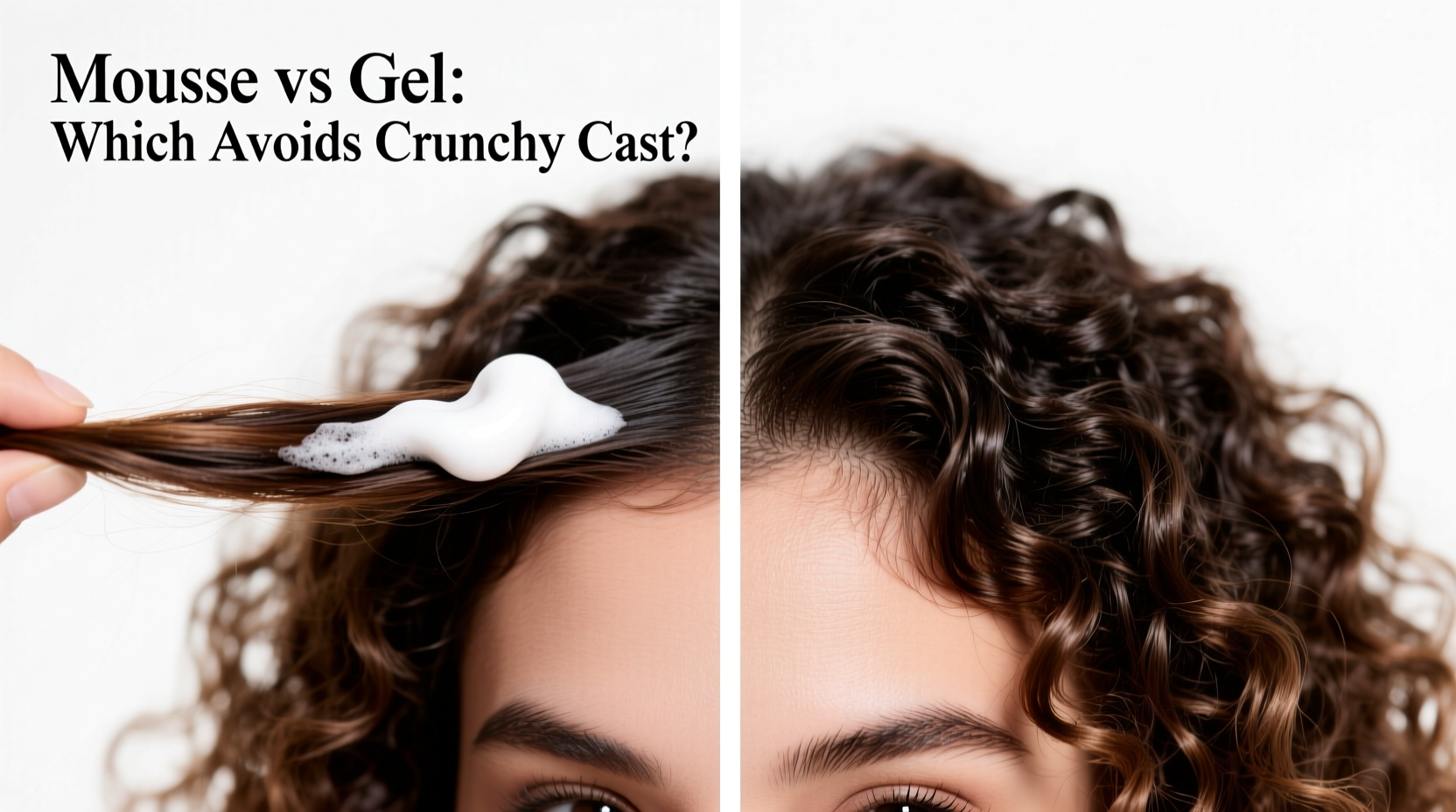
The “cast” refers to the hard, film-like layer that forms on curls as styling products dry. This cast is not inherently bad—in fact, it plays a crucial role in minimizing frizz and preserving curl pattern during drying. The problem arises when the cast doesn’t soften after drying, leaving curls feeling stiff, unnatural, and brittle.
Crunchiness typically stems from high levels of synthetic polymers such as PVP (polyvinylpyrrolidone) or alcohol-based ingredients that evaporate quickly and leave behind a rigid residue. Some gels are notorious for this, especially older formulas designed for maximum hold at the expense of flexibility.
Mousses, on the other hand, are traditionally lighter and contain less concentrated film-forming agents. They rely more on water and conditioning ingredients than on strong polymers, making them less likely to create an inflexible shell. However, not all mousses are created equal—some budget formulations still include drying alcohols or silicones that can contribute to stiffness.
“Many people avoid gel because of past experiences with crunchy results, but modern curl-friendly gels are formulated to cast *and* clump—then soften when touched.” — Dr. Monique Daniels, Trichologist & Curl Care Specialist
Mousse vs Gel: A Structural Breakdown
To determine which product better avoids the crunchy cast, it’s essential to compare their base compositions, weight, and behavior on curly hair.
| Feature | Hair Mousse | Hair Gel |
|---|---|---|
| Base Consistency | Aerated foam, lightweight | Dense, viscous liquid |
| Hold Level | Light to medium | Medium to firm |
| Drying Effect | Minimal cast; rarely crunchy | Strong cast; may remain crunchy if not properly broken |
| Humidity Resistance | Low to moderate | High (with quality polymers) |
| Best For | Loose waves, fine curls, second-day refresh | Tight coils, thick textures, high-frizz environments |
| Weight on Hair | Very light | Can feel heavy if over-applied |
Mousse works by evenly distributing conditioning agents and mild hold builders through whipped air infusion. This makes it ideal for adding volume and bounce without weighing down curls. Because it contains less concentrated styling resin, it dries softer and rarely creates a noticeable cast.
Gel, in contrast, uses a higher concentration of polymers to coat each strand, sealing the cuticle and locking in moisture. When applied correctly and allowed to dry fully (often via diffusing or air-drying), it forms a protective cast that shields curls from environmental disruption. The key difference lies in what happens *after* drying: does the cast remain rigid, or does it become soft and touchable?
Tip: Always apply gel to soaking wet hair—it dilutes the formula slightly and helps prevent patchy, overly stiff areas.How to Use Gel Without the Crunch: The Casting-and-Clumping Method
The belief that gel inevitably leads to crunchy hair is outdated—provided you're using the right kind and applying it properly. Modern curl-enhancing gels made with flexible-hold polymers like PVA (polyvinyl alcohol) or plant-derived alternatives (e.g., flaxseed or okra mucilage) are designed to form a temporary cast that breaks easily.
The technique known as “casting and clumping” is central to achieving soft, defined curls with gel:
- Apply to sopping wet hair: Gel should be used immediately after washing, while hair is dripping wet. Water dilutes the gel slightly, ensuring even distribution and reducing localized buildup.
- Use the praying hands method: Smooth gel down sections of hair using flat palms to encourage uniform coating and alignment.
- Scrunch to form clumps: After applying, gently scrunch upward to encourage curl formation and lift.
- Allow full drying: Let hair dry completely—do not touch or manipulate during this phase. Premature touching disrupts the forming cast and causes frizz.
- Break the cast: Once 100% dry, flip your head over and scrunch firmly. You’ll hear a crunch at first, but continued scrunching breaks the polymer film into softness.
This final step—the cast-breaking—is where most people go wrong. If you skip it, your curls will stay stiff. But done correctly, the transition from hard to soft takes seconds and transforms the entire feel of your style.
Real Example: From Crunch to Cloud-Like Curls
Tasha, a woman with 3C curls living in Miami, had avoided gel for years due to bad experiences with old-school brands that left her hair feeling like straw. She switched to a lightweight mousse thinking it would solve her problems—but found her curls lacked definition in the city’s humidity, collapsing by midday.
After consulting a curl specialist, she tried a new routine: a sulfate-free wash, deep conditioner, then a generous application of a flexible-hold gel (alcohol-free, glycerin-rich). She applied it to wet hair, plopped for 20 minutes, then diffused until fully dry. At first, her curls were rock-hard. Hesitant, she watched a tutorial on cast-breaking and gave her hair a firm scrunch.
The change was immediate. Her curls softened dramatically, gaining shine and movement while retaining tight definition. For the first time, she experienced both hold and softness—even in 85% humidity. The gel hadn’t caused crunch; improper post-dry handling had.
When Mousse Shines: Ideal Scenarios for Lightweight Hold
While gel excels in definition and longevity, mousse remains unmatched for natural movement and ease of use. It's particularly beneficial in the following situations:
- Second-day curls: Reviving day-old curls with a small amount of mousse restores bounce without adding heaviness or requiring re-washing.
- Fine or low-density curls: Thick gels can overwhelm finer strands, causing droop or separation. Mousse adds texture without compromising volume.
- Wavy or looser curl types (2A–2C): These patterns benefit more from separation and body than intense clumping, making mousse a superior choice.
- Quick styling routines: Mousses require no waiting period and rarely need diffusing—ideal for busy mornings.
However, mousse falls short in high-moisture environments. Without a strong protective barrier, curls are more prone to frizz and shrinkage throughout the day. Additionally, mousses generally don’t offer long-term shape retention, meaning touch-ups are often necessary.
Tip: Layer mousse under a light gel (a technique called “mossing”) for hybrid benefits: softness from mousse, definition from gel.Choosing the Right Formula: Ingredients That Matter
Not all mousses or gels behave the same. The ingredient list determines whether a product enhances softness or contributes to crunch. Here’s what to look for—and what to avoid.
Look For:
- Hydrolyzed proteins (e.g., keratin, silk amino acids): Strengthen hair without stiffness.
- Humectants (glycerin, honey, aloe vera): Attract moisture and support pliability.
- Plant-based polymers (flaxseed, marshmallow root): Provide gentle hold with natural flexibility.
- Emollients (cyclopentasiloxane, cetyl alcohol): Soften hair and reduce perceived dryness.
Avoid:
- Drying alcohols (ethanol, SD alcohol 40): Evaporate quickly and strip moisture, increasing brittleness.
- Silicones (dimethicone, amodimethicone): Can build up and prevent moisture absorption over time.
- PVP (polyvinylpyrrolidone): A common film-former that resists water and rarely softens, leading to persistent crunch.
Always check labels. A “natural” claim doesn’t guarantee softness—many botanical gels still use PVP for hold. Instead, prioritize alcohol-free, water-soluble formulas that emphasize hydration.
Step-by-Step Guide: Achieving Soft, Defined Curls Without Crunch
Follow this proven routine to get the best of both worlds—definition and softness—regardless of whether you choose mousse or gel.
- Cleanse gently: Use a sulfate-free shampoo to preserve natural oils. Focus on the scalp, not lengths.
- Condition thoroughly: Apply a rich conditioner from ears down. Detangle with a wide-tooth comb.
- Apply styling product on wet hair: Choose mousse for volume and softness, gel for definition. Apply evenly using fingers or a brush.
- Plop or diffuse (optional): Plopping with a cotton t-shirt reduces drying time and enhances root lift. Diffusing speeds up drying and sets the curl.
- Let hair dry completely: Avoid touching until 100% dry to prevent frizz and uneven casting.
- Break the cast: Once dry, scrunch vigorously with clean hands. If using gel, you may need to “refresh” with a drop of oil or leave-in to enhance softness.
- Preserve overnight: Sleep on a satin pillowcase or wrap hair in a satin scarf to maintain integrity.
FAQ: Common Questions About Mousse, Gel, and Crunchy Curls
Can I use both mousse and gel together?
Yes—this technique, sometimes called “mossing,” combines mousse for volume and gel for definition. Apply mousse first to damp hair, then layer with a lighter gel. Be cautious not to over-apply, as buildup increases stiffness.
Why does my gel still feel crunchy even after scrunching?
You may be using a formula with non-flexible polymers like PVP or drying alcohols. Switch to an alcohol-free, water-soluble gel designed for curls. Also ensure your hair is completely dry before breaking the cast—premature scrunching traps moisture and weakens the hold.
Is crunchy hair damaging?
Not directly. A temporary cast isn’t harmful, but consistently stiff, dry-feeling hair may indicate product buildup or lack of moisture. Over time, this can lead to brittleness and breakage if not balanced with conditioning treatments.
Conclusion: Soft Curls Are Possible—It’s All in the Choice and Technique
The battle between hair mousse and gel for curly hair isn’t about declaring a single winner—it’s about matching the product to your needs and mastering the method. Mousse wins for softness and speed, making it ideal for looser curls and low-maintenance days. Gel, when chosen wisely and used correctly, offers unmatched definition and frizz control without lasting crunch.
The real secret lies not in avoiding gel, but in understanding how to work *with* it. A proper cast isn’t the enemy—it’s a protector. And once broken, it reveals soft, springy curls that last all day. Meanwhile, mousse continues to serve an essential role for those prioritizing movement and natural texture.
Ultimately, the best product is the one that aligns with your hair type, lifestyle, and desired outcome. Experiment fearlessly, read labels closely, and refine your technique. With the right knowledge, crunchy cast doesn’t have to be part of your curly hair story.
💬 Have a favorite mousse or gel that gives you soft, defined curls? Share your go-to product and routine in the comments—your tip could help someone finally break free from the crunch!