Luxury bracelets are more than accessories—they’re heirlooms, statements of taste, and often significant investments. Whether crafted from gold, platinum, silver, or adorned with precious stones, their brilliance can fade over time due to natural oils, environmental pollutants, and daily wear. Harsh cleaning methods may do more harm than good, stripping finishes or loosening gem settings. The key lies in gentle, informed care that preserves integrity while restoring radiance. This guide outlines precise, safe techniques tailored to different materials, helping you maintain the elegance of your jewelry for years to come.
Understanding Your Bracelet’s Material
Not all luxury bracelets are created equal. Each material demands a specific approach to cleaning and maintenance. Applying the wrong method—such as using abrasive cloths on soft gold or soaking pearls in alcohol—can lead to irreversible damage. Before any cleaning, identify the composition of your bracelet:
- Precious Metals: Gold (yellow, white, rose), platinum, and sterling silver each react differently to chemicals and moisture.
- Gemstone-Adorned Pieces: Diamonds are durable, but emeralds, opals, and pearls are sensitive to heat, pressure, and certain solvents.
- Organic Materials: Pearls, coral, and amber require special handling due to their porous nature.
- Enamel or Lacquered Finishes: Often found in designer pieces, these coatings can chip or discolor if exposed to harsh cleaners.
Step-by-Step Guide to Safe Home Cleaning
For most solid metal bracelets without fragile inlays or stones, a controlled at-home cleaning process is both effective and safe. Follow this sequence carefully to avoid stress on joints, clasps, or delicate detailing.
- Prepare the Workspace: Lay down a soft towel on a clean surface. Fill a small bowl with lukewarm water and add one drop of pH-neutral dish soap (avoid detergents with bleach or moisturizers).
- Soak Gently: Submerge the bracelet for no longer than 15 minutes. Extended soaking can weaken soldered joints or corrode silver.
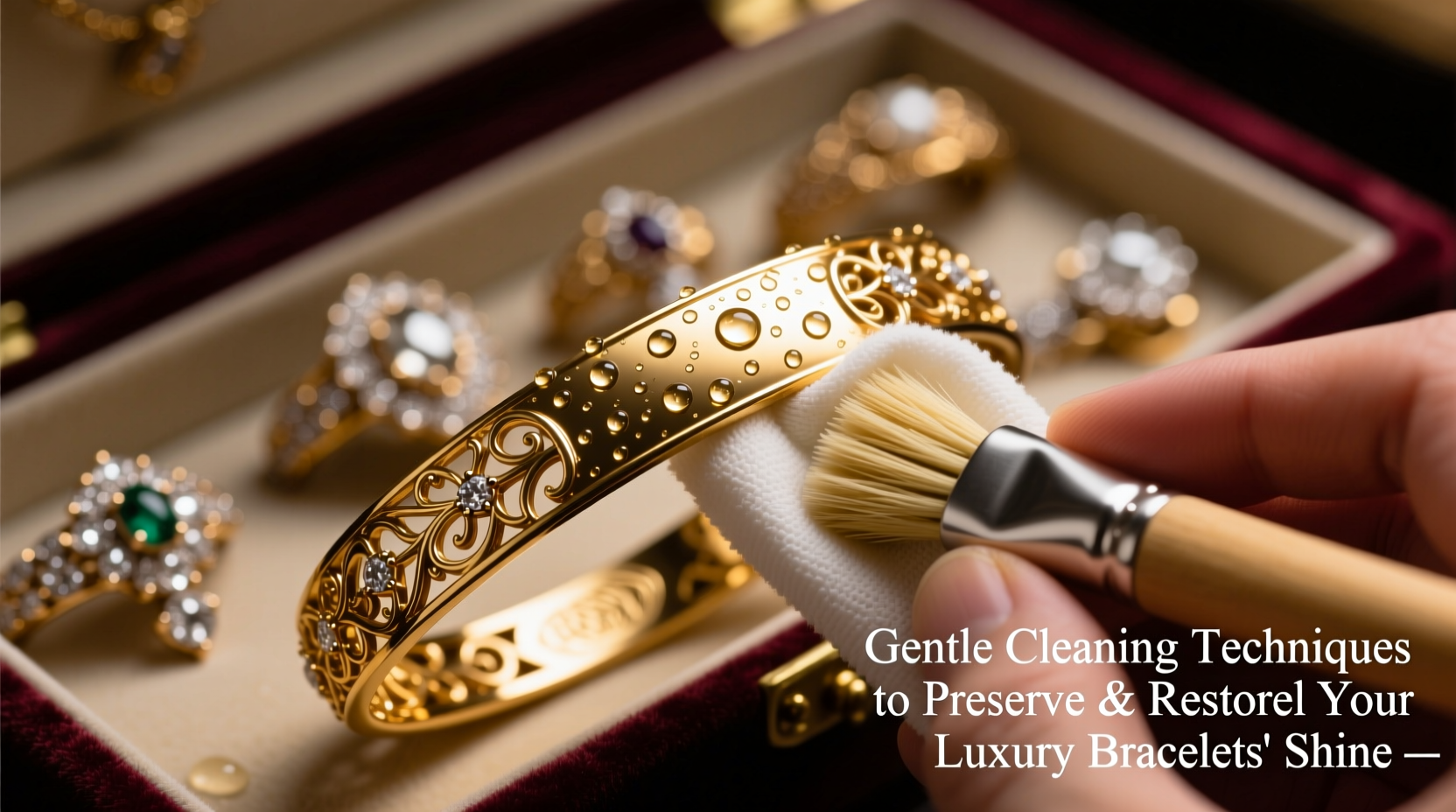
- Clean with a Soft Brush: Use a clean, soft-bristled toothbrush (preferably new) to lightly brush crevices, under prongs, and along chains. Focus on areas where grime accumulates, like hinge mechanisms or engraved patterns.
- Rinse Thoroughly: Hold under a gentle stream of lukewarm water to remove all soap residue. Do not use hot water, especially for pieces with glued components.
- Dry with Care: Pat dry with a lint-free microfiber cloth. Never air-dry on rough surfaces or use paper towels, which can scratch metal.
“Even high-karat gold can develop micro-abrasions from improper drying. Always use a dedicated jewelry cloth.” — Daniel Reyes, Master Jeweler & Conservator
Do’s and Don’ts by Material Type
| Material | Do’s | Don’ts |
|---|---|---|
| Yellow/White/Rose Gold | Use mild soap solution; polish with gold-specific cloth; store separately | Avoid chlorine, saltwater, and ultrasonic cleaners unless verified safe |
| Sterling Silver | Wipe after wear; clean monthly; use anti-tarnish strips in storage | Don’t soak in baking soda mixtures long-term; avoid rubber-lined boxes |
| Platinum | Safe with gentle brushing; responds well to professional polishing | Never use abrasive powders; don’t confuse scratches with tarnish |
| Pearls & Organic Gems | Wipe with damp cloth; apply last when dressing | No soaking; never expose to perfume, hairspray, or vinegar |
| Diamond-Set Pieces | Brush under stones to remove buildup; inspect prongs regularly | Avoid steam cleaners at home; don’t wear during manual labor |
Real Example: Reviving a Heirloom Cuff
A client once brought in a 1940s Art Deco gold cuff bracelet inherited from her grandmother. Years of occasional wear and improper storage in a velvet pouch had dulled its finish, and microscopic dirt was trapped in engraved scrollwork. She attempted to revive it with a commercial jewelry dip, which left streaks and damaged the oxidized detailing meant to accentuate the design.
Working with a conservator, the piece underwent a controlled rehydration soak (distilled water only), followed by meticulous cleaning with a sable-hair brush and deionized water. After air-drying in a dust-free environment, it was buffed with a chamois cloth. The result? Full restoration of luster without compromising original patina—a balance between cleanliness and historical authenticity.
Tip: For antique or vintage pieces, always consult a professional before attempting home cleaning.When to Seek Professional Care
While routine maintenance can be done at home, certain situations demand expert attention:
- Loose stones or worn prongs
- Visible scratches or dents affecting structural integrity
- Bracelets with intricate moving parts (e.g., bangles with rotating elements)
- Items with unknown origins or mixed materials
Jewelers use specialized tools—like non-abrasive ultrasonic baths with adjustable frequencies, laser inspection for micro-fractures, and precision polishing wheels—that deliver results impossible to replicate safely at home. A professional cleaning every 6–12 months complements your at-home regimen and ensures longevity.
Frequently Asked Questions
Can I use toothpaste to clean my gold bracelet?
No. Despite popular belief, toothpaste is mildly abrasive and can create fine scratches on gold, especially softer 18k and 22k alloys. It may also leave a film on the surface. Use only jewelry-specific cleaners approved for your metal type.
How often should I clean my luxury bracelet?
Light wiping after wear is ideal. A full cleaning every 4–6 weeks maintains shine without overhandling. Pearls and porous stones should only be wiped—never soaked—and cleaned minimally.
Is it safe to wear my bracelet while swimming or showering?
No. Chlorine in pools and salt in seawater accelerate corrosion in metals like silver and white gold. Soaps and shampoos leave residues that dull luster and attract more dirt. Always remove luxury bracelets before water exposure.
Essential Jewelry Care Checklist
Keep this checklist handy for consistent upkeep:
- ✅ Identify the material and gemstones in your bracelet
- ✅ Wipe gently with a microfiber cloth after each wear
- ✅ Clean with mild soap and soft brush every 4–6 weeks
- ✅ Inspect clasps and settings monthly for looseness
- ✅ Store flat in a fabric-lined box, away from other jewelry
- ✅ Schedule professional inspection and cleaning annually
- ❌ Avoid exposure to perfumes, lotions, and household chemicals
- ❌ Never clean with bleach, ammonia, or abrasive pastes
“Preservation begins the moment you take it off. How you store it determines how it ages.” — Lena Moreau, Heritage Jewelry Curator
Conclusion: Honor Your Jewelry with Mindful Care
Your luxury bracelets reflect personal milestones, craftsmanship, and enduring value. Their shine isn’t just aesthetic—it’s a sign of respect for the artistry they represent. By adopting gentle, informed cleaning techniques, you protect both beauty and worth. These practices take little time but yield lasting rewards: brilliance that turns heads, confidence in wear, and the quiet satisfaction of knowing your treasures are cared for with expertise and care.
💬 Have a favorite cleaning method that worked wonders? Share your experience in the comments and help others preserve their cherished pieces with confidence.