When it comes to accessorizing with necklaces, few choices spark as much debate as gemstone versus gold. One gleams with timeless luxury; the other bursts with color and personality. But beyond aesthetics, what really determines which looks better—on you, in different settings, or across seasons? The answer isn’t universal. It depends on skin tone, outfit coordination, lifestyle, and even cultural context. Understanding these nuances helps make an informed decision that enhances your appearance and aligns with your identity.
Skin Tone & Jewelry Harmony
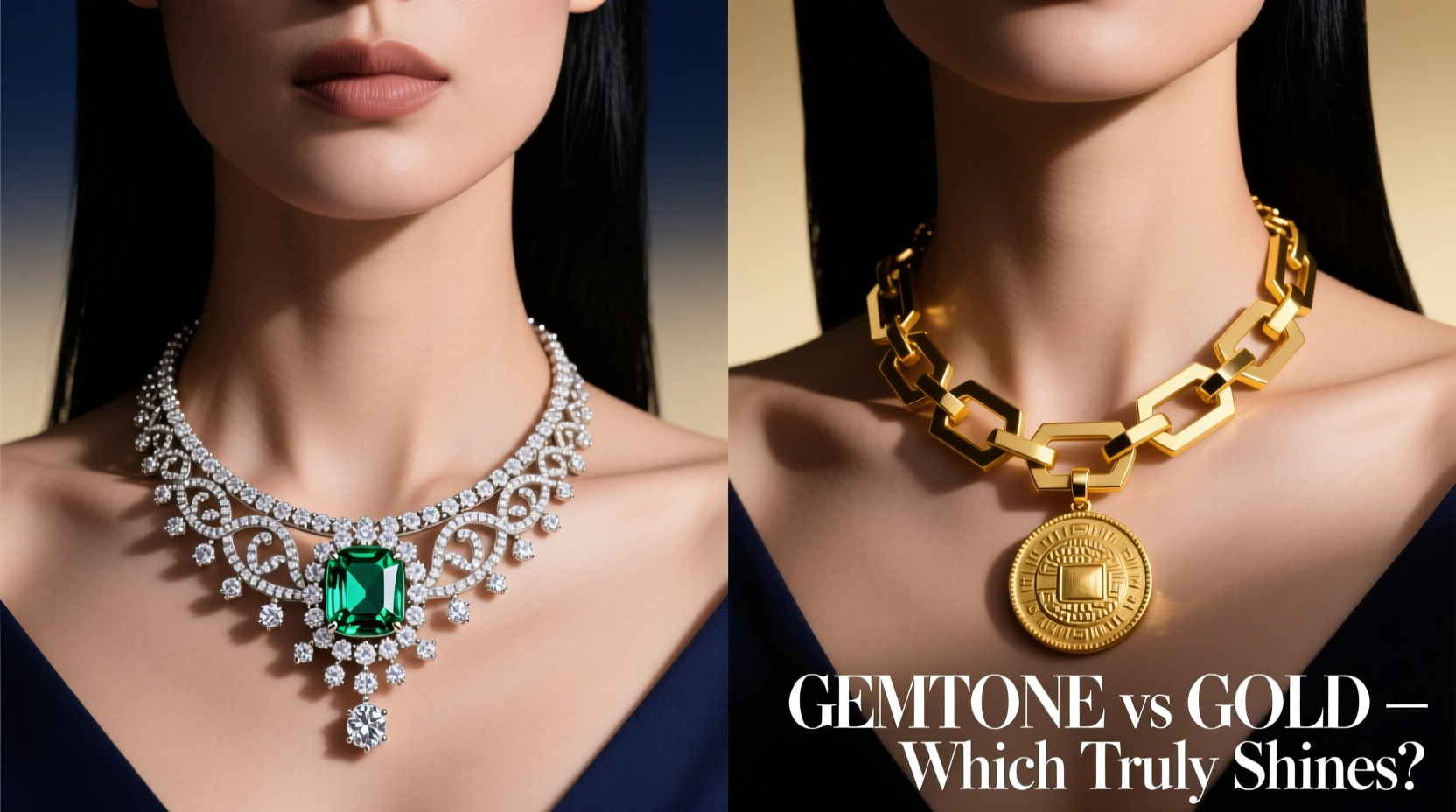
The interaction between jewelry and skin tone is one of the most overlooked yet critical factors in determining visual appeal. Gold, particularly yellow and rose varieties, tends to complement warm undertones—those with golden, peachy, or olive complexions. When worn by someone with a matching undertone, gold emits a radiant glow that enhances facial brightness.
Gemstone necklaces introduce a broader spectrum of influence. A deep amethyst can elevate cool-toned skin (with pink or blue undertones), while citrine or orange carnelian harmonizes beautifully with warmer complexions. The key lies not just in the stone’s hue but in its saturation and clarity. A high-quality sapphire against fair skin creates a striking contrast, whereas a turquoise pendant on deeper skin tones adds vibrancy without overwhelming.
Tip: Hold a white paper next to your face in natural light. If your veins appear greenish, you likely have warm undertones; bluish suggests cool. Match metals and stones accordingly.Occasion & Styling Practicality
A formal gala calls for different adornment than a weekend brunch. Gold necklaces, especially delicate chains or bold statement pieces like Cuban links, project elegance and permanence. They pair effortlessly with monochrome outfits, evening gowns, or tailored suits, serving as subtle power signals.
Gemstone necklaces, by contrast, are expressive tools. A ruby pendant can add drama to a black dress, while a multi-stone choker introduces playfulness to casual wear. However, their vividness demands coordination. Wearing a bright emerald necklace with a neon green top may clash rather than complement.
In professional environments, understated gold chains often outperform colorful gemstones, which might be perceived as distracting. Yet creative industries welcome bolder choices—where a lapis lazuli piece could become part of a signature look.
“Jewelry should enhance the wearer, not compete with them. A well-chosen gemstone speaks volumes about taste and intention.” — Lena Patel, Jewelry Stylist & Curator at Metropolitan Style Review
Comparison: Gemstone vs Gold Necklaces
| Feature | Gold Necklace | Gemstone Necklace |
|---|---|---|
| Timelessness | High – classic appeal across decades | Moderate – trends influence popularity |
| Versatility | Very high – works with nearly all colors and styles | Medium – depends on stone color and cut |
| Durability | High – resistant to tarnish and daily wear | Varies – softer stones (e.g., opal) require care |
| Emotional Impact | Subtle confidence, tradition | Bold expression, symbolism (e.g., birthstones) |
| Cost Range | $$$ – driven by karat weight and craftsmanship | $–$$$$ – varies widely by rarity and setting |
Real-Life Scenario: Choosing for a Wedding
Sophia was attending her sister’s outdoor summer wedding. She owned both a 14k yellow gold pendant and a garnet-and-diamond halo necklace. Her dress was champagne-colored silk with lace detailing. After trying both, she noticed the gold blended too closely with her dress, creating a flat effect. The garnet, however, added warmth and depth, drawing attention to her neckline without overpowering the ensemble.
She also considered the setting: sunlight would amplify the gemstone’s sparkle, while the open-air venue encouraged more vibrant accessories. Guests later complimented her choice, noting how “the necklace gave her look soul.” This example illustrates that beauty isn’t inherent in the material—it emerges from context and synergy.
How to Build a Balanced Jewelry Wardrobe
Rather than choosing one over the other permanently, consider curating a mix. A balanced collection includes:
- A minimalist gold chain for everyday wear
- A bold gemstone piece for events or seasonal rotation
- A layered set combining both elements (e.g., gold chain with a small sapphire charm)
This approach allows adaptability. In winter, darker gemstones like onyx or deep red spinels stand out against heavy fabrics. In spring, pastel aquamarines or morganites paired with rose gold create soft contrasts. Layering a thin gold chain beneath a shorter gemstone pendant adds dimension without clutter.
Action Checklist: Selecting the Right Necklace
- Identify your dominant skin tone (warm, cool, or neutral)
- Assess the primary use case (daily wear, office, special events)
- Evaluate your existing wardrobe palette
- Test potential pieces under natural light
- Consider maintenance needs (cleaning, storage, durability)
- Try layering options before finalizing
Care & Longevity Considerations
Gold requires minimal upkeep—regular wiping with a soft cloth prevents buildup. Avoid exposure to chlorine or perfume, which can damage the finish over time. Solid gold resists scratching better than plated versions, making it a long-term investment.
Gemstones vary significantly in hardness. On the Mohs scale, diamonds rate 10, sapphires 9, but opals sit at 5–6, making them prone to scratches. Store gemstone necklaces separately in padded boxes. Clean them gently with lukewarm water and mild soap—never ultrasonic cleaners unless confirmed safe by a jeweler.
Tip: Remove gemstone necklaces before swimming or exercising. Sweat and saltwater can erode certain minerals and weaken prongs.FAQ: Common Questions Answered
Can I wear gemstone and gold necklaces together?
Absolutely. Combining them thoughtfully enhances visual interest. Try a short gold choker with a longer gemstone pendant, ensuring the colors harmonize. For example, a peridot stone pairs well with yellow gold, while tanzanite complements white gold settings.
Do gemstone necklaces look cheap compared to gold?
Not inherently. Poor craftsmanship or synthetic materials may appear low-quality, but fine gemstones in solid gold or platinum settings exude luxury. The perception often stems from outdated associations—today, colored gemstones are celebrated in high fashion and bespoke design.
Which holds value better—gold or gemstone necklaces?
Gold has intrinsic market value based on weight and purity, making resale easier. Gemstone value depends on rarity, cut, and demand. Rare stones like Paraiba tourmaline or Burmese rubies can appreciate, but most do not match gold’s liquidity. For pure investment, gold wins; for sentimental or artistic value, gemstones often surpass.
Final Thoughts: Beauty Is Contextual
There is no definitive winner in the gemstone versus gold debate. What “looks better” is deeply personal and situational. Gold offers enduring elegance and unmatched versatility. Gemstones deliver emotional resonance, color dynamics, and storytelling potential. The most compelling style emerges not from allegiance to one category, but from knowing when and how to use each.
Instead of asking which looks better universally, ask: Which looks better *on me*, *right now*, *for this moment*? That shift in perspective transforms jewelry from decoration into dialogue—a conversation between self, style, and setting.
💬 What’s your go-to necklace for making a statement? Share your favorite combination of metal and stone—we’d love to hear how you define brilliance.