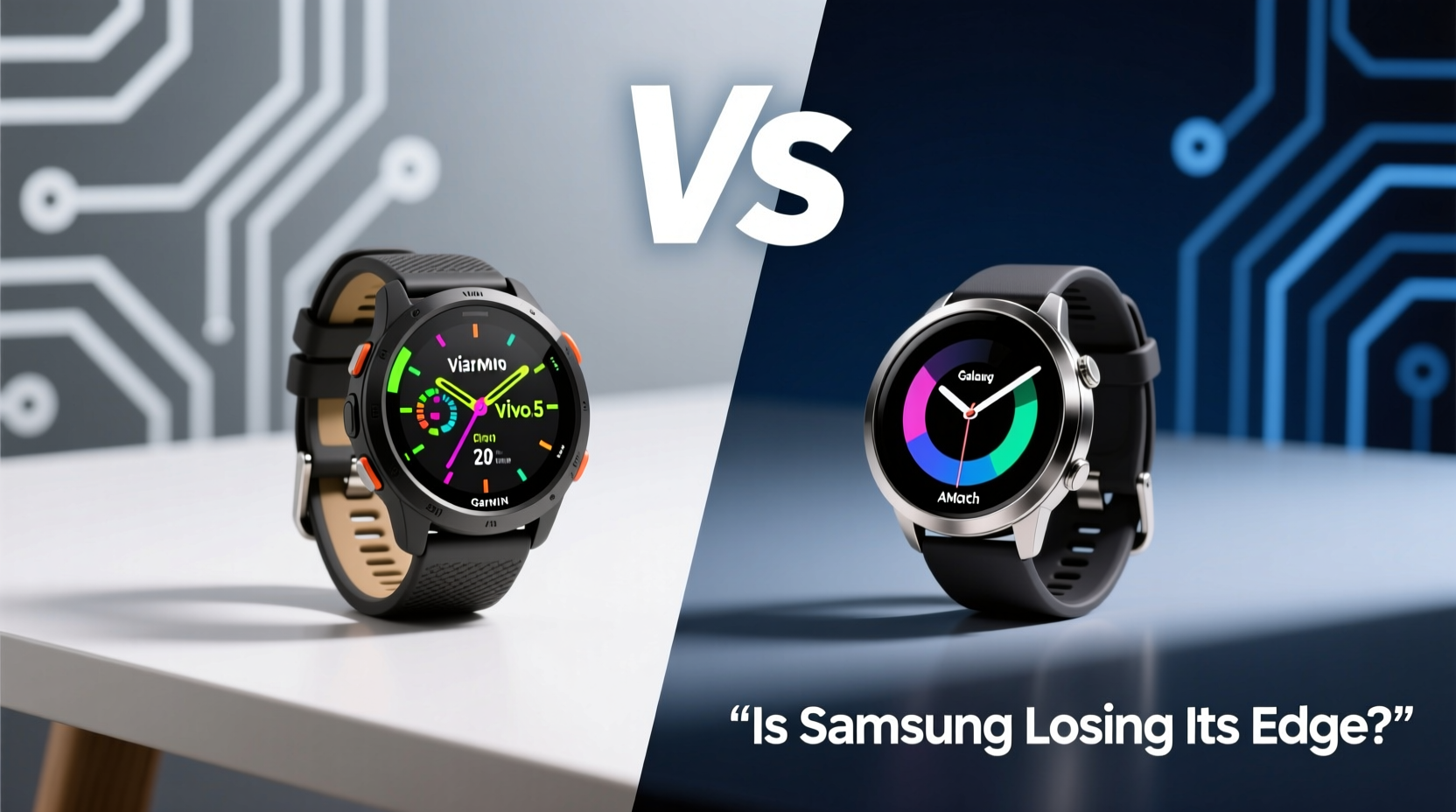
In the rapidly evolving world of wearable technology, two names consistently surface when discussing fitness-focused smartwatches: Garmin and Samsung. The Garmin vivoactive 5 and the latest Samsung Galaxy Watch models—particularly the Galaxy Watch 6—represent their respective brands’ commitment to health monitoring, design, and user experience. But as consumer expectations shift toward deeper fitness integration and longer battery life, a critical question arises: Is Samsung losing its edge against Garmin’s increasingly specialized offerings?
This isn’t just about which device has more features. It’s about how well each serves users who prioritize performance over flash—athletes, outdoor enthusiasts, and health-conscious individuals looking for reliability, accuracy, and sustained functionality without daily charging.
Fitness Tracking: Precision vs. Popularity
When it comes to fitness tracking, Garmin has spent years refining its algorithms for runners, cyclists, swimmers, and triathletes. The vivoactive 5 includes advanced metrics like Training Readiness, Body Battery energy monitoring, and Firstbeat Analytics for real-time stamina and recovery insights. These aren’t just numbers—they’re actionable data points that help users optimize workouts and avoid overtraining.
Samsung’s Galaxy Watch series has made strides with its Samsung BioActive Sensor and improved sleep staging via Sleep Coaching. However, third-party reviews often note inconsistencies in heart rate accuracy during high-intensity interval training (HIIT) or GPS drift on trail runs. While adequate for casual users, these discrepancies matter to serious athletes.
“Garmin’s ecosystem is built around athletic performance. Samsung excels in smartphone integration, but when precision matters, Garmin still leads.” — Dr. Lena Patel, Sports Technology Analyst at FitTech ReviewTip: If you train regularly or follow structured fitness plans, prioritize devices with validated physiological metrics over those focused solely on step counting.
Battery Life: The Real-World Differentiator
Battery longevity separates niche performers from mainstream convenience tools. The Garmin vivoactive 5 offers up to 7 days in smartwatch mode and 15 hours in GPS-only mode. That means completing multiple long runs or hikes without needing a charge.
In contrast, the Samsung Galaxy Watch 6 lasts about 30–40 hours under typical use—often less with always-on display and frequent notifications enabled. This forces nightly charging, which disrupts continuity in sleep tracking and limits usability during travel or multi-day adventures.
For users who forget chargers or live active lifestyles away from power sources, this gap is significant. A smartwatch that dies mid-hike defeats part of its purpose.
User Interface and Ecosystem Integration
Samsung shines in UI elegance and Android integration. With Wear OS powered by Samsung, the Galaxy Watch delivers smooth animations, rich app support through Google Play, and seamless pairing with Samsung smartphones—including call handling, music control, and Bixby voice commands.
The vivoactive 5 runs Garmin’s proprietary operating system. It’s functional but not flashy. App selection is limited compared to Wear OS, and touchscreen responsiveness lags slightly behind Samsung’s AMOLED displays. However, Garmin’s interface prioritizes quick access to workout modes, weather, and safety features like incident detection and SOS alerts.
If your priority is staying connected—replying to messages, using Spotify offline, or checking calendar events—the Galaxy Watch wins on fluidity. But if your goal is minimizing distractions while maximizing fitness utility, Garmin’s no-frills approach may be preferable.
Health Monitoring: Depth vs. Breadth
Both watches offer comprehensive health suites. The Galaxy Watch 6 includes ECG, blood pressure estimation (with calibration), skin temperature sensing, and advanced sleep analysis. These features are impressive on paper and reflect Samsung’s investment in medical-grade aspirations.
However, regulatory limitations restrict some functions outside specific regions, and clinical validation remains partial. Meanwhile, Garmin focuses on proven, consistent biometrics: continuous heart rate, respiration rate, hydration tracking, women’s health logging, and stress scores—all integrated into a cohesive daily health snapshot.
Notably, Garmin avoids speculative health claims. Instead, it emphasizes trend-based insights over time, helping users spot patterns rather than chasing one-off readings.
| Feature | Garmin vivoactive 5 | Samsung Galaxy Watch 6 |
|---|---|---|
| Battery Life (Smart Mode) | Up to 7 days | ~2 days |
| GPS Accuracy | Multi-band GNSS, highly accurate | Standard GPS, occasional drift |
| ECG Support | No | Yes |
| Blood Pressure Estimation | No | Yes (requires calibration) |
| Training Readiness Score | Yes | No |
| Incident Detection & SOS | Yes | Limited (fall detection only) |
| Music Storage | Yes (via Bluetooth headphones) | Yes (on-device storage available) |
Real-World Example: A Weekend Trail Runner’s Dilemma
Consider Mark, an avid trail runner who logs 40 miles weekly and participates in ultramarathons. He used a Galaxy Watch 5 for six months but found himself frustrated: his sleep data was inconsistent due to overnight charging, GPS trails showed gaps on forested routes, and he missed post-run recovery guidance.
After switching to the vivoactive 5, Mark noticed immediate improvements. His route mapping became precise, his Body Battery score helped him adjust training intensity before fatigue set in, and he appreciated not having to charge the watch during weekend camping trips. While he missed some apps and messaging features, the trade-off in performance was worth it.
His experience reflects a growing sentiment among endurance athletes: Samsung builds beautiful, connected devices, but Garmin builds tools designed specifically for athletic resilience.
Checklist: Choosing Between Vivoactive 5 and Galaxy Watch
- ✅ Prioritize battery life beyond 48 hours? → Lean toward Garmin
- ✅ Need advanced running dynamics and training analytics? → Garmin
- ✅ Use an iPhone primarily? → Garmin integrates better across platforms
- ✅ Want full app ecosystem and mobile payments? → Samsung
- ✅ Value ECG and BP monitoring where available? → Samsung
- ✅ Frequently engage in outdoor sports or travel? → Garmin’s ruggedness and GPS win
- ✅ Prefer sleek design and customizable faces? → Samsung
Is Samsung Losing Its Edge?
“Losing its edge” doesn’t mean Samsung is failing—it means its strengths are shifting. Samsung dominates in design, software polish, and smartphone synergy, especially within the Samsung ecosystem. But as Garmin doubles down on athlete-centric innovation, Samsung risks being seen as a lifestyle accessory rather than a performance instrument.
Wear OS has improved, but it still drains batteries faster and lacks the depth of Garmin’s fitness intelligence. Meanwhile, Samsung’s health sensors, while numerous, lack widespread regulatory approval and independent validation compared to Garmin’s transparent methodology.
The gap isn’t insurmountable, but it highlights diverging philosophies: Samsung aims to make wearables more like phones, while Garmin treats them as dedicated health and fitness co-pilots.
FAQ
Can the Garmin vivoactive 5 work with an Android phone?
Yes, fully. The vivoactive 5 syncs seamlessly with both Android and iOS devices via the Garmin Connect app, offering notification support, music control, and automatic activity uploads.
Does the Samsung Galaxy Watch have built-in GPS?
Yes, all recent Galaxy Watch models include built-in GPS. However, some users report slower lock times and less accuracy in dense environments compared to Garmin’s multi-network GNSS support.
Which watch is better for swimming?
Both are water-rated to 5 ATM and suitable for pool and open-water swimming. The vivoactive 5 provides more detailed swim metrics (stroke count, SWOLF, pace per length), making it superior for technique-focused swimmers.
Final Thoughts: Performance Over Polish
The debate between the Garmin vivoactive 5 and the Samsung Galaxy Watch isn’t about which is “better” overall—it’s about what kind of user you are. If you want a stylish, connected companion that blends tech and fashion, the Galaxy Watch remains compelling. But if you demand consistency, durability, and deep fitness insight without compromise, the vivoactive 5 proves that Garmin hasn’t just held its ground—it’s pulling ahead in the areas that matter most to active users.
Samsung isn’t losing relevance, but it is ceding leadership in performance wearables. As consumers grow more discerning about health data quality and device reliability, Garmin’s focus on function-first design gives it a tangible advantage—one measured not in pixels or app downloads, but in miles completed, recoveries optimized, and goals achieved.
🚀 Ready to choose your next smartwatch based on real performance? Share your experience below—do you value connectivity or accuracy more?