Pearl earrings remain a timeless accessory—elegant, versatile, and steeped in tradition. Yet with so many options on the market, consumers often face confusion over terminology and quality. Are freshwater pearls truly inferior to other types of cultured pearls? And if some pearl earrings are significantly cheaper, does that automatically mean they’re “worse”? The answer isn’t as straightforward as it seems. Understanding how pearls are formed, graded, and priced reveals that lower cost doesn’t necessarily equate to lower beauty or wearability.
Understanding Pearl Types: Natural vs. Cultured vs. Freshwater
All modern pearl jewelry is predominantly made from cultured pearls—meaning they are grown with human intervention. Natural pearls, which form without assistance, are extremely rare and typically found only in antique pieces or auctions.
Cultured pearls are categorized by where and how they’re grown. The main types include:
- Freshwater pearls: Grown in mussels in lakes and rivers, primarily in China. One mussel can produce multiple pearls at once, making them more abundant.
- Akoya pearls: Saltwater pearls from Japan and China, known for their high luster and round shape. Typically one pearl per oyster.
- Tahitian pearls: Also saltwater, these come from black-lipped oysters and are famous for their dark, exotic hues.
- South Sea pearls: The most expensive category, cultivated in Australia and Southeast Asia, prized for their large size and satiny glow.
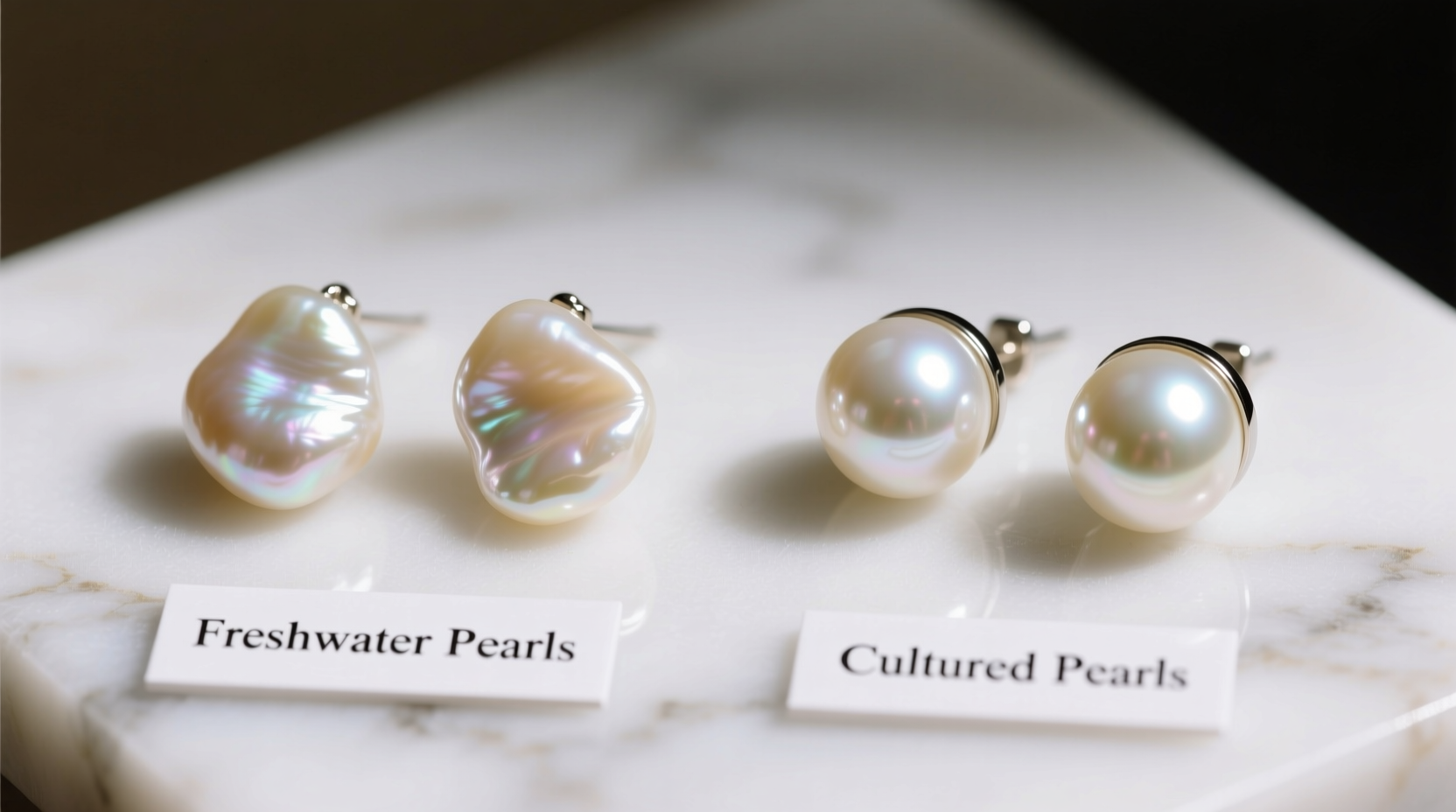
Freshwater pearls are technically a subset of cultured pearls—but when people contrast “freshwater” with “cultured,” they usually mean comparing freshwater to saltwater cultured pearls like Akoya.
Tip: Don’t dismiss freshwater pearls just because they’re less expensive—many offer excellent luster, color variety, and durability ideal for everyday wear.Do Cheaper Pearls Mean Lower Quality?
The short answer: not always. Price reflects several factors beyond pure quality—such as rarity, cultivation difficulty, and market demand. Freshwater pearls are generally cheaper because they’re easier and faster to farm. A single freshwater mussel can yield 20–40 pearls, while saltwater oysters typically produce only one or two.
This scalability reduces costs but doesn’t inherently degrade quality. In fact, modern freshwater pearl farming has improved dramatically. Today’s top-tier freshwater pearls rival Akoya in luster and surface cleanliness, though they may vary more in shape (often baroque or oval rather than perfectly round).
What determines real quality? Experts evaluate pearls using six key criteria:
- Luster: How sharply the pearl reflects light. High luster gives pearls their signature glow.
- Surface quality: Fewer blemishes (spots, bumps, cracks) indicate higher grade.
- Shape: Round pearls are rarer and more valuable, but symmetrical off-round shapes can be stunning.
- Color: Ranges from white and pink to peach, lavender, and silver. Personal preference plays a big role.
- Size: Larger pearls require longer growth periods and are pricier.
- Nacre thickness: Thicker nacre enhances durability and depth of shine.
A well-chosen pair of freshwater pearl earrings can score highly on all these metrics—even if they cost half as much as Akoya earrings.
Comparing Freshwater and Saltwater Cultured Pearls
| Feature | Freshwater Pearls | Saltwater (Akoya) Pearls |
|---|---|---|
| Origin | Lakes and rivers (mainly China) | Ocean (Japan, China) |
| Number per host | 20–40 | 1–2 |
| Average size | 5–12mm | 6–10mm |
| Typical shape | Round, oval, button, baroque | Mostly round |
| Luster | Good to excellent (modern varieties) | Very high, mirror-like |
| Price range (6–7mm studs) | $30–$150 | $100–$500+ |
| Durability | High (thick nacre in quality grades) | High (but thinner nacre possible) |
As the table shows, while Akoya pearls traditionally lead in uniformity and luster, modern freshwater varieties have closed the gap. Some luxury brands now use premium-grade freshwater pearls indistinguishable to the untrained eye.
Expert Insight: What Industry Professionals Say
“Many customers assume that freshwater pearls are ‘cheap’ simply because of price. But I’ve seen freshwater pairs with better luster and fewer blemishes than mid-range Akoyas. It’s about grading, not origin.” — Lena Park, Master Jeweler & Gemologist, New York City
Industry experts emphasize that labeling any pearl type as “noticeably worse” overlooks advancements in cultivation techniques. Chinese freshwater farms now use superior mother-of-pearl nuclei and extended growth cycles to produce near-round, high-luster gems. These improvements allow designers to offer elegant, affordable jewelry without sacrificing integrity.
How to Choose Quality Pearl Earrings on Any Budget
Whether you're buying your first pair or upgrading, follow this checklist to ensure you get the best value and appearance.
Checklist: Buying Smart Pearl Earrings
- ✅ Examine luster: Hold the earrings under light. You should clearly see reflections of nearby objects.
- ✅ Inspect surface: Look closely for pits, wrinkles, or dark spots. Minor flaws are normal; excessive ones reduce value.
- ✅ Check symmetry: For stud earrings, both pearls should match in size, shape, and color.
- ✅ Ask about nacre thickness: Reputable sellers disclose this. Aim for at least 0.5mm on freshwater pearls.
- ✅ Verify metal quality: Ensure posts and backs are made of sterling silver or gold—not base metals that cause irritation.
- ✅ Buy from trusted sources: Look for certifications or third-party grading reports when possible.
Real Example: Sarah’s Smart Purchase
Sarah wanted classic white pearl studs for her wedding but had a limited budget. She initially considered $120 Akoya earrings but noticed the luster was dull and the surface slightly chalky. Instead, she opted for a $68 pair of AAA-grade freshwater pearls from a reputable online jeweler. Under ceremony lighting, the pearls shimmered beautifully—and her photographer commented on how radiant they looked in photos. Six months later, they still show no signs of wear. Her choice proved that informed decisions matter more than brand labels.
FAQ: Common Questions About Freshwater and Cultured Pearls
Are freshwater pearls real pearls?
Yes. Freshwater pearls are genuine cultured pearls grown inside living mussels. They are not imitations or fakes.
Can freshwater pearls last as long as saltwater pearls?
Absolutely. With proper care—avoiding chemicals, storing separately, and wiping after wear—freshwater pearls can last decades. Their durability depends more on nacre quality than water source.
Why are some freshwater pearls perfectly round?
Advanced farming techniques now allow for round bead nucleation in freshwater mussels. While most are still non-bead nucleated (growing without a central sphere), high-end farms produce consistently round shapes through selective breeding and longer cultivation times.
Making the Right Choice Without Overpaying
The belief that cheaper pearls are “noticeably worse” stems from outdated assumptions. While there are low-quality, mass-produced freshwater pearls with poor luster and thin nacre, the same can be said for poorly graded saltwater pearls. The key is not the type—it’s the grade.
For everyday elegance, special occasions, or meaningful gifts, high-quality freshwater pearl earrings offer exceptional value. They provide the classic look of pearls at accessible prices, especially when purchased from knowledgeable vendors who prioritize transparency.
Rather than defaulting to expensive saltwater options out of habit, take time to compare actual specimens. View them in natural light, assess their finish, and consider how they complement your style. You may find that the most beautiful pair isn’t the most expensive one—but the one that shines brightest to you.
💬 Have a favorite pair of pearl earrings? Share your experience or tips in the comments—your insight could help others make confident, stylish choices!








