In the world of symbolic jewelry, few pieces carry as much cultural weight and emotional resonance as the four leaf clover and the religious necklace. Both are worn not just for their aesthetic appeal but for deeper meanings—luck, protection, faith, and identity. Yet when it comes to choosing between them, many wonder: which brings more fortune? Which complements modern style better? The answer isn’t universal—it depends on personal belief, intention, and how you define both luck and style.
This article explores the historical roots, spiritual significance, and stylistic versatility of each symbol, helping you make an informed decision based on authenticity rather than superstition alone.
The Symbolism Behind the Four Leaf Clover
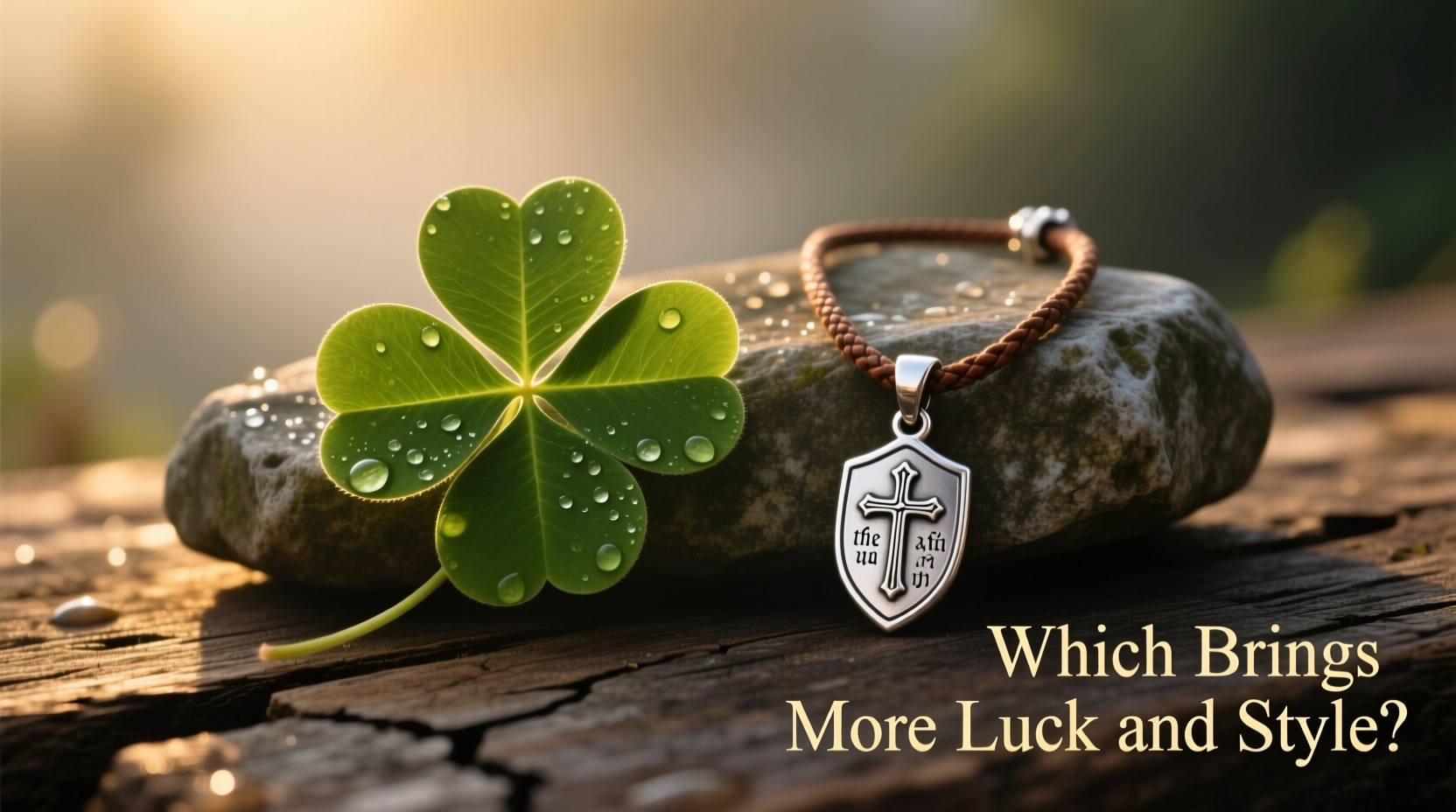
The four leaf clover is one in 10,000 among its three-leafed counterparts—a rare mutation that has long been associated with good fortune. Each leaf traditionally represents a different virtue: hope, faith, love, and luck. Its origins trace back to ancient Celtic traditions, where druids believed clovers could ward off evil spirits due to their sacred symmetry.
In modern times, the four leaf clover has evolved into a secular emblem of serendipity. It’s often used in branding, fashion, and pop culture as a shorthand for “good vibes.” Unlike religious symbols, it carries minimal doctrinal weight, making it accessible across cultures and belief systems.
Tip: When gifting a four leaf clover pendant, pair it with a note explaining what each leaf stands for—adds emotional depth without overstepping spiritual boundaries.Spiritual Depth of Religious Necklaces
Religious necklaces—such as the cross, Star of David, Om symbol, or Hamsa hand—are deeply rooted in centuries of faith and devotion. These aren't merely decorative; they serve as daily reminders of spiritual commitment, divine protection, and moral grounding.
A Christian wearing a cross isn’t just hoping for luck—they’re affirming a relationship with Christ. A Muslim with an Ayat al-Karim pendant recites verses from memory, drawing strength from scripture. For many, these symbols offer psychological comfort during hardship and reinforce identity in pluralistic societies.
“Faith-based symbols don’t attract luck—they anchor meaning. That internal clarity often leads to outward success.” — Dr. Lena Patel, Cultural Anthropologist at Columbia University
While some view religious pendants purely as fashion statements, doing so risks cultural appropriation or trivializing sacred traditions. Wearing one should ideally come with respect for its context—not just because it looks striking against a black turtleneck.
Style Showdown: Fashion Versatility Compared
When evaluating style, consider adaptability across outfits, occasions, and trends. Here’s how the two symbols stack up:
| Symptom | Four Leaf Clover | Religious Necklace |
|---|---|---|
| Fashion Flexibility | High – works with casual, boho, minimalist styles | Moderate – depends on design; subtle crosses work well, large crucifixes less so |
| Cultural Neutrality | High – no inherent religious connotation | Low – tied to specific faiths and practices |
| Gender Appeal | Balanced – popular among all genders | Varies – some designs lean traditional/masculine or feminine |
| Trend Longevity | Moderate – cyclical in popularity (booms in spring/summer) | High – enduring presence across decades |
| Layering Potential | Excellent – small size fits well in stacks | Good – especially fine chain crosses or medallions |
The four leaf clover excels in contemporary layering trends—think delicate gold chains with tiny charms. It blends seamlessly into curated collarbones, especially when paired with initials, moons, or zodiac signs. Religious necklaces, meanwhile, often stand alone as focal points. A simple silver cross can elevate a monochrome outfit with quiet elegance, while ornate rosaries may dominate the visual field.
Real-Life Example: Choosing With Intention
Consider Sarah, a 29-year-old graphic designer in Portland. Raised Catholic but now spiritually eclectic, she struggled with whether to wear her childhood cross necklace professionally. At networking events, clients sometimes made assumptions about her values. She switched to a minimalist four leaf clover pendant after a friend gifted it following a job promotion.
“It felt lighter,” she said. “Not just physically, but emotionally. I didn’t want people projecting dogma onto me. The clover let me keep something meaningful without explaining myself.”
Yet when her father fell ill, she returned to the cross—this time on a leather cord, less conspicuous but personally powerful. “Luck helped me land gigs,” she reflected. “But faith got me through the hard nights.”
Her journey illustrates a key truth: the most effective symbol is the one aligned with your current chapter.
How to Choose Based on Your Values
Selecting between these symbols shouldn’t be arbitrary. Use this checklist to guide your decision:
- Ask yourself why you want the piece: Is it for luck, identity, remembrance, or aesthetics?
- Evaluate your environment: Will workplace norms or social circles interpret it differently?
- Consider longevity: Will you still connect with this symbol in five years?
- Honor origin: If choosing a religious item outside your tradition, research its significance first.
- Test the fit: Try both styles with your regular wardrobe before deciding.
Can You Have Both Luck and Faith?
Many do. In fact, blending symbols is increasingly common. A person might wear a St. Christopher medal (patron saint of travelers) alongside a jade clover for dual protection—one spiritual, one cultural. Others mix heirloom religious pendants with trendy lucky charms, creating a narrative collage around their neck.
The key lies in intentionality. Random stacking of symbols without understanding can dilute their power. But thoughtful curation—where each piece tells part of your story—creates a wearable philosophy.
FAQ
Does science support the idea that wearing lucky symbols improves outcomes?
Indirectly, yes. Studies in psychology show that believing in a \"lucky charm\" can boost confidence and performance under pressure. The effect is self-fulfilling: increased optimism leads to bolder decisions and persistence. So while the clover won’t magically change fate, it may influence behavior in ways that create better opportunities.
Is it disrespectful to wear a religious necklace without practicing the faith?
It depends on context. Wearing a small cross as pure fashion is widely accepted in many Western cultures. However, sacred items like the Hamsa, Mezuzah, or Guru Granth Sahib inscriptions hold deep reverence in their communities. When in doubt, opt for educational engagement over aesthetic borrowing. Better yet, choose symbols that reflect your own heritage or values.
Which material enhances the energy of these symbols?
Metaphysically inclined individuals often prefer natural materials: sterling silver for clarity, gold for abundance, or rosewood for grounding. From a practical standpoint, hypoallergenic metals ensure comfort and durability. Regardless of belief, craftsmanship affects perception—well-made pieces feel more meaningful.
Final Thoughts: Luck, Style, and Authenticity
The debate between four leaf clover and religious necklace isn’t about superiority—it’s about alignment. Luck, in its purest form, isn’t random. It’s the intersection of preparation, mindset, and openness to opportunity. Symbols act as anchors, reminding us of what we value and aspire to become.
If you seek inclusive charm and lighthearted positivity, the four leaf clover offers timeless appeal. If you draw strength from spiritual lineage and divine connection, a religious necklace provides profound resonance. And if your life contains both whimsy and worship, there’s no rule against wearing both.
Style isn’t just about appearance. It’s the visible expression of inner coherence. Whether you choose green enamel leaves or polished silver crosses, let your choice reflect not what you hope to attract—but who you already are.
🚀 Ready to redefine your personal symbolism? Revisit your jewelry box today. Remove what no longer serves you—and make space for pieces that truly resonate.