Choosing a piece of jewelry to express love is more than a gesture—it’s a language of its own. Among the most popular symbols are flowers and hearts, both deeply rooted in romance and affection. But when it comes to wearing your feelings close to the chest, which symbol communicates \"I love you\" more powerfully: a flower necklace or a heart necklace? The answer depends on context, personality, and the kind of emotional resonance you want to create.
This guide explores the deeper meanings behind each design, compares their emotional impact, and helps you decide which option best conveys your message—whether you're celebrating an anniversary, proposing, or simply reaffirming your devotion.
The Symbolism Behind the Heart Necklace
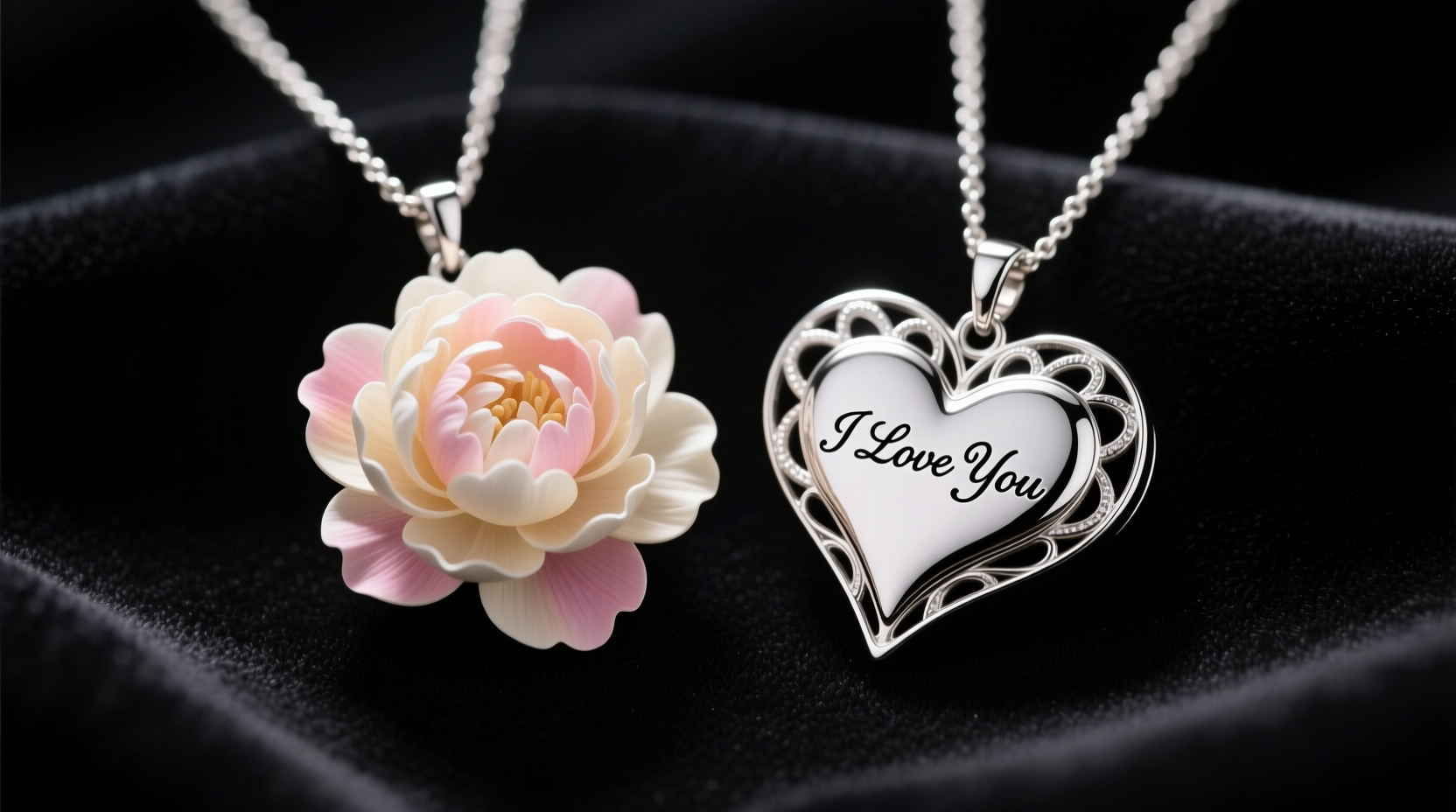
The heart shape is universally recognized as the emblem of love. Its origins trace back to ancient depictions of ivy leaves and silphium plants, but by the Middle Ages, it had evolved into the red, symmetrical icon we know today. Wearing a heart necklace is a direct declaration—a visual shorthand for affection, passion, and emotional commitment.
Modern heart necklaces come in many forms: solid pendants, lockets, intertwined double hearts, or even ones with hidden messages inside. They’re often chosen for Valentine’s Day, engagements, or milestone anniversaries because of their unambiguous meaning.
“Love doesn’t need translation, but symbols help us speak it. The heart is the world’s most understood word for devotion.” — Dr. Lila Monroe, Cultural Anthropologist
Because of its clarity, the heart necklace carries little ambiguity. It says, “My love for you is certain.” For partners who value tradition and directness, this can be the ultimate romantic token.
Tip: Personalize a heart pendant with initials or a date engraved on the back to deepen its emotional significance.The Meaning of Flower Necklaces in Love Expression
Flowers have long been messengers of emotion. In the Victorian era, entire conversations were conducted through floral arrangements using the “language of flowers.” A rose meant passion, a lily purity, and a forget-me-not enduring remembrance. This tradition lives on in modern jewelry.
A flower necklace captures the delicacy, beauty, and transience of love. Unlike the bold certainty of a heart, a flower speaks subtly—of growth, care, and the unfolding of emotion over time. It suggests that love is not just a feeling but a living thing that needs nurturing.
Popular choices include:
- Roses – timeless romance and deep affection
- Tulips – perfect love and renewal
- Cherry blossoms – fleeting beauty and appreciation of the moment
- Daisies – innocence and loyal affection
For someone poetic, artistic, or drawn to nature, a flower necklace may feel more personal and intimate than a heart. It reflects a love that blooms gradually and uniquely.
Heart vs. Flower: A Comparative Analysis
To determine which symbol better expresses \"I love you,\" consider tone, relationship stage, and recipient preferences. The table below breaks down key differences:
| Aspect | Heart Necklace | Flower Necklace |
|---|---|---|
| Emotional Clarity | Direct, unmistakable declaration of love | Subtle, layered meaning depending on flower type |
| Versatility | Widely accepted across cultures and ages | Can be niche; meaning varies by flower |
| Style & Aesthetic | Bold, classic, often minimalist | Elegant, organic, often detailed |
| Best For | Proposals, anniversaries, first gifts | Thoughtful gestures, birthdays, long-term relationships |
| Symbolic Depth | Focused on emotion and unity | Represents growth, care, and natural beauty |
While the heart wins in immediacy, the flower offers nuance. One says “I love you” outright. The other whispers, “Look how beautifully we’ve grown together.”
Real-Life Example: Choosing the Right Symbol
Sophie wanted to surprise her partner, Jordan, on their five-year anniversary. She considered a heart pendant but worried it might feel too generic. Instead, she chose a delicate gold daisy necklace—Jordan’s favorite flower since childhood, tied to memories of summer picnics and shared laughter.
When Sophie gifted it, she explained: “You make ordinary moments bloom.” Jordan was moved—not just by the gift, but by the thought behind it. The flower wasn’t just a symbol; it was a story.
In contrast, when Mark proposed to Elena, he used a solitaire diamond heart pendant before getting down on one knee. The heart’s clarity matched the moment’s gravity. Elena later said, “I knew exactly what it meant the second I saw it.”
Both choices were right—because they aligned with the relationship’s character and the moment’s intent.
How to Choose Based on Your Relationship Stage
Your choice should reflect where you are emotionally. Here’s a step-by-step guide to help you decide:
- Assess the relationship phase: Is this a new romance, a deepening bond, or a long-term commitment?
- Consider their personality: Do they prefer bold statements or quiet, meaningful gestures?
- Think about the occasion: Is it a grand declaration (heart) or a reflective celebration (flower)?
- Match the symbol to your shared story: Did a particular flower mark your first date? Does a heart motif appear in your texts?
- Add a personal touch: Engrave a date, coordinate metal color with their wardrobe, or pair the necklace with a handwritten note.
Checklist: Picking the Perfect Romantic Necklace
- ✅ Identify the emotional message you want to send
- ✅ Research the symbolic meaning of specific flowers (if choosing floral)
- ✅ Match the design to their everyday style (minimalist, vintage, bohemian)
- ✅ Decide whether clarity (heart) or subtlety (flower) fits the moment better
- ✅ Consider adding engraving or birthstones for personalization
- ✅ Ensure quality materials (e.g., sterling silver, gold, hypoallergenic)
- ✅ Pair with a heartfelt note explaining your choice
Frequently Asked Questions
Can a flower necklace be as romantic as a heart?
Absolutely. While less direct, a flower necklace often feels more thoughtful and personalized. When chosen with intention—especially if it references a shared memory or favorite bloom—it can carry deeper emotional weight than a generic heart.
Is a heart necklace too cliché?
It can be, if given without context. However, when paired with a meaningful moment—like a proposal or a vow renewal—it transcends cliché. The key is sincerity. A heart given at the right time, with the right words, remains one of the most powerful symbols of love.
What if I combine both symbols?
Many designers offer hybrid pieces—like a heart-shaped pendant with floral engravings or a bouquet held within a heart outline. These blends offer both clarity and depth, making them excellent choices for complex emotions or milestone gifts.
Final Thoughts: Let Love Guide the Choice
There’s no definitive winner between a flower and a heart necklace. One isn’t inherently “better” at saying “I love you.” What matters is authenticity. A heart speaks clearly to the head and heart alike. A flower speaks to the soul, evoking beauty, memory, and growth.
The best choice reflects your unique connection. Ask yourself: does your love shout with joyful certainty, or does it unfold like petals in spring? Is it a flame, or a garden?
Whether you choose the universal symbol of the heart or the poetic grace of a flower, what makes the gesture unforgettable is the intention behind it. Jewelry may sparkle, but it’s the thought, the memory, and the emotion that truly shine.
💬 Which symbol resonates more with your love story? Share your thoughts or gifting experiences in the comments—we’d love to hear how you say “I love you” in your own way.