At first glance, the terms “fashion necklace” and “costume jewelry” might seem interchangeable. Both describe non-precious adornments designed to complement an outfit rather than serve as heirlooms. But for those who pay attention to detail—designers, stylists, collectors, and discerning wearers—there are meaningful distinctions that go beyond semantics. These differences affect everything from craftsmanship and materials to styling potential and longevity. Understanding them can elevate your accessory choices and help you build a more intentional wardrobe.
The Language of Accessories: Defining the Terms
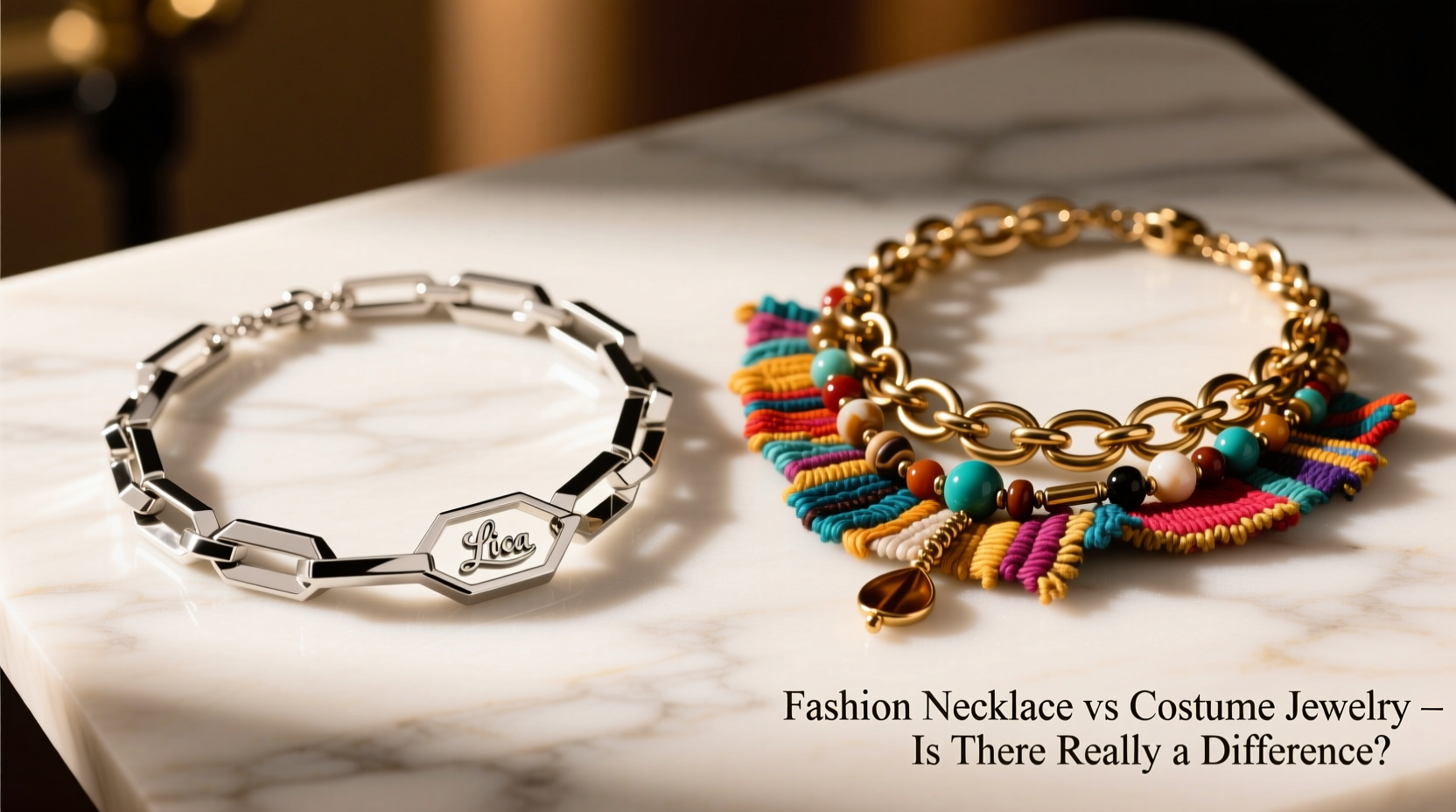
The confusion between fashion necklaces and costume jewelry stems largely from overlapping usage in retail and casual conversation. However, within the fashion industry, each term carries specific connotations.
Costume jewelry is a broad category that encompasses any decorative accessory made from non-precious materials—such as base metals, acrylic, glass, or synthetic stones. Historically, it emerged in the early 20th century as a way for designers to create statement pieces without the cost of fine materials. Think of vintage brooches, rhinestone chokers, or chunky bangles worn with evening gowns. The emphasis is on visual impact, often mimicking fine jewelry.
Fashion necklaces, on the other hand, are a subset of costume jewelry but with a stronger link to current trends and seasonal styles. They’re typically designed in sync with runway collections or fast-fashion cycles. A fashion necklace isn’t just decorative—it’s contextual. It’s meant to be worn with a particular look, era, or aesthetic moment, such as layered delicate chains with a boho dress or an oversized pendant with a minimalist turtleneck.
“Costume jewelry speaks to tradition and theatricality; fashion necklaces respond to culture and immediacy.” — Lila Monroe, Fashion Historian & Curator
Material Quality and Craftsmanship: What Sets Them Apart?
One of the most tangible differences lies in material selection and construction quality. While both types avoid gold, platinum, and genuine gemstones, their approach to alternatives varies.
Costume jewelry often uses higher-grade simulants and more durable plating. Vintage pieces from designers like Trifari or Miriam Haskell used lucite, sterling silver bases, and meticulous hand-setting techniques. Even modern high-end costume lines (such as those by Chanel or Dolce & Gabbana) incorporate weighted metals, enamel detailing, and tarnish-resistant finishes.
Fashion necklaces, especially those tied to fast fashion, may prioritize affordability and speed over durability. Materials like aluminum, plastic chain links, or thin electroplating are common. These pieces shine in the short term but may fade, break, or discolor after limited use.
Tip: Check the clasp and weight of a necklace—solid metal components and noticeable heft often indicate better construction, even in non-precious pieces.Comparison: Costume Jewelry vs. Fashion Necklace
| Feature | Costume Jewelry | Fashion Necklace |
|---|---|---|
| Primary Focus | Dramatic effect, timeless design | Trend alignment, seasonal relevance |
| Materials | Higher-quality alloys, glass stones, enamel | Lightweight metals, plastic, thin plating |
| Lifespan | Years with proper care | Months to one season |
| Price Range | $50–$500+ (designer/vintage) | $10–$75 |
| Styling Role | Statement piece, centerpiece | Complementary accent |
Real-World Example: Two Women, Two Necklaces
Consider two women preparing for the same summer wedding.
Sophie chooses a vintage-style costume necklace—a gold-tone floral bib piece with faux pearls and marcasite stones. She bought it from a curated vintage boutique three years ago. Though not worn frequently, it still gleams, thanks to its sturdy brass core and protective lacquer finish. Paired with a simple silk dress, it becomes the focal point of her ensemble.
Jamila opts for a trendy Y-shaped fashion necklace with a geometric pendant, purchased last month from a popular online retailer. It complements her off-the-shoulder jumpsuit perfectly and matches the season’s aesthetic. However, after a few wears and exposure to perfume and sweat, the plating has begun to chip near the clasp.
Both look stylish, but only Sophie’s piece holds up over time. The difference isn’t just in appearance—it’s in intention and execution.
How to Choose Wisely: A Practical Checklist
Whether you're shopping for a special occasion or refreshing your everyday rotation, use this checklist to make informed decisions:
- ✅ Determine the purpose: Is this a long-term staple or a trend-driven accent?
- ✅ Examine the materials: Look for terms like “brass base,” “rhodium-plated,” or “lead-free alloy.”
- ✅ Test the clasp: Does it feel secure? Flimsy clasps are a red flag.
- ✅ Assess weight: Heavier pieces often indicate better metal density and durability.
- ✅ Consider versatility: Can it pair with multiple outfits, or is it too niche?
- ✅ Read reviews: Look for comments about tarnishing, breakage, or fading.
Caring for Your Pieces: Extending Lifespan Regardless of Label
No matter what you call it, proper care significantly impacts how long a necklace lasts and how good it looks. Follow these steps to protect your investment:
- Remove before activities: Take off necklaces before swimming, exercising, or applying lotions and perfumes.
- Store separately: Keep pieces in soft pouches or divided compartments to prevent scratching.
- Clean gently: Use a microfiber cloth to wipe after wearing. For deeper cleaning, mix mild soap with water and dry thoroughly.
- Avoid moisture: Never leave necklaces in humid bathrooms or damp drawers.
- Rotate usage: Give pieces rest between wears to reduce stress on chains and clasps.
“Even the most affordable fashion necklace can look expensive when cared for properly. Neglect, however, makes luxury costume pieces look cheap.” — Rafael Torres, Jewelry Conservator
Frequently Asked Questions
Can a fashion necklace become costume jewelry over time?
Yes. If a fashion necklace was made with high-quality materials and reflects a notable design era, it may later be classified as costume jewelry—especially if it gains collectible status. For example, 1980s designer-signed pieces once considered trendy are now sought-after vintage costume items.
Are all fashion necklaces low quality?
No. Some contemporary designers produce fashion-forward necklaces using excellent craftsmanship and ethical materials. The key is to research the brand and inspect the product details. Labels like “PVD-coated” or “recycled brass” signal better quality, even in trend-based designs.
Is it worth repairing a damaged fashion necklace?
It depends. If the piece has sentimental or stylistic value and the repair cost is under 30% of replacement price, it may be worth fixing. Simple fixes like restringing beads or replacing a clasp are often economical. However, for mass-produced, ultra-cheap items, replacement is usually more practical.
Conclusion: Notice the Difference, Own the Choice
The distinction between a fashion necklace and costume jewelry may escape casual observers, but it matters to those who value intentionality in personal style. One isn't inherently better than the other—they serve different roles. Costume jewelry offers enduring artistry and presence; fashion necklaces deliver timely flair and expressive variety.
The real power lies in knowing what you're choosing and why. Whether you're investing in a vintage-inspired brooch or grabbing a trendy layered chain, awareness transforms your accessories from mere add-ons into meaningful extensions of self-expression.
💬 What’s your go-to necklace style? Share your favorite piece and what makes it special—timeless charm or trend-led confidence. Join the conversation and inspire others to wear with purpose!








