
City travel demands a balance of convenience, safety, and style. Whether navigating subway platforms, strolling through markets, or hopping between cafes, your choice of carryall can make or break the experience. Two popular options—fanny packs and crossbody bags—dominate urban wardrobes for good reason. Both offer hands-free mobility and compact storage, but they serve different needs in different environments. Understanding their strengths and limitations helps travelers make informed decisions based on lifestyle, destination, and personal priorities.
Design and Ergonomics: How They Fit Your Body
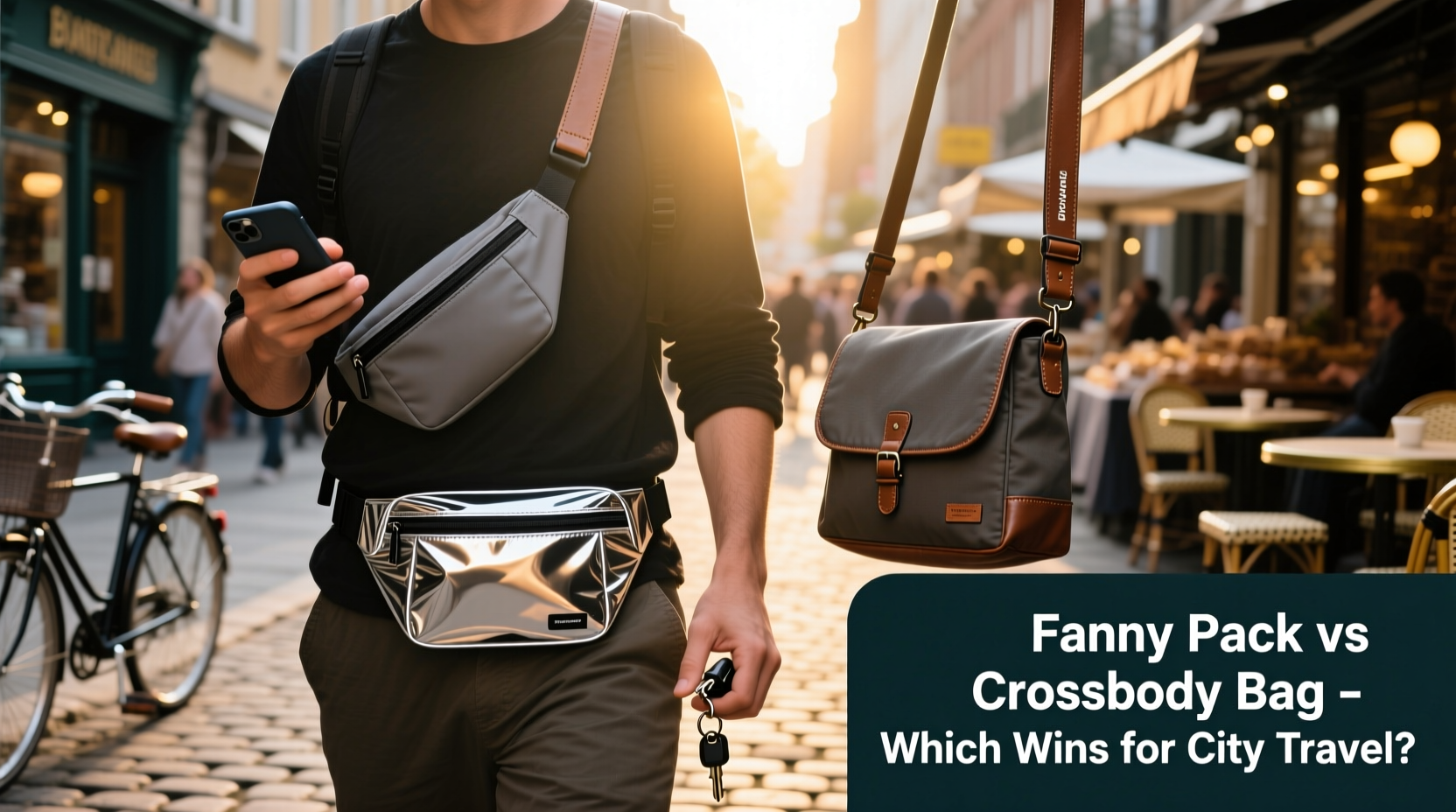
The way a bag sits on your body directly affects comfort, accessibility, and fatigue over long days. Fanny packs, also known as waist packs, wrap around the hips or waist, distributing weight evenly across the lower torso. This positioning minimizes strain on shoulders and back, making them ideal for extended walking or active exploration. Modern versions are adjustable, with straps that fit snugly without bouncing during movement.
Crossbody bags, by contrast, rest diagonally across the chest, anchored over one shoulder and secured at the opposite hip. Their center of gravity lies higher on the torso, which can lead to shoulder fatigue if the bag is heavy or worn for hours. However, this design keeps the bag in front of the body when worn across the chest, offering quick access and visual monitoring of contents.
Ergonomic advantages vary by body type and activity level. Petite travelers may find fanny packs sit more securely than larger crossbodies that slide off narrow shoulders. Meanwhile, taller individuals might appreciate the proportional balance of a well-sized crossbody. For those with chronic back or shoulder issues, fanny packs often provide superior support due to their low-slung, balanced load distribution.
Tip: Adjust your fanny pack slightly above the hips—not too tight—to avoid chafing while maintaining stability.Security and Theft Prevention in Crowded Areas
In cities with dense crowds and high foot traffic, theft risk increases significantly. Pickpocketing is common in tourist hotspots, public transport, and busy shopping districts. Here, how you carry your belongings matters as much as what you carry.
Fanny packs worn in front—across the stomach rather than behind the back—are among the most secure urban carry options. With zippers facing inward and contents visible, tampering is easily noticed. Front-worn fanny packs eliminate blind spots, reducing vulnerability compared to traditional backpacks or rear-placed purses.
Crossbody bags offer moderate protection, especially when worn across the chest with the bag positioned in front. High-quality models feature slash-resistant straps and lockable zippers, enhancing anti-theft performance. However, because they drape along the side when worn traditionally (over one shoulder), they’re susceptible to opportunistic grabs from behind or beside.
“Front-facing fanny packs are one of the smartest choices for solo travelers in crowded European cities.” — Luca Mendez, Urban Travel Safety Consultant
A 2022 study by the International Travel Security Institute found that travelers using front-worn waist packs reported 37% fewer incidents of attempted theft compared to those using shoulder or crossbody styles in high-density areas.
Capacity and Organization: What You Can Carry
Practicality hinges on what you need to bring. City outings typically require essentials: phone, wallet, keys, transit pass, sunglasses, hand sanitizer, and perhaps a small umbrella or power bank. The right bag organizes these efficiently without bulk.
Fanny packs have evolved beyond basic vinyl models. Premium versions now include multiple compartments, RFID-blocking pockets, and stretch mesh sides for water bottles. Despite advancements, capacity remains limited—usually 2–5 liters. This suits minimalist packing but restricts those needing extra layers, snacks, or work gear.
Crossbody bags generally offer greater volume, ranging from 5 to 12 liters depending on size. Many feature structured interiors with dedicated slots for phones, cards, and pens. Some include detachable straps, allowing use as clutches or wristlets at restaurants or events. Their deeper construction accommodates folded jackets, notebooks, or small tablets—useful for business travelers or digital nomads.
| Feature | Fanny Pack | Crossbody Bag |
|---|---|---|
| Average Capacity | 2–5 liters | 5–12 liters |
| Main Compartment Access | Front zipper (often hidden) | Top or front zipper |
| Quick-Access Pockets | Limited; some have side mesh | Common: exterior slip pockets |
| Best For | Minimalists, active travelers | Daily commuters, hybrid work trips |
| Weather Resistance | Often water-resistant materials | Varies; leather less so than nylon |
Style and Social Perception Across Cultures
Perception influences confidence. A bag that feels out of place can undermine comfort, even if functionally sound. Fashion trends have reshaped both fanny packs and crossbody bags in recent years.
Fanny packs were once dismissed as outdated or touristy but have undergone a renaissance thanks to luxury brands like Prada, Gucci, and Balenciaga releasing high-end versions. Today, wearing a sleek black neoprene or leather fanny pack signals fashion-forward awareness in cities like Tokyo, Berlin, and New York. In contrast, in conservative or formal settings—such as business districts in Seoul or Milan—they may still be viewed as too casual unless styled carefully.
Crossbody bags maintain broader social acceptance. Their resemblance to classic handbags allows seamless integration into professional, social, and evening contexts. Neutral-toned leather crossbodies transition effortlessly from meetings to dinners. However, oversized or logo-heavy designs can attract unwanted attention in discreet neighborhoods.
Cultural norms matter. In Paris, minimalism reigns—small crossbodies or thin fanny packs are preferred. In Bangkok, where humidity and motorbike taxis dominate, durable, sweat-resistant fanny packs are standard. Knowing local expectations helps avoid standing out for the wrong reasons.
Tip: Match your bag color to your outfit’s darkest tone to appear more integrated and less like a tourist.Real-World Test: A Day Exploring Barcelona
Sophie, a freelance photographer visiting Barcelona for five days, tested both styles during her trip. Her itinerary included early morning walks to Park Güell, museum visits, tapas tours, and late-night metro rides.
On day one, she used a medium-sized crossbody bag made of vegan leather. It held her camera lens, passport, phone, and a compact rain jacket. While stylish, the single strap dug into her shoulder after three hours. During a crowded ride on Line 3, she felt someone brush against her side—her bag had swung behind her hip unnoticed.
Day two, she switched to a waterproof fanny pack worn across her chest like a bandolier. Though initially self-conscious, she quickly appreciated its stability. She accessed her metro card without removing it, kept her hands free for photos, and never lost sight of her belongings. By evening, she reported less physical strain and greater peace of mind.
Her takeaway: “The fanny pack wasn’t my first choice for looks, but it earned my trust. I’ll pack both next time—one for galleries, one for streets.”
Step-by-Step: Choosing the Right Bag for Your Trip
Selecting between a fanny pack and a crossbody bag doesn’t need to be arbitrary. Follow this decision framework:
- Assess your primary activities. Will you walk extensively, use public transit, attend meetings, or go out at night? Prioritize function accordingly.
- List essential items. If carrying only phone, ID, and cash, a fanny pack suffices. Add a tablet or change of clothes? Lean toward a crossbody.
- Check crime advisories. In high-theft areas, prioritize visibility and anti-theft features. Opt for front-worn fanny packs or crossbodies with locking zippers.
- Consider weather. Rainy destinations favor water-resistant materials. Fanny packs often perform better here due to synthetic builds.
- Test before departure. Wear each option around your neighborhood for several hours. Note discomfort, bounce, or access issues.
- Pack a backup solution. Bring a foldable tote in case you need extra space mid-trip.
When to Use Each: Practical Decision Checklist
- ✅ Choose a fanny pack if:
- You plan to walk more than 5 miles per day
- You're visiting crowded festivals or markets
- You value speed and minimalism
- You're traveling light (no laptop or bulky items)
- You're concerned about shoulder or back pain
- ✅ Choose a crossbody bag if:
- You need to carry a small camera, book, or tablet
- You’re attending semi-formal events or business meetings
- You prefer classic, timeless aesthetics
- You want versatility (can be carried as clutch or shoulder bag)
- You’re combining urban sightseeing with suburban excursions
Frequently Asked Questions
Can I bring a fanny pack onto flights as a personal item?
Yes, most airlines allow fanny packs as part of your personal item allowance, especially when worn during boarding. Since they’re compact and don’t require overhead bin space, they’re ideal for keeping essentials close during flights.
Are fanny packs suitable for older travelers?
Many seniors find fanny packs easier to manage than crossbody or shoulder bags, particularly those with arthritis or balance concerns. Front-worn models reduce bending and reaching, improving independence and confidence during travel.
Do crossbody bags damage clothing over time?
Prolonged wear can cause fabric pilling or dye transfer, especially with synthetic linings. To prevent this, choose crossbodies with soft interior finishes and rotate usage between multiple bags.
Final Recommendation: It’s Not Either/Or—It’s Both/And
The question isn’t whether fanny packs or crossbody bags are better overall—it’s which serves you best in specific situations. Urban travel involves shifting contexts: a morning market visit calls for maximum security and mobility, while an afternoon gallery tour may demand polished presentation and slightly more capacity.
The most effective travelers don’t commit to one style exclusively. They pack a lightweight fanny pack for street days and a slim crossbody for evenings or professional engagements. Some even layer them—wearing a fanny pack under a coat for security while carrying a crossbody for appearance.
Material quality, closure mechanisms, and fit matter more than category. Invest in one of each type from reputable brands with reinforced stitching, YKK zippers, and ergonomic design. Treat them as tools—each suited to a role in your urban toolkit.
💬 What’s your go-to bag for city adventures? Share your favorite model and why it works for you—your insight could help another traveler make the perfect choice.








