C-shaped hoop earrings have surged in popularity for their modern elegance and minimalist flair. Unlike traditional hoops with a post or latch back, C-shaped hoops rely on tension and precise curvature to stay in place. While stylish, many wearers struggle with slippage, discomfort, or the fear of losing them during daily activities. The good news: with the right techniques and small adjustments, you can enjoy these sleek accessories comfortably from morning to night.
The key lies in understanding how C-shaped hoops interact with your ear anatomy, choosing the right fit, and using subtle tricks to enhance security without compromising style. Whether you're wearing delicate gold arcs or bold statement hoops, this guide delivers expert-backed strategies to keep them securely in place—no clips, tapes, or modifications required.
Understand the Design and How It Works
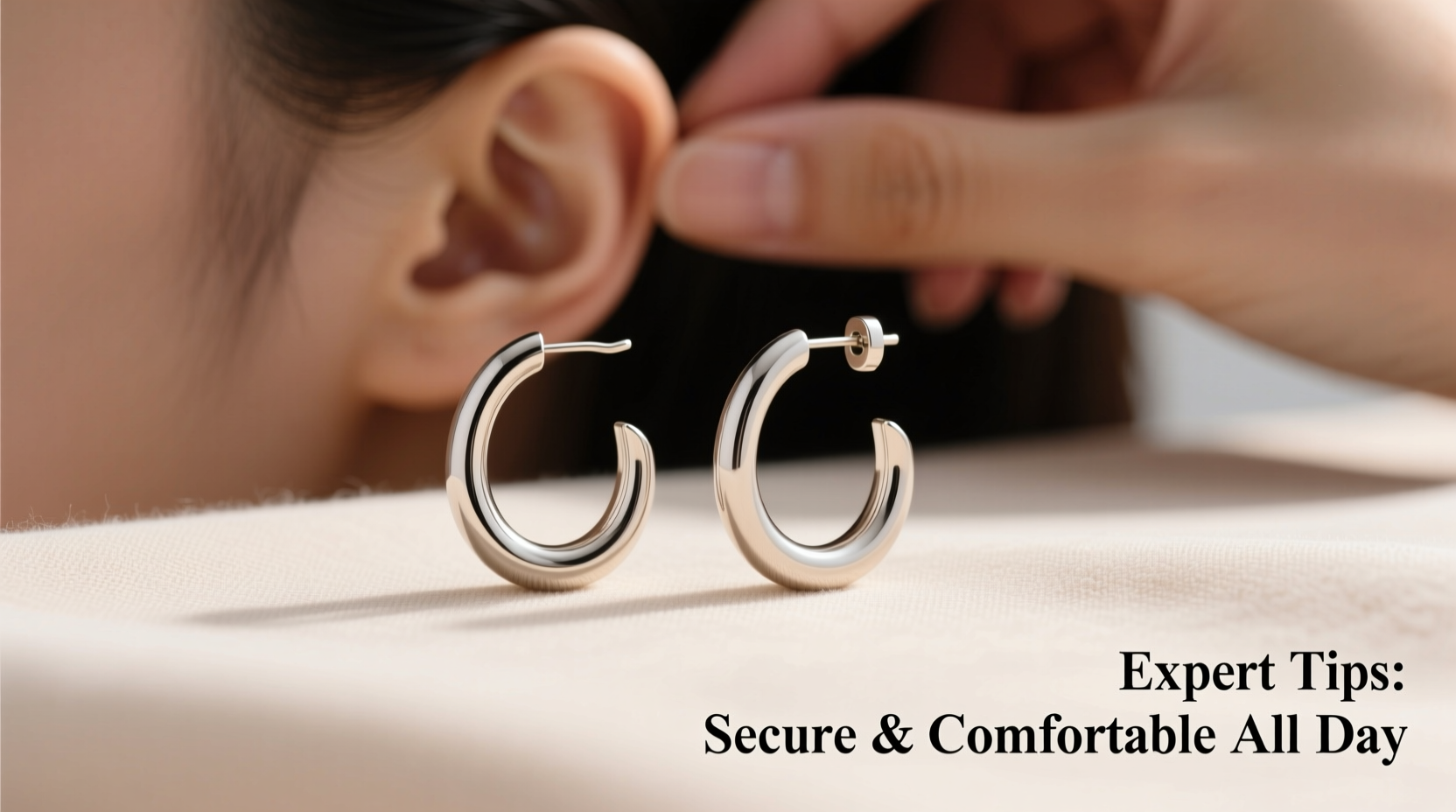
C-shaped hoops are open-ended earrings that gently curve around the earlobe. They stay in place due to the tension created by the metal’s shape and elasticity. When inserted correctly, the front of the earring sits flush against the outer edge of the earlobe, while the back curves behind it, creating a snug but pressure-free hold.
Because they lack clasps or screws, their security depends entirely on proper sizing, material strength, and correct insertion technique. If the diameter is too large or the metal too soft, the earring may slide out. Conversely, if it's too tight, it can pinch or cause soreness over time.
“C-hoops are designed to mimic the natural contour of the earlobe. When fitted well, they feel almost weightless and stay put through movement.” — Lila Nguyen, Jewelry Designer & Earwear SpecialistTip: Always insert C-shaped hoops with the open end facing upward. This allows the curve to lock naturally behind the lobe.
Choose the Right Size and Material
Not all C-shaped hoops are created equal. The size and material significantly impact comfort and retention. Here’s what to consider:
- Diameter: Smaller hoops (10–15mm) typically hug the ear more closely and are less likely to catch on clothing or hair.
- Gauge (Thickness): A thicker wire (1.5mm or more) provides better tension and durability than ultra-thin designs.
- Material: Sterling silver and 14k gold are ideal—they offer the right balance of flexibility and rigidity. Avoid overly soft metals like fine silver or aluminum for daily wear.
| Feature | Best Choice | Avoid |
|---|---|---|
| Diameter | 10–18mm for everyday wear | Over 25mm (increased snag risk) |
| Wire Thickness | 1.5–2.0mm | Below 1.2mm (too flexible) |
| Material | Sterling silver, 14k gold | Plated brass, aluminum |
| Finish | Pulled wire (smooth), polished interior | Rough seams, sharp edges |
When shopping, prioritize craftsmanship. Look for seamless bends and smooth interior surfaces to prevent irritation. High-quality C-hoops should flex slightly when pressed but return to their original shape without deformation.
Master the Insertion Technique
Even the best-designed C-hoop will fail if inserted incorrectly. Follow this step-by-step method for maximum security:
- Wash and dry your hands thoroughly to avoid transferring oils or bacteria.
- Hold the earring by the bottom curve—never bend the ends apart excessively.
- Align the front of the hoop with the center of your earlobe piercing.
- Gently press the front inward while guiding the back curve behind the lobe.
- Release slowly—the tension should snap the earring into place with a soft click.
- Test stability by lightly tugging downward. It should resist movement.
If the earring feels loose or wobbles, remove it and try again. Forcing it can stretch the piercing or damage the metal. Some find it helpful to use a mirror at eye level or apply slight pressure behind the lobe with a fingertip to guide the back into position.
Tip: Insert C-hoops after styling your hair to avoid catching strands during application.Mini Case Study: Sarah’s Commute Fix
Sarah, a graphic designer, loved her rose gold C-hoops but constantly worried about losing them during her bike commute. After two close calls—one where a gust of wind nearly dislodged an earring—she consulted a local jeweler. He adjusted the tension by gently compressing the curve by 2mm. The modified pair stayed secure even on bumpy rides, and Sarah now wears them five days a week without concern. The fix took under a minute and cost nothing.
Enhance Security Without Compromising Comfort
You don’t need adhesives or aftermarket clips to keep C-hoops in place. Instead, use these non-damaging methods:
- Tension Adjustment: If your hoops feel loose, carefully squeeze the ends closer together using nylon-jaw pliers. Do this gradually to avoid over-tightening.
- Earlobe Conditioning: Thicker or denser earlobes hold C-hoops better. Over time, regular wear can help the lobe adapt to the pressure.
- Layering Trick: Wear a thin silicone earring back behind the lobe (not attached to the earring). It adds friction without visibility.
- Hair Management: Keep long hair tied back during high-movement activities to reduce snagging.
“Most people don’t realize that minor tension tweaks can make a huge difference. We adjust hundreds of C-hoops annually—most just need a quarter-turn of compression.” — Rafael Torres, Master Goldsmith at Urban Gem Studio
Checklist: Daily Wear Readiness
- ✅ Inspect earrings for bends or weakened tension
- ✅ Clean with a jewelry polishing cloth before wearing
- ✅ Confirm correct insertion direction (open end up)
- ✅ Test stability with a gentle pull
- ✅ Avoid pairing with hooded jackets or scarves that tug
Frequently Asked Questions
Can I sleep in my C-shaped hoop earrings?
It’s not recommended. Sleeping increases pressure and friction, which can deform the metal or irritate the piercing. Remove them before bed to prolong both comfort and lifespan.
Why do my C-hoops hurt after a few hours?
Pain usually indicates improper fit. Either the hoop is too tight, causing constant pressure, or too loose, leading to micro-movements that irritate the piercing. Adjust the tension or consider a different size.
Are C-shaped hoops safe for sensitive ears?
Yes, provided they’re made from hypoallergenic materials like surgical steel, titanium, or nickel-free gold. Avoid plated metals that may wear off and expose allergens.
Final Thoughts
C-shaped hoop earrings blend sophistication with simplicity, but their staying power depends on smart choices and small habits. From selecting the right gauge and material to mastering insertion and making subtle tension adjustments, every detail contributes to all-day comfort and confidence.
Don’t let insecurity dim your shine. With these expert-backed practices, your favorite hoops can stay as reliable as they are beautiful—through meetings, workouts, and everything in between.
💬 Have a trick that keeps your C-hoops secure? Share your tip in the comments and help others wear theirs with peace of mind!