Sterling silver remains one of the most beloved materials in fine jewelry for its lustrous shine and timeless appeal. However, with the rise of counterfeit pieces and misleading labeling, distinguishing real 925 sterling silver from plated or fake alternatives has become essential. Fortunately, you don’t need a lab or expensive tools to verify authenticity. With a few practical techniques and a bit of knowledge, you can confidently assess your silver items at home.
Understanding What “925 Sterling Silver” Really Means
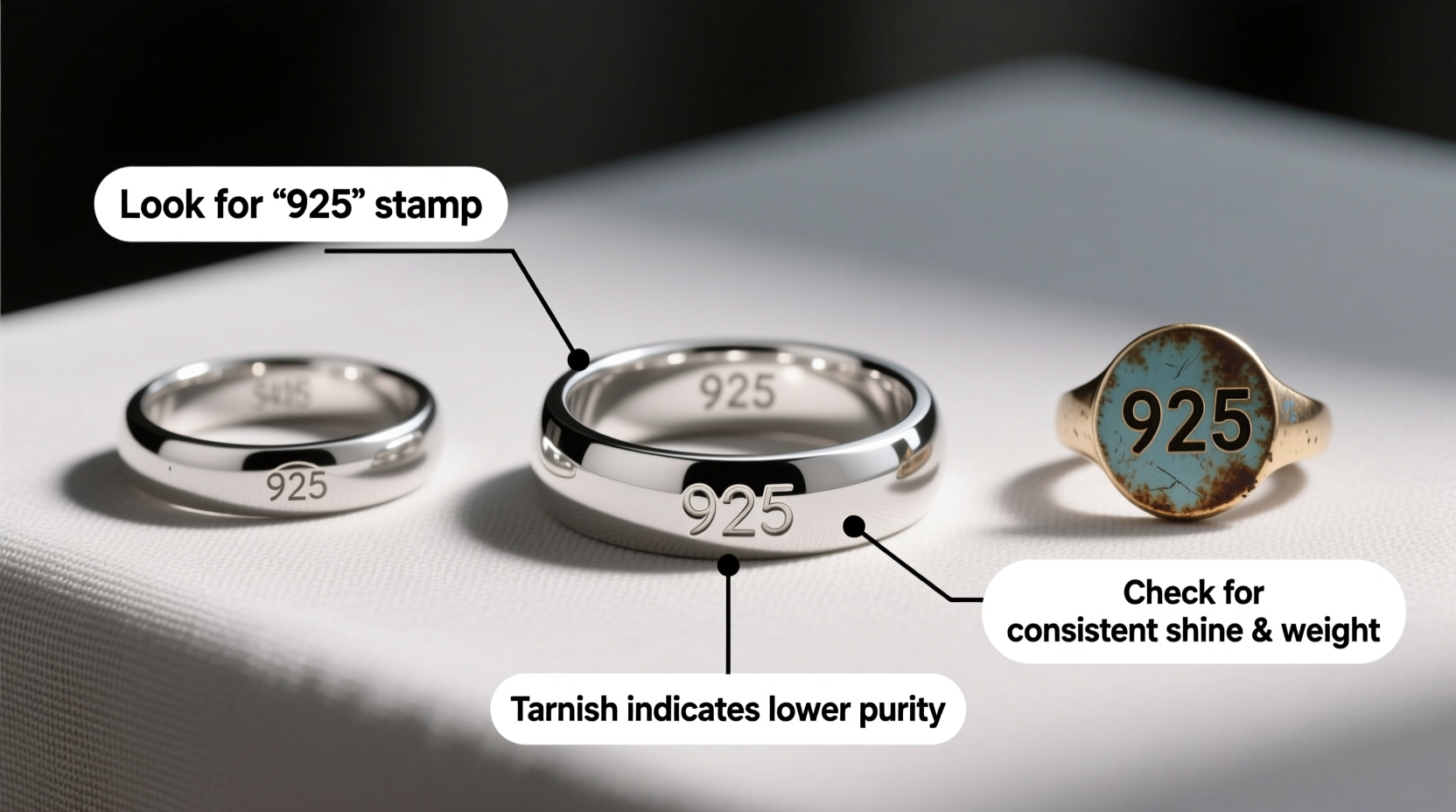
The term “925 sterling silver” refers to an alloy composed of 92.5% pure silver and 7.5% other metals—typically copper. This blend enhances durability while maintaining the metal’s signature brilliance. Pure silver (99.9%) is too soft for everyday wear, which is why the 925 standard was established as an international benchmark for quality.
Genuine 925 pieces are often stamped with hallmarks such as “925,” “STER,” “STERLING,” or “.925.” These marks are usually found on clasps, inside rings, or on pendant bails. While not all authentic pieces carry stamps—especially older or handmade items—the presence of a clear, consistent hallmark is a strong initial indicator of legitimacy.
Tip: Use a magnifying glass to examine tiny engravings; counterfeit stamps may appear uneven, shallow, or misaligned.Step-by-Step Guide: How to Test 925 Silver at Home
Accurate identification requires more than just visual inspection. Follow this five-step process to evaluate your jewelry with confidence:
- Check for Hallmarks: Inspect the piece under bright light using a jeweler’s loupe or magnifier. Look for “925,” “Sterling,” or similar markings.
- Perform the Magnet Test: Genuine silver is non-magnetic. Hold a strong magnet near the item—if it attracts, the piece likely contains ferrous metals and isn’t real sterling.
- Conduct the Ice Test: Place an ice cube directly on the silver. Due to silver’s exceptional thermal conductivity, real 925 silver will melt the ice significantly faster than other metals.
- Use the Cloth Rub Test: Rub the item vigorously with a soft, non-linting microfiber cloth. Genuine silver may leave a slight gray residue (oxidation), while fake silver often shows no change or leaves black streaks if coated.
- Apply the Nitric Acid Test (Optional): For definitive results, use a testing kit. Make a discreet scratch on an inconspicuous area and apply a drop of nitric acid. On real silver, it turns creamy white; green indicates base metal.
“Home tests aren't foolproof, but when used together, they offer over 90% accuracy in identifying authentic 925 silver.” — Dr. Alan Reeves, Metallurgist & Jewelry Appraiser
Common Signs of Fake or Plated Silver
Fake silver jewelry often mimics appearance but fails under scrutiny. Watch for these red flags:
- Tarnishes too quickly or inconsistently: While real silver tarnishes over time due to sulfur exposure, fake pieces may discolor within hours or develop blotchy, uneven spots.
- Unusual weight: Sterling silver has a substantial heft. If a piece feels unusually light, it may be hollow or made from aluminum or plastic.
- Green or black skin stains: Some alloys in counterfeit jewelry react with sweat, leaving greenish marks—a sign of copper or nickel content without proper plating.
- Peeling or flaking surface: Visible layers or chipped areas revealing a different metal underneath indicate silver plating over a base metal.
Do’s and Don’ts When Evaluating Silver Jewelry
| Do’s | Don’ts |
|---|---|
| Inspect hallmarks with a magnifier | Assume all shiny white metal is silver |
| Test thermal conductivity with ice | Rely solely on color or polish |
| Use a neodymium magnet for accurate results | Scratch valuable pieces unnecessarily |
| Store silver in anti-tarnish bags | Expose to chlorine, perfume, or lotions |
| Clean gently with baking soda paste | Soak in harsh chemicals like bleach |
Real Example: How Sarah Avoided a Costly Mistake
Sarah inherited a vintage pendant from her grandmother and wanted to confirm its value before reselling. The piece had no visible stamp, but looked convincingly like silver. At first glance, she assumed it was genuine. However, after performing the ice test—where the ice melted slowly—and noticing a faint magnetic pull, she became suspicious.
She took it to a local jeweler who confirmed it was silver-plated brass. Without testing, Sarah might have paid for an appraisal based on false assumptions or sold it too cheaply. By applying basic home verification steps, she saved time and gained clarity about her heirloom.
Expert Tips for Long-Term Silver Care and Verification
Once you’ve verified your silver, proper maintenance ensures lasting beauty and makes future authentication easier. Tarnished or poorly stored silver can obscure hallmarks and reduce credibility.
Tip: Store each piece in individual anti-tarnish pouches away from rubber, wool, and latex, which accelerate oxidation.Regular cleaning preserves both appearance and integrity. Mix two parts baking soda with one part water into a paste, gently rub onto the surface with a soft cloth, rinse, and dry thoroughly. Avoid ultrasonic cleaners for antique or porous stones.
For collectors or those with high-value pieces, consider professional XRF (X-ray fluorescence) testing. Handheld analyzers used by jewelers provide precise metal composition without damage.
Frequently Asked Questions
Can I trust online sellers claiming “925 silver”?
Not always. Many online marketplaces host sellers who mislabel silver-plated or stainless steel items as 925. Always request photos of hallmarks, read reviews carefully, and buy from reputable sources with return policies.
Why does my 925 silver tarnish so quickly?
Tarnishing is natural and varies by environment. High humidity, exposure to sulfur (in eggs, hot springs, or pollution), and contact with cosmetics accelerate oxidation. Frequent wear actually helps—skin oils can slow tarnish formation.
Is there a difference between “sterling silver” and “925”?
No. Both terms refer to the same alloy: 92.5% pure silver. “Sterling” is the traditional name; “925” is the millesimal fineness notation. They are interchangeable in quality standards.
Final Thoughts: Confidence Starts with Knowledge
Identifying genuine 925 sterling silver doesn’t require advanced training—just attention to detail and a few smart techniques. From hallmark inspection to thermal and magnetic tests, each method builds a clearer picture of authenticity. Whether you're evaluating inherited jewelry, shopping secondhand, or verifying a new purchase, these tools empower you to make informed decisions.
Armed with these insights, you’re better equipped to protect your investment, preserve family heirlooms, and avoid deceptive imitations. Authenticity matters—not just for value, but for the pride that comes with owning something truly beautiful and enduring.
💬 Have a piece you’re unsure about? Try one of the tests today and share your findings in the comments—we’d love to hear your story!