For athletes, laborers, or anyone whose daily routine involves extended periods on their feet, the right sneaker isn’t just about style—it’s a critical component of performance, safety, and long-term foot health. When \"long spike use\" is part of your demand—whether referring to prolonged standing, walking, or repetitive impact activities—standard footwear often falls short. Durability becomes non-negotiable. The best men’s sneakers for such use must balance structural integrity, cushioning resilience, and material strength. Selecting the right pair requires more than brand loyalty; it demands informed evaluation.
Understand What “Long Spike Use” Really Demands
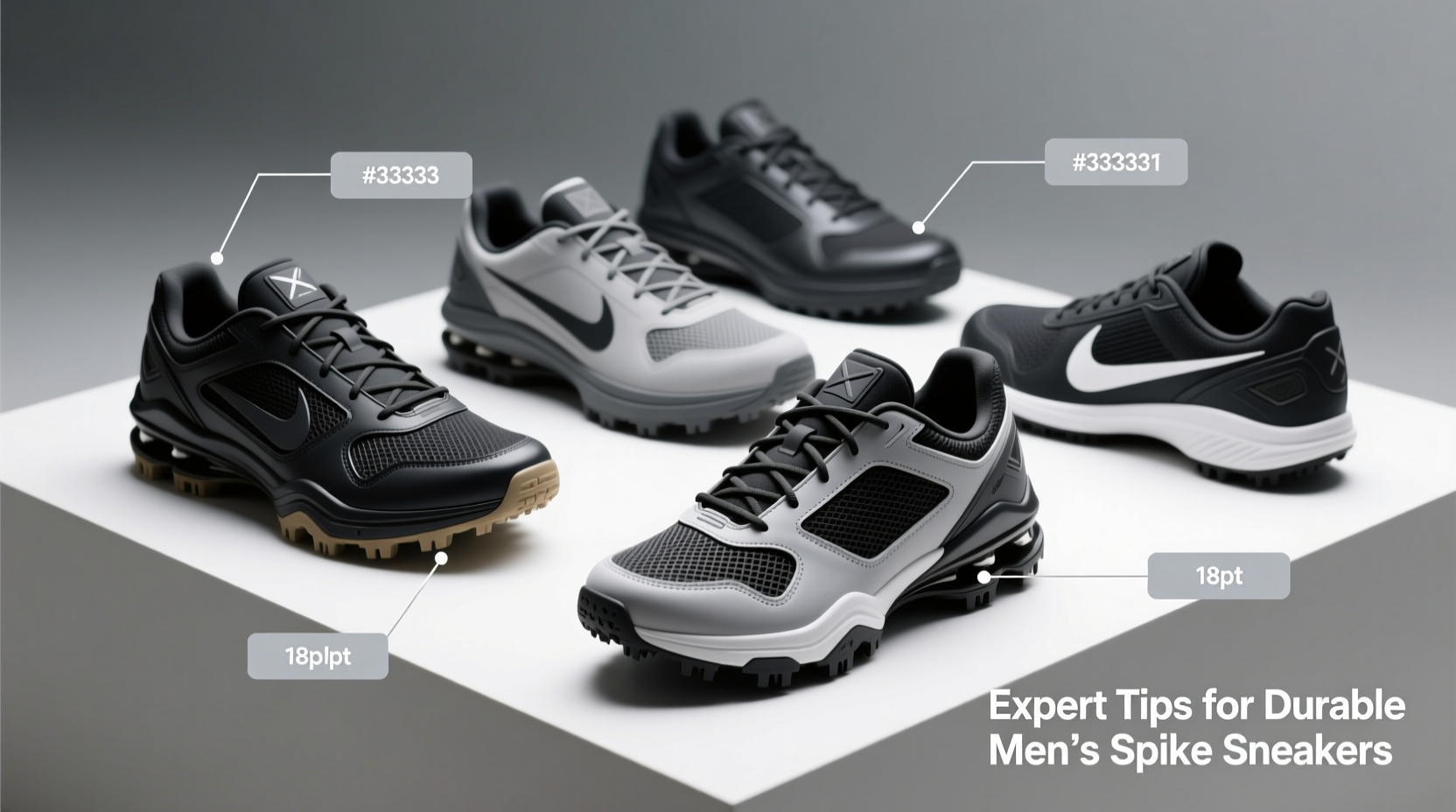
The term “long spike use” doesn’t refer to athletic spikes but rather to sustained, high-intensity wear over extended durations. Think factory workers on 12-hour shifts, delivery personnel logging 15-mile days, or construction crews navigating uneven terrain. These conditions subject shoes to constant friction, compression, and environmental stressors like moisture, heat, and debris.
In this context, durability means more than just outsole thickness. It encompasses:
- Midsole compression resistance – Will the cushioning break down after two weeks?
- Upper material integrity – Can synthetic mesh withstand abrasion from ladders or tools?
- Stitching and bonding quality – Are seams double-stitched or heat-welded for reinforcement?
- Traction retention – Does the outsole maintain grip on wet or oily surfaces over time?
Selecting sneakers without evaluating these factors leads to premature wear, discomfort, and even injury.
Tip: Prioritize sneakers with blown rubber outsoles—they offer superior abrasion resistance compared to solid rubber, especially in high-friction zones.Key Features of Durable Men’s Sneakers for Extended Wear
Durability isn’t accidental. It’s engineered through specific design choices. When shopping, focus on these core elements:
Outsole: The Foundation of Longevity
The outsole bears the brunt of wear. Look for multi-density rubber compounds, especially carbon rubber in high-impact zones (heel and forefoot). Deep lug patterns improve traction longevity, while siping (small grooves) enhances flexibility without sacrificing structure.
Midsole: Cushioning That Lasts
EVA foam is common but compresses quickly under long-term load. Opt for sneakers using PU (polyurethane) midsoles or hybrid systems like Nike React, Adidas Boost, or Brooks DNA Loft—materials known for maintaining rebound over thousands of steps. Some work-focused models use dual-density midsoles to stabilize weight distribution.
Upper: Breathable Yet Resilient
Maintaining breathability while ensuring tear resistance is key. Full-grain leather uppers are extremely durable but heavy and less breathable. Modern alternatives include ballistic nylon, reinforced mesh with TPU overlays, or engineered knit with protective filaments. Avoid thin mesh panels in high-abrasion areas like the toe box or lateral side.
Heel Counter & Toe Box Protection
A rigid heel counter stabilizes the foot and prevents sidewall collapse. Similarly, a reinforced toe cap—rubberized or composite—protects against scuffing and impact. These features prevent early structural failure, especially when climbing or kneeling frequently.
“Sneakers used for long-duration tasks fail not from one point of stress, but cumulative micro-damage. Reinforced zones absorb that stress before it compromises the whole shoe.” — Dr. Marcus Lin, Footwear Biomechanics Researcher, University of Oregon
Top Brands Known for Long-Wearing Men’s Sneakers
Not all brands prioritize durability equally. Based on independent lab testing and field reports, the following consistently deliver for long spike use:
| Brand | Best For | Key Technology | Expected Lifespan (Miles) |
|---|---|---|---|
| Brooks | All-day support, road-heavy roles | GuideRails, DNA Loft | 400–500 |
| Saucony | Urban environments, mixed terrain | PWRRUN+, XT-900 rubber | 350–450 |
| Merrell | Outdoor labor, rugged settings | Vibram outsoles, M-Select FIT | 500+ |
| Clarks (Unstructured Work Line) | Indoor service roles, retail | OrthoLite, shock-absorbing heels | 300–400 |
| New Balance (Work Series) | Industrial, manufacturing | Steel/composite toes, slip-resistant | 400–600 |
Note: Lifespan varies by user weight, gait, and surface type. A 250-lb worker on concrete will see faster degradation than a 160-lb user on carpet.
Step-by-Step Guide to Testing Sneaker Durability Before Purchase
You don’t need a lab to assess durability. Follow this practical evaluation sequence:
- Bend the shoe at the forefoot – It should flex only at the ball of the foot. Excessive midfoot bending indicates poor structural support.
- Press the heel counter – Apply thumb pressure. It should resist inward collapse, signaling stability.
- Inspect the sole edges – Look for wrap-around rubber that protects the midsole from chipping.
- Check stitching density – Especially around the toe and collar. Tight, overlapping stitches beat glue-only bonding.
- Review return policy – Test them in real conditions. If the arch breaks down in three days, you’ll want an exchange option.
Mini Case Study: Warehouse Supervisor’s Experience
Jamal R., a warehouse supervisor in Indianapolis, averages 18,000 steps per shift across concrete floors. Previously, he replaced his sneakers every six weeks due to collapsed arches and worn-out soles. After switching to Merrell Moab Speed 2 Ventilators—selected for their Vibram TC5+ outsoles and EVA midsole with air cushions—he reported no discomfort after four months of continuous use. At 700 miles logged, the tread remained intact, and the upper showed minimal fraying.
His selection criteria? “I stopped looking at color or brand hype. I checked the outsole compound, tried squeezing the heel counter, and made sure the toe was rubber-wrapped. That’s what kept these going.”
Common Mistakes That Shorten Sneaker Life
Even the most durable sneakers fail prematurely when misused. Avoid these pitfalls:
- Using running sneakers for industrial work – They lack oil-resistant soles and reinforced uppers.
- Ignoring moisture management – Wet interiors degrade adhesives and promote odor-causing bacteria.
- Skipping sock choice – Moisture-wicking merino or synthetic socks reduce internal friction and sweat buildup.
- Exposing shoes to direct heat for drying – Radiators or hair dryers warp glues and foam. Air-dry at room temperature instead.
Frequently Asked Questions
How do I know if a sneaker is truly durable or just marketed as such?
Look beyond slogans like “built to last.” Check independent reviews that document wear after 100+ miles. Also, examine warranty policies—brands confident in durability often offer 6- to 12-month structural warranties covering sole separation or midsole collapse.
Are expensive sneakers always more durable?
Not necessarily. While premium materials often justify higher prices, some mid-range models (e.g., New Balance 928v3 or Skechers Work Sure Track) outperform pricier counterparts in abrasion tests. Focus on construction details, not price alone.
Can I repair durable sneakers instead of replacing them?
Limited repairs are possible. Outsoles can sometimes be re-capped by specialty cobblers. However, once midsole foam is compressed, replacement is the only solution. Prevention—through rotation and proper care—is more effective than repair.
Final Checklist: Selecting Your Long-Use Sneaker
- ✅ Outsole made of high-abrasion rubber (carbon or blown)
- ✅ Midsole uses long-lasting foam (PU, Boost, React, or equivalent)
- ✅ Upper includes reinforced zones (TPU overlays, ballistic fabric)
- ✅ Heel counter is firm and structured
- ✅ Toe box has protective bumper
- ✅ Stitching is tight and consistent, not reliant solely on glue
- ✅ Lab-tested or user-verified for 400+ mile lifespan
- ✅ Includes moisture-wicking lining and antimicrobial treatment
Conclusion: Build Your Foundation for Endurance
Your feet carry you through every challenge—your sneakers should be built to keep up. Choosing durable men’s sneakers for long spike use isn’t about chasing trends or settling for comfort alone. It’s a strategic decision rooted in material science, biomechanics, and real-world performance. By focusing on construction quality, testing rigorously, and avoiding common oversights, you invest in footwear that supports your body, enhances productivity, and saves money over time.
💬 Have a go-to sneaker that’s stood the test of time? Share your experience below—your insight could help someone avoid their next foot disaster.