Delicate flower bud jewelry captures the ephemeral beauty of nature in miniature form—petals rendered in gold, gemstones shaped like dewdrops, and stems twisted from fine silver. These pieces are more than accessories; they’re wearable art. Yet their intricate craftsmanship and often fragile materials demand special care. Improper handling can lead to tarnishing, stone loosening, or irreversible structural damage. Understanding how to clean and preserve these treasures ensures they remain radiant across seasons and generations.
Understanding the Structure and Materials
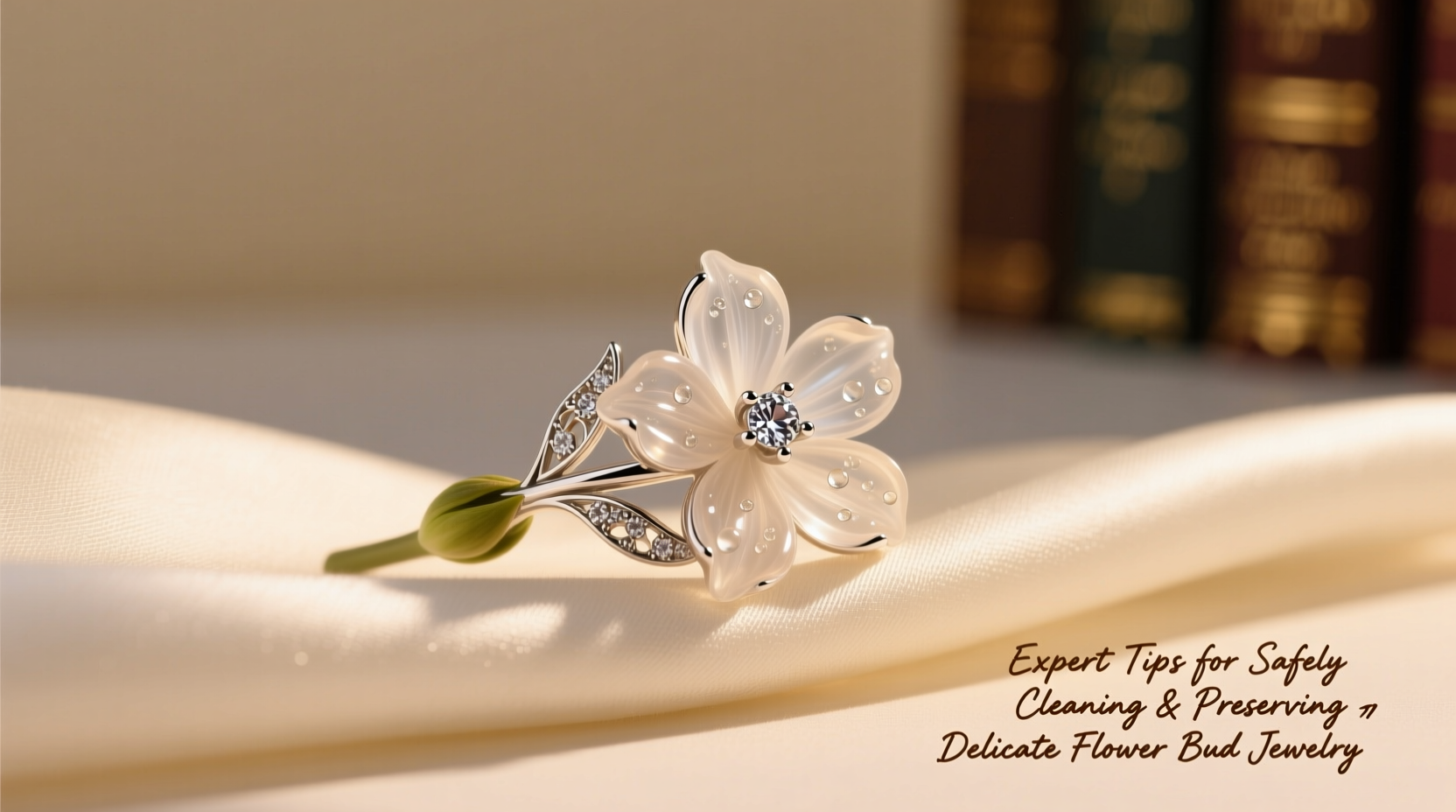
Flower bud jewelry typically combines organic design with precious or semi-precious elements. Common materials include 14k or 18k gold, sterling silver, enamel detailing, and small gemstones such as diamonds, pearls, or colored stones like sapphires and emeralds. The complexity lies in the interplay between soft metals, tiny prongs, and textured surfaces that mimic natural forms.
For example, a rosebud pendant may feature curved petals soldered at precise angles, each edge susceptible to bending if pressure is applied. Enamel accents on lily motifs can chip if exposed to sudden temperature changes. Recognizing these vulnerabilities is the first step toward proper preservation.
“Jewelry that mimics nature’s fragility requires an equally gentle approach to maintenance.” — Lila Chen, Master Jewelry Conservator at The Metropolitan Artifacts Lab
Step-by-Step Guide: Safe Cleaning Process
Cleaning flower bud jewelry isn’t about deep scrubbing—it’s about precision and minimal intervention. Follow this six-step method to remove grime without compromising integrity.
- Pre-Inspection: Use a 10x magnifying loupe to examine for loose stones, bent prongs, or cracks in enamel. If any damage is present, halt cleaning and consult a jeweler.
- Prepare Solution: Mix two drops of pH-neutral dish soap (phosphate-free) into one cup of distilled warm water (not hot). Tap water contains minerals that can leave residue.
- Soak Gently: Submerge the piece for no more than five minutes. Extended soaking risks weakening metal joints and damaging porous stones like pearls.
- Brush Lightly: Use a soft-bristled toothbrush (preferably designated for jewelry only) to lightly trace petal edges and crevices. Apply almost no pressure—let the bristles do the work.
- Rinse Thoroughly: Hold under a slow stream of lukewarm distilled water. Avoid direct spray; instead, let water flow over your fingers cradling the piece.
- Dry Completely: Lay flat on a lint-free microfiber cloth. Never use paper towels—they can scratch. Allow air drying for at least 30 minutes before storage.
Do’s and Don’ts: Preservation Best Practices
Mistakes in daily handling often cause more harm than neglect. Refer to this table to distinguish safe habits from risky ones.
| Action | Do | Don’t |
|---|---|---|
| Storage | Keep in individual padded compartments or soft pouches lined with anti-tarnish fabric. | Store multiple pieces together where they can tangle or scratch. |
| Exposure | Remove before swimming, exercising, or applying lotions. | Wear in chlorinated pools or saunas—heat and chemicals accelerate corrosion. |
| Cleaning Agents | Use mild soapy water or professional non-abrasive jewelry wipes. | Apply ultrasonic cleaners, steamers, or household bleach—even briefly. |
| Handling | Grasp by sturdy parts like the bail or band, not delicate petals. | Pull or adjust buds directly; even slight force can deform thin metal. |
Real Example: A Collector’s Mistake and Recovery
Sophie R., a vintage jewelry collector in Portland, once stored her antique orchid brooch—crafted in 1920s France—in a velvet-lined box alongside her citrine ring. Over six months, unnoticed friction caused the platinum stamen wires to bend and one tiny diamond to dislodge.
She brought it to a heritage restoration specialist who reset the stone and gently reformed the wires using micro-tools. The repair cost $180—more than double routine annual servicing would have been. “I assumed velvet was protective,” she said. “But movement inside the box created constant micro-abrasion.” Now, she stores each piece in separate acid-free tissue within a rigid archival case.
Tip: Place silica gel packets in your jewelry box to absorb moisture and reduce tarnish risk, especially in humid climates.Checklist: Monthly Care Routine
To keep your flower bud jewelry in optimal condition, perform this checklist every 30 days:
- Inspect under magnification for loose stones or worn settings
- Wipe surface gently with a dry, untreated microfiber cloth
- Verify storage environment: cool, dark, and dry (ideally below 50% humidity)
- Rotate frequently worn pieces to prevent stress fatigue in metalwork
- Schedule professional inspection annually for high-value items
Frequently Asked Questions
Can I use commercial jewelry cleaning solutions on flower bud designs?
Only if explicitly labeled safe for delicate or vintage pieces. Many liquid dips contain ammonia or acids that erode thin metal filigree and damage pearls or opals. When in doubt, stick to a DIY soap-and-water method or consult your jeweler.
How often should I professionally service my floral jewelry?
Once per year for regularly worn pieces. A professional can tighten prongs, check for hairline fractures, and polish without removing detail. Antique or heirloom items may benefit from biannual evaluations.
Is it safe to wear flower bud jewelry every day?
With caution. Pieces designed with robust construction (e.g., cast gold with thick petals) can withstand daily wear. However, those with fine wirework, enamel, or small gemstones are better reserved for special occasions to minimize impact exposure.
Long-Term Preservation Strategies
Beyond cleaning, long-term value depends on environmental control. UV light fades enamel and weakens adhesives used in composite stones. Temperature fluctuations cause metal expansion and contraction, which over time loosens settings.
For collectors, consider investing in a climate-controlled display case with UV-filtered glass. Rotate displayed items quarterly to limit light exposure. If storing long-term, wrap pieces in anti-tarnish strips and place them in sealed plastic containers with oxygen absorbers—this slows oxidation significantly.
“The finest floral jewelry tells a story through its details. Preserving it means honoring both artistry and history.” — Rafael Mendez, Curator of Decorative Arts, National Jewelry Museum
Conclusion
Delicate flower bud jewelry deserves more than occasional attention—it requires mindful stewardship. From choosing the right cleaning method to preventing environmental degradation, every decision impacts its lifespan and brilliance. By adopting expert-backed routines and respecting the intricacy of each bloom-shaped masterpiece, you ensure these symbolic tokens of beauty endure.
💬 Have a cherished flower bud piece you’ve successfully preserved? Share your experience or ask questions in the comments—your insight could help others protect their own treasures.








