Zircon and pearl jewelry possess a timeless elegance that enhances any ensemble. While zircon dazzles with its brilliance and fire, pearls exude soft, organic luminescence. However, both gemstones are more delicate than they appear and require specialized care to preserve their beauty. Unlike harder stones such as diamonds or sapphires, zircons and pearls are vulnerable to chemicals, heat, and physical abrasion. Improper cleaning or storage can lead to cloudiness, scratches, discoloration, or even structural damage. Understanding the unique needs of each material is essential to keeping your pieces radiant for years to come.
Understanding Your Gemstones: Zircon vs. Pearl
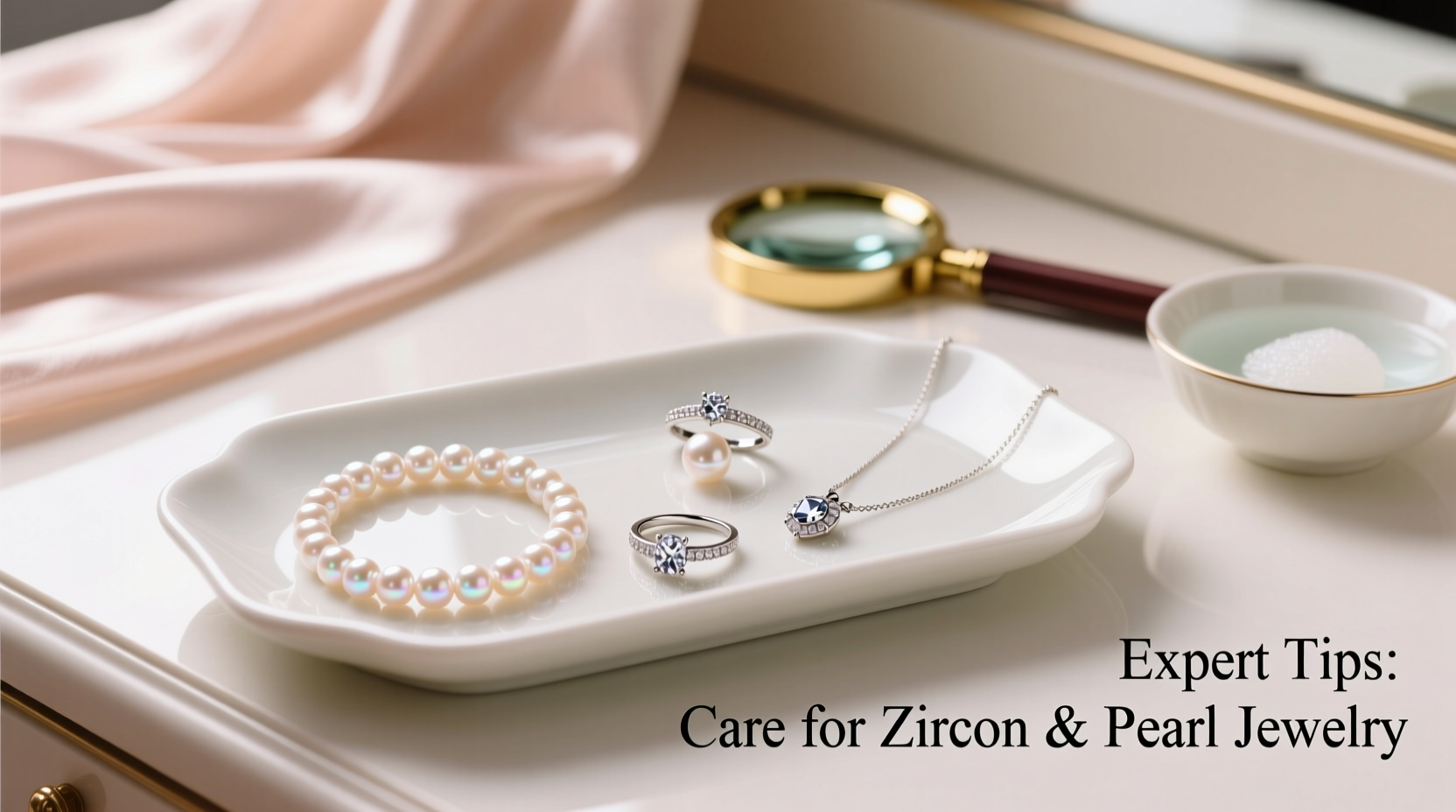
Zircon and pearls differ significantly in composition, durability, and origin. Zircon is a natural mineral (zirconium silicate) known for its high refractive index and dispersion, giving it a diamond-like sparkle. It ranks between 6.5 and 7.5 on the Mohs hardness scale, making it moderately durable but still prone to scratching from harder materials like quartz or topaz.
Pearls, by contrast, are organic gems formed within mollusks. They consist primarily of nacre—a layered mixture of calcium carbonate and conchiolin. With a Mohs hardness of only 2.5 to 4.5, pearls are among the softest gemstones. Their porous surface readily absorbs moisture, oils, and chemicals, which can dull their luster or cause irreversible staining.
Because of these differences, a one-size-fits-all cleaning method won’t work. Treating them appropriately ensures neither gem suffers unnecessary wear.
Tip: Always remove zircon and pearl jewelry before applying cosmetics, perfumes, or lotions—these substances can erode nacre and leave residue on zircon facets.Safe Cleaning Methods for Each Gem Type
Cleaning zircon and pearls requires gentle techniques tailored to their properties. Harsh detergents, ultrasonic cleaners, or steam devices should be avoided—especially for pearls, which can be destroyed by such treatments.
Cleaning Zircon Jewelry
Zircon can tolerate mild cleaning if done carefully. Use lukewarm water mixed with a few drops of mild dish soap. Soak the piece for 10–15 minutes, then gently scrub with a soft-bristled toothbrush to dislodge dirt trapped under prongs or settings. Rinse thoroughly under running water and pat dry with a lint-free cloth. Avoid prolonged soaking, as some zircons may have internal fractures that absorb liquid.
Cleaning Pearl Jewelry
Pearls should never be submerged. Instead, dampen a soft, clean cloth with distilled water and lightly wipe each pearl after wearing. For deeper maintenance, use a barely moistened cloth with a single drop of pH-neutral soap. Wipe the stringing area as well, since sweat and oils accumulate there. After cleaning, lay the strand flat on a towel to air-dry completely before storing. Never hang a wet pearl necklace—the weight can stretch the silk thread.
“Pearls are living gems. They respond to how they’re treated. A little daily attention prevents major issues down the line.” — Dr. Lena Moreau, Gemologist & Jewelry Conservator, GIA Alumni
Do’s and Don’ts: A Quick Reference Table
| Gemstone | Do’s | Don’ts |
|---|---|---|
| Zircon | • Clean with mild soapy water • Dry with microfiber cloth • Inspect prongs monthly |
• Avoid ultrasonic cleaners • Don’t wear during heavy work • Never use bleach or ammonia |
| Pearl | • Wipe after each wear • Store flat in soft pouch • Wear last, remove first |
• Never soak in water • Avoid all chemical exposure • Don’t use commercial jewelry cleaners |
Proper Storage Techniques to Prevent Damage
Storing zircon and pearl jewelry correctly prevents scratches, tangling, and environmental degradation. Pearls, in particular, benefit from being stored separately due to their softness—they can be scratched by almost any other gem or metal.
Wrap pearl strands in a soft cloth or place them in a fabric-lined jewelry box with individual compartments. Avoid plastic bags, which emit gases that can corrode nacre over time. If storing multiple pieces, ensure they cannot rub against each other. For zircon rings or earrings, use partitioned cases to protect the stone’s facets from abrasion.
Humidity also plays a role. Pearls thrive in moderate humidity (around 40–60%) and can dry out and crack in overly arid environments. Consider placing a small sealed container of water near your storage area in dry climates—but never directly inside the jewelry box, where condensation could form.
Tip: Restring pearl necklaces every 1–2 years, especially if worn frequently. Silk degrades over time and can snap, leading to lost pearls.Step-by-Step Guide: Monthly Maintenance Routine
A consistent care schedule keeps your jewelry in optimal condition. Follow this simple monthly routine:
- Inspect each piece under good lighting. Check for loose prongs, frayed threads, or surface damage.
- Clean zircon items using the mild soap and water method. Dry completely before storage.
- Wipe pearls gently with a slightly damp cloth, then allow to air-dry fully.
- Check clasps and fasteners for wear. Tighten or repair as needed.
- Store properly in a lined box away from direct sunlight and heat sources.
This routine takes less than 15 minutes but significantly extends the life and appearance of your collection.
Real-Life Example: The Cost of Neglect
Sophie, a vintage jewelry collector in Portland, inherited a 1940s pearl choker from her grandmother. She wore it weekly but never wiped it down or re-strung it. After five years, the silk thread snapped while she was at dinner, scattering pearls across the floor. Two were lost, and the remaining ones had dulled from constant contact with skin oils and perfume. A jeweler estimated restoration—including restringing, cleaning, and replacing missing pearls—at nearly $400. Had Sophie followed basic maintenance, she could have preserved the necklace’s integrity and saved hundreds.
This case underscores a simple truth: small habits prevent costly consequences.
Frequently Asked Questions
Can I wear zircon and pearl jewelry in the shower?
No. Water exposure, especially with soaps and shampoos, can degrade pearl nacre and leave residues on zircon that dull its shine. Remove all fine jewelry before bathing.
How often should I have my pearl necklace restrung?
If worn regularly (once a week or more), restring every 12 to 18 months. Occasional wearers can wait up to two years. Always restring if the thread appears frayed or stretched.
Is it safe to use a jewelry polishing cloth on zircon?
Yes, but only with a soft, untreated cloth. Avoid impregnated polishing cloths, which may contain chemicals too harsh for zircon coatings or adjacent metals.
Final Thoughts: Care Is an Act of Appreciation
Your zircon and pearl jewelry reflects personal style, sentiment, and sometimes, generations of heritage. Treating them with care isn’t just about preservation—it’s a gesture of respect for their beauty and story. By understanding their vulnerabilities and committing to gentle, consistent maintenance, you ensure these treasures remain luminous and secure for decades.
💬 Have a cherished piece of zircon or pearl jewelry? Share your care routine or ask a question in the comments—let’s build a community of informed, passionate collectors.








