A diamond-encrusted Apple Watch band is more than an accessory—it’s a statement of elegance and personal style. Whether it’s a custom luxury design or a limited-edition release, these bands combine advanced technology with fine craftsmanship. But with beauty comes responsibility: regular wear exposes the band to sweat, oils, lotions, and environmental debris that can dull the diamonds and degrade the metal over time. Cleaning it improperly risks loosening stones or scratching delicate surfaces. The good news? With the right approach, you can maintain its brilliance safely from home without visiting a jeweler every few weeks.
Understanding Your Band’s Materials and Construction
Diamond-encrusted Apple Watch bands are typically crafted from stainless steel, 18k gold, or platinum, with each gemstone set using prong, bezel, or pave techniques. These settings vary in security and sensitivity. Pave settings, where small diamonds are closely set in rows, are especially prone to catching fibers and collecting grime between stones. Prong settings, while more secure, can loosen over time if exposed to harsh chemicals or physical stress.
It's essential to identify whether your band is made of solid precious metal or plated material. Plated bands require gentler care, as abrasive cleaners can wear through the surface layer, exposing base metals underneath. If unsure, refer to the manufacturer’s documentation or consult the retailer. Never assume durability based on appearance alone.
“Diamonds may be the hardest natural substance, but their settings are only as strong as the care they receive. Regular, gentle cleaning prevents buildup that can compromise structural integrity.” — Julian Reed, Master Jeweler & Gemologist
Step-by-Step Guide to Safe Home Cleaning
Cleaning a diamond-encrusted band doesn’t require industrial tools—just precision, patience, and the correct materials. Follow this detailed process to restore shine without risk:
- Remove the watch face: Always detach the Apple Watch module before cleaning. Water resistance does not mean waterproofing, and submerging the device can cause irreversible damage.
- Prepare a cleaning station: Lay down a soft microfiber towel on a flat surface. Use a small bowl to hold your cleaning solution. Ensure good lighting and have tools ready (soft brush, lint-free cloth).
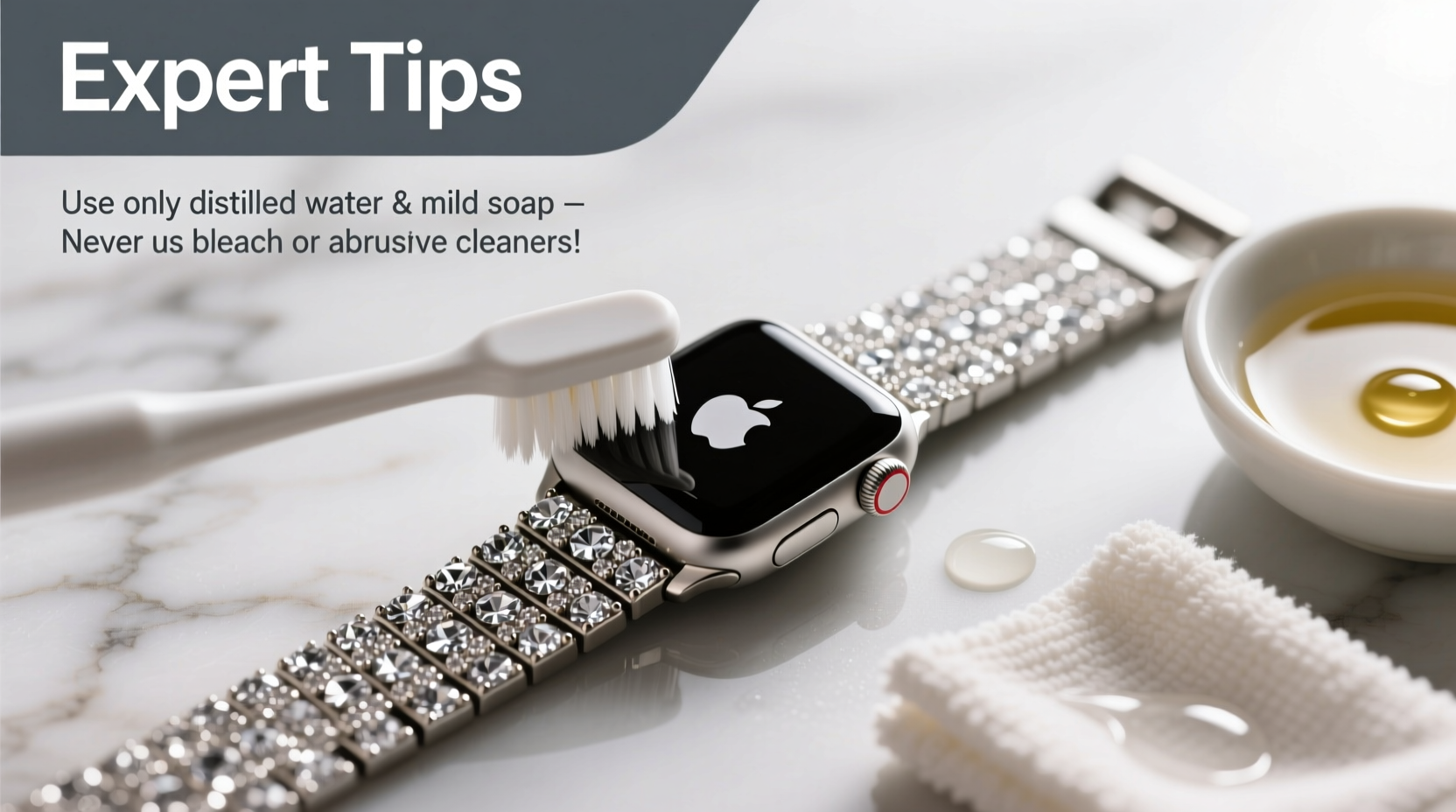
- Mix a gentle cleaning solution: Combine one cup of lukewarm distilled water with one teaspoon of mild, phosphate-free dish soap. Avoid detergents with dyes, fragrances, or degreasers.
- Soak the band (if safe): Submerge only the band for 10–15 minutes. Do not soak plated or glued components. Solid metal bands tolerate soaking; others should be wiped only.
- Brush gently with a soft toothbrush: Use a clean, soft-bristled toothbrush (preferably new) to lightly scrub around each diamond setting. Focus on crevices where dirt accumulates. Use circular motions, never forceful pressure.
- Rinse thoroughly: Dip the band in a second bowl of clean distilled water to remove all soap residue. Tap water contains minerals that can leave spots or corrode metal over time.
- Air-dry completely: Place the band on a dry microfiber cloth in a warm, ventilated area. Avoid direct sunlight or heat sources. Allow at least 30 minutes before reattaching the watch.
- Polish with a jewelry cloth: Once dry, use a non-abrasive jewelry polishing cloth to restore luster. Never use paper towels or tissues—they can scratch soft metals.
Do’s and Don’ts: A Quick Reference Table
| Do’s | Don’ts |
|---|---|
| Use distilled water and mild soap | Use bleach, chlorine, or acetone |
| Clean every 2–3 weeks with light wear | Soak plated or glued bands |
| Inspect settings monthly for looseness | Use ultrasonic cleaners unless approved by manufacturer |
| Store in a fabric-lined jewelry box | Wear while swimming, showering, or exercising |
| Dry completely before reassembly | Use toothpaste or baking soda as cleaners |
Real Example: Preventing a Costly Mistake
Sophia, a marketing executive in San Francisco, received a diamond-accented stainless steel Milanese loop as a gift. After noticing cloudiness on the stones, she attempted to clean it using a jewelry dip she had on hand. Within hours, the silver plating began to flake near the clasp. She visited a boutique repair service, where she learned the dip contained sulfur compounds that reacted with the alloy. The repair cost $180—more than half the original accessory price. Had she used a pH-neutral soap and soft brush instead, she could have avoided damage entirely. This case underscores why product compatibility matters as much as technique.
Essential Checklist for Monthly Maintenance
- ☐ Remove Apple Watch module before handling
- ☐ Inspect each diamond setting for wobbling or misalignment
- ☐ Check for discoloration or tarnish on metal surfaces
- ☐ Clean with mild soap and distilled water
- ☐ Gently brush around all stone clusters
- ☐ Rinse and air-dry fully before reuse
- ☐ Store in a padded, anti-tarnish compartment
- ☐ Schedule professional inspection every 6–12 months
Frequently Asked Questions
Can I use an ultrasonic cleaner on my diamond-encrusted band?
Only if explicitly approved by the manufacturer. While ultrasonic vibrations effectively dislodge debris, they can weaken older or poorly secured settings. Pave and micro-set diamonds are particularly vulnerable. When in doubt, stick to manual brushing.
How often should I have the band professionally inspected?
At minimum, once per year. A qualified jeweler can tighten loose prongs, check for hairline fractures, and perform deep cleaning without abrasion. Frequent wearers or those in humid climates may benefit from biannual checks.
Why do my diamonds look cloudy after cleaning?
Cloudiness often results from residual soap film or mineral deposits if tap water was used. Re-rinse with distilled water and ensure complete drying. Persistent haze may indicate internal inclusion or a damaged girdle—consult a gemologist if the issue remains.
Preserving Beauty Through Consistent Care
The brilliance of a diamond-encrusted Apple Watch band isn't just about initial quality—it's sustained by routine attention. Unlike standard bands, these pieces blend horology with fine jewelry, demanding respect for both disciplines. A few minutes of careful cleaning every few weeks preserves not only appearance but structural integrity. Over time, this diligence prevents costly repairs and maintains resale value. Think of it not as maintenance, but as stewardship of a wearable art piece.
Many owners wait until visible dullness or a lost stone forces action. By then, damage is often cumulative and preventable. Make inspection and cleaning part of your digital wellness routine—just as you update software or charge the battery, give equal care to the hardware that touches your skin daily.
💬 Your watch band tells a story—keep it shining brightly. Share your cleaning routine or ask questions in the comments below. Let’s build a community of informed, detail-oriented owners who value both tech and craftsmanship.








