The khaki tweed dress is a cornerstone of refined, versatile style. Whether worn to a daytime event, office meeting, or autumn wedding, its structured texture and neutral tone offer sophistication with ease. But even the most beautifully crafted tweed dress can fall short if the fit isn’t right. A poorly sized garment can distort proportions, restrict movement, or undermine confidence. Achieving a flawless fit isn’t just about selecting your usual label size—it’s about understanding fabric behavior, body shape alignment, and tailoring nuances unique to tweed.
Tweed, particularly in mid-weight khaki, has minimal stretch and holds its shape firmly. This means precision in sizing becomes non-negotiable. Unlike fluid fabrics that drape forgivingly, tweed emphasizes structure—and any misstep in fit will be immediately noticeable. The goal is not merely to wear the dress, but to have it appear as though it was made for you alone.
Understand How Tweed Behaves on the Body
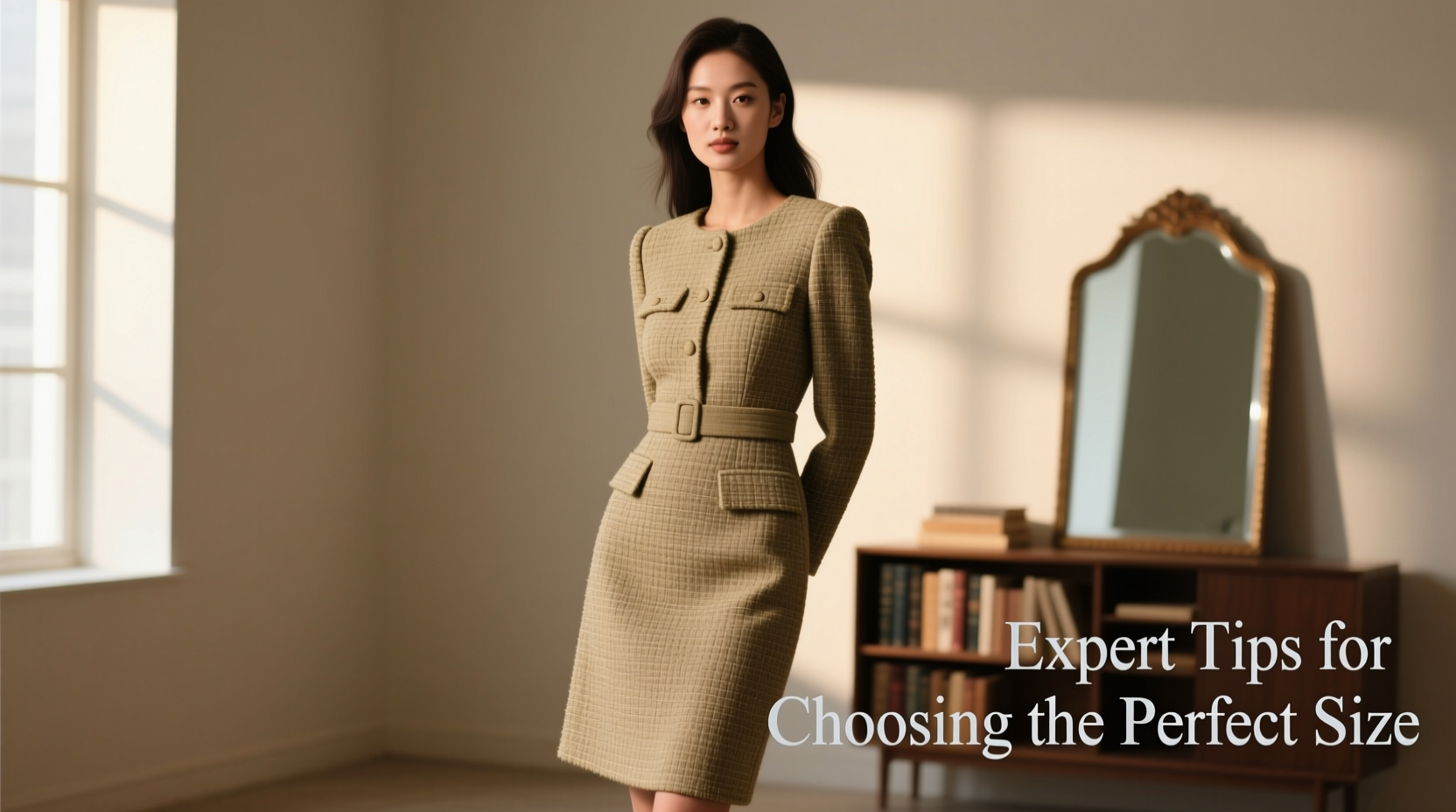
Khaki tweed is typically woven from wool or wool-blend fibers, giving it durability, texture, and a slightly rigid hand feel. Because it doesn’t stretch like jersey or spandex-blend materials, the cut must accommodate natural movement without relying on elasticity. Shoulder seams should align precisely with the edge of your shoulders, sleeves must allow full arm extension, and the waistline should sit at your natural crease—not above or below.
Fabrics like cotton or silk may skim over minor fitting irregularities, but tweed accentuates them. For instance, if the bodice is too tight across the bust or back, puckering will occur around buttons or darts. Similarly, excess fabric under the arms or along the side seams creates bulk that disrupts the clean lines tweed is prized for.
“Tweed demands respect for proportion. It’s not a fabric that adapts to you—it requires you to adapt to its integrity.” — Clara Bennett, Bespoke Tailor & Textile ConsultantTip: Always move around in a fitting room—sit, raise your arms, and walk—to test how the dress performs in motion.
Take Accurate Measurements—Beyond the Label
Standard clothing labels are notoriously inconsistent across brands. One brand’s size 8 may equate to another’s size 10, especially when comparing ready-to-wear collections with European or boutique designers. To avoid guessing, take four critical measurements using a soft tape measure:
- Bust: Measure around the fullest part, keeping the tape level and parallel to the floor.
- Waist: Find your natural waist (usually an inch above the navel) and measure snugly without compressing.
- Hips: Measure at the widest point, typically 7–9 inches below the waist.
- Shoulder width: From the edge of one shoulder to the other—critical for structured dresses with set-in sleeves.
Compare these numbers directly to the brand’s size chart, not the tag. Many high-end retailers provide garment-specific measurements in centimeters or inches. If your bust measures 36\", but the dress’s bust measurement is listed as 37\", you likely have enough ease for comfort without looseness.
Common Sizing Pitfalls to Avoid
| Mistake | Why It Matters | Solution |
|---|---|---|
| Relying only on hip size | Tweed dresses often taper at the hips; a correct hip measurement won't help if the bodice gapes | Check all key areas: bust, waist, shoulders |
| Ignoring sleeve cap fit | Tight sleeve caps restrict arm movement and create tension lines | Ensure sleeves glide smoothly when raised |
| Overlooking length | A hem that’s too short sacrifices elegance; too long looks sloppy | Aim for mid-knee to just above the knee for balance |
Match the Cut to Your Body Shape
No single silhouette flatters every figure. The ideal khaki tweed dress enhances your natural proportions rather than fighting them. Consider these pairings:
- A-line with belt: Ideal for pear shapes. The defined waist and flared skirt balance wider hips.
- Sheath with princess seams: Best for hourglass figures. Vertical seaming supports curves without constriction.
- Fitted bodice with slight flare: Flattering for apple shapes. It elongates the torso and draws attention upward.
- Wrap-style tweed (if available): Versatile for rectangular builds. Creates the illusion of curves and adjustable fit.
If you're between sizes, opt for the larger one—especially in tweed. Minor alterations like taking in the sides or adjusting straps can be done by a tailor, but adding width or length after cutting is impossible.
Real Example: Finding Fit After Maternity
Sophie, a 34-year-old marketing director, struggled to find a tweed dress post-pregnancy. Her bust had increased by one cup size, and her waist sat lower than before. Off-the-rack options either strained across the chest or gapped at the back. She eventually ordered a size up in a belted A-line design from a British heritage brand. With the waistband adjusted by a seamstress, the dress now fits seamlessly. “It took two tries and one alteration,” she says, “but now it’s my go-to for client meetings.”
Step-by-Step Guide to Finalizing Your Choice
Follow this timeline when shopping for your ideal khaki tweed dress:
- Week 1: Define your purpose. Is it for work, weddings, or weekend outings? This influences length and formality.
- Week 2: Measure yourself accurately. Do this in the morning when swelling is minimal, wearing minimal undergarments.
- Week 3: Research brands with detailed sizing charts. Prioritize those offering customer reviews mentioning fit accuracy.
- Week 4: Try at least three styles in person. Focus on shoulder line, underarm clearance, and ease of sitting.
- Week 5: Schedule a minor alteration if needed. Hemming or waist adjustments usually cost $20–$50 but dramatically improve longevity of wear.
Frequently Asked Questions
Can I wear a slightly loose tweed dress with a belt?
Yes—if the looseness is primarily in the waist and the bust, shoulders, and hips fit well. However, avoid belting a dress that gaps at the back or pulls across the chest, as a belt won’t fix structural imbalance.
Is dry cleaning necessary for khaki tweed?
Yes. Most tweed garments require professional cleaning to maintain fiber integrity. Spot clean between wears and air out after use to extend time between cleanings.
How do I know if the dress will shrink over time?
Pure wool tweed may felt or shrink if exposed to moisture and heat. Check the care label: if it says “dry clean only” and lists wool content above 80%, minimal shrinkage should occur with proper care.
Final Checklist Before Purchase
- ✅ Measured myself instead of guessing by label
- ✅ Compared garment measurements to my own
- ✅ Tried the dress while moving—sat down, lifted arms
- ✅ Checked that shoulder seams align with my shoulders
- ✅ Verified sleeve and necklines don’t pull or gap
- ✅ Confirmed hem hits at a flattering length
- ✅ Determined whether minor tailoring is feasible
Conclusion
A perfectly fitted khaki tweed dress transcends trends. It becomes a trusted piece that elevates your presence with quiet authority. By prioritizing accurate measurements, understanding fabric limitations, and aligning cut with body type, you invest not just in clothing—but in confidence. Don’t settle for “close enough.” Take the time to evaluate, adjust, and choose wisely. When you do, you’ll own more than a dress: you’ll own a statement of intentionality and personal style.
💬 Found your perfect-fit tweed dress? Share your experience or tip in the comments—your insight could help someone else achieve sartorial success.








