There’s a quiet power in a well-placed bow. It speaks of grace, intention, and a subtle nod to classic femininity. When integrated into an evening or formal dress, a bow becomes more than a detail—it transforms the silhouette, draws attention, and adds movement. Whether attending a gala, wedding, or black-tie soirée, a bow dress can be your most expressive sartorial choice. But not every bow is created equal, and selecting the right one requires thoughtful consideration of proportion, placement, fabric, and personal style.
The elegance of a bow lies in its duality: it can be romantic, dramatic, minimalist, or bold—depending on how it’s designed and worn. The key to mastering this statement element is balance. Too large, and it overwhelms; too small, and it gets lost. The wrong placement can distort your proportions, while the ideal one enhances them. This guide walks you through the nuanced art of selecting a bow dress that doesn’t just fit but flatters, elevates, and empowers.
Understand Bow Placement and Its Visual Impact
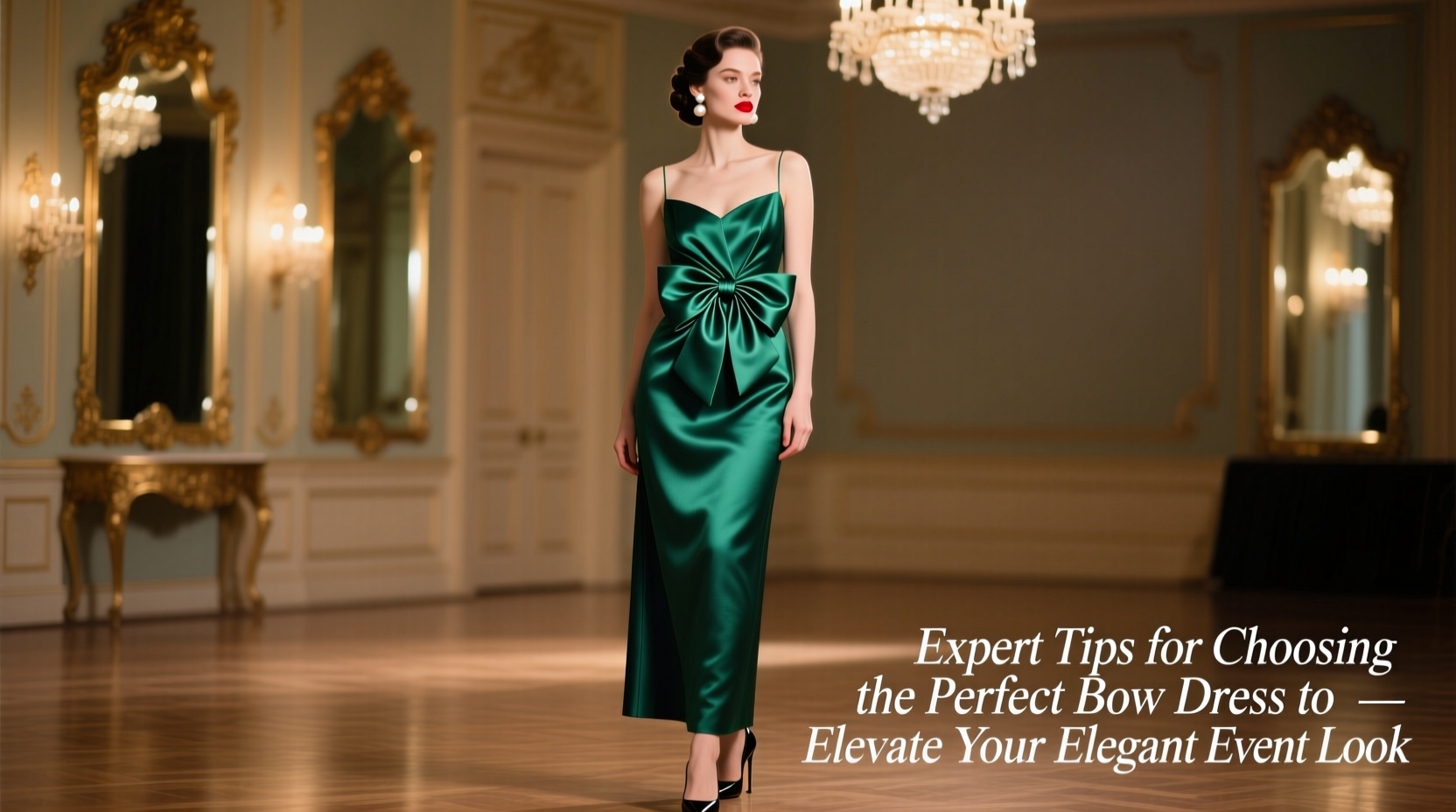
The position of the bow on your dress dramatically affects your overall silhouette. Designers use bows strategically to emphasize curves, create symmetry, or add drama. Knowing where a bow works best on your body type ensures the final look is harmonious and flattering.
| Bow Location | Best For | Styling Effect |
|---|---|---|
| Waist (front or side) | Hourglass, pear, rectangle shapes | Defines waist, creates hourglass illusion |
| Back (neckline or lower back) | All body types, especially slender frames | Adds drama, elongates spine, draws attention |
| Shoulder or sleeve | Narrow shoulders, petite figures | Balances top half, adds volume |
| Hip or thigh | Inverted triangle, athletic builds | Draws eye downward, balances broad shoulders |
| Chest or neckline | Small bust, straight silhouettes | Adds focal point, creates softness |
Select the Right Fabric and Structure
A bow's material should complement both the dress and the occasion. A silk satin bow on a tulle gown reads luxurious and cohesive; the same bow on a cotton poplin day dress might feel out of place. Equally important is the bow’s construction—whether it’s flat, puffed, looped, or trailing.
Silk, satin, and faille are ideal for formal events. They hold shape well and catch light elegantly. Chiffon or organza bows offer softness and movement, perfect for garden parties or spring weddings. Avoid overly stiff synthetic materials unless part of a deliberate avant-garde design—they can appear cheap under proper lighting.
Consider structure: a pre-tied, sculpted bow maintains consistency throughout the evening. A flowing, ribbon-style bow offers romance but may require occasional adjustment. For reliability, choose dresses with internally wired or stitched bows that retain form without drooping.
“Bows should enhance, not distract. The best ones feel like a natural extension of the garment’s architecture.” — Lila Moreau, Haute Couture Designer
Match the Bow Style to the Event Formality
Not all bows are suited for every occasion. Understanding the tone of the event helps you avoid underdressing or overdoing it.
- Black-Tie Galas: Opt for structured silk bows in deep tones—navy, emerald, or black. Back bows with long tails or chignon-level placements exude sophistication.
- Weddings (Guest or Bridal Party): Soft tulle or organza bows in ivory, blush, or champagne add romantic flair. Consider off-the-shoulder styles with delicate shoulder bows.
- Cocktail Parties: Playful yet polished. Think asymmetric waist bows in bold colors or metallic fabrics. Mini-wrap dresses with single-loop bows work beautifully.
- Garden Soirées or Brunches: Lightweight fabrics with fluttering ribbon bows. Pastel shades and floral prints paired with dainty shoulder or hip bows strike the right note.
Mini Case Study: Elena’s Charity Gala Look
Elena, a 5’4” professional with a pear-shaped figure, was invited to a high-profile charity gala. She wanted to stand out without sacrificing elegance. After trying several options, she chose a midnight blue column dress with a sculpted silk bow at the lower back, positioned just above the hips. The bow’s slight upward angle elongated her torso, and its rich texture caught the ballroom lighting subtly. Paired with minimal jewelry and a low chignon, the look was celebrated as “effortlessly commanding.” The bow didn’t dominate—it completed the story.
Follow This Step-by-Step Selection Guide
Choosing the perfect bow dress doesn’t have to be overwhelming. Use this sequence to make confident decisions:
- Define the occasion. Is it formal, semi-formal, daytime, or evening? This sets the tone for fabric and bow size.
- Assess your body shape. Identify your proportions—hourglass, pear, apple, rectangle, or inverted triangle. Use this to guide bow placement.
- Determine the focal point. Decide whether you want emphasis on the waist, back, shoulders, or neckline.
- Choose fabric cohesion. Ensure the bow material matches or complements the dress base. Avoid mismatched textures unless intentional.
- Try before committing. Move in the dress—sit, walk, raise your arms. Check if the bow shifts, flattens, or feels unstable.
- Accessories last. Let the bow be the star. Pair with simple earrings and a sleek clutch to avoid visual clutter.
Common Pitfalls to Avoid
Even a beautiful bow can fall flat if misapplied. Watch for these common mistakes:
- Over-accessorizing: If your dress has a large bow, skip statement necklaces or busy earrings.
- Ignoring scale: Petite frames can be overwhelmed by giant bows. Tall women may need larger bows to maintain proportion.
- Poor tailoring: A crooked or unevenly tied bow undermines elegance. Choose dresses with fixed, professionally finished bows.
- Mismatched formality: A ruffled pink satin bow may clash with a sleek black jumpsuit dress meant for a modern art opening.
Frequently Asked Questions
Can I wear a bow dress if I’m tall?
Absolutely. Tall figures often carry dramatic bows with ease. Try exaggerated back bows or cascading shoulder ribbons. Just ensure the bow aligns with your natural waist or hip line to anchor the look.
Are bow dresses appropriate for older women?
Yes—age is not a limitation. Opt for refined placements like a nape bow or tailored waist accent in luxe fabrics. Avoid overly juvenile frills; focus on structure and sophistication.
How do I care for a bow dress?
Treat the bow as part of the garment’s integrity. Store the dress on a padded hanger to preserve the bow’s shape. If the bow is detachable, store it separately in tissue paper. Always follow the care label—most silk bows require dry cleaning.
Final Checklist Before Purchase
Before saying yes to a bow dress, run through this checklist:
- ✅ Does the bow placement flatter my body shape?
- ✅ Is the fabric suitable for the event’s formality?
- ✅ Does the bow hold its shape when I move?
- ✅ Is the color versatile enough for future wear?
- ✅ Are there any visible seams or asymmetries in the bow?
- ✅ Can I sit comfortably without flattening the bow?
Conclusion: Make the Bow Your Signature
A bow is more than decoration—it’s a gesture. When chosen with intention, it conveys confidence, poise, and a love for detail. The perfect bow dress doesn’t shout; it whispers elegance, drawing people in with its quiet sophistication. Whether it’s a whisper-thin ribbon at the nape or a bold sculptural knot at the waist, let it reflect who you are and how you wish to be seen.
💬 Found your dream bow dress? Share your styling tips or tag a friend who needs bow inspiration. Elegance is better when shared.








