Selecting the right Apple Watch strap isn’t just about aesthetics—it’s about comfort, security, and long-term wearability. Too tight, and you’ll feel restricted; too loose, and your watch risks slipping or inaccurate health tracking. With dozens of band styles, materials, and sizing options, finding the ideal fit can be overwhelming. Yet, getting it right ensures your device stays comfortable during workouts, workdays, and sleep tracking. This guide delivers expert-backed strategies to help you choose the perfect Apple Watch strap size—every single time.
Understand Your Wrist Anatomy First
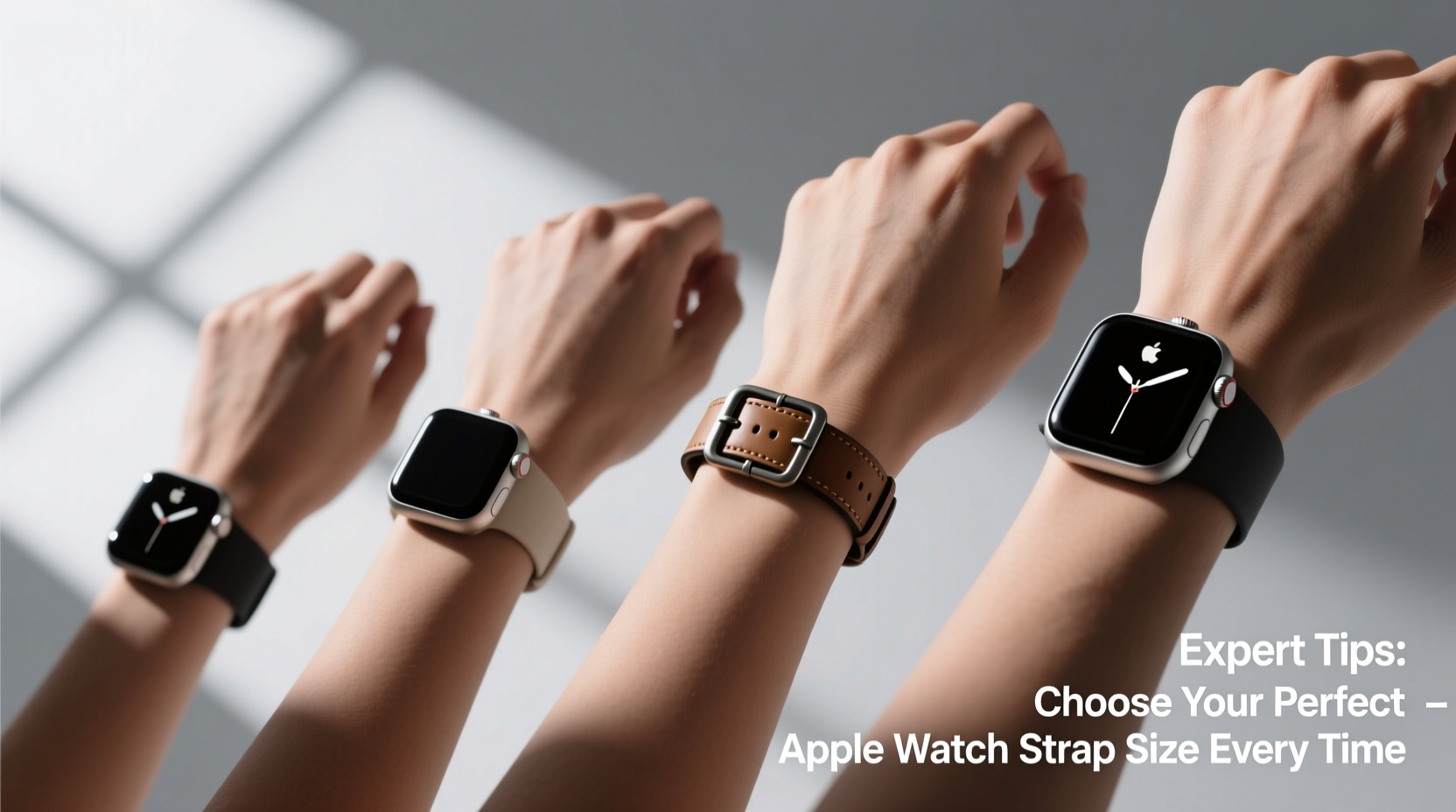
Before diving into band measurements, assess your wrist structure. Wrist circumference, bone prominence, and skin sensitivity all influence how a strap fits and feels. Apple categorizes bands into small and large sizes, but these are generalizations. A “large” might still be too tight on a muscular forearm or too loose on a slender wrist.
To begin, measure your wrist accurately using a flexible tape measure. Wrap it snugly around the widest part of your wrist, just below the hand. Record the measurement in millimeters or inches. Most Apple Watch bands are designed for wrists between 130mm and 220mm, but individual models vary.
Tip: Measure your wrist at the end of the day when slight swelling is normal—this gives a more realistic daily fit.Also consider seasonal changes. Skin can tighten in cold weather or swell slightly in heat. If you plan to wear your watch year-round, prioritize a band with multiple adjustment points or a flexible material like nylon or silicone.
Match Band Type to Your Watch Case Size
Apple Watch case size directly determines compatible band widths. Using the wrong width creates an unbalanced look and may compromise structural integrity. Here’s how they align:
| Apple Watch Case Size | Lug Width (Band Attachment) | Compatible Band Sizes |
|---|---|---|
| 38mm / 40mm / 41mm | 20mm | Narrower bands, often labeled \"Small/Medium\" or \"S/M\" |
| 42mm / 44mm / 45mm / 49mm (Ultra) | 22mm / 24mm (Ultra) | Wider bands, typically \"Medium/Large\" or \"M/L\" |
Note: The 41mm and 45mm models use the same 20mm and 22mm lug widths as their predecessors, so older compatible bands may still work. Always verify compatibility before purchasing third-party straps.
“Many users overlook that even premium bands fail if they don’t match the watch’s physical dimensions. Fit starts with correct width, not just length.” — Jordan Lee, Wearable Tech Consultant
How to Determine Your Ideal Strap Length
Once you’ve matched the band to your watch case, determine the ideal length based on your measured wrist size. Apple uses a two-tier system:
- S/M: Typically fits wrists from 130mm to 180mm
- M/L: Usually fits wrists from 150mm to 220mm
Notice the overlap? That’s intentional—many users fall into both ranges. The key is where your measurement lands within the spectrum. For example, a 175mm wrist could go either way depending on desired tightness and band type.
Here’s a step-by-step method to find your best fit:
- Measure your wrist circumference precisely.
- Check the manufacturer’s size chart—don’t assume Apple’s S/M and M/L apply universally.
- For buckle or loop bands, ensure at least two adjustment holes remain unused on each end for future flexibility.
- Try the band on with your watch already attached. Slide your finger under the strap; there should be slight space but no sliding.
- Test movement: Raise your arm quickly. The watch shouldn’t shift more than 1–2cm.
Choose the Right Material for Your Lifestyle
Different materials behave differently on the wrist. Silicone (fluoroelastomer) conforms to skin and resists sweat, making it ideal for athletes. Stainless steel links offer precision adjustments but require professional resizing. Nylon (like the Nike Sport Loop) expands with moisture and dries quickly—great for humid climates or runners.
Consider real-world usage:
- Office professionals: Opt for leather or stainless steel for a polished look. Ensure the clasp allows micro-adjustments.
- Fitness enthusiasts: Use ventilated silicone or fabric bands. Avoid metal links during high-intensity training—they can chafe.
- Sleep trackers: Choose soft, breathable loops. A band that digs in will disrupt sleep quality and data accuracy.
“I switched from a metal link to a sport loop for nighttime wear. My sleep scores improved because I stopped waking up from discomfort.” — Sarah Tran, Nurse & Health Tech User
Checklist: How to Confirm You’ve Chosen the Right Strap Size
Before finalizing your purchase or daily wear, run through this practical checklist:
- ✅ Measured wrist circumference accurately
- ✅ Verified compatibility with Apple Watch case size (40mm vs 44mm, etc.)
- ✅ Selected appropriate length (S/M or M/L) based on actual measurement, not guesswork
- ✅ Considered material expansion or contraction over time
- ✅ Tested fit with room for one finger underneath
- ✅ Confirmed secure attachment—no wobbling at the lugs
- ✅ Checked for comfort during movement (wrist flexion, typing, lifting)
Frequently Asked Questions
Can I use a 42mm band on my 40mm Apple Watch?
No. While some third-party sellers claim cross-compatibility, Apple designs bands specifically for certain case widths. A 22mm band won’t properly attach to a 20mm lug and could damage the connectors or create instability.
What if my wrist is exactly between sizes?
Choose the larger size if you prefer looser, breathable wear—especially for sport bands. Pick the smaller size if you want a snug, secure fit and plan to use stretch-prone materials like leather. Alternatively, seek brands offering three-size systems (S/M/L).
Do international brands follow the same sizing standards?
Most reputable brands adhere to Apple’s specifications, but always double-check product details. Some European or Asian manufacturers may use different labeling (e.g., “One Size,” “Universal”) which can lead to poor fit. Look for explicit millimeter measurements.
Real-World Example: Fixing a Common Fit Mistake
Mark, a software developer, bought a sleek Milanese Loop for his 45mm Apple Watch Ultra. He chose the M/L size assuming it would accommodate his 178mm wrist. Within days, he noticed the watch rotated during typing and felt pressure points near his ulna bone.
After consulting a tech specialist, he realized the magnetic closure was set too tightly due to limited adjustment range on the M/L band. Switching to a custom-fit S/M version with finer magnetic increments eliminated rotation and improved all-day comfort. His mistake? Assuming “larger” meant “better fit” without testing incremental adjustability.
This scenario underscores that precise fit trumps generic size labels. Adjustable closures, whether buckles, magnets, or Velcro, make a critical difference in long-term satisfaction.
Final Recommendations for Lasting Comfort
The perfect Apple Watch strap blends technical compatibility with personal comfort. Don’t rely solely on default options or aesthetic appeal. Take the time to measure, test, and evaluate how a band performs across activities. Rotate straps seasonally or by occasion—a durable ocean band for summer, a refined leather option for formal events.
Remember, your Apple Watch is in constant contact with your body. A well-chosen strap enhances its functionality, protects your skin, and supports accurate sensor readings. Whether you’re tracking heart rate variability or simply staying connected, fit is foundational.
💬 Found your perfect fit? Share your go-to Apple Watch strap and sizing tip in the comments—help others avoid common mistakes and wear their tech with confidence.