Pearls are among the most delicate and elegant forms of natural gemstones. Unlike diamonds or sapphires, they are organic—formed within living oysters and mussels—and as such, require a unique approach to care. Their soft surface, layered nacre structure, and sensitivity to chemicals mean that even minor mishandling can lead to dullness, discoloration, or irreversible damage. Yet, with proper attention, pearls can retain their radiant glow for generations. Whether you own a vintage strand passed down through family or a modern pendant gifted on a milestone occasion, maintaining your pearls’ brilliance begins with informed, consistent care.
Understanding Pearl Composition and Vulnerability
Pearls are composed primarily of calcium carbonate in the form of aragonite, layered with conchiolin to create nacre—the substance responsible for their signature iridescence. This nacre is what gives pearls their depth and luster, but it’s also their greatest weakness. With a Mohs hardness rating between 2.5 and 4.5, pearls are softer than most gemstones, making them prone to scratches from harder materials like metal clasps or other jewelry. Additionally, their porous nature allows them to absorb moisture, oils, and chemicals quickly.
Environmental factors such as humidity, heat, and exposure to cosmetics, perfumes, and perspiration accelerate deterioration. Over time, untreated exposure can cause pearls to yellow, crack, or lose their sheen. Understanding these vulnerabilities is the first step toward effective preservation.
“Pearls are survivors of a biological process—they need to be treated with the same respect we give living things.” — Dr. Lena Moreau, Gemologist and Pearl Specialist at the International Gemological Institute
Daily Wear and Handling: Best Practices
How you wear your pearls significantly impacts their lifespan. Many believe that skin contact harms pearls, but moderate, regular wearing actually benefits them. Natural skin oils help maintain moisture in the nacre, preventing drying and cracking—especially important for older or antique pearls.
However, timing matters. Always put on pearl jewelry after applying makeup, hairspray, perfume, and lotions. These products contain alcohol, acids, and solvents that degrade nacre over time. Similarly, remove pearls before swimming, exercising, or showering to avoid chlorine, sweat, and soaps.
Tip: Put your pearls on last when getting dressed and take them off first when undressing. This minimizes exposure to damaging substances.When wearing strands, ensure the silk thread is secure. Knots between each pearl prevent loss if the strand breaks and protect individual pearls from rubbing against one another. Inspect your necklace or bracelet every six months for frayed thread or loose knots.
Step-by-Step Guide to Cleaning Pearl Jewelry
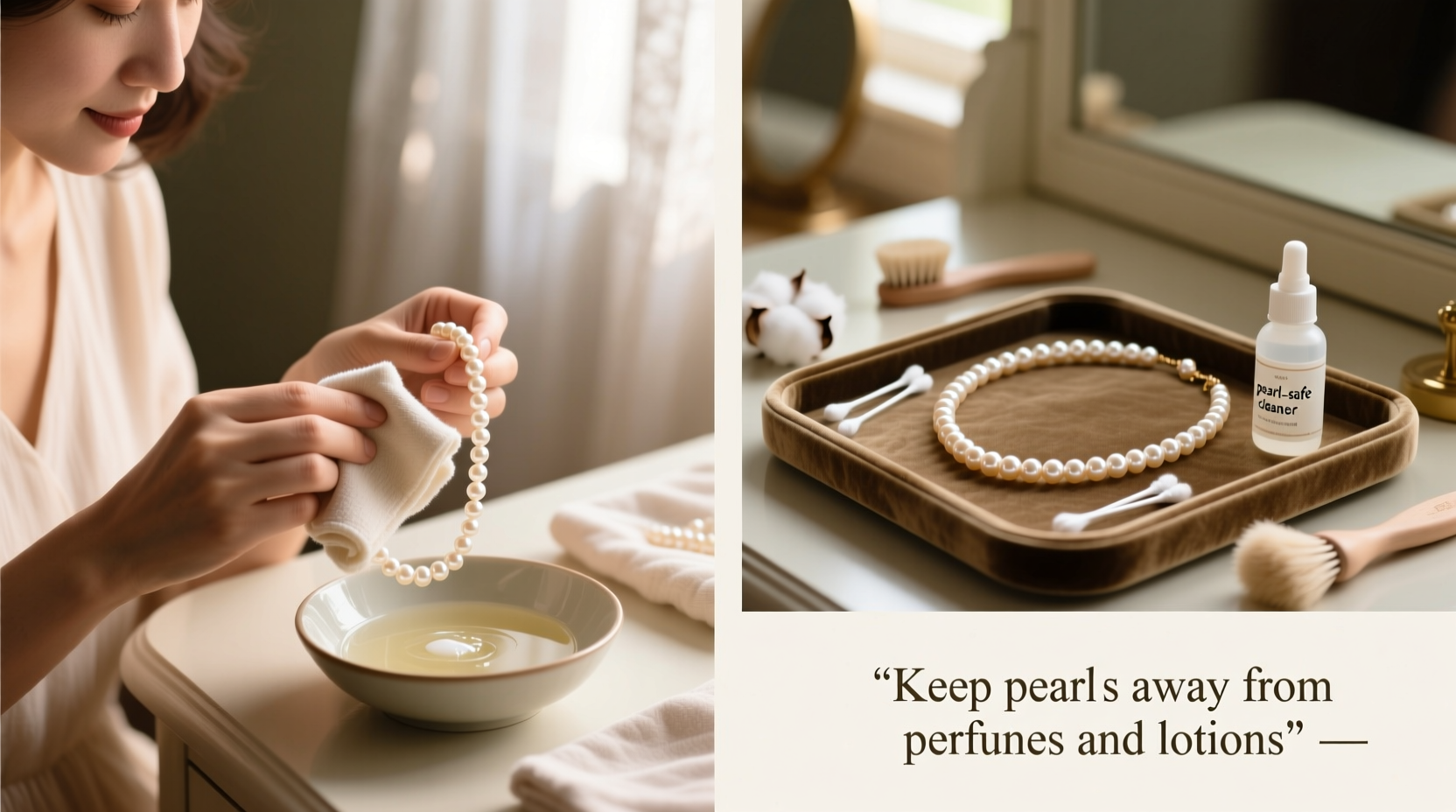
Cleaning pearls requires gentleness and precision. Never use ultrasonic cleaners, steamers, or chemical dips—these can strip nacre and weaken the drill holes. Instead, follow this safe, professional-grade method:
- Wipe after each wear: Use a soft, lint-free cloth (like microfiber or cotton) to gently wipe each pearl. This removes oils and residues before they settle.
- Deep clean monthly: Dampen a second soft cloth with lukewarm water only—never hot. Gently wipe each pearl without soaking the string.
- Avoid submersion: Do not immerse pearl strands in water. Excess moisture can weaken the silk thread and promote mildew.
- Dry flat: Lay the jewelry on a towel in a cool, dry place away from direct sunlight. Allow it to air-dry completely before storing.
- Re-string periodically: Have necklaces professionally re-strung every 1–2 years, especially if worn frequently.
Never use commercial jewelry cleaners, baking soda, vinegar, or ammonia-based solutions. Even “natural” remedies like lemon juice are too acidic and will etch the surface.
Storage Solutions That Protect Luster
Improper storage is a leading cause of pearl damage. Tossing pearls into a crowded jewelry box can result in scratches from rings or bracelets. Exposure to dry air or temperature swings causes brittleness.
The ideal storage environment is soft, dark, and slightly humid. Wrap pearls in a soft cloth or place them in a fabric-lined jewelry pouch. Avoid airtight containers or plastic bags, which trap gases from plastics that can tarnish metal components and dehydrate pearls.
| Do | Don’t |
|---|---|
| Store pearls in a soft pouch or dedicated compartment | Store with harder jewelry like diamonds or gold bangles |
| Keep in a bedroom drawer (moderate humidity) | Leave in a bathroom cabinet (excessive moisture and heat) |
| Lay necklaces flat or hang on a padded stand | Coil tightly or drape over sharp edges |
| Wear occasionally to restore natural moisture | Leave untouched in storage for years without inspection |
Real Example: Reviving a Heirloom Strand
Sarah inherited a 1940s cultured pearl necklace from her grandmother. Stored in a velvet box for decades, the pearls had dulled and the silk thread was brittle. She brought it to a reputable jeweler who assessed the condition. The expert recommended gentle wiping with a damp cloth followed by air-drying, then re-stringing with new silk and securing each pearl with knots. After the restoration, Sarah began wearing the necklace monthly and wiping it after each use. Within a year, the pearls regained much of their original luster. Today, the necklace is a centerpiece of her collection—proof that patience and proper care can breathe new life into neglected pearls.
Essential Care Checklist
- ✅ Wipe pearls with a soft cloth after every wear
- ✅ Apply cosmetics and perfumes before putting on pearls
- ✅ Store separately in a soft pouch or fabric-lined case
- ✅ Avoid exposure to chlorine, sweat, and household chemicals
- ✅ Have strands re-strung every 12–24 months
- ✅ Keep away from extreme temperatures and dry environments
- ✅ Schedule annual inspections for clasps and threading
Frequently Asked Questions
Can I wear my pearls in the rain?
It’s best to avoid wearing pearls in the rain. Rainwater may seem harmless, but it often contains pollutants and acidity that can erode nacre over time. If your pearls get wet, gently pat them dry with a soft cloth and allow them to air-dry flat before storing.
Why are my white pearls turning yellow?
Yellowing can result from prolonged exposure to sunlight, heat, or environmental pollutants. It can also occur naturally with age, especially in older natural pearls. However, sudden discoloration may indicate improper storage or chemical exposure. While some yellowing is irreversible, consistent care can slow further change.
Are cultured pearls more fragile than natural ones?
Not necessarily. Both natural and cultured pearls share the same nacre composition and require similar care. The main difference lies in origin—cultured pearls are grown with human assistance—but their maintenance needs are identical. Durability depends more on quality and handling than origin.
Final Thoughts: Honor the Elegance of Your Pearls
Pearls are timeless, but their beauty is not self-sustaining. They respond to how they are treated—neglect leads to dullness, while mindful care preserves their glow for decades. Each wipe, each careful placement in its pouch, and each professional check-up contributes to a legacy of elegance. Whether your pearls are modern treasures or heirlooms with stories to tell, they deserve attention that matches their grace.
💬 Have a cherished pearl piece you’ve restored or maintained? Share your story in the comments—your experience could inspire others to cherish their pearls just as deeply.