Backpacks are no longer just functional tools—they’re statements. Whether you're commuting to work, hiking a trail, or navigating campus life, your backpack says something about your priorities. Today’s market offers everything from minimalist canvas designs to intricately embroidered pieces that look like wearable art. But does embroidery add lasting value, or is it just aesthetic fluff? The answer depends on how you use your bag, what you value in design, and how much you're willing to maintain it.
Choosing between an embroidered and a plain backpack isn’t just about looks—it involves trade-offs in durability, maintenance, versatility, and price. Let’s break down the real differences so you can make a decision that aligns with both your lifestyle and budget.
Design & Aesthetic Appeal: Making a Statement vs. Staying Neutral
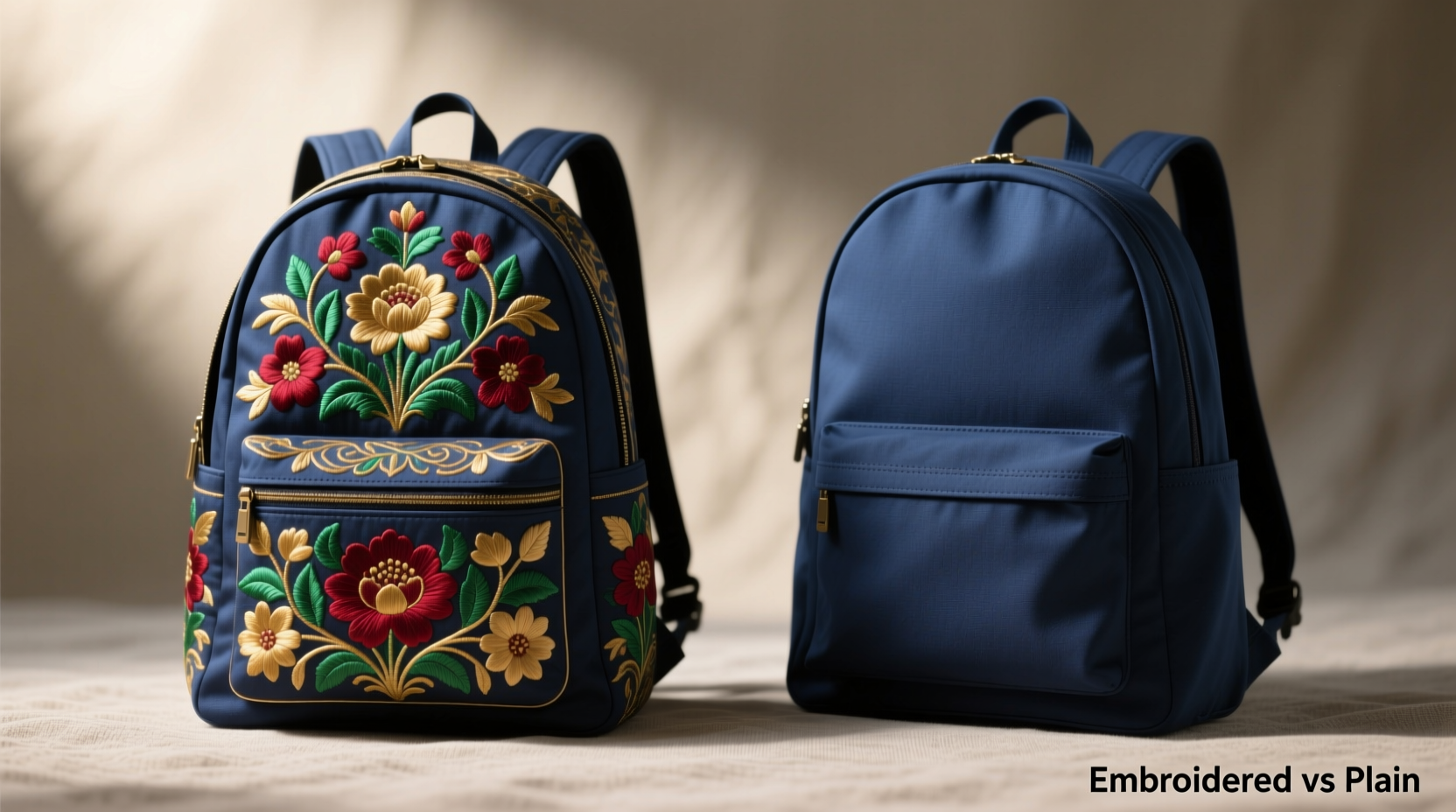
Embroidered backpacks stand out. With floral motifs, geometric patterns, or personalized lettering, they turn a utilitarian item into a fashion accessory. These designs often reflect individuality, cultural heritage, or brand identity. For those who view their gear as an extension of personal style, embroidery offers instant visual interest and uniqueness.
Plain backpacks, on the other hand, thrive on versatility. A solid black, navy, or beige pack blends seamlessly across environments—office, gym, travel, or casual outings. They follow the “quiet luxury” trend: understated, timeless, and adaptable. Without flashy details, they avoid dating quickly and remain relevant season after season.
Tip: If you frequently change your style or need one bag for multiple roles, go plain. If self-expression is key, embroidery can be a bold investment.Durability & Longevity: How Embroidery Impacts Wear and Tear
While embroidery adds beauty, it introduces structural complexity. Each stitched pattern is an additional layer bonded to the base fabric. Over time, especially with heavy use or frequent washing, these threads can fray, loosen, or even pull at the underlying material. Areas around dense embroidery become stress points, potentially leading to premature wear.
In contrast, plain backpacks typically have fewer weak spots. Without added stitching layers, the fabric maintains uniform strength. Repetitive strain—like daily shoulder pressure or rough handling—doesn’t concentrate around decorative elements. This makes them inherently more resilient over years of regular use.
That said, quality matters. High-end embroidered bags use reinforced backing and durable thread (like polyester or rayon) to minimize damage. But budget-friendly embroidered models may cut corners, using cotton threads that degrade faster when exposed to moisture or friction.
“Embroidery doesn’t ruin durability—but poor execution does. Look for clean backing, tight stitch density, and UV-resistant threads if you plan to use the bag outdoors.” — Lena Torres, Textile Designer & Product Developer
Price Comparison: Is the Premium Justified?
On average, embroidered backpacks cost 25% to 75% more than their plain counterparts. This markup covers not only the materials but also labor-intensive stitching processes, especially if done by hand or with precision digital machines.
Consider this breakdown:
| Feature | Plain Backpack (Mid-Range) | Embroidered Backpack (Mid-Range) |
|---|---|---|
| Average Price | $35–$60 | $60–$100+ |
| Production Time | Standard assembly line | +15–30% for embroidery step |
| Maintenance Needs | Low (machine washable, stain-resistant) | Moderate to high (spot clean only, risk of snagging) |
| Lifespan (Daily Use) | 3–5 years | 2–4 years (depending on care) |
| Versatility Score (1–10) | 9 | 5–6 |
The data shows that while embroidery increases upfront cost and care requirements, it doesn’t necessarily extend lifespan. In fact, it may shorten it under demanding conditions.
Real-World Use Case: Student Life vs. Urban Commuting
Take Sarah, a university student who carries her backpack between classes, the library, and weekend trips. She initially loved her embroidered floral backpack—it stood out, matched her wardrobe, and felt unique. But within eight months, the threads began fraying at the edges where her laptop pressed against the inner lining. After a rainy day commute, water seeped through the top panel, causing mildew under the embroidery backing. By year’s end, she replaced it with a plain, water-resistant nylon model.
Compare that to James, a graphic designer who uses his sleek black backpack five days a week for client meetings and coffee shop work sessions. His plain bag has lasted four years with minimal signs of wear. It fits under tables, resists spills, and never draws attention away from his presentation.
Sarah valued aesthetics first; James prioritized function. Both made valid choices based on needs—but Sarah learned that intricate details come with higher maintenance costs in real-life scenarios.
Care & Maintenance: What You Must Know Before Buying
One of the most overlooked factors in the embroidered vs. plain debate is long-term upkeep. Embroidered backpacks often require special care:
- No machine washing: Agitation can unravel threads or distort the design.
- Spot cleaning only: Requires gentle detergent and soft cloth application.
- Avoid folding: Creasing over embroidered areas can crack the stabilizer backing.
- Store flat or loosely stuffed: Prevents tension on stitched zones.
Plain backpacks are far more forgiving. Most can be wiped down, tossed in a gentle cycle (if fabric allows), or aired out after exposure to rain or sweat.
Step-by-Step Guide: Caring for Embroidered Backpacks
- Empty all compartments and remove loose debris.
- Use a soft-bristled brush to gently lift surface dust from the embroidery.
- Mix lukewarm water with a drop of mild detergent.
- Dip a microfiber cloth, wring well, and dab stained areas—never rub.
- Blot dry immediately with a clean towel.
- Let air-dry away from direct sunlight or heat sources.
- Once dry, store in a breathable cotton bag, not plastic.
When to Choose Embroidered—and When to Skip It
Here’s a quick checklist to help you decide:
✅ Choose Embroidered If:
- You want a signature piece that reflects your personality.
- You use the backpack occasionally (e.g., weekends, travel).
- You appreciate artisan craftsmanship and support small designers.
- You’re willing to invest time in proper care.
✅ Stick with Plain If:
- You carry heavy loads daily (laptop, books, gym gear).
- You face variable weather (rain, snow, humidity).
- You prefer low-maintenance, easy-to-clean gear.
- You want one bag that works across contexts without standing out.
Frequently Asked Questions
Can I repair damaged embroidery on a backpack?
Yes, minor fraying can often be re-stitched by a skilled tailor or embroiderer. However, extensive damage—especially if the base fabric is compromised—is rarely worth repairing. Replacement threads may not match perfectly, and the fix could weaken surrounding areas.
Do embroidered backpacks last as long as plain ones?
Generally, no—especially under heavy use. While high-quality embroidery on durable fabric can endure, the added complexity reduces overall resilience. Expect a shorter functional lifespan compared to a well-made plain alternative.
Are embroidered backpacks suitable for kids or teens?
They can be, especially if chosen for fun designs. However, consider that children tend to be rougher on gear. Opt for simpler embroidery with minimal thread density, and supervise cleaning routines closely.
Final Verdict: Simplicity Wins for Utility, Embroidery Shines for Expression
There’s no universal winner in the embroidered vs. plain backpack debate. The best choice hinges on your priorities. If reliability, ease of care, and adaptability matter most, a plain backpack delivers unmatched practicality. It’s the Swiss Army knife of carry solutions—unobtrusive, dependable, and built to endure.
But if you value creativity, storytelling through design, or supporting independent artists, an embroidered backpack can be a meaningful purchase. Just go in with eyes open: accept the higher cost, embrace the extra care routine, and treat it more like curated apparel than everyday equipment.
Ultimately, ask yourself: Do you need a tool—or a canvas? Your answer will guide the right decision.
💬 Which do you lean toward—minimalist function or expressive detail? Share your thoughts or experiences with embroidered and plain backpacks in the comments. Your insight might help someone make their next smart purchase!