Layering necklaces isn’t just a trend—it’s a personal expression of elegance, confidence, and individuality. When done right, even the most basic chains can transform into a striking focal point that elevates any outfit. The secret lies not in complexity, but in thoughtful composition: balancing lengths, textures, and proportions to reflect your unique aesthetic. Whether you're dressing up a casual tee or accessorizing an evening dress, mastering the art of necklace layering allows you to craft a signature look that feels both effortless and intentional.
Understand the Basics of Necklace Lengths
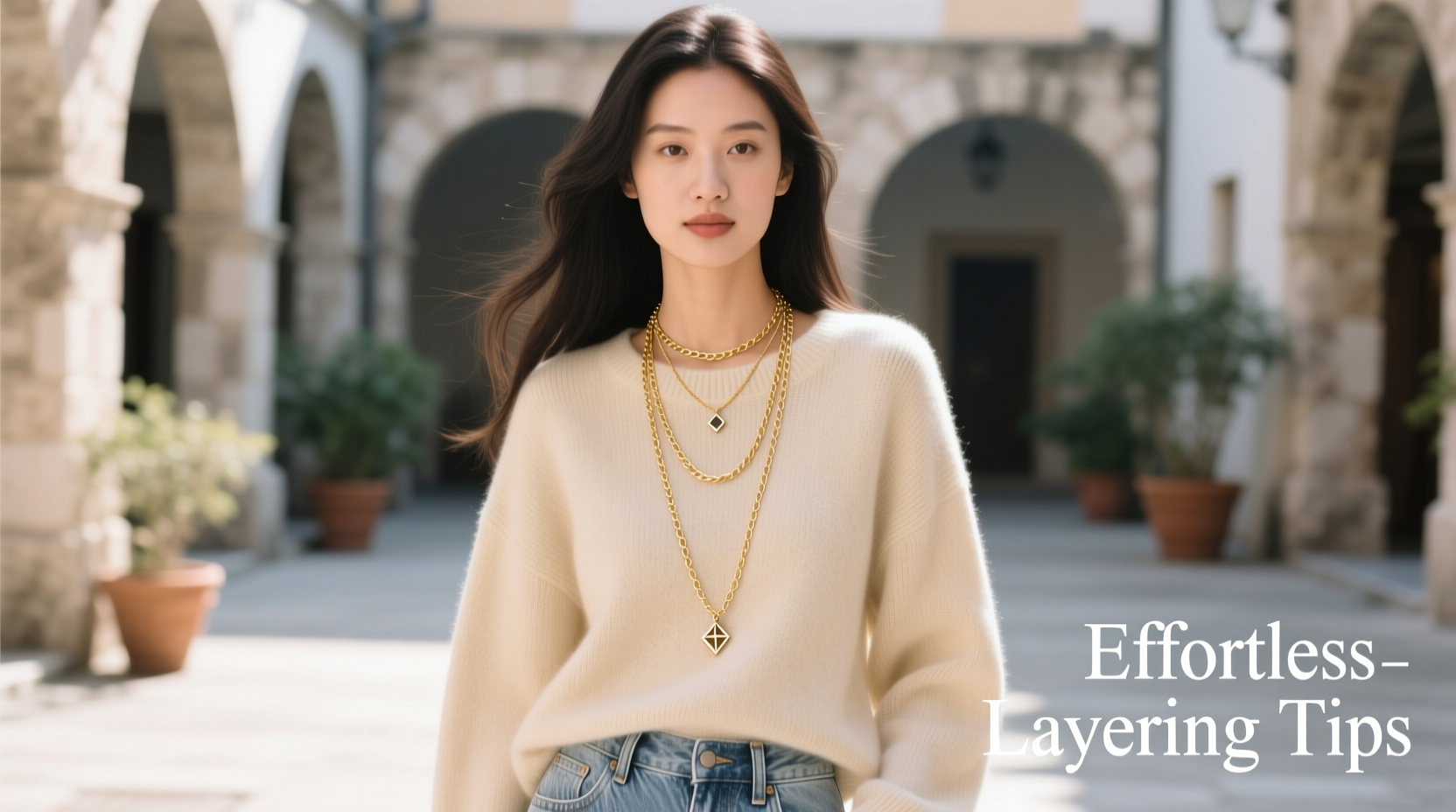
The foundation of successful layering is understanding standard necklace lengths and how they interact when worn together. Each length sits differently on the body, creating distinct visual zones. Knowing these helps avoid clumping and ensures each piece has room to shine.
| Length (inches) | Name | Sits On | Best For Layering |
|---|---|---|---|
| 14–16 | Choker | Base of neck | Top layer or solo statement |
| 18 | Princess | Just below collarbone | Middle anchor in a stack |
| 20–22 | Matinee | Upper chest | Balancing longer pieces |
| 24+ | Opera or Rope | Chest to sternum | Bottom layer or draped styles |
A well-balanced stack typically includes three layers: one short (14–16\"), one mid-length (18–20\"), and one long (24\"+). This creates a cascading effect that draws the eye downward while maintaining symmetry.
Tip: Always measure your existing necklaces before layering—use a soft tape or string to confirm exact drop points.Choose Complementary Styles and Textures
Harmony in layering comes from contrast as much as cohesion. Mixing delicate chains with bolder elements adds depth without overwhelming the neckline. Consider combining different chain types—like a fine cable, a dainty box chain, and a slightly chunkier Figaro—to introduce subtle variation.
Include at least one pendant in your stack, ideally on the middle or longest chain, to serve as a visual anchor. Smaller charms or minimalist symbols (such as moons, stars, or initials) work beautifully without dominating the look.
- Fine + Bold Mix: Pair a 14\" gold choker with a 20\" textured rope chain for contrast.
- Material Consistency: Stick to one metal tone (e.g., all gold or all silver) unless intentionally going for a mixed-metal look.
- Pendant Placement: Avoid placing pendants too close together—they should land at different vertical levels.
“Layering is about rhythm, not repetition. Think like a composer—each piece plays a note, and together they form a melody.” — Lena Torres, Jewelry Stylist & Founder of Forma Collective
Step-by-Step Guide to Building Your First Stack
Creating a cohesive layered look doesn’t require a jewelry box full of options. Start with what you have and build intentionally. Follow this sequence to design a balanced, flattering combination.
- Select a Base Chain: Begin with a reliable 18\" chain—this will act as your anchor. A simple cable or snake chain works best.
- Add a Shorter Layer: Choose a 14–16\" choker, either plain or with a small charm. This adds intimacy near the throat.
- Incorporate a Long Piece: Introduce a 24\" or longer chain to extend the line downward. Try a paperclip or curb chain for modern appeal.
- Vary Pendant Sizes: If using pendants, ensure they differ in size and hang at separate levels to prevent tangling.
- Adjust and Test: Put them on, check in the mirror from front and side angles, and adjust lengths if needed by adding extenders.
This methodical approach prevents overcrowding and ensures each necklace contributes meaningfully to the overall composition.
Real-Life Example: From Office to Evening
Consider Sarah, a marketing professional who wanted to add personality to her weekday wardrobe without switching outfits. She started with a simple white blouse and black blazer—a common uniform. Her go-to was a single 18\" pendant necklace, which felt safe but forgettable.
After experimenting, she created a three-layer set: - 16\" thin herringbone chain with a tiny initial charm - 18\" classic box chain with a medium-sized disc pendant - 24\" delicate trace chain with no pendant
Worn together, the layers added dimension and warmth to her look. Colleagues noticed, complimenting her “put-together” style. For evenings, she swapped in a bold 30\" link chain over a little black dress—same concept, elevated impact.
This example shows how minimal additions can maximize visual interest without sacrificing professionalism or comfort.
Do’s and Don’ts of Necklace Layering
To refine your technique and avoid common pitfalls, refer to this quick-reference guide.
| Do’s | Don’ts |
|---|---|
| Stick to odd numbers (3 or 5 layers) for visual balance | Layer more than five delicate chains—they’ll tangle and blur |
| Mix textures but keep metals consistent | Combine overly chunky pieces that compete for attention |
| Use extenders to fine-tune lengths | Wear all pendants at the same level |
| Secure clasps properly to prevent breakage | Forget skin tone���rose gold flatters warm tones, silver suits cool undertones |
Checklist: Build Your Signature Stack in 5 Steps
Use this actionable checklist to curate a layered look that reflects your style and adapts to your lifestyle.
- ☐ Assess your current necklace collection—identify lengths and styles
- ☐ Select one base chain (18\") as your starting point
- ☐ Add one shorter (14–16\") and one longer (24\"+) chain for contrast
- ☐ Choose pendants carefully—one focal point is enough
- ☐ Test the stack with different necklines (V-neck, crew, off-shoulder) to ensure versatility
Frequently Asked Questions
Can I layer necklaces with different metal tones?
Yes—but do so intentionally. Mixing gold, silver, and rose gold can look modern and eclectic, especially if the designs are cohesive. Limit mixed metals to two types max, and ensure other elements (like watch or ring metals) complement the blend.
How do I stop my necklaces from tangling?
Tangling is common with multiple fine chains. To minimize it, fasten each clasp before putting them on, choose chains with varying thicknesses, and consider using a necklace separator charm between layers. At night, store them flat or hang individually.
Is there a rule for how many necklaces to wear?
While there's no strict rule, odd-numbered stacks (3 or 5) tend to be more visually pleasing. Beginners should start with three. As you gain confidence, you can experiment with asymmetry or themed sets (e.g., birthstones, zodiac symbols).
Final Thoughts: Make It Yours
Layering necklaces is less about following rules and more about discovering what resonates with your personal rhythm. The most memorable styles aren’t copied—they’re cultivated over time, shaped by experience, emotion, and self-awareness. A locket passed down from a grandmother, a souvenir pendant from a trip, or a sleek modern chain bought on a whim—all can coexist in a way that tells your story.
Start small. Be patient. Adjust often. Let your layers evolve as you do.
💬 What does your signature stack say about you? Share your favorite combination or styling tip in the comments—inspire others to wear their stories with pride.