Geometric jewelry—defined by clean lines, symmetry, and bold shapes like circles, triangles, squares, and hexagons—has emerged as a cornerstone of modern personal style. Unlike ornate or organic designs, geometric pieces bring structure, balance, and a contemporary edge to any ensemble. When paired thoughtfully, they elevate even the simplest outfit into a statement of intentionality and confidence. Yet many wearers hesitate, unsure how to integrate these striking accessories without overwhelming their look. This guide demystifies the process, offering practical strategies to seamlessly blend geometric jewelry with your wardrobe for truly effortless style.
The Power of Shape in Fashion
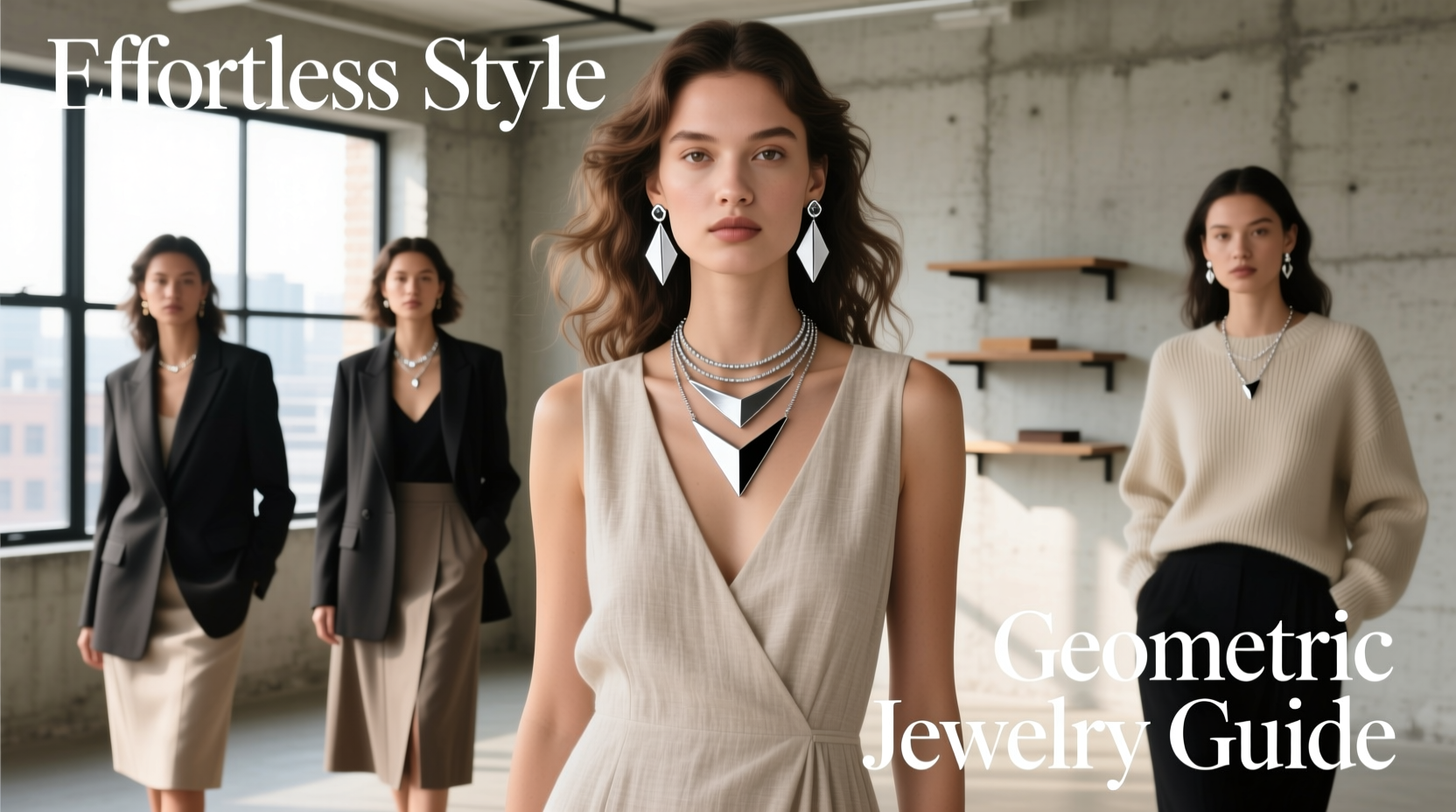
Shapes carry psychological weight. Circles suggest continuity and softness; triangles imply direction and energy; squares and rectangles convey stability and order. When you wear geometric jewelry, you're not just adding sparkle—you're introducing visual language to your appearance. Understanding how each shape interacts with clothing silhouettes and body lines allows you to curate a more intentional aesthetic.
For instance, angular necklaces can draw attention upward, accentuating the face, while circular earrings soften strong jawlines. Layered linear bracelets echo structured tailoring, creating cohesion between accessory and garment. The key is alignment: match the energy of the jewelry to the mood of the outfit.
“Geometric jewelry is architecture for the body. It frames movement, enhances proportion, and turns fashion into form.” — Lena Moreau, Jewelry Designer & Style Consultant
How to Match Jewelry Geometry with Outfit Silhouettes
The silhouette of your clothing sets the stage for how geometric jewelry performs. A flowing maxi dress behaves differently under adornment than a tailored blazer or a minimalist slip top. Consider these guiding principles:
- Structured outfits (blazers, sheath dresses, button-downs): Pair with angular or multi-faceted pieces. Think cubic earrings, rectangular cuffs, or faceted pendant necklaces that echo architectural lines.
- Soft, flowing garments (linen tunics, silk skirts, drapey knits): Use circular or curved geometric forms to complement the fluidity. Hoops, domed rings, or wave-like link chains maintain harmony without competing.
- Asymmetrical cuts: Balance them with symmetrical jewelry. A one-shoulder top looks grounded with a pair of identical geometric studs.
Jewelry Pairing Strategy by Occasion
Not all settings call for the same intensity of design. Adjusting your geometric jewelry based on context ensures elegance without overstatement.
| Occasion | Recommended Jewelry Type | Styling Notes |
|---|---|---|
| Work / Office | Sleek bar necklaces, angular studs, thin bangles | Stick to monochrome metals and small-scale geometry for professionalism. |
| Casual Day Out | Layered pendant necklaces, mixed-shape earrings | Combine different geometries (e.g., circle + triangle) for playful contrast. |
| Evening Event | Statement cuffs, chandelier geometric earrings, bold rings | Choose larger pieces with reflective surfaces to catch light and command attention. |
| Wedding / Formal | Delicate hexagon pendants, crystal-embedded shapes | Avoid overly industrial finishes; opt for refined materials like gold-plated brass or sterling silver. |
Step-by-Step Guide: Building a Geometric Jewelry Look
Creating a polished, cohesive appearance with geometric accessories doesn’t require fashion school training. Follow this five-step process to build confidence in your styling choices:
- Start with the outfit’s focal point. Is it a plunging neckline? A bold print? Begin by identifying where you want attention drawn, then select jewelry that enhances—not distracts from—that feature.
- Choose one dominant shape. Pick a primary geometric motif (e.g., triangles) and use it across 1–2 key pieces—say, earrings and a ring—to create rhythm.
- Limit full-face competition. If wearing dramatic earrings, avoid a chunky necklace. Let one area shine.
- Vary scale, not shape. Mix small and large versions of the same shape for depth. For example, pair tiny square studs with a larger square pendant.
- Anchor with neutral tones. Geometric jewelry stands out best against solid colors—especially black, white, beige, navy, or gray. These backdrops let the design speak clearly.
Real-Life Example: From Dressed Down to Polished
Take Maria, a marketing consultant who typically wears simple cotton shirts and jeans. She wanted to appear more put-together during client meetings without changing her wardrobe drastically. Her solution? A pair of matte-finish triangular drop earrings in brushed gold and a slim hexagonal ring.
By adding only two geometric pieces, her entire presence shifted. The angular earrings framed her face and suggested precision; the ring added subtle detail when gesturing. Colleagues began commenting on her “elevated yet relaxed” style. No new clothes were purchased—just strategic jewelry placement that aligned shape with purpose.
Common Mistakes to Avoid
Even experienced dressers can misstep when integrating geometric jewelry. Watch out for these pitfalls:
- Overloading on angles. Wearing sharp-edged earrings, a jagged pendant, and a zig-zag bracelet simultaneously can feel chaotic rather than curated.
- Mismatched metal tones. Mixing warm gold with cool silver in multiple pieces often disrupts visual flow unless intentionally styled.
- Ignoring facial proportions. Large geometric earrings may overwhelm smaller facial features. Opt for proportional sizing—small hoops or studs if your face is petite.
- Clashing with patterns. Highly structured jewelry competes with busy prints. Pair with solids or subtle textures instead.
Essential Checklist: Styling Geometric Jewelry Like a Pro
Before stepping out, run through this checklist to ensure your look is balanced and intentional:
- ✅ One dominant shape selected
- ✅ Jewelry complements clothing silhouette
- ✅ Metals coordinated (or deliberately contrasted)
- ✅ No more than two statement pieces worn at once
- ✅ Focal point of the outfit enhanced, not competed with
- ✅ Proportions suit your frame and facial features
- ✅ Overall vibe matches the occasion (professional, playful, romantic, etc.)
Frequently Asked Questions
Can I wear geometric jewelry with vintage-inspired clothing?
Absolutely—but do so selectively. Pair a single modern geometric piece, like a circular pendant, with a 1970s-style blouse to add subtle contrast. Avoid combining multiple geometric items with period-specific attire, as it can create visual conflict.
Is geometric jewelry suitable for men?
Yes. Men can embrace geometric style through minimalist signet rings with engraved shapes, angular cufflinks, or pendant necklaces featuring cubes or pyramids. The key is restraint and alignment with overall grooming and clothing style.
How do I care for geometric jewelry with intricate edges?
Clean gently with a soft-bristled brush and mild soap solution. Store each piece separately in a fabric-lined box to prevent scratches on corners and edges. Avoid tossing into drawers where sharp points can snag fabrics or deform.
Final Thoughts: Make Geometry Work for You
Effortless style isn’t about following trends—it’s about making deliberate choices that reflect your personality and enhance your natural strengths. Geometric jewelry offers a powerful tool for doing just that. Its clarity of form brings order to chaos, draws attention where you intend, and adds a whisper of modern artistry to everyday life.
You don’t need a closet full of statement pieces. Start with one well-chosen item—a pair of angular earrings, a linear bracelet—and observe how it changes the way people see you. Then build from there, guided by proportion, purpose, and personal taste. Over time, you’ll find that pairing geometric jewelry with your outfits becomes second nature—instinctive, expressive, and undeniably stylish.
💬 Ready to redefine your look? Choose one geometric piece today and style it with confidence. Share your favorite combination in the comments—we’d love to hear what works for you.