Tweed jackets are timeless pieces—valued for their durability, texture, and classic style. Whether part of a tailored suit or a standalone statement piece, they often become wardrobe staples. But because tweed is typically made from wool or wool-blend fibers, improper cleaning can lead to shrinkage, felting, or damage to the fabric’s structure. Unlike cotton or synthetic materials, wool reacts unpredictably to heat, moisture, and agitation. Understanding how to clean a tweed jacket safely is essential to maintaining its shape, drape, and longevity.
Cleaning doesn’t always mean washing. For tweed, preservation through spot treatment, airing, and professional care often outweighs aggressive home cleaning. The goal is not just cleanliness but also protection of the fabric’s natural oils, weave integrity, and dimensional stability.
Why Tweed Requires Special Care
Tweed is traditionally woven from carded wool yarns, giving it a slightly rough, nubby texture that resists wind and water. Its natural lanolin content provides some resistance to stains and odors, but over time, body oils, sweat, and environmental grime accumulate. However, exposing tweed to high heat or moisture triggers the scales in wool fibers to open and interlock—a process known as felting—which causes irreversible shrinkage.
Washing a tweed jacket in hot water or tossing it into a dryer is a common mistake. Even hand-washing with warm water can be risky if not done precisely. Mechanical agitation during laundering encourages fiber migration and compaction, leading to a misshapen, tighter garment. Therefore, gentle, controlled methods are non-negotiable when dealing with this delicate yet resilient fabric.
“Tweed should never be treated like everyday cotton clothing. It demands respect for its natural fiber composition.” — Margaret Langley, Textile Conservator at the British Fashion Archive
Step-by-Step Guide: Safe Home Maintenance Routine
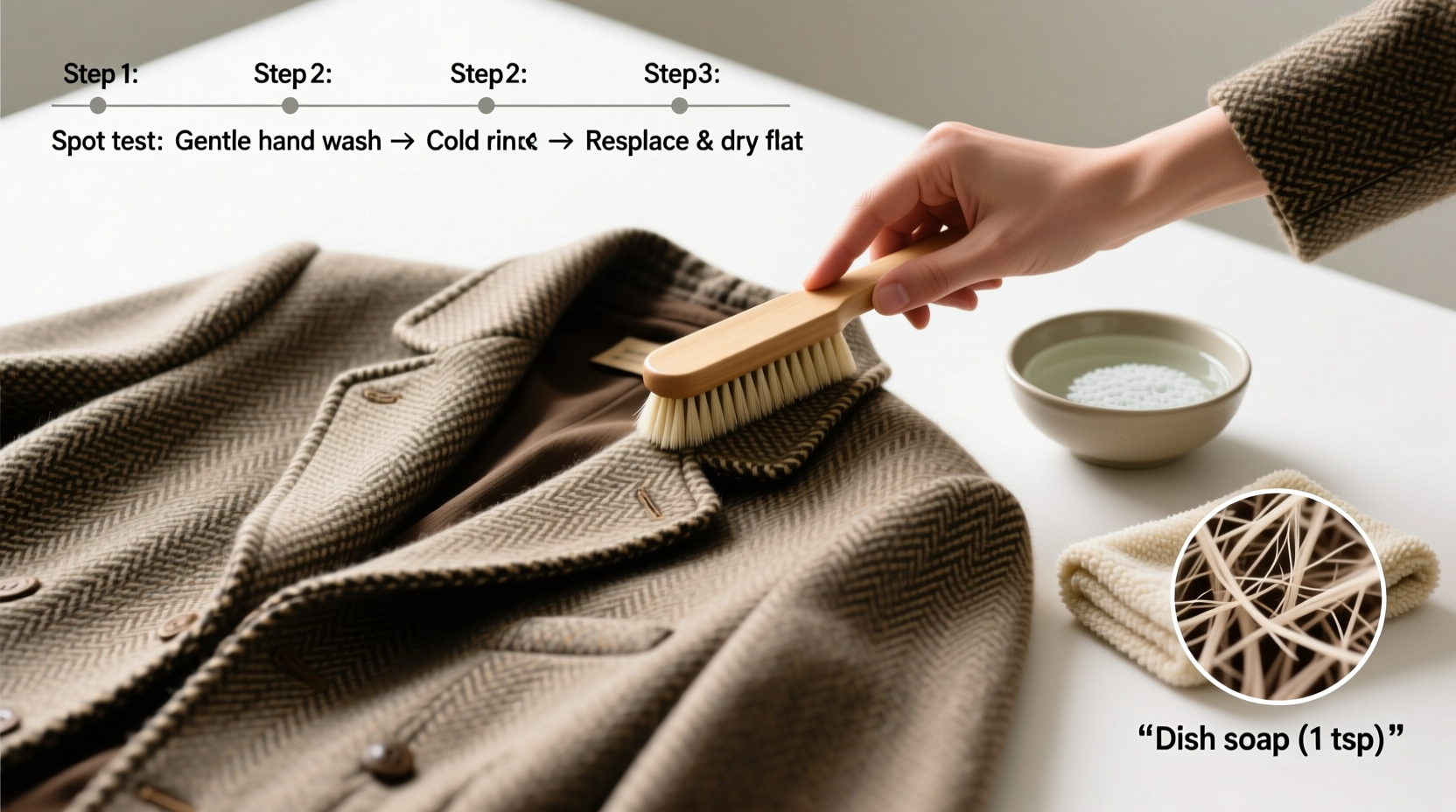
While full cleaning should often be left to professionals, regular maintenance at home prevents deep-set dirt and reduces the need for frequent dry cleaning. Follow this timeline-based routine to keep your tweed jacket fresh between professional services.
- After Each Wear (Immediate): Hang the jacket on a broad, padded hanger in a well-ventilated area for at least 24 hours. This allows moisture and odors to dissipate naturally.
- Weekly: Use a soft-bristled clothes brush (preferably a suede or wool brush) to gently remove surface dust and lint. Always brush in the direction of the nap to avoid damaging fibers.
- Monthly: Inspect for stains, especially under collars and cuffs. Address spots immediately using a damp cloth and minimal pressure.
- Every 3–6 Months: Consider professional cleaning, depending on wear frequency. Over-cleaning strips natural oils; under-cleaning leads to embedded grime.
Do’s and Don’ts of Cleaning Tweed
| Do’s | Don’ts |
|---|---|
| Spot clean with a barely damp microfiber cloth | Soak the jacket in water |
| Use cold distilled water for spot treatment | Apply household detergents or bleach |
| Blot spills gently—never rub | Rub or scrub stained areas aggressively |
| Air dry flat away from direct heat or sunlight | Use a hairdryer, radiator, or tumble dryer |
| Take to a specialist cleaner experienced with woolens | Machine wash, even on “wool” or “delicate” settings |
Professional vs. At-Home Spot Cleaning
For minor soiling, careful at-home spot cleaning can be effective. However, it's crucial to test any method on an inconspicuous area first—such as the inside seam or hem.
To treat light stains:
- Dampen a clean, white microfiber cloth with cold distilled water.
- Gently dab the affected area without pressing deeply into the fabric.
- For oily stains, place a small amount of cornstarch or talcum powder on the spot, let sit for 15 minutes, then brush off.
- Never use vinegar, alcohol, or commercial stain removers unless approved by a textile expert.
When stains are larger, set-in, or involve liquids like wine or coffee, professional dry cleaning is the safest route. Choose a cleaner who specializes in heritage garments or natural fibers. Ask whether they use hydrocarbon solvents instead of perchloroethylene, which is harsher on wool.
Mini Case Study: Reviving a Vintage Harris Tweed Jacket
James, a collector of vintage menswear, inherited his grandfather’s 1950s Harris Tweed jacket. Though structurally sound, it had developed musty odor and collar discoloration from years in storage. Instead of washing it, he consulted a textile conservator.
The expert recommended air circulation for 72 hours, followed by light brushing and localized steam treatment using a cool iron with a press cloth. The jacket was then cleaned using a pH-neutral solvent system designed for aged wool. Result: the jacket regained its original luster without any shrinkage or warping. This case underscores the value of patience and expertise over DIY urgency.
What to Look for in a Professional Cleaner
Not all dry cleaners are equipped to handle tweed properly. Seek out establishments that:
- Offer hand-finishing and tailored garment care
- Use gentle, wool-safe solvents
- Have experience with structured jackets and natural fibers
- Provide clear communication about their cleaning process
Ask questions before handing over your jacket. A reputable cleaner will inspect the garment, check for loose linings or weak seams, and advise on whether cleaning is advisable at that time.
“With tweed, sometimes the best cleaning method is prevention. Rotate your jackets, air them often, and intervene early.” — Daniel Reeves, Master Tailor & Garment Care Consultant
Frequently Asked Questions
Can I steam my tweed jacket to remove wrinkles?
Yes, but with caution. Use a garment steamer on low heat, holding it at least 6 inches from the fabric. Never apply direct steam or press with a hot iron. Always place a clean cotton cloth between the iron and jacket if pressing is necessary.
How do I remove cigarette or cooking odors from tweed?
Hang the jacket outdoors on a dry, breezy day—away from direct sunlight—for several hours. You can also place it in a closet with activated charcoal or cedar blocks to absorb odors naturally. Avoid fabric sprays, which may leave residue.
Is it safe to store a tweed jacket in a vacuum-sealed bag?
No. Vacuum sealing compresses the fibers and disrupts the fabric’s loft and breathability. Store tweed in a breathable cotton garment bag in a cool, dry closet with good airflow.
Checklist: Safe Tweed Jacket Care
- ✔️ Brush after every few wears to remove surface debris
- ✔️ Air out for 24 hours after wearing
- ✔️ Spot clean only with cold water and microfiber cloth
- ✔️ Use a padded hanger to maintain shoulder shape
- ✔️ Schedule professional cleaning every 3–6 months based on use
- ✔️ Store in a breathable garment bag away from humidity
- ✔️ Avoid exposure to direct heat, sunlight, and rain
Conclusion
Caring for a tweed jacket isn’t about frequent cleaning—it’s about intelligent maintenance. By respecting the natural properties of wool and avoiding common pitfalls like heat and moisture exposure, you preserve both appearance and structural integrity. Whether you’re tending to a family heirloom or a modern investment piece, the right approach ensures your tweed jacket remains sharp, comfortable, and unwrinkled for decades.
💬 Have a tweed care tip or success story? Share your experience in the comments and help others protect their favorite wool garments with confidence.