Diamond inlay rings combine elegance with intricate craftsmanship, making them cherished pieces in any jewelry collection. Over time, exposure to oils, lotions, dust, and everyday wear can dull their brilliance. While professional cleaning is always an option, maintaining your ring’s sparkle between visits is both practical and achievable at home. The key lies in using the right techniques—methods that effectively remove buildup without compromising the integrity of the delicate inlay or the diamond itself.
Cleaning a diamond inlay requires attention to detail. Unlike solitaire settings, inlays often involve multiple small stones set into grooves or channels, which can trap debris and are more vulnerable to loosening if mishandled. This guide outlines scientifically sound, jeweler-approved practices for safely restoring your ring’s luster using household items and careful methodology.
Understanding Diamond Inlay Rings
A diamond inlay ring features stones embedded directly into the metal surface, typically along the band or in decorative patterns. These settings are prized for their seamless appearance but demand special care. Because the stones sit flush or slightly recessed, grime accumulates easily in the crevices around each diamond. Additionally, thermal shock, harsh chemicals, or abrasive tools can damage the metal matrix or dislodge stones.
The durability of a diamond (rated 10 on the Mohs hardness scale) makes it resistant to scratching, but the surrounding metal—often gold, platinum, or palladium—is not impervious to corrosion or wear. Porous metals like silver may tarnish, while alloys can react poorly to acidic or chlorinated substances. Understanding these material properties ensures your cleaning method enhances longevity rather than accelerating deterioration.
“Many customers bring in damaged inlay rings after using ultrasonic cleaners or bleach-based solutions. A gentle, consistent routine at home prevents most issues.” — Daniel Reyes, Master Jeweler & GIA Graduate
Step-by-Step Guide: Safe Home Cleaning Process
Cleaning your diamond inlay ring doesn’t require specialized equipment. With patience and precision, you can achieve professional-level results using common household items. Follow this six-step process weekly to maintain optimal shine and hygiene.
- Prepare Your Workspace: Lay down a soft towel on a clean, flat surface. Close the drain if working near a sink and consider placing a fine mesh strainer over it to prevent accidental loss.
- Remove Lotions and Oils: Wash your hands thoroughly before handling the ring to avoid transferring additional residue.
- Create a Mild Cleaning Solution: Mix one cup of lukewarm distilled water with two drops of non-ammonia dish soap. Avoid detergents with dyes, fragrances, or degreasers.
- Soak the Ring: Submerge the ring for 15–20 minutes. This loosens embedded particles without stressing the metal or adhesive (if present).
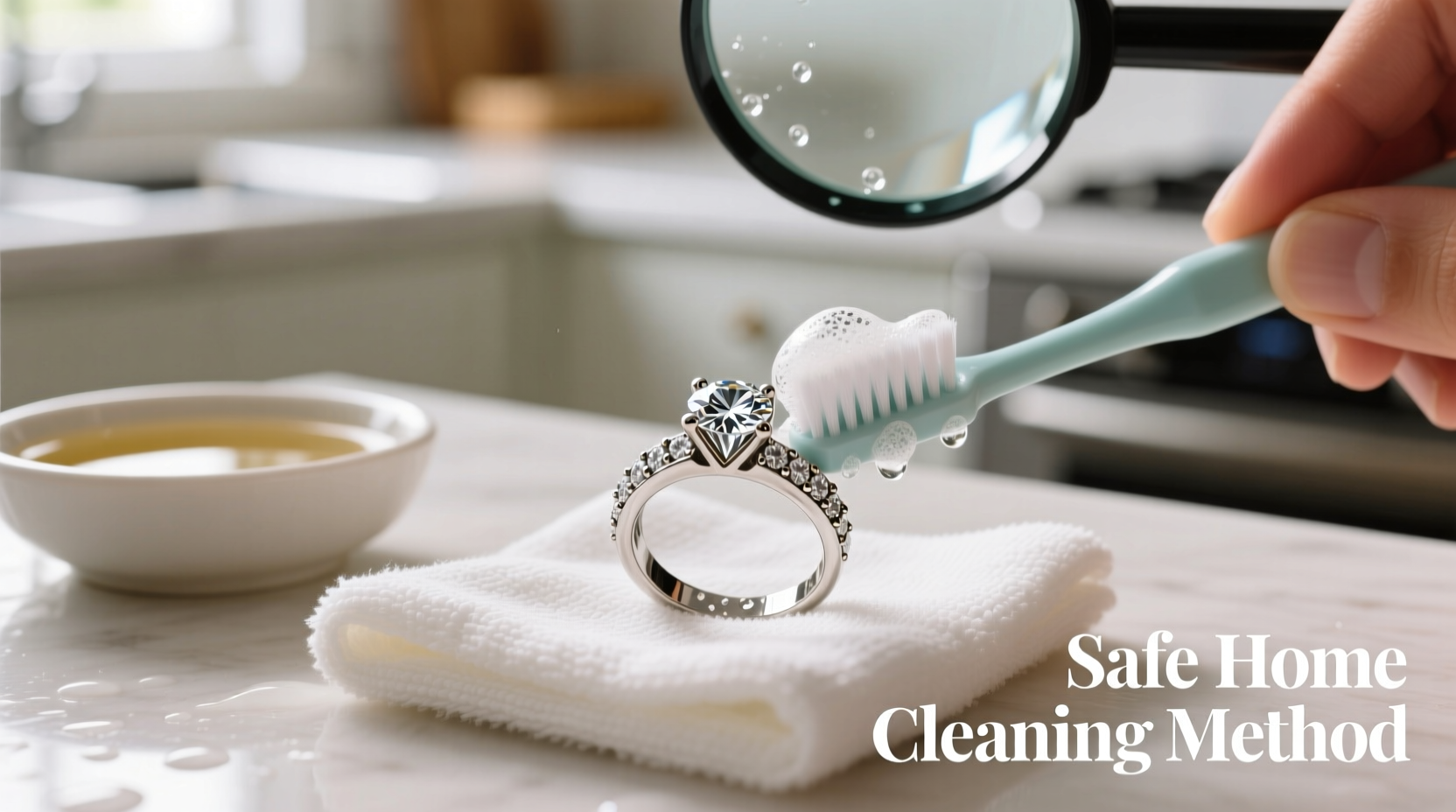
- Gentle Brushing: Use a soft-bristled toothbrush (preferably new and dedicated to jewelry use). Dip it into the solution and lightly brush around each diamond, focusing on the base where dirt collects. Apply minimal pressure—let the bristles do the work.
- Rinse and Dry: Rinse under lukewarm running water for 10 seconds. Pat dry with a lint-free microfiber cloth. Do not air-dry, as water spots may form.
Do’s and Don’ts: Best Practices Table
| Do’s | Don’ts |
|---|---|
| Use lukewarm distilled water | Expose to hot tap water (mineral deposits can build up) |
| Clean once every 7–10 days | Go longer than three weeks without cleaning |
| Inspect for loose stones monthly | Tap or knock the ring against hard surfaces during cleaning |
| Store separately in a fabric-lined box | Keep in humid environments like bathrooms |
| Use a magnifying glass to check details | Use toothpaste, baking soda, or vinegar (abrasive or acidic) |
Alternative Methods: When Standard Cleaning Isn't Enough
For rings with visible cloudiness or stubborn buildup, mild enhancements to the basic method can improve results—without risking damage.
- Isopropyl Alcohol Rinse (Occasional Use): After soapy cleaning, dip the ring briefly in 90%+ isopropyl alcohol to dissolve oily residues. Immediately rinse with water and dry. Limit to once per month.
- Steam from a Kettle (Caution Advised): Hold the ring several inches above steam from a boiling kettle for no more than 10 seconds. Do not touch the spout. This helps loosen debris but should be avoided for rings with glued components or opals nearby.
- Professional-Grade Cloth Polishing: Use a certified jewelry polishing cloth (e.g., Sunshine Cloth™) to gently buff the metal. Always wipe in one direction, avoiding direct contact with stone edges.
Note: Ultrasonic cleaners are generally not recommended for inlay designs unless explicitly approved by the manufacturer. Vibration can weaken prongs or fracture micro-settings over time.
Mini Case Study: Reviving a Heirloom Band
Sarah inherited a white gold diamond inlay wedding band from her grandmother. After years in a drawer, the ring appeared dull, with blackened crevices between stones. She began a bi-weekly cleaning routine using the lukewarm soapy water method and a baby toothbrush. Within a month, the metal regained its luster and the diamonds sparkled clearly. A local jeweler later confirmed no structural damage and praised the consistency of care. “It looked like it had been professionally serviced,” he said. Sarah now cleans it every Sunday evening—a ritual that connects her to family history and personal pride.
Jewelry Care Checklist
Stay proactive with this printable-style checklist to ensure your diamond inlay ring remains in top condition:
- ☐ Clean ring every 7–10 days using mild soap and water
- ☐ Inspect under bright light monthly for loose or missing stones
- ☐ Remove ring before swimming, cleaning, or applying cosmetics
- ☐ Store in a padded, individual compartment when not worn
- ☐ Schedule professional inspection every 12–18 months
- ☐ Avoid wearing during high-impact activities (e.g., gym, gardening)
- ☐ Use a microfiber cloth for daily wipe-downs after wear
Frequently Asked Questions
Can I use dish soap to clean my diamond inlay ring?
Yes, but only fragrance-free, dye-free liquid dish soap without ammonia or bleach. Brands like Dawn Original or Seventh Generation Free & Clear are widely recommended by jewelers. Excessive surfactants can leave a film, so rinse thoroughly.
How do I know if my inlay stones are secure?
Examine the ring under a magnifier or smartphone macro lens. Look for gaps between the stone and metal, uneven alignment, or dark shadows beneath diamonds. Gently tap the side of the ring on a hard surface—if you hear a rattling sound, seek professional tightening immediately.
Is it safe to wear my ring in the shower?
No. Soap scum, shampoo residues, and hard water minerals accumulate rapidly in inlay settings, creating a film that dulls the stone. Long-term exposure also increases risk of metal erosion and stone loosening. Always remove before bathing.
Conclusion: Preserve Beauty Through Consistent Care
A diamond inlay ring is more than an accessory—it’s a symbol of meaning, artistry, and enduring value. Its brilliance depends not on rare interventions but on regular, thoughtful maintenance. By adopting a simple yet disciplined cleaning routine, you protect both aesthetic appeal and structural integrity. Each gentle brushstroke contributes to a legacy of care that honors the craftsmanship and sentiment behind the piece.
💬 Have a favorite home care tip or success story? Share your experience in the comments—your insight could help others cherish their rings just a little longer.