
Choosing the right gear for your dog’s daily walks isn’t just about style—it directly impacts their safety, comfort, and behavior. Two popular options—dog vest jackets and dog harnesses—are often confused or used interchangeably, but they serve very different purposes. While both go over the torso, one prioritizes warmth and visibility, the other control and physical protection. Understanding the distinction can prevent injury, reduce pulling, and make every walk more enjoyable.
Understanding the Fundamental Differences
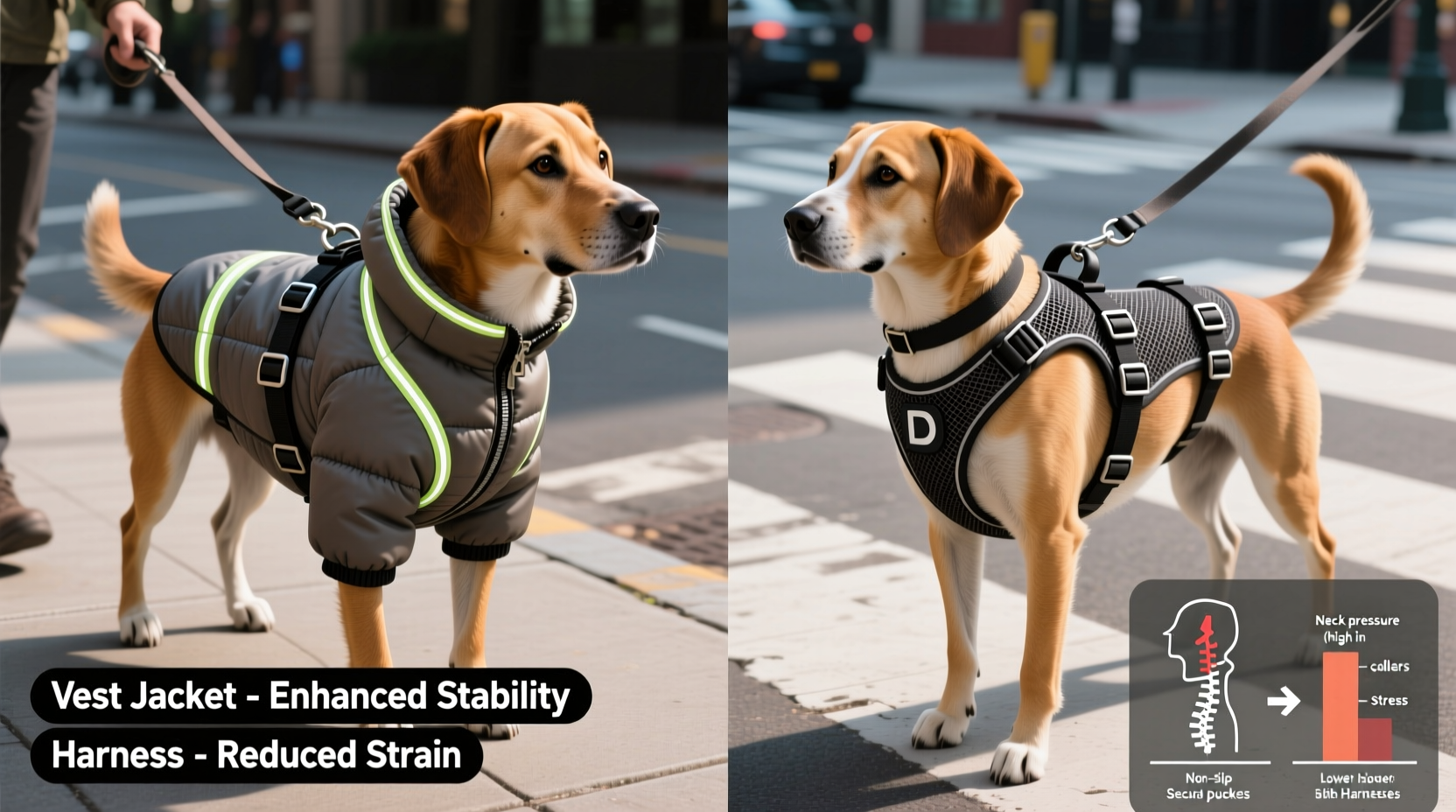
A dog vest jacket and a dog harness may look similar at first glance, especially when both are worn across the chest and back. However, their design goals diverge significantly:
- Dog Vest Jacket: Primarily designed for insulation, weather protection, or visibility (e.g., reflective strips). Often includes padding or fleece lining and may have attachment points for leashes, but not engineered for load distribution during pulling.
- Dog Harness: Engineered specifically for walking, training, or mobility support. Distributes pressure evenly across the chest and shoulders, reducing strain on the neck and trachea. Features secure leash attachments, adjustable straps, and structural support.
The confusion arises when manufacturers market “vest-style” harnesses—hybrids that look like jackets but function as harnesses. True safety comes not from appearance, but from biomechanical design.
Tip: Always check where the leash attaches. If it's at the back between the shoulders, it may be a vest with harness-like features—but front-clip or dual-clip harnesses offer superior control.Safety: Why Harnesses Win for Daily Walks
Veterinarians and canine physiotherapists consistently recommend harnesses over collars—and certainly over non-functional vests—for regular walking. The reason lies in force distribution.
When a dog pulls while wearing a collar or a vest without proper harness engineering, pressure concentrates on the neck. This can lead to:
- Tracheal collapse or irritation
- Cervical spine strain
- Glaucoma or increased intraocular pressure from neck compression
- Thyroid gland damage over time
In contrast, a well-fitted harness disperses pulling force across the dog’s stronger chest and shoulder muscles. Front-clip harnesses, which attach the leash to a ring on the chest, gently guide dogs toward the handler when they pull, encouraging better leash manners.
“Dogs are not built to withstand constant neck pressure. Using a proper harness reduces long-term injury risk and supports healthy musculoskeletal development.” — Dr. Lena Patel, DVM, Canine Rehabilitation Specialist
Comparative Breakdown: Vest Jacket vs. Harness
| Feature | Dog Vest Jacket | Dog Harness |
|---|---|---|
| Primary Purpose | Warmth, visibility, fashion | Control, safety, training |
| Leash Attachment | Rear-only (if present) | Front, rear, or dual-clip options |
| Pressure Distribution | Poor – often neck-focused | Excellent – across chest and back |
| Suitable for Pulling Dogs? | No – increases injury risk | Yes – especially front-clip models |
| Breathability & Mobility | Varies – often bulky | High – designed for movement |
| Best For | Cold weather, light strolls, visibility | Daily walks, training, reactive dogs |
Real-World Example: Max the Labrador Mix
Max, a 2-year-old energetic Labrador mix, started showing signs of coughing after walks. His owner used a stylish blue vest jacket with a rear leash loop, believing it was safer than a collar. After a vet visit, Max was diagnosed with mild tracheal irritation caused by repeated pulling against the vest.
Switching to a front-clip harness eliminated the coughing within two weeks. Not only did his breathing improve, but his pulling decreased because the harness redirected him when he surged forward. The owner kept the vest jacket for cold evenings but only uses it with the harness underneath—never as the primary walking gear.
This case highlights a common mistake: assuming that any torso-worn gear is inherently safe. Function must trump form when it comes to walking equipment.
How to Choose the Right Walking Gear: A Step-by-Step Guide
- Assess Your Dog’s Needs: Is your dog prone to pulling? Do they have respiratory issues or a history of neck injuries? Small breeds like Pomeranians or larger breeds like Huskies benefit greatly from harnesses.
- Look for Dual-Clip or Front-Clip Options: Rear clips allow pulling; front clips discourage it. Dual-clip harnesses offer flexibility—use the front clip for training, the back for relaxed walks.
- Check Fit and Adjustability: The harness should be snug but allow two fingers beneath each strap. Straps should lie flat without twisting.
- Avoid Over-the-Head Designs if Possible: Step-in harnesses reduce stress for dogs who dislike head handling and ensure proper alignment.
- Layer Wisely in Cold Weather: Use a lightweight harness as the base layer, then add a vest jacket over it for warmth. Never rely on the vest alone for control.
When a Vest Jacket Makes Sense
Vest jackets aren't useless—they fill important roles outside of active walking:
- Cold Climates: Fleece-lined or insulated vests help small or short-haired dogs retain body heat.
- Visibility: Reflective or LED-embedded vests enhance safety during early morning or evening walks.
- Identification: Some vests have pockets for ID cards or medical info, useful for service dogs or seniors.
The key is using them appropriately—as outerwear, not as restraint systems. Think of a vest jacket like a winter coat with added features, not a substitute for a seatbelt.
Frequently Asked Questions
Can I use a dog vest jacket for walking instead of a harness?
Only if it’s explicitly designed as a harness. Most vest jackets lack proper load distribution and secure leash points. Using them for walking, especially with strong or excitable dogs, increases the risk of injury.
Are no-pull harnesses safe?
Yes, when properly fitted. Front-clip no-pull harnesses are recommended by trainers and vets for dogs that pull. They redirect momentum without causing pain or joint stress, unlike choke collars or prong devices.
Do harnesses make dogs pull more?
Some dogs may initially pull more in a back-clip harness because they feel less resistance. This is not a flaw of the harness but an opportunity for training. Switching to a front-clip model or combining the harness with positive reinforcement techniques corrects this behavior.
Final Checklist Before You Buy
- ✅ Does the leash attach at the chest (front-clip) or allow dual attachment?
- ✅ Are all straps adjustable for a snug, chafe-free fit?
- ✅ Is the material durable and breathable?
- ✅ Can you easily check and adjust the fit without removing the entire harness?
- ✅ If using a vest, does it go over—not replace—a proper harness?
Conclusion: Prioritize Safety Over Style
While dog vest jackets have their place in a pet owner’s wardrobe rotation, they should never be mistaken for functional walking gear. When it comes to daily walks, training, or managing a strong dog, a well-designed harness is objectively safer, more effective, and more humane. It protects your dog’s body, improves control, and supports long-term health.
Don’t let aesthetics override anatomy. Invest in a quality harness tailored to your dog’s size, breed, and behavior. Layer a vest jacket on top when needed for warmth or visibility—but always anchor your walks in safety first.
💬 Your dog’s comfort and safety matter. Have you switched from a vest to a harness? Share your experience and help others make informed choices!