In the ongoing effort to reduce the transmission of respiratory viruses like SARS-CoV-2, mask-wearing has become a cornerstone of public health guidance. As new variants emerge and environments shift, people are increasingly asking: does layering up with two masks provide meaningful extra protection? The answer isn’t as simple as “yes” or “no.” It depends on the type of masks used, how they’re worn, and the context in which they’re used. This article breaks down the science, evaluates real-world effectiveness, and offers practical advice based on current research and expert recommendations.
The Science Behind Mask Layering
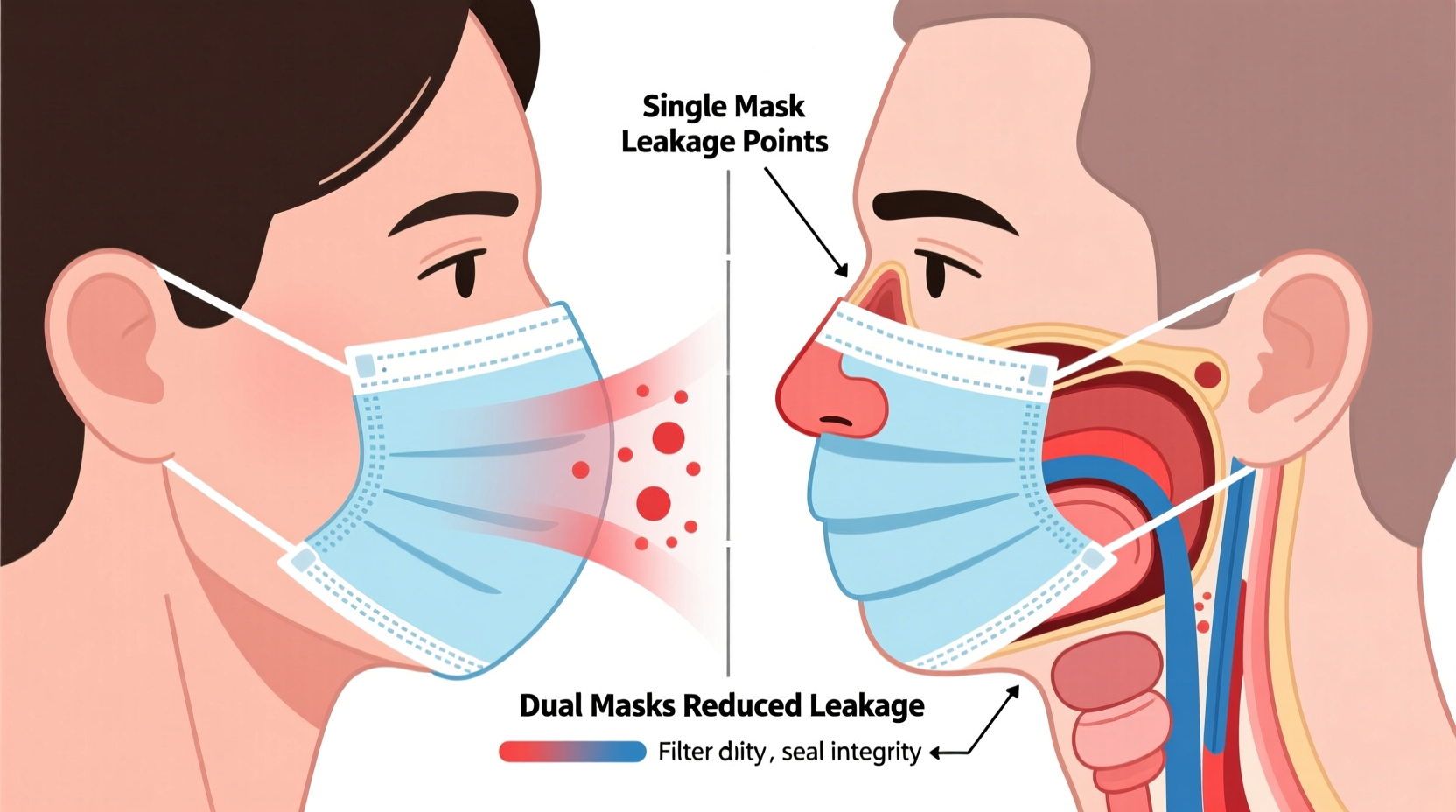
Masks work by filtering out airborne particles—both those expelled by the wearer (source control) and those inhaled from the environment (personal protection). The effectiveness of any mask depends on three key factors: filtration efficiency, fit, and breathability. When considering double masking, these variables interact in complex ways.
Wearing two masks can improve filtration if the inner and outer layers use different materials that complement each other. For example, a cloth mask over a surgical mask can enhance overall particle capture. However, simply stacking two poorly fitting masks may not help—and could even create gaps due to improper positioning.
A 2021 study published in MMWR by the CDC demonstrated that knotting the ear loops of a surgical mask and tucking in the sides (to improve fit), then placing a cloth mask over it, reduced exposure to aerosol particles by up to 95% in simulated environments. This combination addressed both filtration and fit—two common weaknesses of single-use masks.
“Properly fitted multi-layer masks significantly reduce inhalation of infectious particles. The key is minimizing leaks around the edges.” — Dr. Anthony Fauci, Director of NIAID
When Two Masks Help—And When They Don’t
Double masking isn’t universally beneficial. Its value hinges on the specific combination and execution. Below are scenarios where it adds measurable protection—and situations where it may do little or even backfire.
Situations Where Double Masking Improves Protection
- Crowded indoor spaces: In poorly ventilated areas with high foot traffic (e.g., public transit, grocery stores), an added layer can reduce inhaled viral load.
- Poorly fitting surgical masks: These often gap at the sides and nose. Adding a well-fitted cloth mask over them can seal edges and boost performance.
- High-risk settings: Healthcare workers or caregivers of immunocompromised individuals may benefit from enhanced filtration during close contact.
When Double Masking Offers Little Benefit
- Two loose-fitting cloth masks: Layering two low-filtration fabrics without improving fit yields minimal gains.
- Over an N95 respirator: Wearing another mask over a properly fitted N95 is unnecessary and may interfere with its seal.
- Daily outdoor activities: In open-air environments with low transmission risk, single high-quality masking is usually sufficient.
Comparative Effectiveness of Mask Combinations
Not all mask pairings are created equal. The table below summarizes findings from peer-reviewed studies and public health evaluations on common combinations.
| Mask Combination | Filtration Efficiency | Fit Improvement | Recommended? |
|---|---|---|---|
| Surgical mask + cloth mask (over) | 85–95% | High (when adjusted) | Yes, especially in crowded indoor areas |
| Cloth mask + surgical mask (over) | 70–80% | Low | No—reduces effectiveness due to poor inner fit |
| N95 + surgical mask | ~99% | None (may disrupt seal) | Rarely—only in clinical settings under protocol |
| Two cloth masks | 50–70% | Minimal | No—better to upgrade material or fit |
| Knot-tucked surgical + cloth over | Up to 95% | Very High | Yes—CDC-endorsed method |
The data shows that strategic layering—particularly using a modified surgical mask beneath a snug cloth mask—can approach the performance of higher-grade respirators in everyday conditions. However, haphazard combinations often fail to deliver meaningful improvements.
Step-by-Step Guide to Effective Double Masking
If you decide to wear two masks, follow this evidence-based sequence to maximize protection without compromising comfort or safety.
- Select your base mask: Use a disposable surgical mask. Avoid reusing it. Ensure it covers your nose, mouth, and chin completely.
- Improve the fit: Knot the ear loops near the edge of the mask and tuck the excess material inward. This reduces side gaps and creates a tighter seal across the nose and cheeks.
- Choose your outer mask: Pick a cloth mask with multiple layers (at least two), preferably with a nose wire and a tight weave (e.g., cotton quilting fabric).
- Layer correctly: Place the cloth mask over the surgical mask. The outer mask should press the inner one firmly against your face, especially along the bridge of the nose and jawline.
- Check the seal: Perform a user seal check by cupping your hands around the edges while breathing in and out. If you feel air leaking, adjust the fit or try a different size.
- Monitor comfort and duration: Double masking increases breathing resistance. Limit prolonged use in hot or physically demanding conditions to avoid fatigue.
“Fit is everything. A well-sealed surgical-cloth combo can outperform a loose N95.” — Linsey Marr, PhD, Professor of Civil and Environmental Engineering, Virginia Tech
Real-World Case: Commuter Exposure Reduction
Consider Maria, a subway commuter in a major metropolitan area during a winter surge of respiratory illness. Her daily ride involves 45 minutes in a packed train car with limited ventilation. Initially, she wore only a single-ply cloth mask. After reading about rising case numbers, she switched to a double-masking strategy: a knot-tucked surgical mask covered by a three-layer cotton mask with a nose wire.
She noticed the fit was tighter and breathing slightly harder, but after adjusting the ear loops for comfort, she adapted quickly. Over the next six weeks, despite close proximity to several coughing passengers, she remained uninfected—while two coworkers who wore single cloth masks tested positive. While correlation doesn’t prove causation, her improved respiratory protection likely played a role in reducing her exposure risk.
This scenario illustrates how context matters. In high-exposure environments, small upgrades in personal protection can translate into tangible benefits.
Expert Recommendations and Public Health Guidance
Major health organizations have weighed in on double masking. The CDC initially promoted it during periods of high transmission, particularly before widespread access to high-filtration respirators. Their guidance emphasized that double masking was a pragmatic solution when N95s were scarce.
Today, the emphasis has shifted toward upgrading to higher-quality masks rather than layering lower-tier ones. The National Institute for Occupational Safety and Health (NIOSH) recommends respirators like N95s, KN95s, or KF94s for optimal protection—especially in high-risk settings.
Still, double masking remains a viable option for those who cannot access or tolerate respirators. The key is doing it right: improving both filtration and fit, not just adding bulk.
Tip: Replace surgical masks after each day of use. Wash cloth masks after every wear to maintain hygiene and filtration integrity.Checklist: Is Your Double Masking Effective?
Use this checklist to evaluate your current approach:
- ✅ Base layer is a surgical mask (not another cloth mask)
- ✅ Surgical mask is knot-tucked or otherwise adjusted to minimize side gaps
- ✅ Outer cloth mask is multi-layered and fits snugly over the inner mask
- ✅ No visible gaps around the nose, cheeks, or under the chin
- ✅ You can breathe comfortably for the intended duration
- ✅ Masks are clean, undamaged, and replaced or washed regularly
- ✅ You avoid touching the masks while wearing them
If you answered “no” to any of the first four items, your protection level may be compromised. Reassess your technique or consider switching to a single high-performance mask.
Frequently Asked Questions
Can double masking make it harder to breathe?
Yes, adding layers increases breathing resistance. Most healthy adults can tolerate this for short durations, but individuals with respiratory conditions (e.g., asthma, COPD) should consult a healthcare provider. If you experience dizziness, shortness of breath, or chest pain, remove the masks and seek fresh air immediately.
Is double masking still necessary now that vaccines are available?
Vaccination reduces the risk of severe illness but does not eliminate transmission entirely—especially with emerging variants. In high-risk settings or during surges, layered protection remains prudent. Personal choice should factor in community transmission levels, individual risk, and local guidelines.
Should children double mask?
For most children over age 2, a single well-fitted mask appropriate for their size is sufficient. Double masking may be uncomfortable or improperly worn, reducing compliance. Focus on fit and material quality instead. Consult pediatric guidance if your child is immunocompromised or in high-exposure settings.
Conclusion: Prioritize Quality and Fit Over Quantity
Wearing two masks can offer more protection than one—but only when done correctly. Simply layering any two masks without attention to fit and material will likely yield disappointing results. The goal isn’t to pile on fabric but to create a sealed, high-filtration barrier between you and airborne pathogens.
As better options like N95 and KN95 respirators become more accessible, upgrading to a single high-performance mask is often a smarter move than double masking with surgical and cloth alternatives. However, for those who rely on everyday masks, combining a properly adjusted surgical mask with a snug cloth cover remains a scientifically supported strategy in high-risk environments.
Protection is personal. Assess your daily exposures, understand the limitations of your gear, and make informed choices. Whether you opt for one superior mask or a thoughtfully layered pair, the bottom line is clear: fit, filtration, and consistency matter far more than the number of masks on your face.
🚀 Ready to optimize your protection? Evaluate your current mask setup using the checklist above, and share this guide with others who want science-backed strategies for staying safe.