For years, anime has functioned as more than entertainment—it’s been a cultural compass. From the mist-wrapped shrines of K-On! to the coastal cliffs of Free!, fictional backdrops have quietly reshaped how fans experience Japan. But one trend has emerged with surprising momentum: distillery tourism inspired by anime settings. Not as cosplay gimmicks or themed cafes—but as deeply intentional, location-driven pilgrimages where travelers seek out real-world distilleries that mirror the atmosphere, geography, and craftsmanship evoked in beloved series. This isn’t about chasing fantasy; it’s about recognizing how anime’s visual language—its reverence for seasonal rhythm, artisanal patience, and quiet rural dignity—has reawakened global interest in Japan’s regional spirits culture. The result? A new kind of cultural travel: slow, sensory, and steeped in authenticity.
How Anime Framed Japan’s Spirits Landscape
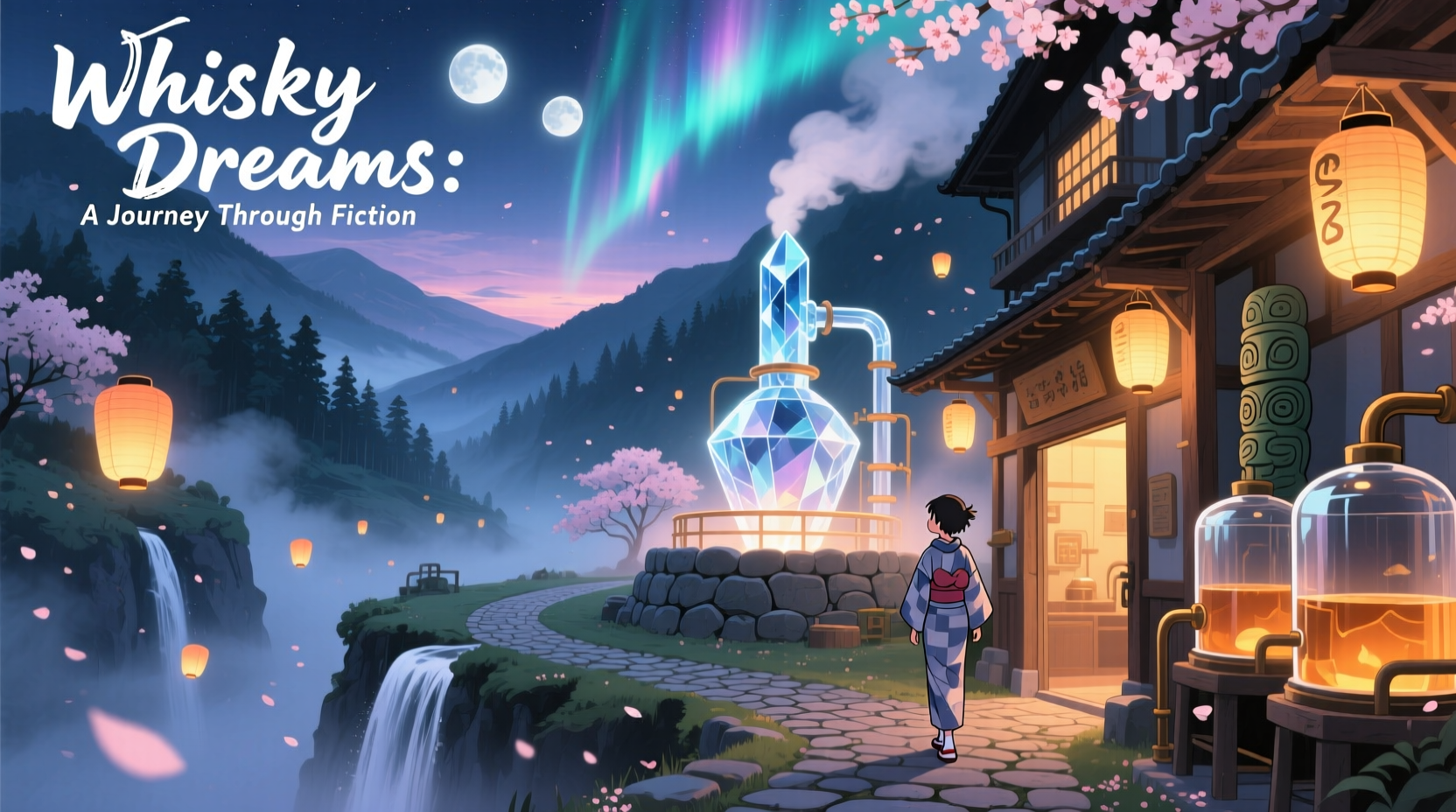
Anime rarely features distilleries as central plot devices—but it consistently uses them as atmospheric anchors. Consider the amber-lit interior of the family-run sake brewery in March Comes in Like a Lion, where steam rises from wooden mash vats and elderly brewers move with unhurried precision. Or the snow-draped, copper-still-lined distillery in Laid-Back Camp’s Hokkaido arc, its windows fogged from fermentation heat, nestled beside a frozen river. These aren’t generic backdrops. They’re meticulously researched composites: the sake brewery draws on real practices from Nara’s 1,300-year-old Kasuga Taisha shrine breweries; the Hokkaido distillery echoes the architecture and isolation of Nikka Whisky’s Yoichi Distillery. What makes these scenes resonate is their fidelity to *process*—not just aesthetics. Viewers absorb the weight of time (years-long aging), the humility of human-scale production, and the symbiosis between terroir and tradition.
This subtle pedagogy has had measurable impact. According to the Japan Tourism Agency’s 2023 Visitor Behavior Survey, 37% of international visitors aged 25–44 cited “anime-influenced location recognition” as a factor in choosing rural destinations—and among those visiting Hokkaido, Kyushu, or the Kansai region, over half visited at least one distillery or sake brewery. As Dr. Yuki Tanaka, cultural anthropologist at Kyoto University, observes: “Anime doesn’t invent places—it *curates* them. It selects details that signal authenticity: the grain texture in a rice field before brewing, the sound of wooden barrels being tapped, the way light falls on a copper still at dawn. That curation builds emotional familiarity long before a traveler books a flight.”
“Anime taught a generation to see Japanese spirits not as commodities, but as narratives in liquid form—each bottle carrying soil, season, and stewardship.” — Dr. Yuki Tanaka, Cultural Anthropologist, Kyoto University
Five Real Distilleries Resonating with Anime Aesthetics
These are not “anime-themed” venues. They are working distilleries whose landscapes, architecture, and ethos align so closely with iconic anime settings that fans report visceral recognition upon arrival—like stepping into a paused frame. Below is a comparative overview of five such sites:
| Distillery | Real Location | Anime Parallel | Why the Resonance? |
|---|---|---|---|
| Nikka Whisky Yoichi Distillery | Yoichi, Hokkaido | Laid-Back Camp (S2, Ep. 8–9) | Original stone buildings, coastal winds, visible peat smoke, and founder Masataka Taketsuru’s Scottish-Japanese fusion ethos mirror the anime’s emphasis on quiet mastery and northern resilience. |
| Kubota Shuzō (Kubota Sake Brewery) | Sakata City, Yamagata Prefecture | Barakamon (Ep. 12–13) | Operates in a 19th-century merchant house surrounded by snow-laden cedar forests; seasonal rice-polishing rituals and hand-crafted koji beds echo the show’s celebration of rural renewal and tactile craft. |
| Chichibu Distillery | Chichibu, Saitama Prefecture | Made in Abyss (visual motifs, not plot) | Deep mountain setting, custom-built stills shaped like inverted bells, and obsessive small-batch experimentation reflect the anime’s reverence for layered discovery and geological time—minus the fantasy. |
| Takara Shuzō (Takara Sake USA – Berkeley) | Berkeley, California (US branch) | Shirobako (studio culture parallels) | While overseas, its transparent fermentation tanks, open-floor layout, and bilingual staff training mirror the anime’s depiction of collaborative, detail-obsessed creative work—applied here to sake-making. |
| Hakushika Sake Brewery | Nada, Kobe, Hyōgo Prefecture | Samurai Champloo (urban-rural contrast) | One of Japan’s oldest breweries (founded 1659), located where mountains meet port city. Its historic kura (storehouse) district—lined with clay-walled buildings and narrow alleys—mirrors the anime’s textured, lived-in urbanity fused with deep tradition. |
Planning Your Trip: Beyond the Checklist
Visiting these distilleries isn’t about ticking boxes. It’s about aligning your itinerary with the rhythms anime subtly teaches: respect for seasonality, attention to process, and patience with revelation. Here’s how to structure a meaningful journey:
- Anchor around seasonal milestones: Sake breweries operate on strict annual cycles—rice harvesting (Sept–Oct), koji inoculation (Nov), pressing (Jan–Feb). Plan visits to coincide with key stages; many offer limited-access “moto-zukuri” (starter culture) observation days.
- Choose transport intentionally: Skip the shinkansen for regional lines. The JR Senmo Line to Yoichi offers coastal views identical to Laid-Back Camp’s opening shots; the JR Uetsu Line to Sakata passes through snow-draped rice fields seen in Barakamon. Motion reinforces memory.
- Book direct, not through aggregators: Email distilleries in Japanese (use simple templates: “I admire your work in [anime reference, e.g., ‘the preservation of traditional methods’] and would be honored to visit”)—many respond personally and may arrange private cellar access.
- Bring a notebook, not just a camera: Record sensory notes—not just “smells like pear,” but “smell emerges after 12 seconds, then fades into cedar resin, then returns as warm rice cake.” This mirrors how anime lingers on micro-moments.
- Respect silence protocols: In fermentation rooms and barrel cellars, speaking is often prohibited. Anime teaches this reverence—watch how characters pause before entering sacred spaces. Emulate that hush.
Case Study: The “Barakamon” Effect in Yamagata
In 2022, Kubota Shuzō in Sakata City reported a 210% year-on-year increase in foreign visitors aged 28–39. Local tourism officials traced the surge to one source: Barakamon’s two-episode arc featuring a fictional sake brewery in a snowbound village modeled explicitly on Sakata’s historic port district. What made the impact unique wasn’t fan service—it was accuracy. The anime’s art team spent three weeks in Sakata photographing grain storage silos, interviewing brewers about winter fermentation temperatures, and sketching the exact curve of the brewery’s tiled roof.
When fans arrived, they didn’t ask for photo ops with cosplayers. They asked to see the kōji-muro (koji incubation room) during active cultivation—a request Kubota had never received before. The brewery responded by launching a monthly “Winter Koji Observation” program, limiting attendance to 12 people, requiring advance registration, and offering no tasting until participants spend 45 minutes silently observing temperature and humidity logs. Enrollment fills within 90 seconds of release. As brewery manager Hiroshi Yamada told The Japan Times: “They don’t want a show. They want the truth behind the frame. We stopped explaining what we do—and started showing them how we breathe with the rice.”
What to Do (and Not Do) on an Anime-Inspired Distillery Tour
These experiences reward intentionality—and penalize performative tourism. Below is a distilled guide to respectful engagement:
| Action | Do | Don’t |
|---|---|---|
| Photography | Ask permission before shooting fermentation tanks or staff; use natural light only in cellars | Use flash near open vats (disrupts yeast activity); post unedited photos of workers without consent |
| Tasting | Hold the cup with both hands; sip slowly; note how flavor evolves over 30 seconds | Rinse palate with water between samples (dilutes nuance); compare sakes to wine using Western descriptors |
| Interaction | Ask about rice variety, water source, and barrel wood type—not “Is this like in the anime?” | Request anime-themed merchandise or insist on seeing “the scene’s exact spot” |
| Timing | Visit early morning during active brewing (6–9 a.m.) for peak sensory immersion | Arrive 10 minutes before closing for a rushed tasting |
Frequently Asked Questions
Do distilleries know about the anime connections—and do they welcome fans?
Yes—increasingly so. Most larger breweries now train staff on common anime references (e.g., “Yes, our water source matches the spring shown in March Comes in Like a Lion”). Smaller ones appreciate when visitors demonstrate knowledge of actual processes rather than just fandom. A thoughtful question about yamahai fermentation will earn more goodwill than asking for a selfie with a still.
Are English-language tours available—or is Japanese required?
Major distilleries like Nikka Yoichi and Hakushika offer excellent English tours, often led by bilingual brewers. For smaller operations like Kubota or Chichibu, email ahead: many assign a staff member fluent in English if given 10 days’ notice. Avoid assuming translation apps suffice—brewing terminology (e.g., shubo, moto, hiire) has no direct English equivalent.
Can I buy bottles directly from the distillery—and are they different from store versions?
Absolutely—and yes. Distillery-exclusive releases often feature single-barrel selections, unfiltered drafts (namazake), or vintage-specific blends unavailable elsewhere. Many include handwritten tasting notes from the brewmaster. Bring sturdy packaging: these are not souvenirs, but living artifacts meant to be consumed mindfully.
Conclusion: From Frame to Fermentation
Anime didn’t create Japan’s distilleries—but it gave them a new language of resonance. By framing centuries-old craft through intimacy, stillness, and reverence for material, it trained a global audience to recognize authenticity not as a marketing term, but as a sensory signature: the scent of steamed rice in winter air, the resonant hum of a copper still at dawn, the weight of a 20-year-old barrel under fingertips. These tours succeed because they reject escapism. Instead, they invite participation—in seasons, in patience, in the quiet pride of making something that improves with time. You won’t find a character waving from the tasting room door. But you might feel the same hush that falls over a screen when a master brewer lifts a ladle of clear sake from the vat—because for a moment, fiction and fermentation align. Your next trip shouldn’t begin with a flight booking. It should begin with watching that scene again—not for the story, but for the steam rising off the mash, the grain in the light, the unspoken care in every gesture. Then go. Taste the truth behind the frame.
💬 Have you visited a distillery inspired by anime? Share your sensory notes—the smell, the sound, the silence—and help others plan journeys rooted in authenticity, not imitation.