
In an age where personal safety and urban mobility go hand in hand, choosing the right backpack has become more than a fashion statement—it’s a functional necessity. Many professionals, travelers, and city dwellers face a growing dilemma: should they opt for a sleek designer rucksack that elevates their aesthetic, or prioritize protection with an anti-theft backpack engineered for real-world risks? The answer isn’t always clear-cut. While one promises prestige and polish, the other delivers peace of mind through reinforced zippers, RFID-blocking pockets, and cut-resistant materials. But does choosing security mean compromising on elegance?
The Style Statement: What Designer Rucksacks Offer
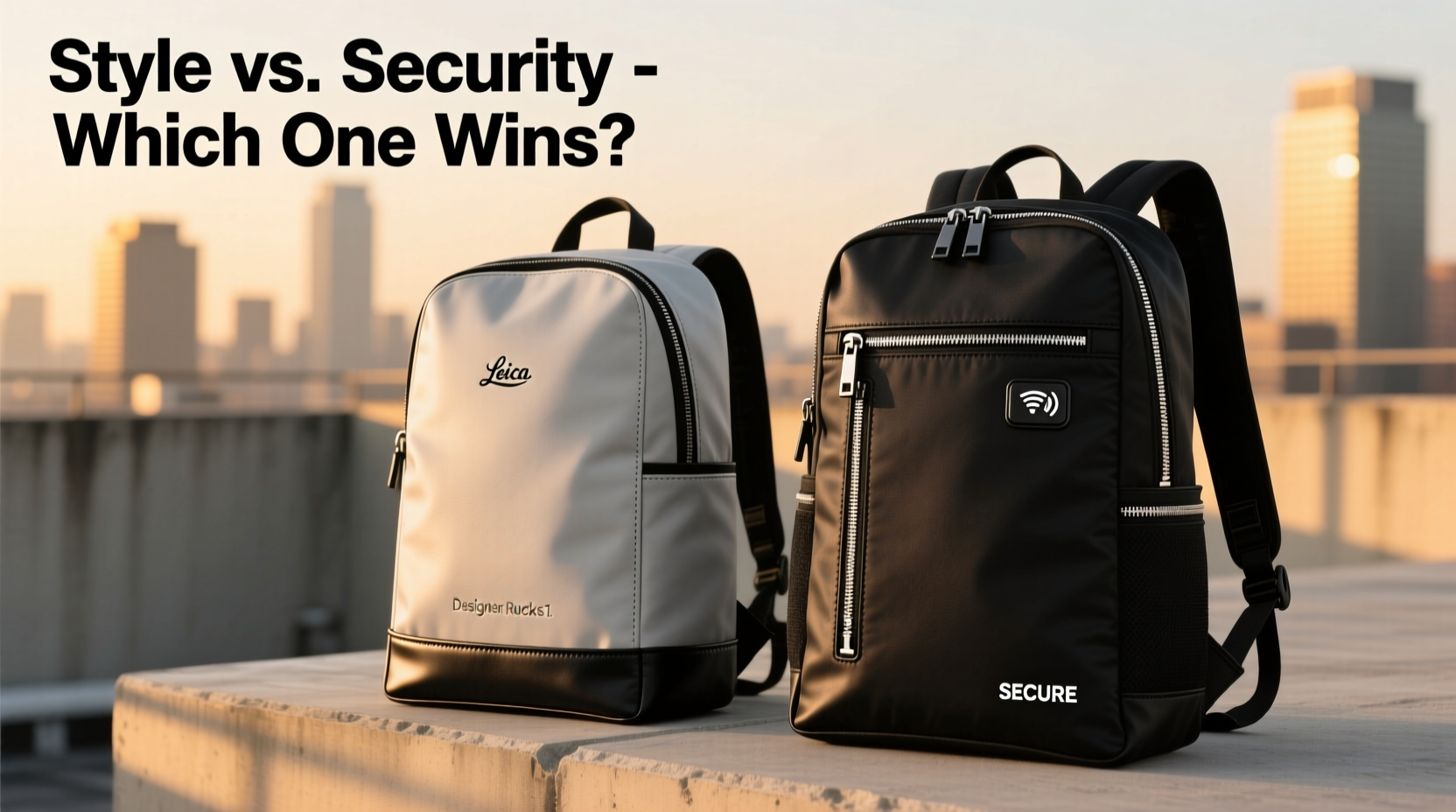
Designer rucksacks from brands like Prada, Acne Studios, or Stone Island are crafted with aesthetics at the forefront. These bags often feature minimalist silhouettes, premium materials such as full-grain leather or technical nylon, and subtle branding that speaks to discerning taste. They’re built not just to carry your essentials, but to make a visual impact—perfect for boardrooms, gallery openings, or weekend brunches.
Functionality isn’t entirely absent. Most high-end rucksacks include padded laptop compartments, internal organization, and ergonomic straps. However, their primary design goal is style over survivability. You won’t typically find lockable zippers, hidden slash-proof panels, or concealed passport sleeves. In bustling cities or crowded transit hubs, this can leave valuables exposed.
Tip: If you're using a designer rucksack in high-risk areas, consider pairing it with a portable RFID-blocking wallet and keep electronics in interior pockets.The Security Solution: Why Anti-Theft Backpacks Are Gaining Ground
Anti-theft backpacks have evolved from clunky travel gear into sleek, modern companions. Brands like Pacsafe, Côte & Ciel (with integrated security features), and Skunkfix now blend functionality with contemporary design. These packs incorporate features such as:
- Lockable, slash-resistant zippers
- RFID-blocking card slots to prevent digital pickpocketing
- Cut-proof steel mesh lining
- Hidden compartments for passports or cash
- Anchor-lock systems to secure the bag to fixed objects
Engineered for travelers, commuters, and digital nomads, these backpacks are designed to withstand opportunistic theft—a common issue in tourist hotspots, subways, and festivals. Their practicality extends beyond theft prevention; many models offer USB charging ports, water-resistant coatings, and quick-access pockets for phones or tickets.
“Urban environments demand smarter carry solutions. Today’s best anti-theft designs don’t sacrifice form—they redefine it.” — Lena Torres, Urban Mobility Consultant
Comparing Key Features: A Practical Breakdown
| Feature | Designer Rucksack | Anti-Theft Backpack |
|---|---|---|
| Primary Focus | Style, brand prestige | Security, durability |
| Material Quality | Luxury fabrics (e.g., Italian leather, Japanese nylon) | Reinforced, cut-resistant textiles |
| Theft Protection | Limited or none | Lockable zippers, hidden pockets, RFID blocking |
| Ease of Access | Open compartments, minimal barriers | Controlled access via locks or concealed zips |
| Aesthetic Appeal | High—designed for visibility and status | Moderate to high (modern models are increasingly stylish) |
| Price Range | $300–$1,500+ | $80–$300 |
Real-World Scenario: A Traveler’s Dilemma
Consider Mark, a freelance photographer based in Berlin who frequently travels across Europe. He initially carried a limited-edition Maison Margiela rucksack—minimalist, striking, and perfectly aligned with his personal brand. During a trip to Barcelona, he left his bag unattended for two minutes while ordering coffee at a crowded plaza. When he turned back, his camera and laptop were gone. No visible signs of forced entry; the thief had simply unzipped the side pocket unnoticed.
After replacing $4,000 worth of gear, Mark switched to a Pacsafe Venturesafe X30. It wasn’t as instantly recognizable as a luxury item, but it featured lockable zippers, a steel-mesh body, and a hidden rear panel that sits flush against his back. Within months, he noticed people attempting to access his bag on the metro—but the locks held. “I used to worry about what my bag said about me,” he says. “Now I care more about what it protects.”
Finding the Balance: Hybrid Options and Smart Choices
The good news is that the gap between style and security is narrowing. Several brands now offer hybrid models that merge high-design principles with robust anti-theft technology. Examples include:
- Peak Design Everyday Backpack: Combines clean lines with discreet locking buckles and weather-resistant zippers.
- Knomo Beauchamp Plus: A British-designed backpack with RFID-safe pockets and a professional look suitable for office wear.
- Thule Subterra: Sleek urban styling with reinforced base material and zipper guards.
These options prove that you don’t have to choose between looking sharp and staying safe. The key is identifying which security features matter most to your lifestyle—whether it's RFID protection for frequent flyers or lockable compartments for daily commutes.
Tip: Look for anti-theft backpacks with modular designs—some allow you to remove bulky locks when in low-risk environments, improving comfort and appearance.Checklist: Choosing the Right Bag for Your Needs
- Assess your daily environment: Do you commute through crowded areas?
- Determine priority: Is visual impact more important than asset protection?
- Identify essential tech: Do you carry a laptop, tablet, or external drives?
- Check for RFID protection if you use contactless cards or passports.
- Test ergonomics: Shoulder straps, weight distribution, and ease of access.
- Verify warranty and build quality—especially for higher-priced models.
- Consider versatility: Can it transition from work to travel seamlessly?
Frequently Asked Questions
Can a designer rucksack be modified for better security?
Yes, to some extent. You can add aftermarket zipper locks, use internal pouches with RFID shielding, and adopt habits like wearing the bag in front in crowded spaces. However, structural vulnerabilities—like thin fabric or open compartments—can't be fully mitigated without altering the bag’s integrity.
Are anti-theft backpacks noticeable or awkward-looking?
Older models were often bulky and overtly tactical, but modern versions are designed with urban aesthetics in mind. Many use neutral tones, clean lines, and minimal branding, making them suitable for professional settings. Some even mimic the silhouette of popular designer styles.
Do anti-theft features slow down access to my items?
There can be a slight delay when unlocking zippers or opening hidden compartments. However, most users report adapting within a few days. The trade-off—knowing your belongings are secure—often outweighs the minor inconvenience.
Conclusion: Style and Security Don’t Have to Be Mutually Exclusive
The choice between a designer rucksack and an anti-theft backpack no longer needs to be an either-or decision. As consumer expectations evolve, so do product offerings. Today’s smart buyer doesn’t have to sacrifice elegance for protection—instead, they can seek out intelligent designs that deliver both. Whether you're navigating rush-hour crowds, exploring foreign cities, or simply want peace of mind during your daily grind, the right backpack should serve your lifestyle, not compromise it.
Ask yourself: What am I carrying, where am I going, and what would losing it cost me—not just financially, but emotionally and professionally? With those answers in mind, you can move beyond superficial appeal and invest in a bag that truly works for you.
🚀 Ready to upgrade your carry game? Evaluate your current backpack against your real-world needs—and share your ideal balance of style and security in the comments below.