Diamonds have long symbolized love, commitment, and luxury. But with lab-created alternatives and high-quality simulants like cubic zirconia (CZ) flooding the market, many buyers are questioning whether a natural diamond’s premium price tag is truly justified. The answer isn’t just about sparkle—it involves durability, emotional value, resale potential, and personal priorities. Understanding the real differences helps you decide if the investment in a natural diamond ring pays off—or if a CZ option delivers nearly the same beauty at a fraction of the cost.
Understanding the Basics: What Is a CZ Ring?
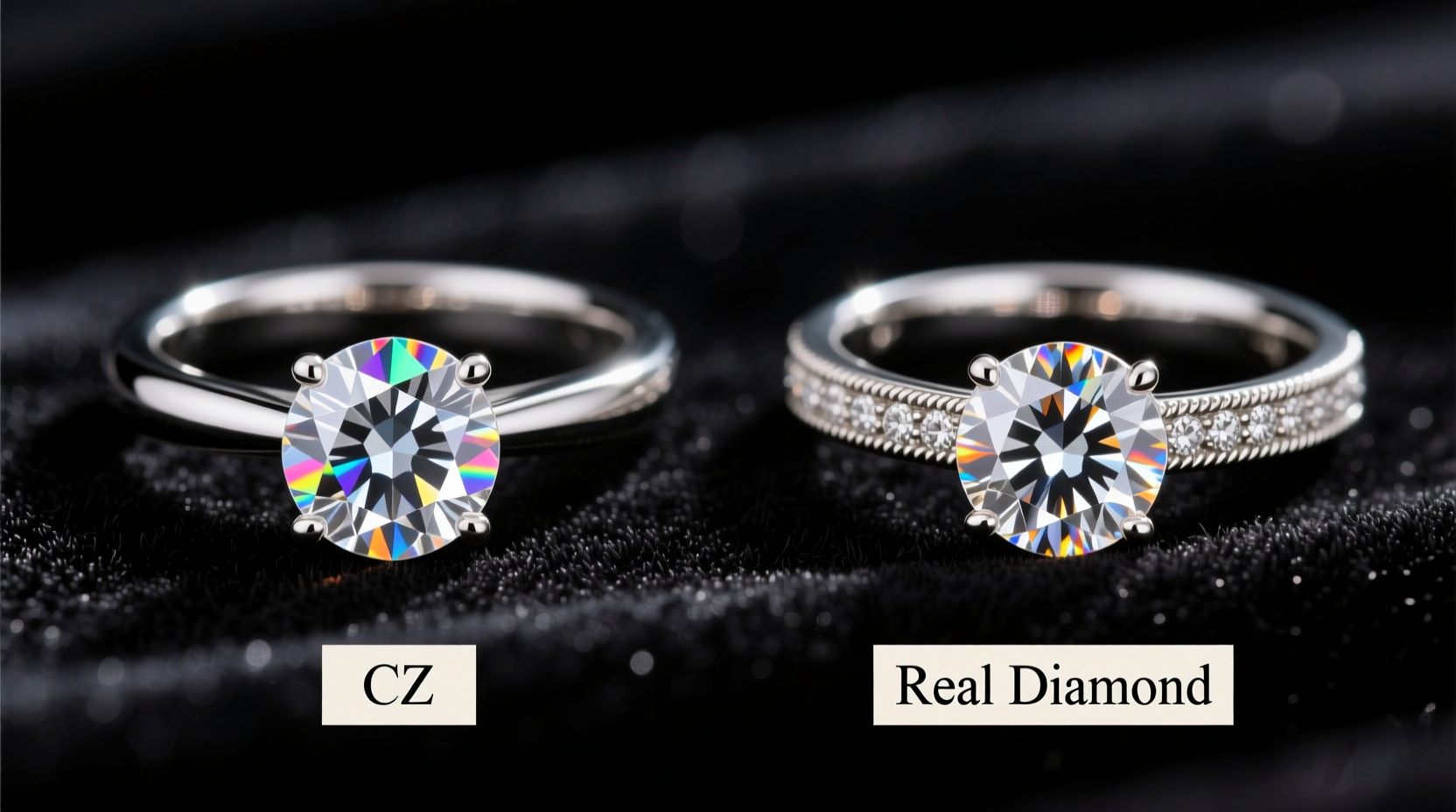
Cubic zirconia is a synthetic gemstone engineered to mimic the appearance of a diamond. It’s made from zirconium dioxide, stabilized with magnesium or calcium oxide, and produced in labs under controlled conditions. When polished, CZ can look remarkably similar to a diamond—especially to the untrained eye. It’s colorless, has high clarity, and reflects light with impressive fire and brilliance.
Because it’s lab-made, CZ is significantly less expensive than mined diamonds. A one-carat CZ stone might cost $20–$50, while a comparable natural diamond starts around $4,000. This stark difference makes CZ rings popular for engagement jewelry, fashion accessories, or temporary wear.
Tip: If budget is tight but you want a large, sparkly center stone, CZ offers immediate visual impact without financial strain.How Natural Diamonds Differ in Composition and Value
Natural diamonds form deep within the Earth’s mantle over billions of years under extreme heat and pressure. Composed of pure carbon atoms arranged in a crystal lattice, they rank 10 on the Mohs scale of hardness—the highest of any known mineral. This makes them exceptionally resistant to scratching and everyday wear.
Unlike CZ, natural diamonds carry intrinsic geological rarity. Even with modern mining and lab-grown options, naturally occurring gem-quality stones remain scarce. Their value is influenced by the four Cs: carat weight, cut, color, and clarity. These factors determine not only beauty but also long-term worth.
“Diamonds aren’t just beautiful—they’re enduring symbols of permanence. That emotional resonance can’t be replicated, even if the sparkle looks similar.” — Dr. Lena Patel, Gemologist and Jewelry Historian
Sparkle Showdown: Brilliance, Fire, and Lifespan
At first glance, both CZ and diamond rings dazzle. However, their optical performance differs in subtle but meaningful ways:
- Brilliance: Diamond reflects more white light due to its higher refractive index (2.42 vs. CZ’s 2.15–2.18), giving it a sharper, crisper sparkle.
- Fire: CZ actually disperses light more than diamond, creating rainbow-colored flashes. While striking, this excess fire can appear “too flashy” or artificial under certain lighting.
- Luster: Diamonds have an adamantine (metallic-like) luster that feels more substantial and refined compared to CZ’s glassy shine.
Over time, CZ degrades. Exposure to soap, lotions, chlorine, and daily friction causes microscopic scratches and clouding. Within 1–3 years, many CZ stones lose their initial luster unless meticulously maintained. Natural diamonds, by contrast, retain their brilliance indefinitely when cleaned regularly.
Longevity Comparison
| Feature | Cubic Zirconia | Natural Diamond |
|---|---|---|
| Hardness (Mohs) | 8–8.5 | 10 |
| Scratch Resistance | Moderate – prone to wear over time | Excellent – resists daily abrasion |
| Clouding Over Time | Yes – common after 1–3 years | No – maintains clarity |
| Heat Resistance | Poor – can crack under high heat | High – stable up to 700°C+ |
| Average Lifespan (with regular wear) | 2–5 years before noticeable dulling | Generations |
Emotional and Financial Considerations
The decision between CZ and diamond often transcends physical properties. For many, an engagement ring represents a lifelong promise. Choosing a natural diamond may reflect that depth of commitment—even if others don’t notice the difference in sparkle.
There’s also the matter of resale and inheritance. A well-documented natural diamond retains some value over time. High-quality stones can appreciate, especially rare colors or historic cuts. CZ rings, however, have virtually no resale market. They’re seen as disposable fashion items rather than heirlooms.
Yet, not everyone prioritizes legacy or investment. Some couples prefer allocating funds toward experiences, travel, or a home. In these cases, opting for a CZ ring frees up thousands of dollars without diminishing the sincerity of the gesture.
Mini Case Study: Sarah & James’ Engagement Choice
Sarah and James wanted a meaningful engagement but were focused on paying off student debt. They chose a 2-carat oval CZ solitaire set in white gold for $320. It looked stunning in person and in photos. Five years later, the stone had minor surface scratches but still sparkled beautifully after professional polishing. They saved over $8,000, which went toward a down payment on a house. “We didn’t feel like we compromised,” Sarah said. “The ring was perfect for us—and our life.”
Step-by-Step Guide: How to Decide Which Ring Is Right for You
- Assess your budget realistically. Determine how much you’re comfortable spending without financial stress.
- Consider long-term use. Will the ring be worn daily? If so, durability becomes critical.
- Evaluate lifestyle factors. Do you work with your hands, swim frequently, or engage in sports? CZ may degrade faster in active environments.
- Think about symbolism. Does owning a natural diamond hold emotional or cultural significance for you or your partner?
- Research resale and insurance. Natural diamonds can be insured and appraised; CZ typically cannot. Factor in long-term costs.
- Try both in person. Visit jewelers to compare side-by-side sparkle, weight, and overall presence on the hand.
- Make a values-based decision. Align your choice with what matters most: savings, sustainability, tradition, or longevity.
Frequently Asked Questions
Can people tell the difference between CZ and real diamonds?
To the untrained eye, especially in smaller sizes or under casual lighting, it’s difficult to distinguish. However, experts can identify CZ through magnification (look for internal flaws typical of mass production), weight (CZ is heavier), and thermal conductivity tests (diamonds conduct heat better).
Is a CZ ring suitable for an engagement?
Yes—if both partners agree and understand the trade-offs. Many modern couples view jewelry as symbolic, not financial. As long as expectations are aligned, a CZ engagement ring can be deeply meaningful.
Does CZ scratch easily?
While hard, CZ ranks below diamond on the Mohs scale. Daily exposure to dust (which contains microscopic quartz) can cause fine scratches over time. Avoid wearing CZ rings during manual tasks, and store them separately to prevent contact with harder materials.
Final Checklist Before Buying
- ✅ Set a clear budget and stick to it
- ✅ Decide whether longevity or affordability is more important
- ✅ Try on both CZ and diamond rings in natural light
- ✅ Ask about warranty, cleaning, and repair options
- ✅ Discuss expectations openly with your partner
- ✅ Consider future resizing, resetting, or upgrading
Conclusion: Sparkle Is Subjective—Value Is Personal
The question isn’t whether a CZ ring *can* look like a diamond—it absolutely can. The real issue is whether that visual similarity meets your deeper needs: emotional significance, practical durability, financial freedom, or legacy building. A natural diamond offers unmatched resilience and timeless appeal, but at a steep cost. Cubic zirconia delivers instant glamour and accessibility, though it may fade with time.
Ultimately, the best ring is the one that aligns with your values, lifestyle, and vision for the future. Whether you choose CZ or a natural diamond, what matters most is the meaning behind the gesture—not the price tag or the technical specs.
💬 Have you chosen a CZ or diamond ring? Share your story or advice in the comments—your experience could help someone make a confident decision.








