This summer, footwear fashion finds itself at a crossroads between function and flair. On one side, we have the unexpected evolution of a once-mocked staple—Crocs—now elevated with heel lifts and structured soles. On the other, the timeless platform sandal returns with bold silhouettes, intricate straps, and runway-ready designs. Both promise to elevate your look—literally—but only one may truly earn its place in your daily rotation. The real question isn’t just about what’s trending, but what’s actually wearable when you’re walking through a farmers market, commuting downtown, or meeting friends for brunch.
The debate isn’t merely aesthetic; it’s practical. Wearability encompasses comfort, durability, versatility, and social appropriateness. While both styles have gained celebrity endorsements and street-style visibility, their performance across different scenarios varies significantly. To determine which trend holds up beyond the Instagram post, let’s break down the strengths and limitations of each.
Understanding the Trends: What Defines Each Style?
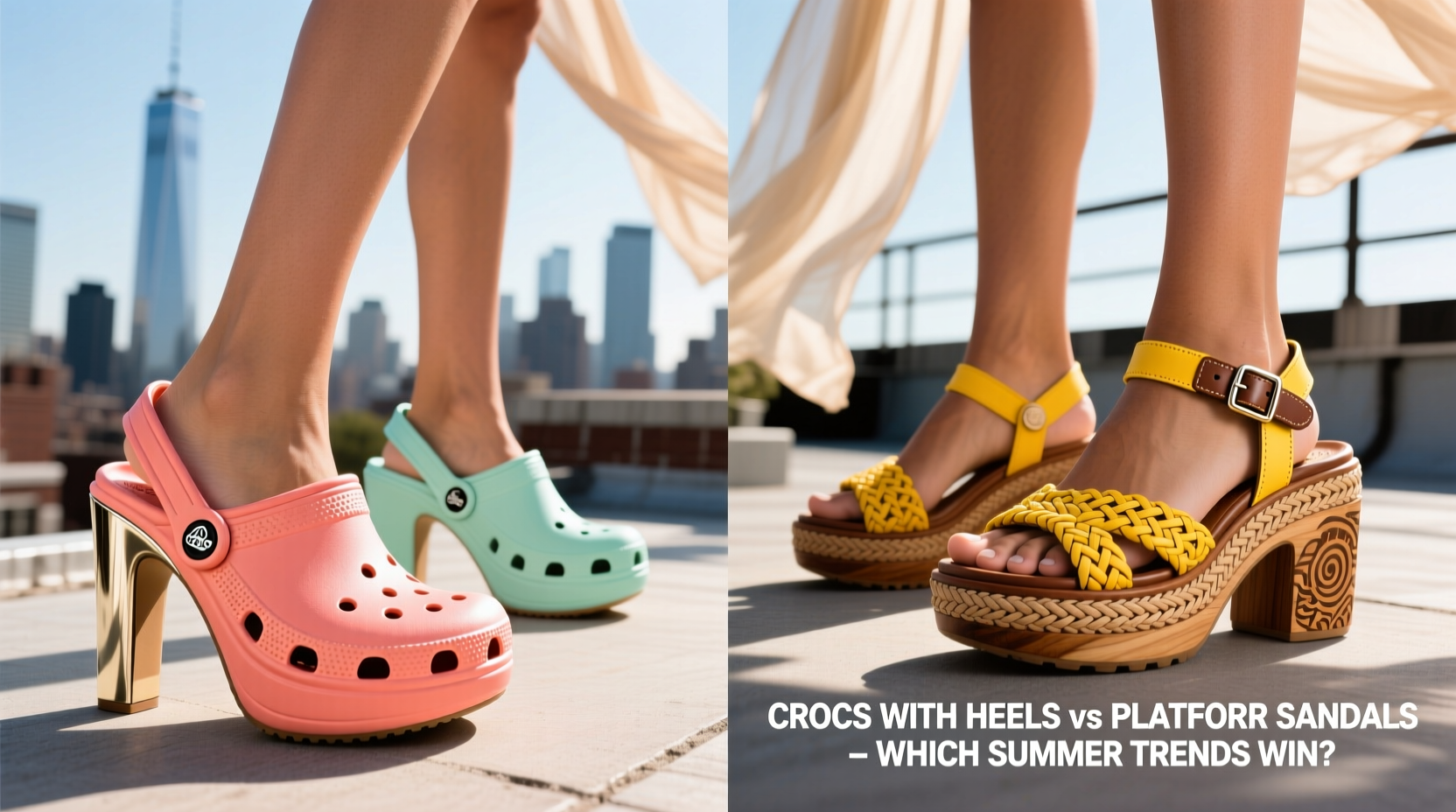
Crocs with heels are a hybrid category that merges the brand’s signature foam construction with an added heel lift—typically ranging from 1.5 to 3 inches. These aren’t stilettos by any means, but they do shift the silhouette upward, offering a modest elevation while maintaining the lightweight, slip-on ease Crocs are known for. Some versions feature cutouts, faux leather overlays, or even embellished Jibbitz charms, blurring the line between orthopedic footwear and fashion statement.
In contrast, platform sandals come in a wide spectrum—from minimalist wooden soles to chunky PVC-laden runways styles. They often feature thick, elevated soles (sometimes exceeding 4 inches) paired with adjustable straps, open toes, and materials like suede, patent leather, or woven raffia. Unlike Crocs, platforms are designed with intentionality: to make a visual impact, elongate the leg, and complement warm-weather outfits from linen pants to mini dresses.
While both offer height, their design philosophies diverge. Crocs prioritize ergonomics and accessibility; platforms lean into drama and proportion. This fundamental difference shapes how—and where—they can be worn.
Comfort & Support: Who Wins on All-Day Wear?
When evaluating wearability, comfort is non-negotiable. No matter how stylish a shoe is, if it causes foot pain by midday, it fails the practicality test.
Crocs leverage Croslite™ foam technology, a proprietary material known for cushioning, breathability, and resistance to odor. The contoured footbed supports the arch naturally, and the roomy toe box prevents pinching—a major advantage for those with bunions or plantar fasciitis. Adding a heel doesn’t compromise these benefits significantly, especially in models where the incline is gradual and integrated into the sole structure.
Platforms, however, vary widely. High-quality versions from brands like By Far, Ancient Greek Sandals, or Birkenstock use anatomically shaped footbeds and shock-absorbing soles. But many fast-fashion iterations sacrifice support for aesthetics. Thin straps dig into the foot, rigid soles lack flex, and uneven weight distribution leads to ankle fatigue. Walking long distances in poorly made platforms can result in blisters, shin splints, or lower back strain.
Tip: If choosing platform sandals, opt for styles with padded footbeds and a slight negative heel (where the heel sits slightly lower than the ball of the foot) to reduce strain.A study published in the Journal of Foot and Ankle Research found that shoes with moderate elevation and flexible soles reduced perceived exertion during prolonged standing compared to rigid, high-heeled alternatives. This gives Crocs with heels a measurable edge in environments requiring extended wear—think outdoor festivals, travel days, or retail jobs.
Versatility in Outfit Pairing: Which Goes With More?
Fashion wearability also depends on adaptability. Can the shoe transition from day to night? From casual errands to semi-formal events?
| Outfit Type | Crocs with Heels | Platform Sandals |
|---|---|---|
| Casual (jeans + tee) | ✅ Strong fit, adds quirky charm | ✅ Works with right top/layer |
| Workwear (chinos/blazer) | ⚠️ Limited to creative industries | ✅ Acceptable in fashion, media, design |
| Dressy (midi dress, jumpsuit) | ❌ Rarely appropriate | ✅ Ideal match |
| Beachwear (cover-up, swim shorts) | ✅ Natural pairing | ✅ Stylish option |
| Evening (cocktail attire) | ❌ Inappropriate | ✅ Elevates the look |
As shown, platform sandals win in formal and fashion-forward contexts. Their structure complements tailored silhouettes and refined fabrics. Crocs with heels, despite upgrades, still carry cultural baggage associated with medical or utilitarian footwear. While they’ve gained acceptance in streetwear circles—especially when styled with socks or oversized denim—they rarely pass as evening-appropriate.
That said, Crocs excel in laid-back settings. Paired with bike shorts and an oversized shirt, or cropped trousers and a tank, they project a relaxed confidence. Their playful energy aligns with Gen Z’s embrace of anti-fashion statements, making them ideal for weekend outings, casual coworking sessions, or coffee runs.
“Footwear today is less about perfection and more about personality. Crocs with heels work because they own their absurdity.” — Lena Torres, Fashion Editor at *Urban Mode Weekly*
Real-World Test: A Week in Both Styles
To assess true wearability, consider a real-life scenario involving Maya, a 29-year-old graphic designer based in Austin, Texas. Her week included a mix of activities: a morning farmers market, two office days, a lakeside picnic, and a rooftop dinner.
- Monday (Farmers Market): Wore Crocs with 2-inch heels. Praised the ease of walking on gravel paths and standing for 90 minutes without discomfort. “They squished pleasantly underfoot,” she noted.
- Tuesday (Office): Switched to black platform sandals with crisscross straps. Looked sharp with wide-leg linen pants but developed a blister by noon due to tight ankle strap.
- Thursday (Client Meeting): Opted for low platform mules. Felt professional and confident. No pain after three hours seated.
- Saturday (Picnic): Returned to Crocs. Loved how they handled grass, dirt, and impromptu wading into shallow water. “I didn’t worry about ruining them.”
- Sunday (Rooftop Dinner): Chose strappy white platforms. Received compliments but left early due to foot fatigue. “Beautiful, but I wouldn’t walk home in them.”
Maya concluded: “The Crocs were easier to live in. The platforms made me feel more put-together, but only when I wasn’t moving much.” Her experience reflects a broader truth: Crocs favor mobility; platforms favor presentation.
Longevity & Maintenance: Which Holds Up Over Time?
Wearability extends beyond immediate comfort—it includes how well a shoe withstands repeated use.
Crocs are inherently durable. The foam resists cracking, fading, and water damage. They can be hosed off, machine washed (on gentle), and air-dried without deformation. Even after months of regular wear, most retain their shape and bounce. However, added elements like fabric linings or glued-on heels may degrade faster than the base material.
Platforms require more careful handling. Leather straps can stretch or snap. Adhesives bonding thick soles may delaminate after exposure to heat or moisture. Raffia or cork platforms absorb water and can warp if not dried properly. Cleaning often involves spot-treatment and conditioning, especially for premium materials.
Tip: Store platform sandals with shoe trees or tissue paper to maintain shape, and avoid leaving them in hot cars where adhesives can weaken.Checklist: How to Maximize Wearability of Either Style
- Try shoes on later in the day when feet are slightly swollen.
- Walk around indoors for 20–30 minutes before wearing them outside.
- Break in platforms gradually—start with 1–2 hour wears.
- Use gel inserts or moleskin on pressure points.
- Rotate footwear to allow materials to recover between uses.
- Inspect soles weekly for signs of separation or wear.
- Match shoe formality to event expectations—don’t force a fit.
Expert Insight: What Designers and Podiatrists Say
Dr. Rachel Nguyen, a podiatrist specializing in lifestyle footwear, weighs in: “Any shoe that alters your gait introduces risk. Crocs with heels change your center of gravity slightly, but the cushioning offsets much of the stress. Platforms, especially those over 3 inches, increase forefoot pressure by up to 40%. That’s fine for short durations, but problematic for all-day wear.”
From a design perspective, Marcus Liu, footwear developer at a sustainable fashion label, observes: “Crocs represent a shift toward ‘comfort-first’ fashion. They’re not trying to be something they’re not. Platforms, meanwhile, are aspirational—they sell a version of yourself. But aspiration doesn’t always align with reality.”
“The most wearable trend is the one that disappears into your life, not the one that demands constant attention.” — Dr. Rachel Nguyen, DPM
Final Verdict: Which Trend Is More Wearable This Summer?
If wearability is defined by comfort, durability, and everyday functionality, Crocs with heels take the lead. They perform reliably across diverse conditions, require minimal maintenance, and accommodate a wide range of foot types. For anyone prioritizing ease—parents, travelers, healthcare workers, or those on their feet all day—this hybrid style offers a rare blend of quirk and utility.
However, if your summer involves dinners, dates, gallery openings, or beach clubs where appearance matters, platform sandals remain indispensable. They elevate ensembles, enhance posture, and express individuality. Just be selective: invest in well-constructed pairs with supportive footbeds and realistic heel heights.
The smart approach isn’t choosing one over the other, but understanding their roles. Think of Crocs with heels as your reliable weekday companion—the shoe you reach for when practicality wins. Reserve platforms for moments when you want to make an impression, knowing you might trade comfort for charisma.
FAQ
Can Crocs with heels be dressed up?
Limitedly. They work best with elevated casual looks—think tailored shorts, structured tops, or fashion-forward athleisure. Avoid pairing them with formal dresses or suits. Socks (especially patterned or textured ones) can add polish.
Are platform sandals bad for your feet?
Not inherently. Well-designed platforms distribute weight more evenly than narrow heels. However, poorly made versions with stiff soles or thin straps can cause strain. Limit continuous wear to 3–4 hours and stretch calf muscles regularly.
How do I clean Crocs with added heel components?
Use mild soap and water. Avoid submerging glued areas. Dry flat away from direct heat. For fabric overlays, spot clean with a soft brush. Do not machine dry.
Conclusion
This summer, the most wearable trend isn’t about following the loudest fad—it’s about listening to your lifestyle. Crocs with heels offer unmatched ease for the rhythm of daily life, while platform sandals deliver the drama suited for standout moments. Rather than pitting them against each other, integrate both strategically. Let comfort guide your mornings, and style crown your evenings. The future of footwear isn’t one-size-fits-all; it’s knowing which shoe fits your moment.
🚀 Ready to upgrade your summer rotation? Assess your calendar: how many days demand endurance versus elegance? Choose your footwear accordingly—and share your go-to summer shoe combo in the comments below.