Walking into a craft distillery is like stepping into a living archive of American ingenuity: copper stills gleam under industrial skylights, oak barrels line weathered brick walls, and the air hums with the warm, caramel-sweet scent of aging bourbon or the bright, herbal lift of gin botanicals. These aren’t sterile factory floors—they’re cultural destinations where makers pour soul into every batch. And yet, many visitors arrive underdressed for the occasion—not in a “too formal” way, but in clothing that undermines both comfort and credibility. Jeans with visible holes? Flip-flops on a damp concrete floor? A polyester blazer that traps heat near a 180°F still? All common missteps. Looking sharp onsite isn’t about wearing a tuxedo to taste rye—it’s about aligning your outfit with the distillery’s ethos: grounded, intentional, and quietly confident. This guide delivers actionable, field-tested style principles drawn from years of touring over 70 independent distilleries across Kentucky, Oregon, New York, and Tennessee—and from conversations with head distillers, tour managers, and hospitality directors who see what works (and what doesn’t) day after day.
Why Distillery Dress Code Matters More Than You Think
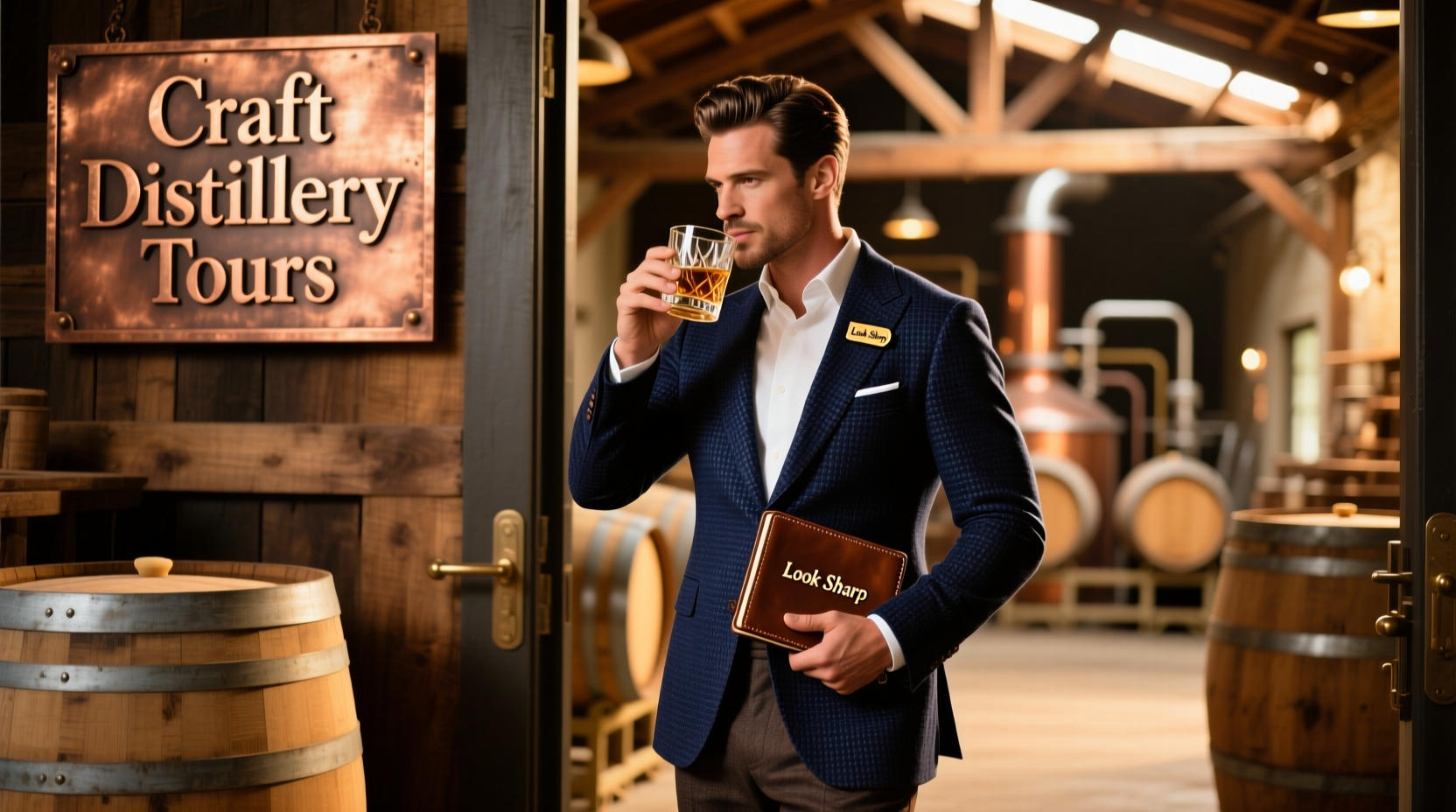
Unlike wineries—which often lean into pastoral elegance—or breweries—with their casual, hop-scented informality—craft distilleries occupy a distinct sartorial middle ground. They blend artisanal rigor with rustic authenticity. Guests who dress thoughtfully signal respect for the process: the 36-hour fermentation, the precise cuts during distillation, the patience of barrel aging. More practically, distillery environments present unique physical variables: temperature swings (cool barrel rooms vs. hot still houses), uneven flooring (gravel lots, grated metal walkways, aged wood), and occasional humidity or residual mash vapors. One distiller in Louisville told us, “I’ve had guests slip on wet grain residue because their leather soles had zero grip—and I’ve had others sweat through three layers while standing next to a steam jacketed still. Comfort isn’t optional. It’s part of the experience.”
“People remember how they *felt* on a tour more than what they tasted. If someone’s shivering, squinting in glare, or adjusting ill-fitting clothes, it fractures their connection to the story we’re telling.” — Lena Ruiz, Co-Founder & Guest Experience Director, Hollow Oak Distilling (Asheville, NC)
This isn’t fashion for fashion’s sake. It’s functional storytelling—where your clothes become a silent extension of the narrative.
Core Principles: The 4 Pillars of Distillery-Appropriate Style
Forget rigid “rules.” Instead, anchor your choices in four non-negotiable pillars:
- Temperature Responsiveness: Layer strategically. Distilleries routinely shift between 45°F barrel warehouses and 90°F still rooms—often within 20 minutes.
- Surface Intelligence: Prioritize traction, quiet movement, and durability. No loud heels on metal grating. No delicate silks that snag on copper rivets.
- Authentic Alignment: Mirror the distillery’s aesthetic—not as costume, but as congruence. A Hudson Valley apple brandy maker favors heritage wool and waxed canvas; a Texas mesquite-smoked whiskey distillery leans into rugged denim and leather accents.
- Taste-Ready Practicality: Your outfit should support tasting—not hinder it. Avoid strong scents (perfume competes with spirit aromas), loose sleeves (risk contact with open fermenters), and dark fabrics that show dust or flour residue.
Your Distillery Wardrobe: What to Wear (and Why)
Below is a curated breakdown—not of trends, but of high-performing pieces proven across seasons and regions. Each recommendation balances aesthetics, utility, and distillery-specific physics.
| Category | Recommended Items | Why It Works |
|---|---|---|
| Footwear | Water-resistant chukka boots (e.g., Red Wing Iron Rangers), low-profile hiking shoes (Merrell Moab Edge), or sturdy suede loafers with rubber lug soles | Provides grip on damp concrete, gravel, and metal; protects feet from incidental grain spillage or dropped ice; breathable enough for summer still rooms |
| Bottoms | Mid-weight selvedge denim (12–14 oz), cotton-twill trousers, or corduroy pants with slight stretch | Durable against abrasion from barrel staves or ladder rungs; allows full range of motion for climbing stairs or leaning over fermenters; avoids static cling near dry grain areas |
| Top Layers | Unlined chore jackets, washed cotton oxfords, lightweight merino crewnecks, or linen-cotton blend shirts | Wicks moisture near heat sources; layers easily; natural fibers resist odor buildup during extended tours; no shiny synthetics that reflect harsh lighting |
| Accessories | Leather watch strap (not metal), minimalist wooden or horn cufflinks, small crossbody bag with secure zip closure | Prevents clatter on metal railings; avoids interference with sampling stations; keeps hands free for note-taking or holding tasting glasses |
Note the absence of athleisure, ripped denim, open-toed sandals, or anything with loud logos. Distilleries are spaces of craft—not commerce—and visual noise distracts from the focus on process and provenance.
Real-World Example: How One Visitor Transformed Her Tour Experience
When Maya Chen, a Brooklyn-based graphic designer, booked her first solo distillery tour at Spirit Hollow (a 12-year-old rye-focused operation in Pennsylvania), she wore what she assumed was “casual chic”: white linen wide-leg pants, espadrille wedges, and a silk camisole under a cropped denim jacket. Within 15 minutes, she’d stepped in a puddle of condensed steam near the condenser coils—soaking her hems. Her wedges slipped twice on the grated catwalk above the fermenters. By the time she reached the barrel warehouse, the silk had stuck to her back in the 95% humidity, and the white pants showed every speck of airborne rye dust. She spent the tasting portion self-conscious and distracted.
The following year, she returned—armed with new knowledge. She wore charcoal twill trousers, lace-up Chelsea boots with Vibram soles, a breathable navy merino henley, and a compact waxed-cotton utility vest with deep pockets for her notebook and tasting card. She moved confidently across all zones. She took notes without fumbling. She lingered in the rickhouse, inhaling deeply, fully present. “It wasn’t just about looking better,” she shared later. “It was about *belonging* in the space—not as a spectator, but as someone who understood its rhythms.”
Step-by-Step: Building Your Distillery-Ready Outfit (30 Minutes or Less)
You don’t need a wardrobe overhaul. Follow this streamlined sequence before your next tour:
- Check the distillery’s website for facility notes. Look for keywords: “barrel warehouse access,” “still room proximity,” “outdoor gravel lot,” or “climate-controlled tasting room.” Adjust accordingly.
- Select footwear first. Choose based on surface type: boots for outdoor/industrial sites; soft-soled leather shoes for urban, climate-controlled distilleries.
- Pick one neutral base layer. Opt for mid-tone natural fiber (charcoal, olive, oat, or deep burgundy)—it hides dust, resists glare, and photographs well.
- Add one functional outer layer. Not for fashion—but for adaptability: a vest for variable temps, a lightweight overshirt for UV protection in sunlit courtyards.
- Final audit: Remove three things. Scented lotion, dangling earrings (they swing near open tanks), and anything with exposed zippers or buckles that could scratch copper or glassware.
What to Avoid: The Distillery Dress Don’ts (Backed by Incident Reports)
Distillery staff quietly track recurring issues—not to shame guests, but to improve safety and flow. These five items appear most frequently in incident logs:
- Perfume or heavy cologne: Masks spirit aromas for you and others—especially critical during guided nosing sessions.
- Cotton t-shirts with large prints: Ink cracks and fades near heat sources; logos distract from the distiller’s branding during photo ops.
- Loose scarves or long necklaces: Hazard near rotating agitators, open fermenters, or overhead piping.
- White or light-colored shoes: Show every trace of grain dust, charcoal residue, or spilled mash—creating visual dissonance in an environment defined by earthy tones.
- Headphones or earbuds: Even when not playing audio, wearing them signals disengagement—distillers notice, and it affects the depth of interaction you receive.
FAQ: Distillery Fashion Questions Answered
Can I wear shorts on a summer distillery tour?
Only if the distillery explicitly permits them—and even then, choose tailored, mid-thigh shorts in structured cotton or twill (no athletic mesh). Avoid shorts at facilities with active grain handling, open mash tuns, or barrel warehouses with low-hanging staves. Most reputable distilleries discourage them for safety and professionalism reasons.
Is it okay to bring a tote bag? What should it hold?
Assuredly—just keep it compact and structured (no slouchy canvas sacks). Ideal contents: a reusable water bottle (many distilleries offer filtered water fills), a small notepad, a pen, your tasting card (if provided), and a folded microfiber cloth for wiping glasses. Skip the umbrella unless forecast calls for rain—you won’t be able to use it indoors near open tanks.
Do men and women dress differently for these tours?
Not meaningfully. The core principles—traction, breathability, temperature responsiveness, and material integrity—apply equally. Where differences emerge, they’re stylistic, not functional: a woman might choose a tailored jumpsuit instead of trousers; a man might opt for a collarless knit polo instead of a button-down. But both prioritize the same performance criteria.
Conclusion: Dress Like You Respect the Craft—and Yourself
Fashion at a craft distillery isn’t about impressing others. It’s about honoring the labor behind every bottle—the farmer who grew the grain, the cooper who toasted the oak, the distiller who watched the hearts cut by hand at 3 a.m. When your clothes fit well, move with you, and adapt to the environment, you remove friction from the experience. You listen more closely to the story behind the spirit. You taste more intentionally. You leave not just with a souvenir bottle, but with a deeper sense of place—and your own quiet confidence amplified by intentionality.
So next time you book that tour—whether it’s a historic Kentucky bourbon house or a coastal Washington gin lab—choose your outfit like you’d choose your first pour: thoughtfully, respectfully, and with full attention to what comes next. Then step inside, breathe deep, and let the copper glow reflect not just off the stills—but off your quiet, considered presence.
💬 Have a distillery style win—or a lesson learned the hard way? Share your real-world tip in the comments. Let’s build a smarter, sharper community of craft spirit lovers—one thoughtful outfit at a time.