When it comes to performance under bright lighting—whether on stage, at a convention, or under studio lamps—the way a wig holds its style can make or break an appearance. For cosplayers, performers, and fashion enthusiasts, choosing between a synthetic cosplay wig and a human hair wig isn’t just about aesthetics; it’s about resilience, texture behavior, and long-term reliability under intense conditions. While both types have their strengths, the real test lies in how they respond to heat, humidity, and prolonged exposure to artificial light—all common elements in event environments.
Synthetic fibers have evolved dramatically over the past decade, with high-quality cosplay wigs now mimicking natural movement and shine. Yet, human hair remains the gold standard for versatility and realism. But when subjected to hot stage lights or extended wear under LED spotlights, which type truly maintains its shape, volume, and curl pattern? This article dives deep into material science, stylist insights, and real-world usage to answer that question definitively.
Material Composition: The Core Difference
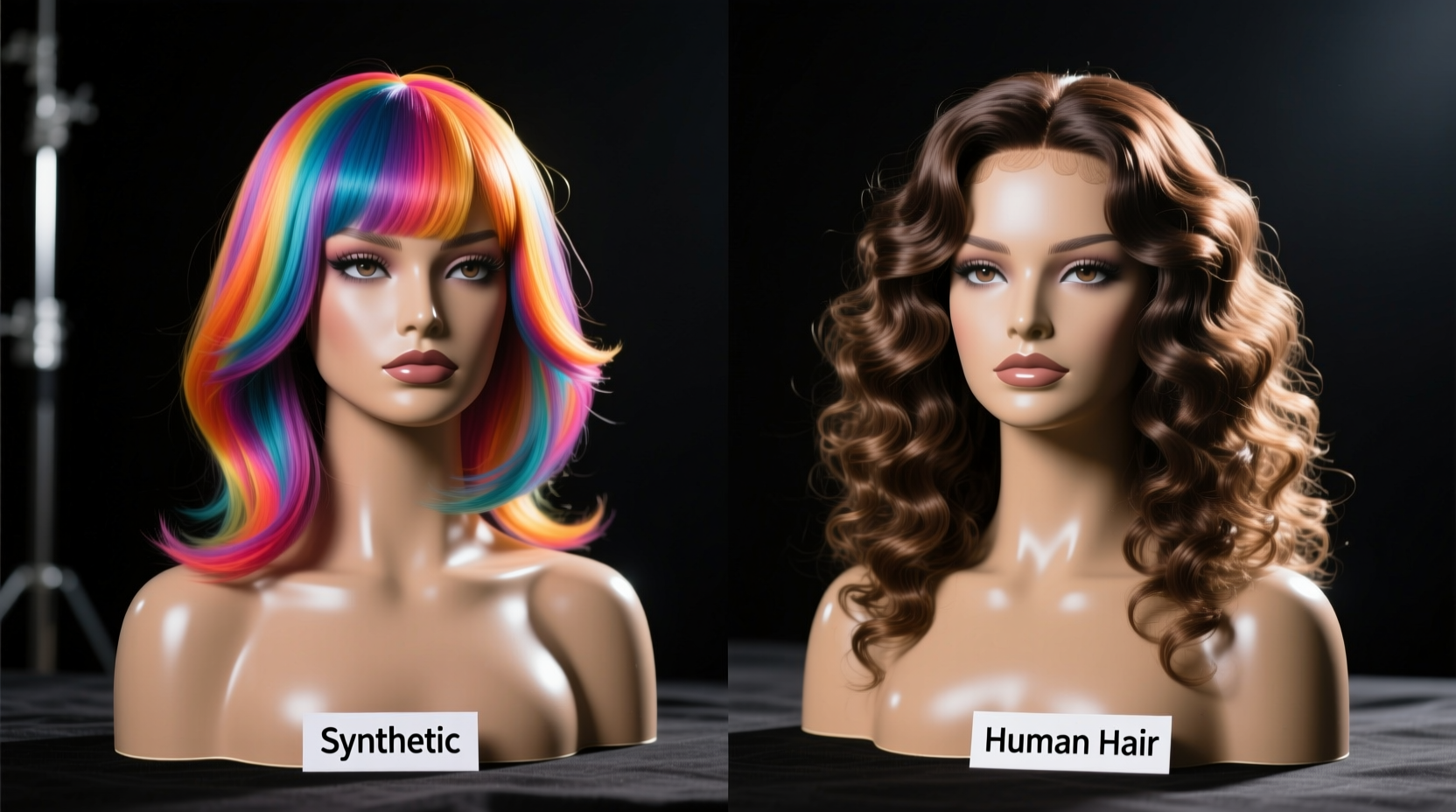
The fundamental distinction between cosplay (synthetic) wigs and human hair wigs lies in their fiber composition. Most cosplay wigs are made from modacrylic or Kanekalon fibers—engineered polymers designed to resemble hair while being cost-effective and color-stable. These materials are inherently heat-sensitive, typically softening at temperatures as low as 160°F (71°C). In contrast, human hair wigs are constructed from real hair, usually sourced from donors, and can withstand temperatures up to 450°F (232°C) before structural damage occurs.
This thermal threshold is critical under lighting conditions. Stage and studio lights—especially halogen and tungsten-based fixtures—emit significant radiant heat. Prolonged exposure can raise the surface temperature of a wig dramatically, even if ambient room temperature feels comfortable. Under these conditions, synthetic fibers begin to lose their set, leading to drooping curls, flattened layers, and frizz.
Tip: Avoid placing your synthetic wig directly under unshielded stage lights for more than 15–20 minutes without monitoring heat buildup.Style Retention Under Artificial Light: A Direct Comparison
Under consistent lighting, human hair wigs outperform synthetic alternatives in maintaining style integrity. The keratin structure of human hair allows it to retain curl patterns, waves, and volume far longer—even after hours under bright illumination. Heat from lights may slightly dry the hair but doesn't alter its form unless styling tools are applied simultaneously.
In contrast, synthetic wigs often come pre-styled with curled or waved configurations set during manufacturing using heat molds. Once exposed to external heat sources like stage lighting, these styles begin to relax. A tightly curled cosplay wig, ideal for anime characters like Sailor Moon or Goku, may appear limp and lifeless after 30–45 minutes under strong lights.
“On professional sets, we rarely use synthetic wigs for actors under hot lights. Even with cooling breaks, the loss of definition becomes visible within an hour.” — Lila Chen, Wardrobe Supervisor, Los Angeles Film Collective
Comparative Analysis: Key Performance Factors
| Factor | Cosplay (Synthetic) Wigs | Human Hair Wigs |
|---|---|---|
| Heat Resistance | Low to moderate (up to 180°F max) | High (up to 450°F) |
| Style Longevity Under Lights | 30–60 minutes before noticeable droop | 4+ hours with minimal change |
| Response to Humidity | Resistant to moisture; no frizz | Potentially frizzy in high humidity |
| Shine & Reflectivity | High gloss; can appear plastic under direct light | Natural luster; diffuses light softly |
| Styling Flexibility | Limited; requires cool tools only | Full heat tool compatibility |
| Maintenance Needs | Low; pre-set style lasts weeks | Higher; requires regular conditioning |
The table illustrates a trade-off: synthetic wigs offer convenience and vibrant colors but falter under heat stress. Human hair wigs demand more upkeep but deliver superior stability when light intensity increases. For short appearances or photo shoots with controlled lighting, cosplay wigs perform admirably. However, for all-day events or performances under continuous illumination, human hair provides unmatched consistency.
Real-World Case: Anime Expo Cosplayer Experience
Rina T., a seasoned cosplayer from Seattle, attended Anime Expo wearing a custom purple ombre cosplay wig styled with tight ringlets for her portrayal of a fantasy mage character. By midday, after moving between indoor panels and outdoor photo ops under midsummer sun and fluorescent hall lighting, she noticed her wig had lost nearly all curl definition. “It looked flat and greasy, even though I hadn’t touched it,” she recalled. “I had to re-curl sections in the restroom using a battery-powered cool-air styler, but it never bounced back fully.”
For her next major con, Rina invested in a human hair wig dyed to match her original design. Despite similar lighting conditions and longer wear time, the wig retained 90% of its wave pattern throughout the day. She attributed the difference not just to material quality but also to the ability to lightly refresh the style with a flat iron backstage—something impossible with her previous synthetic version.
This case highlights a growing trend among competitive cosplayers: upgrading to human hair for key roles where presentation matters most. While more expensive upfront, the investment pays off in visual fidelity and reduced maintenance stress during long events.
Care and Optimization Strategies for Each Wig Type
Regardless of material, proper care extends style longevity. However, the methods differ significantly between synthetic and human hair wigs.
For Synthetic Cosplay Wigs:
- Use cool-air setting on blow dryers only—never apply direct heat.
- Store in a cool, dark place away from windows or radiators.
- Refresh styles with fabric steaming (from a distance) rather than irons.
- Apply anti-static sprays to reduce flyaways caused by friction and dry air.
- Limit direct exposure to UV light, which can degrade fibers and fade colors.
For Human Hair Wigs:
- Condition weekly with sulfate-free products to prevent dryness.
- Use heat protectant spray before any thermal styling.
- Store on a mannequin head or wig stand to preserve shape.
- Deep condition monthly to maintain elasticity under stress.
- Brush gently from ends upward to avoid tangling and breakage.
Expert Styling Timeline: Preparing a Wig for High-Light Events
Whether you're preparing for a stage performance or a full-day convention, following a structured timeline ensures optimal style retention. Here's a step-by-step guide used by professional costume stylists:
- 48 Hours Before Event: Wash and deep condition the wig (for human hair) or rinse with cool water and wig shampoo (for synthetic). Allow to air-dry completely on a stand.
- 24 Hours Before: Style the wig according to character requirements. For human hair, set curls with rods or a low-heat iron. For synthetic, use steam or cold-setting techniques.
- 12 Hours Before: Apply a light-hold hairspray (thermal-protectant formula for human hair; static-control for synthetic).
- 1 Hour Before Wear: Do a final fluff and volume check. Use pick combs or fingers to lift roots gently.
- During Event: Carry a mini brush, travel-sized static guard, and—if permitted—a portable cooler bag to store the wig during breaks.
- After Event: Detangle carefully, wipe sweat-prone areas (like nape and temples), and return to storage immediately.
“The first rule of wig longevity under lights? Minimize direct exposure. Position yourself strategically on stage or in photos to avoid sitting directly under the hottest spots.” — Marcus Tran, Lead Stylist, CosFest Productions
Frequently Asked Questions
Can I use a flat iron on a cosplay wig?
Only if it’s labeled as heat-resistant (typically up to 350°F). Standard synthetic fibers will melt under traditional flat irons. Always check manufacturer guidelines and use tools specifically designed for synthetic hair with adjustable low-temperature settings.
Do LED lights affect wigs differently than halogen lights?
Yes. LED lights emit far less radiant heat than halogen or incandescent bulbs, making them much safer for both synthetic and human hair wigs. If possible, request LED-based lighting setups for events where wigs will be worn for extended periods.
Why does my synthetic wig look shiny under lights?
Synthetic fibers have a uniform surface that reflects light intensely, creating a “plastic” sheen. To reduce this, use a matte finishing spray formulated for synthetic wigs. Avoid oily products, as they can attract dust and worsen the glossy effect.
Final Verdict: Which Holds Style Better?
When judged solely on style retention under bright lights, human hair wigs are the clear winner. Their natural protein structure resists deformation from radiant heat, maintains curl memory, and allows for mid-event touch-ups using heat tools—something synthetic wigs cannot safely replicate.
That said, cosplay wigs still hold a vital place in the world of costuming. They are affordable, come in bold colors and textures not easily replicated in human hair, and require minimal daily maintenance. For short-duration appearances, controlled lighting, or budget-conscious projects, they remain a practical choice.
The decision ultimately depends on context. For one-day events with limited stage time, a high-quality heat-resistant synthetic wig may suffice. But for professionals, performers, or serious cosplayers who need flawless presentation over many hours, investing in a human hair wig offers superior durability, realism, and peace of mind under the spotlight.
💬 Have you switched from synthetic to human hair wigs for performances? Share your experience or styling hacks in the comments below—we’d love to hear what works for you!