There’s a quiet elegance in a set of cordial glasses—slim-stemmed, crystal-clear, often resting in a velvet-lined box tucked away in a china cabinet. When those glasses bear engraved initials—perhaps “E.M.” etched delicately beneath the rim—they carry more than function. They carry intention. A gift for a 21st birthday. A wedding keepsake. A tribute to a grandmother who served port after Sunday dinner. Yet today, many younger hosts glance at such pieces and wonder: Is this meaningful—or merely musty? The question isn’t about taste alone. It’s about how meaning is made, sustained, and sometimes quietly discarded across generations.
The Enduring Craft Behind the Engraving
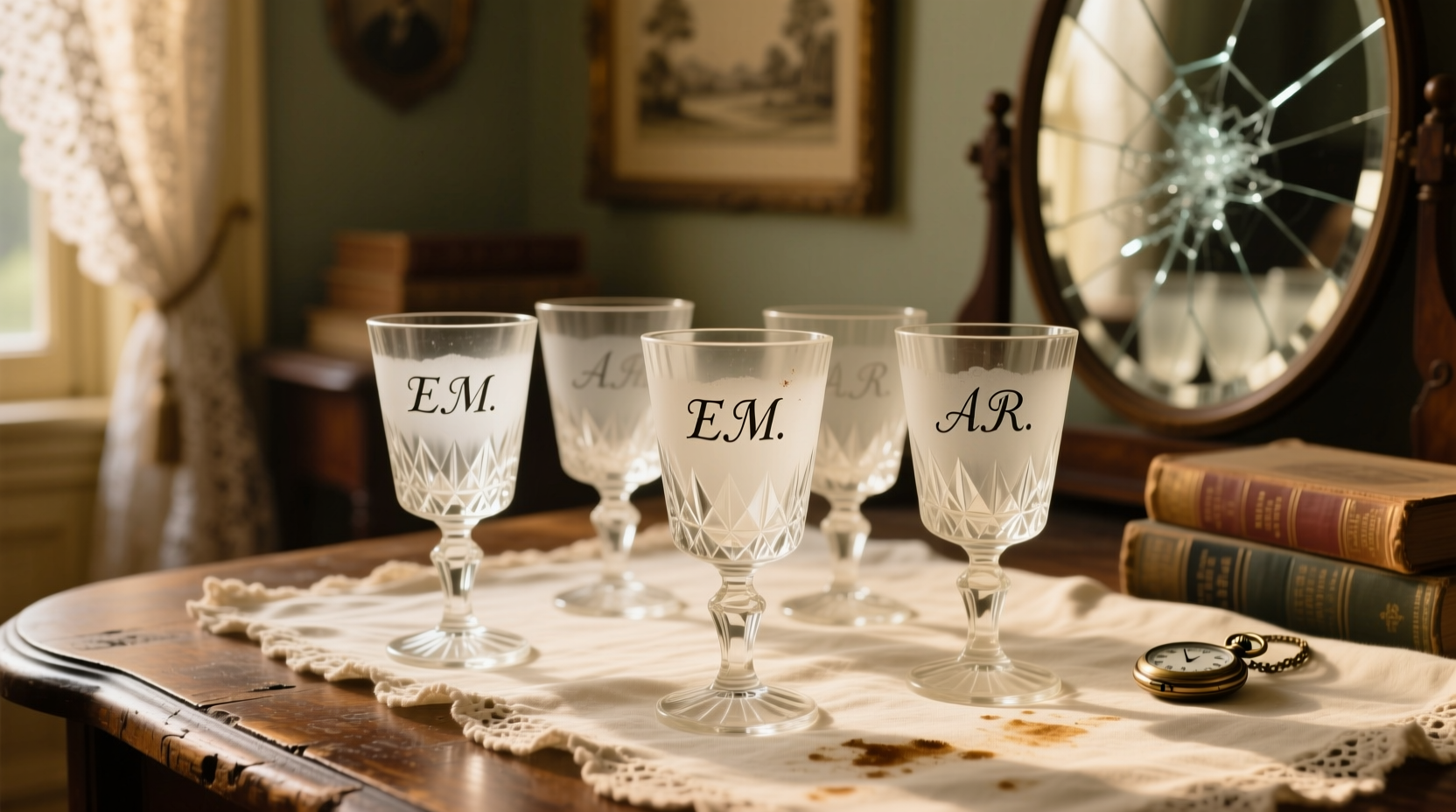
Engraved cordial glasses represent a confluence of material craft and personal inscription. Unlike printed labels or laser-etched logos, traditional hand-engraving on fine crystal involves skilled artisans using diamond-tipped tools or acid-etching techniques to carve letters into the glass surface. This process demands precision, patience, and respect for the fragility of the medium. Each initial becomes a permanent, tactile signature—not a sticker that peels, not a monogrammed napkin that fades, but a physical integration of identity into object.
Historically, engraving was reserved for objects intended to last: silverware, pocket watches, baptismal goblets. Cordial glasses—designed for small, ritualized servings of liqueurs like Benedictine, Grand Marnier, or Amaro—occupied a similar ceremonial niche. Their slender stems and narrow bowls were engineered for aroma concentration and temperature control, making them functional as well as symbolic. When initials were added, they transformed utilitarian glassware into vessels of memory: a graduation gift from a mentor, a retirement present signed by colleagues, a pair gifted to newlyweds with their shared surname.
Tip: If you inherit or acquire engraved cordial glasses, avoid dishwashers entirely—even on gentle cycles. Hand-wash with lukewarm water and a soft microfiber cloth. Harsh detergents and high heat can dull the crystal’s brilliance and subtly erode fine engraving over time.Sentimental Value: When Initials Become Anchors
Sentimentality isn’t inherent in objects—it’s conferred through use, story, and continuity. Engraved cordial glasses become sentimental when they’re *activated*: when someone lifts one to toast a milestone, when a child recognizes “Nana’s ‘J’” while helping clear the table, when a couple uses the same pair each New Year’s Eve for twenty-three years. Psychologists refer to this as “object-mediated continuity”—the way physical items serve as tangible links to people, values, or chapters of life we wish to honor.
A real-world example illustrates this powerfully: In Portland, Oregon, interior designer Lena Rostova inherited a set of six Lalique cordial glasses engraved with her late mother’s maiden initials—“A.V.”—from her 1957 engagement. For years, Lena stored them unused, assuming they were “too formal” for her modern, open-concept home. Then, during her own daughter’s college graduation, she served elderflower cordial in them—not as museum pieces, but as living tradition. Her daughter later told her, “I didn’t know Grandma’s initials until I held that glass. It felt like she was right there.” That moment reframed the glasses not as relics, but as conduits.
This shift—from passive inheritance to active participation—is key. Sentimental value doesn’t require daily use, but it does require intentionality. It flourishes when the engraving isn’t hidden, but acknowledged; when the story behind the initials is shared, not assumed.
Why Some See Them as Outdated: Cultural and Practical Shifts
Yet dismissal is understandable—and rooted in observable trends. Three major forces have eroded the everyday relevance of engraved cordial glasses:
- Declining ritualization of drinking culture: Fewer households maintain formal liqueur service. Pre-dinner amari or post-dinner digestifs are now often poured directly into tumblers or stemless wine glasses. The cordial glass’s specific volume (typically 2–3 oz) and shape feel unnecessarily prescriptive in an era favoring flexibility and minimalism.
- Evolving aesthetics: Mid-century modern and Scandinavian design emphasize clean lines, transparency, and unadorned surfaces. An engraved initial—especially if ornate or placed prominently—can clash with contemporary sensibilities that prize anonymity and universality over personalized ornamentation.
- Generational disconnection from heirloom logic: Millennials and Gen Z often prioritize experiences over possessions—and when they do collect objects, they favor items with clear utility, sustainability credentials, or digital shareability (e.g., a beautifully designed reusable bottle). A fragile, single-purpose glass engraved with someone else’s initials lacks obvious utility or narrative hook for many younger consumers.
It’s not that sentimentality has vanished. It’s that its expression has diversified: a playlist named after a loved one, a digital photo album tagged with dates and locations, a tattoo replicating a grandmother’s handwriting. These carry emotional weight without requiring physical storage or specialized care.
Do’s and Don’ts: Making Engraved Cordial Glasses Meaningful Today
Whether you’ve inherited a set, received one as a gift, or are considering commissioning new ones, intentionality determines whether they feel cherished—or cluttered. Below is a practical guide grounded in both design ethics and emotional intelligence.
| Action | Why It Works | Risk of Skipping |
|---|---|---|
| Research the origin Find out who commissioned the engraving, when, and why. |
Context transforms initials from decoration into biography. Knowing “These were given to my aunt after her first solo exhibition in 1974” adds layers of meaning that “A.B.” alone cannot convey. | Initials remain anonymous symbols—easy to overlook or discard without understanding their human anchor. |
| Use them intentionally, not ceremonially Choose one meaningful occasion per year (e.g., solstice, family reunion, birthday of the person whose initials appear). |
Infrequent but deliberate use preserves the glass physically and emotionally. It avoids performative tradition while honoring continuity. | Using them only “for best” leads to decades of storage—and eventual forgetting. Unused objects lose narrative momentum. |
| Pair with storytelling When serving, say aloud: “These belonged to my grandfather, who drank Chartreuse from them every Christmas Eve.” |
Oral transmission embeds memory in the next generation. Neuroscience confirms that stories paired with sensory experience (the clink, the aroma, the visual detail of the engraving) strengthen retention far more than silent display. | Without narration, the engraving remains mute. Younger guests may admire the craftsmanship—but miss the human significance entirely. |
| Modernize the setting Place engraved cordials alongside minimalist barware, or use them for unexpected purposes (e.g., serving artisanal shrubs, house-made bitters, or even espresso martinis). |
Recontextualization signals respect for the object’s history while asserting its relevance in your current life. It rejects nostalgia-as-museum and embraces legacy-as-living. | Isolating them in a locked cabinet or displaying them solely beside antique silver reinforces obsolescence. |
Expert Insight: Beyond Nostalgia, Toward Narrative Stewardship
Dr. Aris Thorne, curator of domestic material culture at the Cooper Hewitt Smithsonian Design Museum, has studied engraved glassware across three centuries. His research reveals a consistent pattern: objects survive not because they’re “valuable,” but because successive owners reinterpret their purpose without erasing their past.
“The most enduring engraved glasses aren’t the rarest or most expensive—they’re the ones that got *used*, even imperfectly. A tiny chip from a dropped glass in 1982? That’s not damage. That’s evidence of life lived with the object. Sentimentality isn’t preserved in perfection—it’s deepened by participation. When we stop asking ‘Is this outdated?’ and start asking ‘What story does this want to tell next?’—that’s when heirlooms breathe again.” — Dr. Aris Thorne, Curator & Author of Everyday Heirlooms: Objects That Outlive Trends
Thorne’s insight reframes the core question. It’s not whether engraved cordial glasses are inherently sentimental or outdated. It’s whether we possess the imagination—and the humility—to let them evolve.
Step-by-Step: Reviving an Engraved Set in Four Thoughtful Actions
Reviving doesn’t mean restoring to mint condition. It means reintegrating into your emotional and practical ecosystem. Follow this sequence:
- Inventory & Identify
Count the glasses. Note condition (chips, clouding, clarity of engraving). Research hallmarks or maker’s marks (e.g., “Steuben,” “Baccarat,” “Waterford”) using resources like the Glass Encyclopedia or local historical societies. Write down what you know—and what you don’t—about their origin. - Document the Story
Contact older relatives. Ask: Who gave these? On what occasion? What did they drink from them? Was there a particular ritual? Record answers—even fragments—in a dedicated notebook or digital note titled “The [Initials] Cordials.” - Design One Intentional Use
Choose a single, low-pressure occasion within the next 90 days: a quiet Friday night with a friend, a solo moment of reflection, or a small family gathering. Select one liqueur or spirit that feels resonant (not necessarily traditional—try a local fruit brandy or barrel-aged vermouth). Serve it in one glass. Hold it. Read the initials aloud. Notice the weight, the light refraction, the sound when tapped gently. - Decide Your Role as Steward
After that use, reflect: Did the glass feel like a bridge���or a barrier? Does its presence enrich your space, or demand explanation you’re unwilling to give? You now have three ethical options: pass it on with full context to someone who’ll activate it; repurpose it thoughtfully (e.g., as a bud vase for wildflowers, with the initials visible); or, with gratitude and ceremony, retire it respectfully (recycling fine crystal requires specialty facilities—contact your municipal waste authority for guidance).
FAQ: Addressing Common Concerns
Are engraved cordial glasses still appropriate wedding gifts?
Yes—if the couple has expressed appreciation for heirloom-quality objects or has a discernible interest in cocktail culture, vintage design, or family history. Avoid generic monogramming; instead, engrave with a meaningful date (“June 2025”) or shared symbol (e.g., coordinates of where they met). Include a handwritten note explaining why you chose this form of permanence.
Can I re-engrave or modify existing initials?
Technically possible, but ethically complex. Re-engraving erases the original intent and risks damaging the crystal. If the current initials no longer resonate, consider adding a subtle secondary engraving elsewhere (e.g., on the base) with new meaning—“Given anew, 2024”—rather than overwriting history. Consult a master engraver first; many refuse rework on ethical grounds.
How do I explain their value to skeptical family members?
Focus on function, not fantasy: “They’re not just ‘old glasses.’ They’re precisely calibrated for tasting spirits—designed to concentrate aroma and control temperature. The engraving makes them ours, not just inventory. Think of them like a chef’s favorite knife: worn, personal, and better for it.” Anchor meaning in sensory experience and utility, not just sentiment.
Conclusion: Choose Meaning Over Momentum
Calling engraved cordial glasses “sentimental or outdated” sets up a false binary—one that mistakes cultural change for moral decline, and practicality for emotional poverty. The truth is more nuanced: these glasses are neither inherently sacred nor obsolete. They are invitations. Invitations to pause in a rushed world. To touch something handmade. To speak a name aloud. To ask, “Whose hands held this before mine—and what did it mean to them?”
You don’t need to host formal liqueur service to honor that invitation. You don’t need to display them under glass. You simply need to decide—consciously—what role they play in your story. Will they gather dust as artifacts of a past you don’t inhabit? Or will you hold one, feel its cool weight, trace the curve of an “M” or “T” with your thumb, and choose, just once, to let it mean something new?
💬 Your turn: Have you revived an “outdated” heirloom in a way that surprised you? Share your story—how you used it, what you learned, and whether the initials finally spoke to you. Real experiences are the best antidote to doubt.








