When building a functional yet stylish wardrobe, few pieces carry as much weight as the jacket. It’s the outer layer that frames your entire look—whether you're dressing casually or stepping into a semi-formal setting. But beyond cut, fabric, and fit, one subtle design choice can dramatically shift the perception of your outfit: color strategy. Specifically, the decision between contrast color and solid color jackets isn’t just aesthetic—it influences versatility, visual impact, and even personal branding. The question isn’t whether there’s a difference, but how you can leverage that difference to elevate your everyday style.
The Visual Language of Color in Outerwear
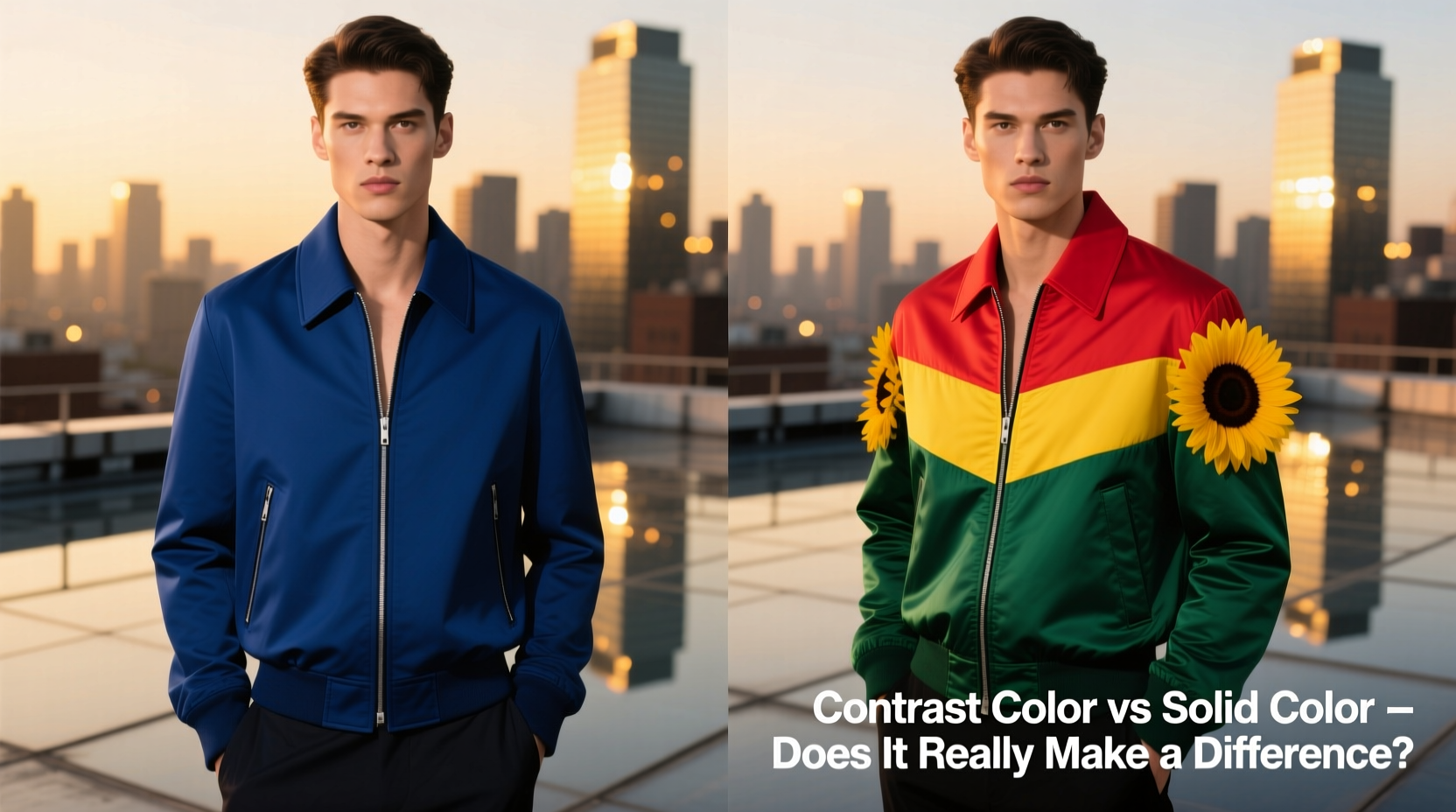
Color isn’t merely decorative; it communicates intention. A solid color jacket—uniform in tone from collar to hem—projects cohesion, simplicity, and timelessness. Think of a classic navy bomber or a black leather moto: these are staples because they anchor an outfit without demanding attention. In contrast, a contrast color jacket introduces deliberate variation—often seen in sportswear or streetwear designs where sleeves, panels, or trims differ in hue from the main body.
This divergence creates visual interest. For example, a white jacket with black sleeves immediately draws the eye to movement and structure. The contrast breaks symmetry, suggesting dynamism. But while contrast jackets stand out, they also come with constraints. Their boldness limits pairing options and can clash with complex patterns or busy accessories. Solid colors, by comparison, act like a blank canvas—adaptable across seasons, occasions, and trends.
Tip: Use contrast color jackets as statement pieces—pair them with neutral bottoms to avoid overwhelming your silhouette.Functionality Meets Fashion: When Each Style Shines
Solid color jackets dominate formal and minimalist wardrobes for good reason. Their uniform appearance supports clean lines and professional aesthetics. A charcoal wool overcoat or an olive field jacket blends seamlessly into business-casual environments. They’re also easier to maintain visually—if one part fades, the entire piece ages uniformly.
Contrast color jackets, however, thrive in expressive contexts. Athleisure brands like Adidas and Nike have long used contrasting sleeves or side panels to echo team uniforms and athletic identity. These designs enhance motion perception and add energy to static poses. Streetwear enthusiasts use contrast elements to signal affiliation with subcultures or specific design movements—like 90s revivalism or retro-futurism.
Yet, functionality plays a role too. Some performance jackets use contrast coloring not for style, but for utility—highlighting ventilation zones, pockets, or ergonomic seams. In this sense, contrast becomes both aesthetic and informative.
A Closer Look: Comparing Key Attributes
| Attribute | Solid Color Jackets | Contrast Color Jackets |
|---|---|---|
| Versatility | High – pairs easily with most outfits | Moderate – requires careful coordination |
| Style Longevity | High – timeless appeal | Variable – trend-dependent |
| Visual Impact | Subtle, refined | Bold, attention-grabbing |
| Dress-Up Potential | Excellent – suitable for formal settings | Limited – mostly casual or thematic |
| Maintenance Ease | Easy – consistent cleaning approach | Tricky – potential mismatch if fading occurs unevenly |
Real-World Example: Two Outfits, One Wardrobe
Consider Marcus, a 32-year-old graphic designer who balances client meetings with weekend creative events. On Monday, he wears a solid dark gray Harrington jacket over a white tee and chinos. The look is polished, understated, and appropriate for a presentation. That same week, at a music festival, he switches to a vintage-inspired varsity jacket with cream body and burgundy sleeves. The contrast instantly signals personality, aligning with his artistic brand. Both jackets serve him—but in entirely different social codes.
This duality illustrates the power of intentional selection. The solid jacket enables professionalism; the contrast jacket amplifies individuality. Neither is superior—each fulfills a role based on context.
“Color contrast in outerwear is a silent communicator. It tells people you’re paying attention—not just to fashion, but to self-expression.” — Lena Torres, Fashion Psychologist & Consultant
How to Choose Based on Your Lifestyle
Selecting between contrast and solid isn’t about following trends—it’s about aligning with your daily life. Ask yourself: What environments do I occupy? How much do I value adaptability versus distinction?
If your routine involves office work, travel, or frequent transitions between settings, solid color jackets offer unmatched flexibility. You can layer them over turtlenecks in winter or wear them open with a shirt in spring. Their neutrality makes them ideal for capsule wardrobes.
If you’re in creative fields, entertainment, or urban subcultures where standing out matters, contrast color jackets become strategic tools. They function like signatures—immediately recognizable and often associated with confidence. However, overuse can dilute their effect. Reserve them for moments when you want to be seen, not just noticed.
Tip: Limit contrast jackets to 1–2 key pieces per season. This preserves their impact and prevents style fatigue.Step-by-Step Guide: Building a Balanced Jacket Rotation
- Assess your weekly activities: Note how many days require professionalism, casual comfort, or social visibility.
- Invest in one versatile solid jacket: Choose a neutral tone (navy, black, beige) in a cut that suits your body type.
- Add a second solid option for seasonal variation: For example, a khaki field jacket for fall or a lightweight denim jacket for summer.
- Select one contrast jacket that reflects your personality: Look for balanced proportions—avoid excessive patchwork unless it fits your aesthetic.
- Test combinations at home: Wear each jacket with three different outfits to evaluate compatibility before committing.
- Rotate mindfully: Use contrast pieces during high-engagement days (events, dates, creative showcases).
Common Misconceptions Debunked
Some believe that contrast color jackets are inherently “unprofessional” or “juvenile.” This isn’t universally true. A navy blazer with camel elbow patches—a classic contrast design—has been a symbol of academic and corporate elegance for decades. Similarly, a tailored bomber with tonal contrast (e.g., charcoal body with slate sleeves) can appear modern and sophisticated.
The issue lies not in contrast itself, but in execution. Poorly balanced colors, clashing textures, or overly loud combinations undermine credibility. Conversely, well-designed contrast enhances dimensionality. It’s the difference between a thoughtfully accented piece and a chaotic collage.
Frequently Asked Questions
Can I wear a contrast color jacket to work?
Yes—if your workplace culture allows creative expression. Opt for muted tones and subtle contrasts (like navy with heather gray sleeves). Avoid bright, jarring combinations in conservative environments.
Do solid color jackets get boring over time?
Not if styled intentionally. Layer with patterned scarves, textured shirts, or unique footwear to refresh the look. The strength of a solid jacket is its ability to highlight other elements in your outfit.
Are contrast jackets harder to match with pants?
Sometimes. If the jacket has multiple colors, choose bottoms that match the dominant tone. For instance, pair a black-and-white jacket with black trousers to ground the look.
Final Thoughts: Style Is Contextual
The debate between contrast and solid color jackets ultimately comes down to purpose. A solid jacket is a foundation—a reliable, enduring element of personal style. A contrast jacket is punctuation—an exclamation point or italicized phrase in the narrative of your appearance.
You don’t need to choose one forever. Instead, curate both types with intention. Let solid colors handle consistency and contrast pieces deliver character. When used wisely, each enhances the other, creating a wardrobe that’s both functional and expressive.
🚀 Ready to refine your outerwear game? Audit your current jackets today—identify which support versatility, which spark joy, and where you might need balance. Share your favorite combo in the comments and inspire others to dress with purpose.