For centuries, symbols of fortune have adorned wrists and fingers—none more iconic than the clover and the lucky charm. Whether rooted in folklore or fashion, these talismans promise prosperity, protection, and a touch of whimsy. But when it comes to choosing between a clover ring and a lucky charm bracelet, which truly delivers on both luck and aesthetics? The answer isn’t just about superstition—it’s about personal meaning, craftsmanship, and how each piece integrates into daily life.
The Symbolism Behind the Clover and Lucky Charms
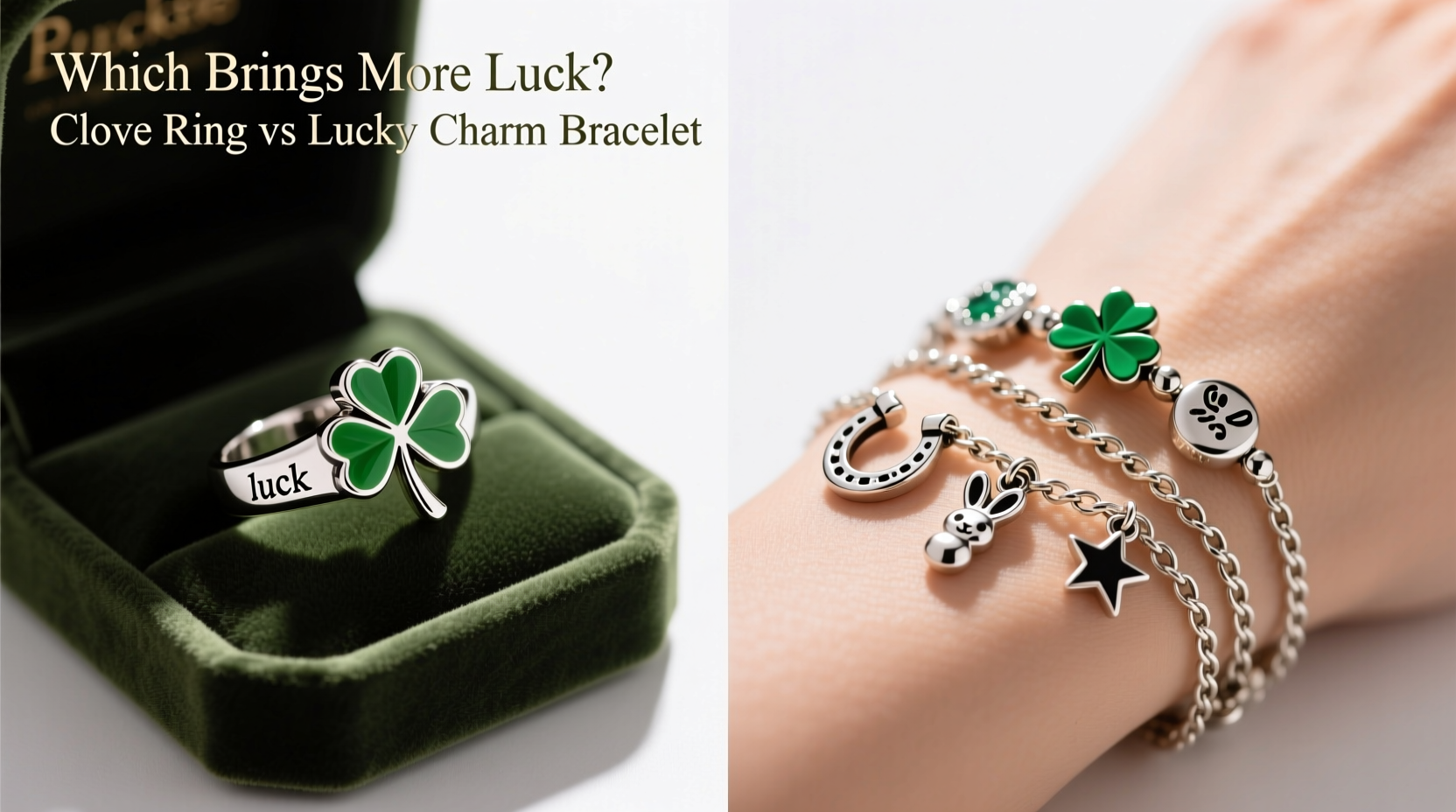
The four-leaf clover is nature’s rare gift—a genetic anomaly occurring roughly once in every 10,000 three-leaf variants. This scarcity cemented its status as a symbol of luck across cultures, particularly in Irish tradition where it was believed to ward off evil spirits and reveal fairies. Each leaf represents hope, faith, love, and luck—the last being the most elusive.
Lucky charms, by contrast, are eclectic. A \"lucky charm bracelet\" typically combines multiple symbols: horseshoes, stars, hearts, dice, keys, and sometimes even miniature clovers. These items draw from diverse mythologies—Celtic, Chinese, Roman—and often serve as personalized amulets. While the clover speaks to natural serendipity, the charm bracelet reflects curated intention.
“Symbols gain power through belief and repetition. Wearing them consistently can reinforce a mindset of abundance.” — Dr. Lila Nguyen, Cultural Anthropologist & Symbolism Researcher
Design and Aesthetic Appeal: Style That Speaks Volumes
A clover ring tends to be minimalist and elegant. Most feature a single four-leaf clover motif set in gold, silver, or rose gold, often accented with small gemstones. Its subtle presence makes it ideal for stacking with other rings or wearing alone as a quiet statement of optimism.
Lucky charm bracelets, however, embrace boldness. Think Pandora-style chains with dangling trinkets or sleek leather bands embedded with metallic symbols. They’re expressive, customizable, and often grow over time as wearers add new charms representing milestones. Where a clover ring whispers, a lucky charm bracelet sings.
Tip: Match your jewelry to your lifestyle—minimalist attire pairs well with clover rings, while bohemian or layered looks suit charm bracelets.Comparing Luck: Superstition vs. Psychology
Does either item actually bring luck? Scientifically, no object alters probability. But psychology tells a different story. Studies in behavioral science show that carrying a personal lucky charm can boost confidence, reduce anxiety, and improve performance in high-pressure situations.
In one experiment at the University of Cologne, participants who brought their lucky charms performed significantly better in memory and puzzle tasks. The effect wasn’t magical—it was cognitive. Belief in the charm enhanced focus and self-efficacy.
So, whether it's a clover ring or a charm bracelet, the real power lies in what you believe it represents. A clover may remind you to stay open to unexpected opportunities, while a charm bracelet can serve as a wearable journal of goals achieved and hopes held.
Clover Ring vs Lucky Charm Bracelet: Key Comparison
| Feature | Clover Ring | Lucky Charm Bracelet |
|---|---|---|
| Symmetry of Design | Simple, centered motif | Asymmetrical, dynamic layout |
| Wearability | Daily wear, office-friendly | Versatile but can snag on fabrics |
| Symbolic Focus | Natural luck, serendipity | Personalized protection & aspiration |
| Customization | Limited (engraving, metal choice) | High (add/remove charms) |
| Lifetime Value | Timeless, heirloom potential | Evolves with wearer’s journey |
| Maintenance | Low (occasional polishing) | Moderate (check clasps, clean crevices) |
Real-Life Example: How One Woman Chose Her Lucky Piece
Sophie, a graphic designer from Portland, struggled with public speaking despite her creative talent. Before a major client pitch, she inherited her grandmother’s vintage clover ring—passed down through generations of women in her family. She wore it during the presentation, feeling an unexpected calm. She won the contract.
Over time, Sophie began attributing her growing confidence not to magic, but to the ring’s reminder of her lineage and resilience. Later, she added a lucky charm bracelet with a tiny paintbrush and globe, symbolizing her career aspirations. “The clover grounded me,” she says. “The bracelet reminds me where I’m going.”
Her experience illustrates a key truth: the best talisman isn’t defined by form, but by function—how it aligns with your inner narrative.
How to Choose the Right One for You: A Step-by-Step Guide
- Reflect on your intentions. Are you seeking general good fortune, or do you have specific goals (career, love, creativity)?
- Assess your style. Do you prefer understated elegance or expressive layering?
- Consider durability. Rings face more friction; bracelets risk snagging. Choose materials accordingly—sterling silver, stainless steel, or gold-filled options last longer.
- Test comfort. Wear sample pieces for a day. Does the ring catch on paper? Does the bracelet slide too much?
- Add personal meaning. Engrave a date, choose a birthstone accent, or select a charm that represents a dream.
- Start simple. Begin with one meaningful piece rather than overwhelming yourself with symbols.
Tips for Maximizing the Power of Your Lucky Jewelry
- Wear it consistently to build a psychological association with confidence and positivity.
- Pair it with affirmations—e.g., “I am open to opportunity” when touching your clover ring.
- Keep it clean; polished jewelry feels more intentional and cared for.
- Avoid lending it to others—personal talismans lose potency when shared.
- Replace worn components promptly; a broken clasp can symbolize lost momentum.
Frequently Asked Questions
Can a clover ring be worn every day?
Yes, especially if crafted from durable metals like platinum or titanium. Avoid exposure to harsh chemicals like chlorine or cleaning agents, and remove it during heavy manual work to prevent scratches.
Do lucky charm bracelets need to be blessed or activated?
Not necessarily. While some traditions recommend blessing by a spiritual leader or placing the bracelet under moonlight, the most important factor is your personal connection to it. Intention matters more than ritual.
Is there such a thing as too many charms?
Yes. Overcrowding a bracelet can dilute focus and make the piece unwieldy. Experts suggest limiting active charms to five or fewer—each representing a core value or goal.
Final Thoughts: Luck Is What You Make It
The clover ring and the lucky charm bracelet are more than accessories—they’re extensions of identity. One offers quiet elegance and a nod to nature’s rarity; the other celebrates individuality and life’s evolving journey. In terms of appearance, preference reigns: minimalists lean toward clover rings, while storytellers favor charm bracelets.
As for luck, neither guarantees wealth or success. But both can serve as anchors—reminders to act bravely, think positively, and remain open to possibility. The truest luck isn’t found in metal or stone, but in the courage to move forward. Whether on your finger or wrist, let your chosen talisman reflect not just hope, but action.
💬 Which resonates more with you—the simplicity of a clover ring or the storytelling power of a lucky charm bracelet? Share your thoughts or your own lucky jewelry story in the comments below.