When it comes to warm-weather footwear, few choices spark as much debate as clip toe versus thong sandals. Both styles promise comfort and breathability, but one critical factor often gets overlooked: do they actually stay on your feet? Whether you're walking across a parking lot, navigating cobblestone streets, or simply chasing a bus, losing a sandal mid-stride is more than inconvenient—it’s embarrassing. This guide dives deep into the mechanics, design differences, and real-world stability of clip toe and thong sandals to help you make a smarter, more secure footwear choice.
Understanding the Design: How Each Style Works
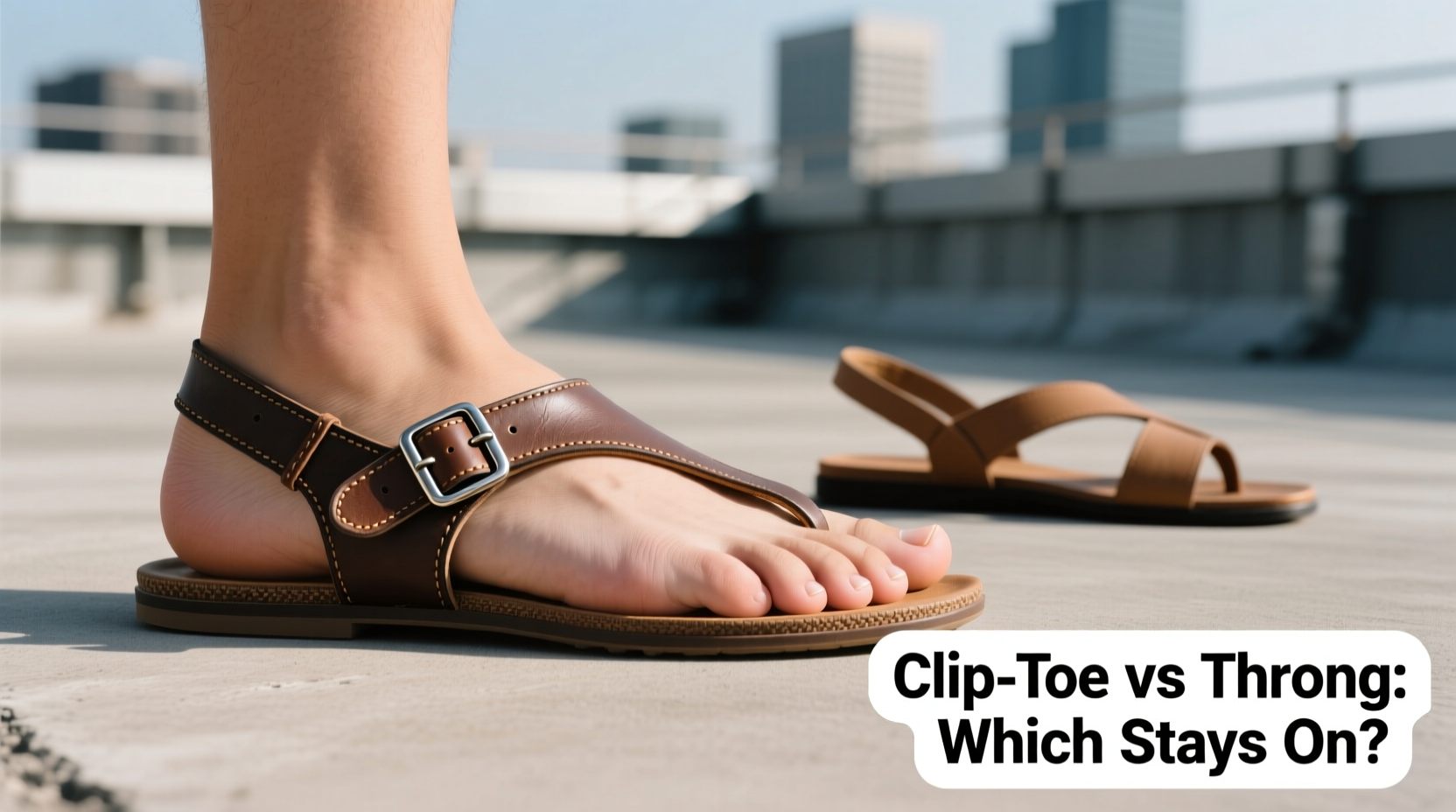
The fundamental difference between clip toe and thong sandals lies in how they anchor to your foot. Thong sandals—often associated with flip-flops—use a narrow strap that passes between the big toe and second toe, connecting to a sole with minimal lateral support. The entire sandal relies on toe grip to remain attached during movement. Over time, this can lead to toe fatigue and instability, especially on uneven terrain.
Clip toe sandals, on the other hand, feature a U-shaped or Y-shaped strap that wraps over the front of the foot, usually just behind the toes. This strap is secured by an adjustable buckle, elastic band, or Velcro closure. Instead of relying on toe clenching, clip toes use a secure fastening system across the instep, distributing pressure more evenly and reducing slippage.
“Footwear that secures the forefoot without requiring constant toe engagement offers better biomechanical efficiency and reduces strain,” says Dr. Lena Torres, podiatrist and footwear ergonomics researcher at the Institute for Movement Science.
Stability Showdown: Real-World Performance
To determine which style stays on your feet more reliably, consider three key factors: motion resistance, surface adaptability, and foot shape compatibility.
- Motion Resistance: Clip toes generally outperform thongs during brisk walking or sudden stops. The fixed strap resists forward slide, while thongs require active toe gripping to prevent detachment.
- Surface Adaptability: On smooth surfaces like pavement or tile, both styles may perform adequately. However, on gravel, grass, or wet tiles, clip toes maintain better contact due to their broader foot coverage.
- Foot Shape Compatibility: Narrow or low-volume feet often struggle with thongs, as the toe post can slip around, increasing instability. Clip toes accommodate a wider range of foot shapes thanks to adjustable straps.
Comparison Table: Clip Toe vs Thong Sandals
| Feature | Clip Toe Sandals | Thong Sandals |
|---|---|---|
| Primary Foot Attachment | Strap over forefoot (adjustable) | Toe post between first two toes |
| Stability During Walking | High – minimal heel lift or slippage | Low to Moderate – requires toe grip |
| Comfort Over Long Distances | Good – even pressure distribution | Poor – toe fatigue common |
| Suitability for Wide/Narrow Feet | Adjustable – fits most foot types | Limited – depends on toe post fit |
| Durability of Fit Over Time | Consistent – straps maintain tension | Declines – elastic degrades, soles wear |
| Fashion Versatility | Moderate to High – dressy and casual options | Mostly Casual – limited formal use |
Real Example: A Commuter’s Dilemma
Take Sarah, a city dweller who walks 1.5 miles daily from her subway stop to work. Last summer, she wore classic thong sandals thinking they’d keep her cool. Within a week, she was constantly stopping to reattach slipping straps. One rainy morning, she lost a sandal entirely crossing a slick crosswalk. Frustrated, she switched to a pair of minimalist clip toe sandals with soft neoprene straps. The change was immediate: no more mid-walk adjustments, less foot fatigue, and zero losses—even during rushed commutes. Her experience isn’t unique. Many urban walkers report similar outcomes when prioritizing secure fit over traditional sandal aesthetics.
How to Choose the Right Style for Your Lifestyle
Selecting between clip toe and thong sandals shouldn’t be based solely on trend or temperature. Consider your daily activities and movement patterns. Here’s a step-by-step decision guide:
- Evaluate Your Daily Foot Traffic: Do you walk more than half a mile per day? If yes, prioritize stability—opt for clip toes.
- Assess Common Surfaces: Are you on pavement, trails, or wet floors? Uneven or slippery surfaces favor clip toes.
- Check Your Foot Type: Narrow heels or slim forefeet increase thong slippage risk. Clip toes offer better retention.
- Test the Fit In-Store: Walk briskly in place. If your toes are gripping or the heel lifts excessively, the sandal won’t stay put outdoors.
- Look for Adjustability: Even within clip toes, models with buckles or Velcro provide better customization than fixed elastic.
Checklist: What to Look for in Stable Sandals
- ✅ Secure forefoot attachment (strap or buckle)
- ✅ Minimal heel lift when walking
- ✅ Adjustable fit across the instep
- ✅ Contoured footbed that supports arches
- ✅ Non-slip outsole for traction
- ❌ Avoid overly flat soles with no cushioning
- ❌ Avoid loose toe posts that wobble
FAQ: Common Questions About Sandal Security
Do clip toe sandals look less stylish than thongs?
Not necessarily. Modern clip toe designs come in sleek, minimalist styles that rival the aesthetic of high-end thongs. Brands like Birkenstock, Teva, and even fashion labels such as Chloé and Prada now offer clip toes with refined silhouettes suitable for casual and semi-formal settings.
Can I wear clip toe sandals with socks?
Absolutely. Unlike thongs, clip toes don’t require bare toes and work well with no-show or ankle socks. This makes them ideal for transitional weather or workplaces with modesty requirements.
Are thong sandals ever stable enough for long walks?
Some engineered thongs—like those with contoured footbeds and supportive arches (e.g., OOFOS or certain Reef models)—offer improved stability. However, they still rely on toe grip, making them less reliable than clip toes for sustained activity or fast-paced movement.
Conclusion: Stay on Your Feet, Not in Your Hand
When it comes to staying securely on your feet, clip toe sandals clearly outperform traditional thong designs. Their superior strap mechanics, adaptability to different foot shapes, and reduced reliance on toe strength make them the smarter choice for anyone who values practicality alongside comfort. While thongs have cultural staying power and undeniable ease of wear, they fall short in reliability—especially for active lifestyles or challenging environments.
Don’t let fashion override function. Upgrading to a well-designed clip toe sandal doesn’t mean sacrificing style; it means investing in footwear that moves with you, not against you. Try a pair on your next outing and feel the difference a secure fit makes—one confident step at a time.
💬 Have a favorite sandal that never slips? Share your go-to style and why it works for you—we’d love to hear what keeps you grounded all summer long.