In 2025, fashion is no longer just about what’s new—it’s about what endures. As consumers shift toward mindful consumption and investment dressing, the lifespan of trends matters more than ever. Nowhere is this clearer than in the footwear aisle, where two opposing styles dominate: the bold, statement-making chunky sneaker and the sleek, understated minimalist loafer. One thrives on attention; the other on restraint. But which one has the staying power to outlast seasonal hype?
The answer isn’t as simple as personal preference. It involves understanding design longevity, cultural relevance, wearability across contexts, material resilience, and broader shifts in lifestyle and workplace norms. This analysis cuts through the noise to determine not just which shoe looks better now, but which one you’ll still be wearing—and loving—three years from today.
Design Philosophy: Volume vs. Void
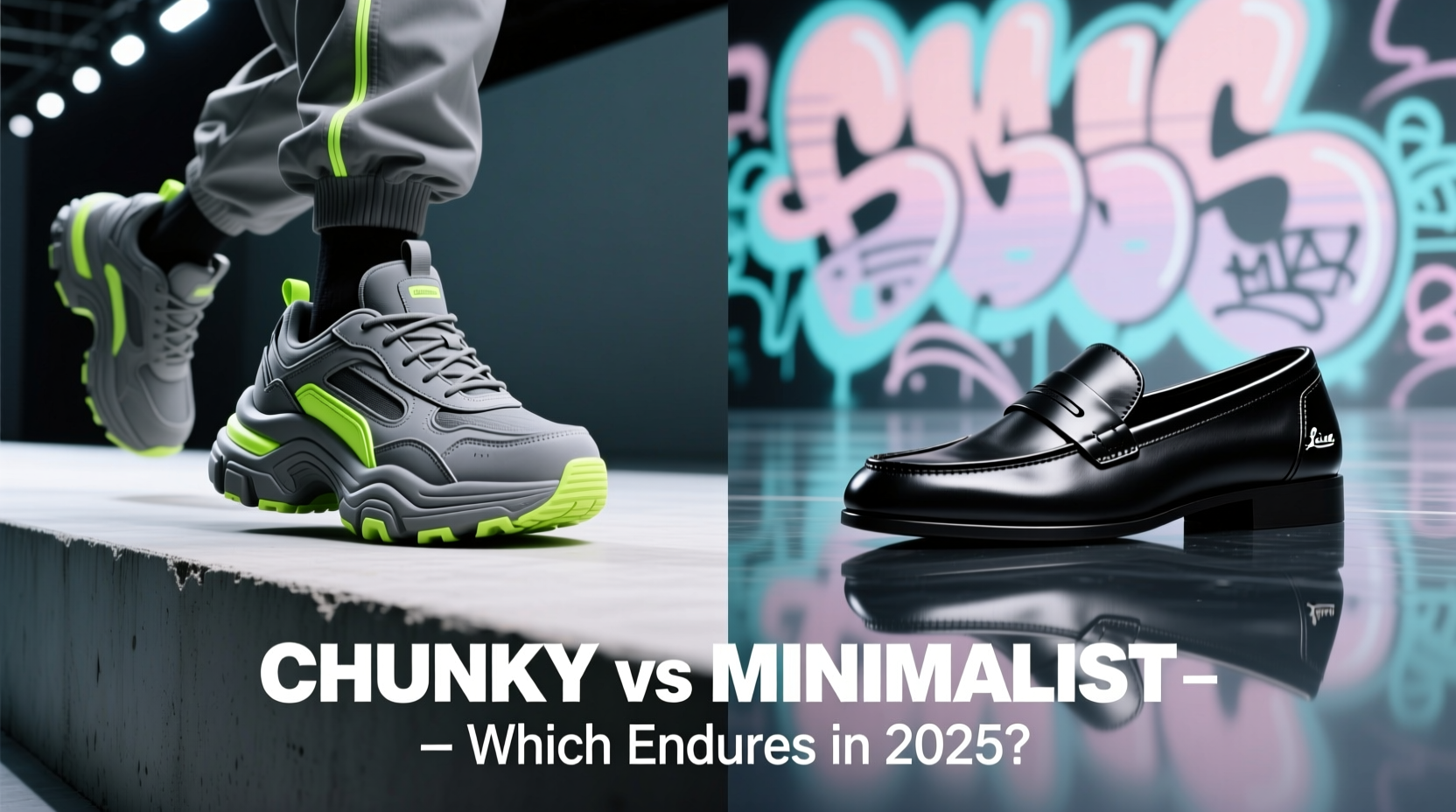
At their core, chunky sneakers and minimalist loafers represent opposite ends of a design spectrum. Chunky sneakers—popularized by brands like Balenciaga, Nike, and New Balance—embrace exaggeration. Thick soles, layered uppers, and aggressive silhouettes create visual weight. They are engineered for impact, often prioritizing aesthetic disruption over subtlety.
Minimalist loafers, by contrast, follow the “less is more” principle. Think Tod’s driving mocs, Axel Arigato slip-ons, or Everlane’s clean-lined leather options. These shoes focus on precision: flat profiles, neutral tones, and high-quality materials that age gracefully. Their appeal lies in invisibility—not because they’re forgettable, but because they blend seamlessly into diverse wardrobes.
This philosophical divide influences longevity. Trends built on excess often peak quickly. The bolder the statement, the shorter its shelf life in fast-moving fashion cycles. Minimalism, however, has proven remarkably resilient. From the 1990s Calvin Klein era to the modern normcore movement, understated elegance resurfaces with regularity.
Tip: When evaluating a trend's longevity, ask: Does it rely on novelty, or does it serve a functional purpose? The latter tends to endure.Cultural Momentum and Lifestyle Shifts
Fashion reflects culture, and footwear choices mirror evolving lifestyles. In recent years, hybrid work models have blurred the lines between office and casual wear. Sneakers gained formal acceptance, while traditional dress codes eroded. This environment fueled the rise of the chunky sneaker—a shoe that could straddle gym-to-dinner transitions without apology.
Yet by 2025, signs point to a counter-movement. As remote work normalizes, many professionals are reclaiming intentionality in dressing. The “I’m back in the office” look isn’t about athleisure anymore—it’s about polish. Minimalist loafers fit perfectly here: easy to slip on, comfortable enough for walking, yet refined enough for client meetings.
Meanwhile, the cultural fatigue around “ugly chic” aesthetics is growing. What once felt rebellious now feels predictable. Critics argue that the exaggerated proportions of chunky sneakers have become cliché—especially when worn outside athletic contexts. A 2024 Vogue Business report noted a 37% decline in search interest for “dad sneakers” compared to 2022 peaks, while queries for “quiet luxury shoes” rose steadily.
“Trends based on irony or subversion rarely survive beyond five years. Timelessness wins when novelty fades.” — Lena Park, Senior Analyst at WGSN
Wearability and Versatility Compared
A shoe’s usefulness determines how often it’s worn—and how long it stays relevant in your closet. Let’s break down real-world performance across key categories.
| Factor | Chunky Sneakers | Minimalist Loafers |
|---|---|---|
| Dress-Up Potential | Limited; works best with streetwear or relaxed tailoring | High; pairs effortlessly with suits, chinos, or jeans |
| Dress-Down Flexibility | Excellent; ideal with joggers, shorts, oversized tees | Good; can feel too formal with ultra-casual outfits |
| All-Day Comfort | Generally high due to cushioned soles | Moderate; depends on arch support and leather softness |
| Seasonal Range | Better in cooler months; bulky appearance clashes with summer minimalism | Year-round; lighter leathers and breathable designs available |
| Foot Shape Compatibility | Narrow fits common; may not suit wider feet | More accommodating cuts; many brands offer wide sizes |
The data suggests a clear trade-off: chunky sneakers excel in comfort and youth-driven styling, but their visual dominance limits pairing options. Minimalist loafers, while less cushioned, integrate more fluidly into varied wardrobes. Their adaptability makes them a higher-frequency wear item, increasing perceived value over time.
Material Quality and Longevity
Durability isn’t just about how long a shoe physically lasts—it’s also about how well it ages aesthetically. Here, construction methods and materials play decisive roles.
Chunky sneakers often use synthetic overlays, foam midsoles, and mesh linings. While these keep weight down and production costs manageable, they degrade faster. EVA foam compresses over time, losing bounce. Glued-on elements (like rubber toe caps) can delaminate. Even premium versions from designer labels face these issues due to complex layering.
Minimalist loafers, particularly those made from full-grain leather or suede, are built differently. Many use Goodyear welt or Blake stitching—techniques that allow resoling. High-end versions develop a patina rather than wear out, gaining character with age. Brands like Magnanni, Carmina, and Santoni prioritize repairability, aligning with slow fashion values.
A 2023 study by the Fashion Sustainability Institute found that 68% of respondents kept minimalist leather loafers for over four years, compared to just 29% for chunky sneakers. The primary reasons cited were sole degradation, discoloration of white foam, and changing style preferences.
Tip: Invest in shoes that can be repaired. Resoling extends life far beyond initial wear, reducing waste and cost per use.Real-World Example: Two Professionals, Two Choices
Consider Sarah and Marcus, both urban professionals in their early 30s.
Sarah embraced the chunky sneaker wave in 2021. She bought a pair of triple-white platform runners for $220, wearing them daily during hybrid work weeks. By 2023, the foam midsole had yellowed, the heel tab cracked, and she found them too loud for her new corporate role. She donated them after three seasons.
Marcus purchased a pair of black minimalist loafers from Cole Haan in 2022. He wore them with tailored trousers, weekend denim, and even smart swimwear cover-ups. After noticing slight scuffing, he took them to a cobbler for polishing and a half-sole replacement ($45). Now in 2025, they remain his go-to pair—comfortable, professional, and timeless.
Their stories reflect a broader pattern: high-impact trends fade fast, while understated pieces compound value through repeated use and care.
Step-by-Step: Choosing the Right Investment for 2025 and Beyond
Selecting footwear that lasts requires more than following influencers. Follow this process to make a future-proof decision:
- Assess Your Daily Context: How often do you need to look polished? If more than twice a week, lean toward loafers.
- Evaluate Existing Wardrobe: Do your pants, shirts, and outerwear favor minimalism or maximalism? Match your footwear to your dominant aesthetic.
- Test for Long-Term Wear: Try the shoe with multiple outfit types. Can it transition from day to evening? From casual to semi-formal?
- Check Repair Options: Research whether the brand offers resoling services or partners with cobblers.
- Calculate Cost Per Wear: Divide price by estimated number of wears over three years. A $200 sneaker worn 50 times = $4 per wear. A $250 loafer worn 150 times = $1.67 per wear.
Expert Insight: What Designers Are Saying
The industry itself is signaling a pivot. At the 2024 Milan Fashion Week, several menswear collections featured sleek moccasins and penny loafers instead of bulky silhouettes. Stefano Bemer, creative director at a revived Italian heritage brand, commented:
“We’re seeing clients reject disposable fashion. They want shoes that improve with age, not ones that scream ‘I was trendy in 2023.’” — Stefano Bemer, Creative Director, Bemer Heritage Line
Similarly, Nike’s 2024 innovation report highlighted a strategic shift toward “lightweight performance hybrids,” suggesting even sportswear giants recognize the limits of bulk.
FAQ: Your Questions Answered
Can I wear minimalist loafers to the gym or for walking?
No—they aren’t designed for high-impact activity. For walking, choose loafers with cushioned insoles or rubber outsoles. But for gym use, stick to proper athletic shoes. Loafers are optimized for low-intensity mobility, not dynamic movement.
Are chunky sneakers completely outdated in 2025?
Not entirely. They remain popular in streetwear circles and among younger demographics. However, their mainstream dominance has waned. Selective, intentional use—such as with monochrome athleisure—can still look fresh. Just don’t expect them to be wardrobe staples in 2028.
How do I style minimalist loafers without looking too formal?
Break the formality with texture and proportion. Pair them with cropped raw-hem jeans, a slouchy knit, or unstructured blazers. Socks matter: try no-show liners or textured cotton in neutral tones. Avoid black socks with navy pants—the contrast increases formality.
Final Verdict: Which Trend Lasts Longer?
If judged solely by 2023 popularity, chunky sneakers win. But longevity isn’t about peak attention—it’s about staying power. By every meaningful metric—versatility, repairability, cultural evolution, and style neutrality—minimalist loafers emerge as the more enduring choice for 2025 and beyond.
They align with the growing demand for quiet luxury, responsible consumption, and multi-context dressing. While chunky sneakers served a moment—a rebellion against formality, a celebration of comfort—they did so at the expense of timelessness. Minimalist loafers, rooted in decades of design history, don’t need to shout to be seen. They persist because they solve real problems: how to look put-together without effort, how to walk comfortably without sacrificing style, and how to own less without feeling limited.
That doesn’t mean eliminating chunky sneakers entirely. They have their place—in creative industries, weekend outings, or as temporary expressions of mood. But if you’re investing in one pair of shoes that must last, adapt, and remain relevant across seasons and roles, the minimalist loafer is the smarter, more sustainable bet.
Checklist: Building a Future-Proof Footwear Wardrobe
- ✅ Own at least one pair of neutral minimalist loafers (black, brown, or tan)
- ✅ Choose leather or suede over synthetic materials
- ✅ Verify resoling options before purchase
- ✅ Limit bold statement shoes to seasonal experimentation
- ✅ Rotate shoes to extend lifespan and prevent moisture buildup
- ✅ Schedule annual maintenance (polishing, stretching, sole inspection)
Conclusion: Step Into the Future With Intention
The most lasting trends aren’t the loudest—they’re the ones that quietly earn their place in your daily life. As we move further into an era defined by conscious choices and curated wardrobes, the value of a shoe isn’t measured in Instagram likes, but in years worn and occasions served.
Chunky sneakers had their moment. Minimalist loafers are building a legacy. In 2025, the choice isn’t about which trend is hotter—it’s about which one will still make sense next winter, and the one after that. Choose wisely. Your closet—and the planet—will thank you.
🚀 Ready to refine your footwear strategy? Audit your current collection: how many pairs have you worn consistently for over a year? Share your findings—or your favorite long-lasting shoe—in the comments below.








