
When it comes to building a sharp, seasonally adaptable wardrobe, the way you layer your pieces can make or break an outfit. Few combinations are as timeless—or as frequently worn—than a blazer paired with a sweater underneath. But choosing between a chunky knit sweater and a fitted turtleneck isn't just about personal taste; it's a decision rooted in proportion, structure, occasion, and climate. While both options bring their own strengths to the table, only one consistently delivers a clean, professional silhouette when layered beneath tailored outerwear.
The answer depends on context, but understanding the nuances of fabric weight, collar height, drape, and overall volume will help you make smarter choices—whether you're dressing for a boardroom meeting, a casual weekend brunch, or a transitional autumn evening out.
Fabric & Fit: The Core Differences
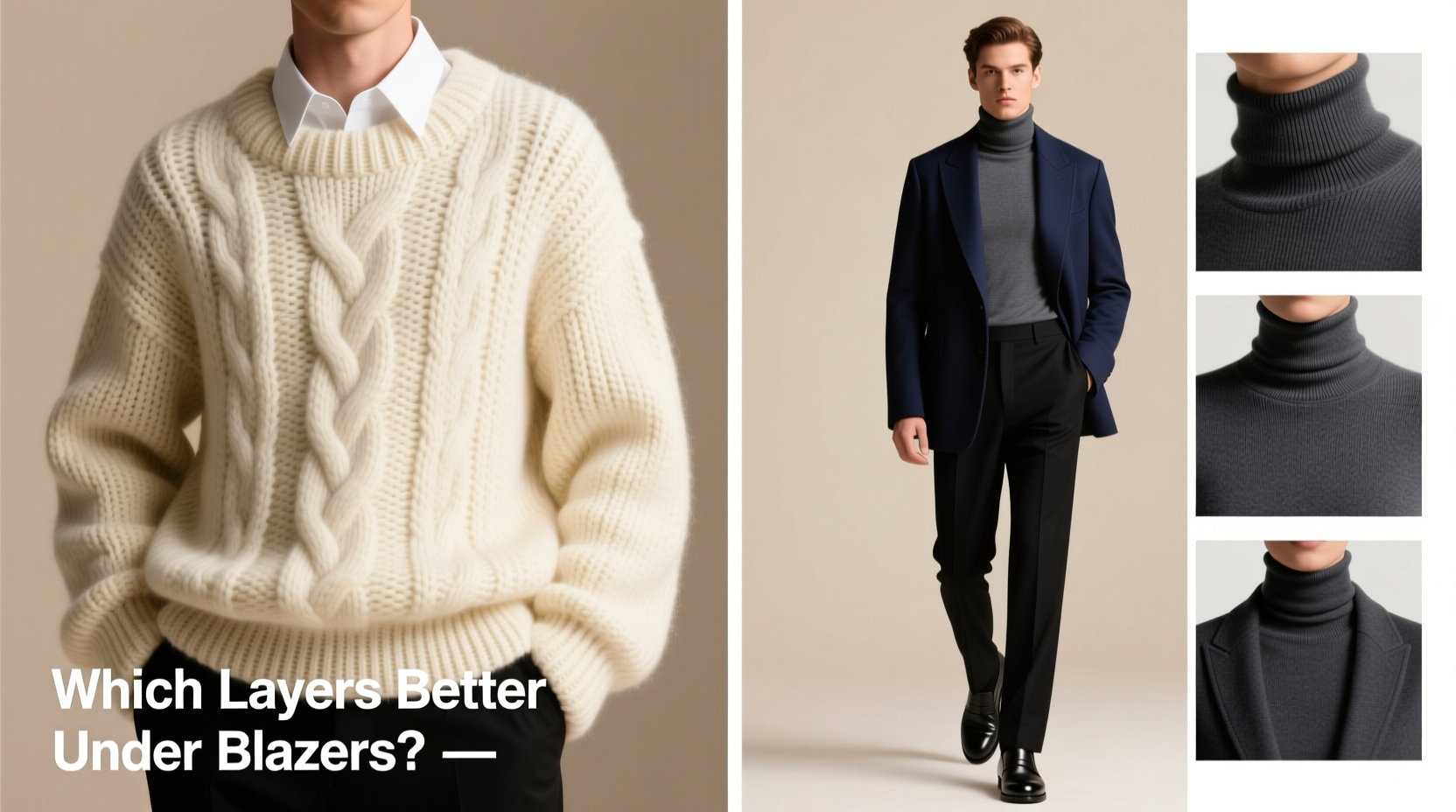
At first glance, the distinction between a chunky knit sweater and a fitted turtleneck seems obvious: one is thick and textured, the other sleek and streamlined. But these differences go beyond aesthetics—they influence comfort, mobility, and visual balance.
Chunky knit sweaters are typically made from heavy-gauge yarns like wool, alpaca, or acrylic blends. They’re designed for warmth and texture, often featuring cable knits, ribbing, or oversized silhouettes. Their appeal lies in coziness and visual interest, making them ideal for cold weather and relaxed settings.
Fitted turtlenecks, by contrast, are constructed from fine-knit materials such as merino wool, cotton jersey, or cashmere. They hug the body closely, minimizing bulk and offering a smooth transition from neck to shoulders. Originally popularized in mid-century menswear and later adopted by minimalist designers, they serve as elegant base layers that enhance tailoring rather than compete with it.
Tip: If your blazer buttons feel strained when zipped or buttoned over a sweater, the layer underneath is likely too bulky.Layering Mechanics: How Each Performs Under a Blazer
Blazers are structured garments. Their lapels, shoulder pads (if present), and chest canvas are engineered to lie flat and drape cleanly across the torso. When you introduce a thick layer beneath, especially around the upper back and shoulders, you risk distorting this intended shape.
A chunky knit adds significant volume, particularly at the yoke and collar area. This can cause:
- Puckering along the button closure
- Lapels that won’t lay flat
- Ripples or tension lines across the chest
- Restricted arm movement due to tight sleeves
In contrast, a well-fitted turtleneck sits flush against the body, preserving the blazer’s natural line. It provides insulation without compromising structure, allowing the garment to maintain its tailored integrity. The high neck also eliminates the need for additional collars or scarves, creating a modern, cohesive look.
“Layering is not just about warmth—it’s about proportion. A blazer should frame the body, not fight against what’s underneath.” — Marcus Lang, Menswear Stylist & Creative Director
Comparative Breakdown: Key Factors Side-by-Side
| Factor | Chunky Knit Sweater | Fitted Turtleneck |
|---|---|---|
| Bulk/Volume | High – adds noticeable thickness | Low – minimal added volume |
| Blazer Fit Compatibility | Poor – disrupts chest and shoulder lines | Excellent – complements tailored cuts |
| Warmth Level | High – excellent for cold climates | Moderate – best with outer coat in extreme cold |
| Formality | Casual to smart-casual | Semi-formal to formal |
| Collar Visibility | Visible texture, may peek above blazer | Clean roll, integrates seamlessly |
| Mobility | Restricted – tightens when arms move | Unrestricted – flexible stretch |
| Style Versatility | Limited to casual or creative environments | Adaptable to office, dinner, events |
This comparison makes clear that while chunky knits excel in comfort and seasonal warmth, they compromise the very qualities that make a blazer effective: precision, polish, and proportion.
When to Choose Each Option: Practical Scenarios
There’s no single “best” choice in all situations. Context determines whether functionality or formality takes priority.
Opt for a Fitted Turtleneck When:
- You’re attending a business meeting, interview, or formal event
- Your blazer has a slim or tailored cut
- You want a minimalist, modern aesthetic
- You’ll be wearing a coat over the blazer (avoiding triple-layer bulk)
- Photography or public appearances are involved (clean lines photograph better)
Choose a Chunky Knit Sweater When:
- The setting is casual—think coffee shops, creative studios, or weekend outings
- You’re prioritizing warmth over appearance
- Your blazer is unstructured, oversized, or made from soft fabrics like cotton or linen
- You’re going for a deliberately rugged or eclectic look
- You plan to remove the blazer indoors and want the sweater to stand alone as a statement piece
Mini Case Study: Office Presentation vs. Weekend Market Visit
Consider two scenarios involving Daniel, a marketing consultant in his early 30s.
Scenario 1: Client Pitch Meeting
Daniel wears a navy wool blazer with charcoal trousers. Beneath it, he layers a black merino wool turtleneck. The fit is snug but not tight, the neckline rolls neatly, and the blazer closes smoothly. His colleagues comment on his polished presence. He feels confident and moves freely throughout the presentation.
Scenario 2: Saturday Farmers Market
Same blazer, but now paired with an oatmeal-colored cable-knit sweater. The texture draws compliments, and the extra warmth is welcome in the crisp morning air. However, when he buttons the blazer, the front gaps slightly, and the lapels lift. He leaves it open, which works with jeans and boots—but would look unprofessional in an office.
The takeaway? Both outfits succeed within their contexts. But only one supports the structural demands of the blazer itself.
Step-by-Step Guide to Optimal Layering with a Blazer
To ensure your outfit looks intentional and well-proportioned, follow this sequence:
- Assess your blazer’s cut: Is it slim, regular, or oversized? Slim fits demand thinner layers.
- Select your base layer: For formal or professional settings, choose a fine-gauge turtleneck in neutral tones (black, gray, navy, cream).
- Check sleeve length: The sweater sleeves should extend just past the wrist bone but remain visible under the blazer cuff—about 1/2 inch showing is ideal.
- Test the closure: Button or zip your blazer. There should be no pulling, wrinkling, or difficulty moving your arms.
- Evaluate the neckline: The turtleneck should sit just below the blazer’s collar without pushing it up or bunching behind the neck.
- Add outerwear if needed: In colder weather, wear a topcoat or overcoat over both layers—never try to fit a puffer jacket over a chunky knit and expect a clean look.
- Final mirror check: Turn sideways. Does the silhouette remain clean from shoulders to hips? If not, reconsider the sweater choice.
Common Mistakes to Avoid
- Wearing a thick sweater under a double-breasted blazer: The added volume almost always causes strain and misalignment.
- Letting the turtleneck ride up: A folded-over collar that stands too high can push against the jawline—opt for a lower roll if needed.
- Mixing textures haphazardly: Pairing a shiny blazer with a fuzzy knit creates visual conflict. Stick to complementary finishes (matte with matte, soft with soft).
- Ignoring fabric breathability: Wearing a non-breathable synthetic turtleneck under wool can lead to overheating and odor buildup.
- Choosing the wrong color: High-contrast combinations (e.g., bright red turtleneck under navy) can draw attention away from your face—neutral tones are safer for professional settings.
Frequently Asked Questions
Can I wear a chunky knit under a blazer if it’s unbuttoned?
Yes—this is actually the most flattering way to style a chunky knit with a blazer. Leaving the blazer open avoids fit distortion and allows the sweater’s texture to shine. Just ensure the overall proportions balance; avoid overly long sweaters that overwhelm the frame.
Are there any chunky knits that work well under blazers?
Rarely. However, some lightweight cable knits made from fine merino or silk-blend yarns offer texture with reduced bulk. Look for “sport-weight” or “four-ply” knits rather than super-bulky gauges. Even then, prioritize unstructured blazers with soft shoulders.
What material is best for a turtleneck worn under a blazer?
Merino wool is ideal—it’s breathable, wrinkle-resistant, warm without being heavy, and naturally wicks moisture. Cotton-jersey turtlenecks are comfortable but prone to pilling and stretching. Cashmere is luxurious but delicate; reserve it for low-friction environments.
Styling Checklist: Achieve a Polished Layered Look
Before heading out, run through this checklist:
- ✅ Blazer buttons easily without strain
- ✅ Lapels lie flat when closed
- ✅ No visible bunching at shoulders or back
- ✅ Turtleneck sleeve shows just enough under blazer cuff
- ✅ Neckline doesn’t push against the jaw or collarbone
- ✅ Color complements both blazer and pants
- ✅ Overall silhouette appears balanced and intentional
Conclusion: Prioritize Proportion Over Texture
While the cozy allure of a chunky knit sweater is undeniable, it rarely serves the structural needs of a well-tailored blazer. For reliable, professional, and visually harmonious layering, the fitted turtleneck remains the superior choice. It respects the architecture of tailored clothing, enhances your posture, and transitions effortlessly from day to night, office to dinner.
That said, fashion is not about rigid rules—it’s about informed decisions. There’s room in every wardrobe for both pieces. Use the chunky knit when comfort and character take precedence; reach for the turtleneck when clarity of line and sartorial intelligence matter most.
🚀 Ready to refine your layering game? Try pairing a charcoal blazer with a deep burgundy merino turtleneck this week—then share your look online and tag it #SmartLayering. Your next signature outfit starts with one thoughtful choice.








