A wristwatch is more than a timekeeping device—it’s a statement of style, precision, and sometimes, technical sophistication. Among the most visually striking variations is the chronograph, instantly recognizable by its cluster of subdials surrounding the main face. But beyond aesthetics, do these extra dials serve a meaningful purpose? Or are they just decorative flourishes on an otherwise functional tool? The answer depends on how you use your watch and what you expect from it.
While a simple three-hand watch displays hours, minutes, and seconds with minimal distraction, a chronograph introduces stopwatch functionality through additional counters. These subdials track elapsed seconds, minutes, and sometimes even hours. But in an age where smartphones can time laps with pinpoint accuracy, is this mechanical complexity still relevant?
What Exactly Is a Chronograph?
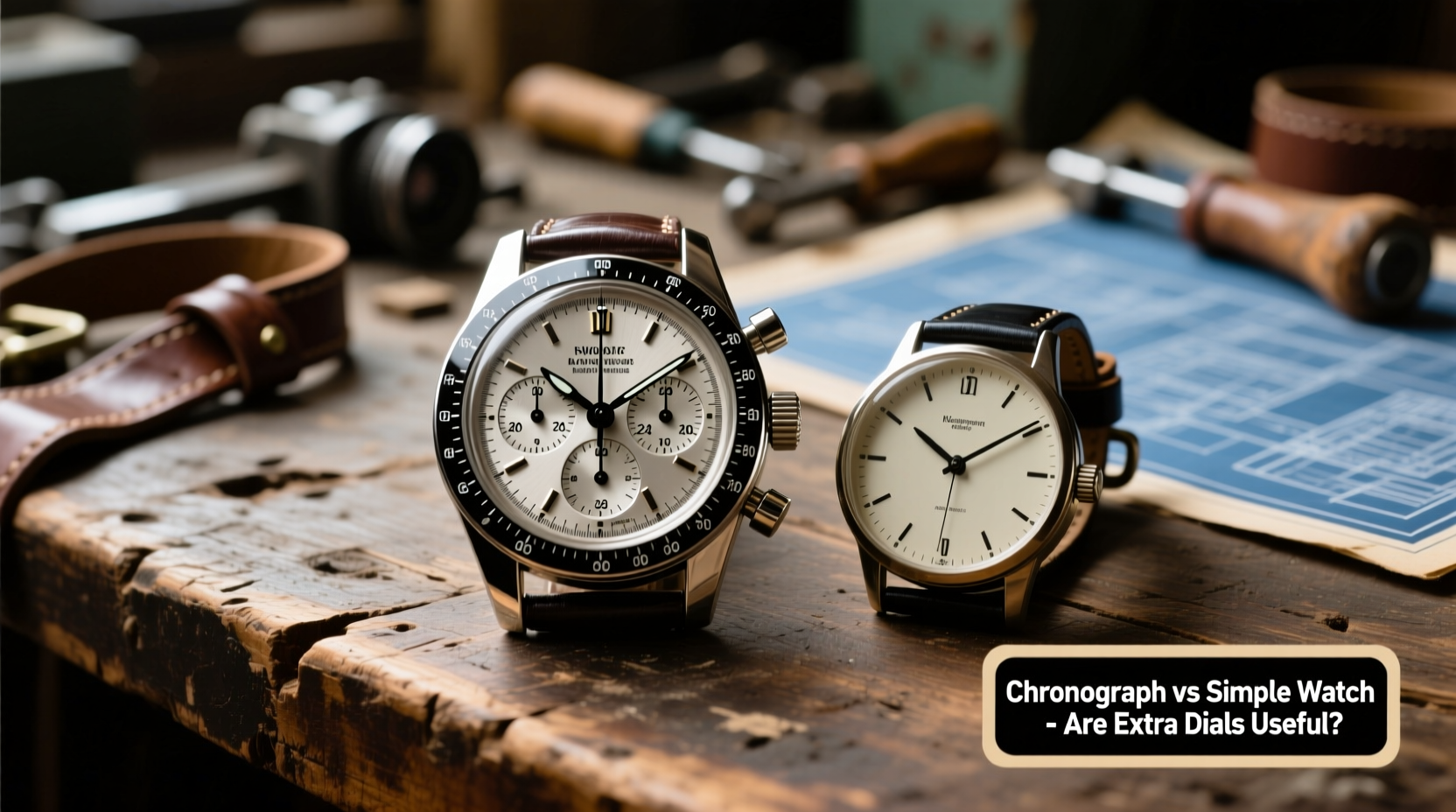
The term \"chronograph\" comes from the Greek words *chronos* (time) and *graph* (writer), literally meaning “time writer.” In horology, it refers to a watch with integrated stopwatch functions. Pressing the pushers on the side of the case starts, stops, and resets the chronograph hand, while the subdials record fractions of time—typically up to 30 minutes or 12 hours, depending on design.
Unlike a standard analog watch, which passively tells time, a chronograph actively measures intervals. This makes it particularly valuable for tasks requiring precise timing: athletic events, industrial processes, aviation maneuvers, or even cooking delicate dishes. The mechanics behind it are intricate—a separate gear train engages only when the chronograph is activated, preserving accuracy in both timekeeping and measurement.
“Mechanical chronographs represent one of the pinnacles of traditional watchmaking. They combine utility with engineering artistry.” — Daniel Reardon, Horologist & Curator at the Swiss Watch Heritage Foundation
Practical Uses of Chronograph Subdials
Despite skepticism about their necessity in daily life, chronographs offer tangible advantages in specific scenarios:
- Sports & Fitness: Runners, swimmers, and cyclists use chronographs to measure lap times without touching a phone or fitness tracker.
- Aviation & Navigation: Pilots historically relied on chronographs to calculate fuel burn, ground speed, or descent rates—functions still taught in flight schools today.
- Professional Timing: Chefs, lab technicians, and engineers occasionally prefer tactile, glanceable timing tools over digital devices that may require unlocking or app navigation.
- Dive Watches: Some divers use the chronograph to monitor bottom time, though most rely on dedicated dive timers due to safety redundancy.
Chronograph vs Simple Watch: A Feature Comparison
| Feature | Simple Watch | Chronograph Watch |
|---|---|---|
| Main Function | Time display only | Time + stopwatch capabilities |
| Subdials | None or small seconds dial | Typically 3: seconds, minutes, hours |
| Pushers | None | Two (start/stop, reset) |
| Mechanical Complexity | Low to moderate | High |
| Maintenance Frequency | Every 5–7 years | Every 3–5 years |
| Price Range (Entry-Level) | $100–$300 | $300–$600+ |
| Best For | Casual wear, minimalists, dress occasions | Active lifestyles, professionals, collectors |
Real-World Example: The Engineer Who Relies on His Chronograph
Carlos Mendez, a field service engineer based in Stuttgart, uses his stainless steel chronograph daily during equipment calibration. During a recent plant audit, he needed to measure fluid flow rates across multiple valves under variable pressure. With gloves on and no access to a smartphone in hazardous zones, his watch became essential.
“I started the chronograph as soon as the valve opened,” he explains. “The 30-minute counter tracked total run time, while the central seconds hand gave me split-second feedback. It’s faster than pulling out a tablet, and I trust the mechanical readout more in extreme environments.”
In situations like Carlos’s, the extra dials aren’t just useful—they’re mission-critical. Yet for others, such precision may never be required.
When Simplicity Wins: The Case for the Basic Watch
There’s undeniable elegance in restraint. A simple watch—especially a well-designed dress model—prioritizes legibility, thinness, and understated craftsmanship. Without subdials cluttering the dial, the face remains clean and timeless. These watches often feature slimmer cases, making them ideal under shirt cuffs, and require less frequent servicing due to fewer moving parts.
Moreover, simplicity enhances longevity. Fewer components mean lower risk of malfunction. For someone who values reliability over features, a three-hand automatic or quartz watch delivers consistent performance with minimal upkeep.
Checklist: Should You Choose a Chronograph?
Ask yourself the following before investing in a multi-dial timepiece:
- Do I regularly need to time intervals (e.g., workouts, meetings, experiments)?
- Am I drawn to mechanical complexity and horological craftsmanship?
- Do I work in a profession where quick, reliable timing is important?
- Am I willing to service the watch more frequently due to added mechanics?
- Does the busier dial design align with my personal aesthetic?
If most answers are “no,” a simpler watch may better suit your lifestyle.
Myths About Chronograph Dials
Several misconceptions persist about what chronograph subdials actually do:
- Myth: The subdials show the day, date, or moon phase.
Reality: Chronograph subdials measure elapsed time. Calendar functions appear elsewhere, if present. - Myth: All chronographs can time events up to 12 hours.
Reality: Most top subdials only track 30 or 60 minutes; extended timing requires manual resetting. - Myth: More dials equal higher accuracy.
Reality: Accuracy depends on movement quality, not the number of counters.
Frequently Asked Questions
Can I use a chronograph every day?
Absolutely. Many chronographs are built for daily wear with robust movements and water resistance. However, frequent use of the stopwatch function increases wear on the mechanism, so occasional rest is advisable.
Are chronographs harder to read?
Initially, yes—especially for beginners. The layout takes getting used to, but most users adapt within a week. Look for models with clear labeling and contrasting hands if readability is a priority.
Do quartz chronographs work the same way as mechanical ones?
Functionally, yes. Both start, stop, and reset timing via pushers. However, quartz versions use battery-powered circuits instead of springs and levers, resulting in lower maintenance but less mechanical appeal.
Conclusion: Function Meets Form—Choose Intentionally
The presence of extra dials on a chronograph isn’t inherently good or bad—it’s a question of alignment with your needs. For enthusiasts, professionals, or anyone who appreciates mechanical ingenuity, a chronograph offers genuine utility and visual intrigue. The subdials aren’t ornaments; they’re instruments designed for action.
But for those seeking quiet elegance, effortless legibility, or low-maintenance reliability, a simple watch remains the smarter, more refined choice. Ultimately, the best timepiece is one that serves your life—not just your wrist.
🚀 Ready to find your perfect match? Evaluate your daily routines, then choose a watch that enhances—not complicates—your day. Share your thoughts: Do you lean toward chronographs or simplicity?








