Sunglasses are more than just sun protection—they’re a statement. Among the most iconic silhouettes, cat eye and square frames dominate fashion conversations year after year. Cat eye sunglasses, with their upswept outer edges, evoke vintage glamour and femininity. Square frames, defined by strong lines and balanced proportions, project modern confidence and versatility. But despite their popularity, one persistent question remains: Do cat eye sunglasses truly flatter every face shape? And how do they stack up against square styles in terms of wearability and aesthetic impact?
The answer isn’t a simple yes or no. While cat eye sunglasses have been praised for their universally flattering reputation, especially for round and oval faces, their dramatic lift can clash with certain facial structures. Meanwhile, square sunglasses offer a structured contrast that enhances angularity but may overwhelm softer features. Understanding how each frame interacts with your unique bone structure, skin tone, and personal style is key to making an informed choice.
Understanding Face Shapes and Frame Compatibility
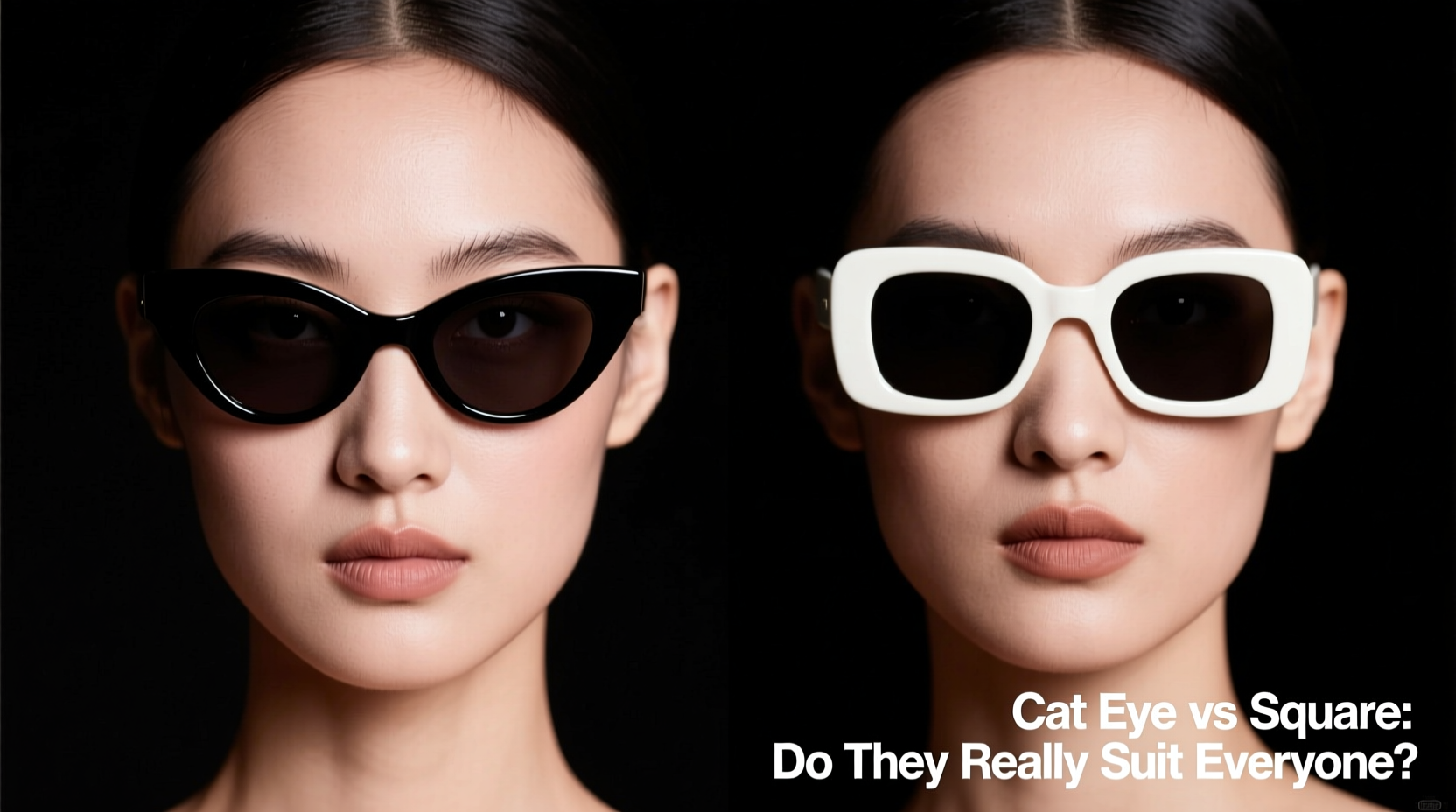
Choosing the right sunglasses starts with knowing your face shape. The goal is balance—selecting a frame that either contrasts or complements your natural contours. Here’s how different face types respond to cat eye and square designs:
- Oval: Considered the most versatile, oval faces suit both cat eye and square frames. The balanced proportions allow experimentation.
- Round: Angular square frames add definition and elongate the face. Cat eye styles also work well by lifting the cheekbone area and creating vertical emphasis.
- Square: Softened by cat eye sunglasses, which introduce curves and upward movement. Square frames on a square face can exaggerate jawlines, unless intentionally styled for boldness.
- Heart: Both styles can succeed. Cat eyes echo the forehead width and taper down, harmonizing with the chin. Square frames offer grounding symmetry if not too wide at the top.
- Diamond: Cat eyes highlight cheekbones beautifully. Square frames should be proportionate to avoid overwhelming narrow foreheads and chins.
Design Breakdown: Cat Eye vs Square Sunglasses
The structural differences between these two styles go beyond aesthetics—they influence comfort, functionality, and long-term wearability.
| Feature | Cat Eye Sunglasses | Square Sunglasses |
|---|---|---|
| Frame Shape | Upswept outer corners, curved bottom line | Geometric, straight top and bottom lines |
| Fashion Era | 1950s–60s retro revival | Modern minimalism, unisex appeal |
| Best For | Adding drama, softening strong jaws, enhancing cheekbones | Defining facial structure, projecting authority, everyday wear |
| Versatility | Moderate – depends on intensity of curve | High – easily transitions from casual to formal |
| Gender Appeal | Traditionally feminine, though modern versions are gender-fluid | Unisex, widely adopted across genders |
Cat eye frames tend to sit higher on the bridge and extend outward, drawing attention upward toward the eyes and temples. This makes them excellent for balancing fuller cheeks or shorter foreheads. In contrast, square frames distribute visual weight evenly, offering a grounded, architectural presence that pairs well with structured outfits and minimalist wardrobes.
The Myth of “Flattering Everyone” — A Closer Look
Marketing campaigns often claim cat eye sunglasses suit “every face.” While appealing, this is misleading. Their sharp upward tilt can amplify a high forehead or create imbalance on already angular faces. As stylist and image consultant Naomi Reed explains:
“Cat eyes are transformative—but transformation doesn’t always mean harmony. They work best when they counterbalance, not compete with, existing facial geometry.” — Naomi Reed, Celebrity Stylist & Image Consultant
For instance, someone with a long, narrow face might find cat eyes elongate their profile too much, creating a stretched appearance. On the other hand, a person with a wide, flat nasal bridge may benefit from the elevated outer rim, which lifts the eye area visually.
Real-World Example: Two Women, Two Choices
Consider Maya and Lena, both shopping for summer sunglasses.
Maya has a square jawline and broad forehead. She tries on a pair of oversized square lenses first—the strong horizontal lines emphasize her jaw, making her face appear boxier. Then she switches to a mid-rise cat eye with subtle wingtips. Instantly, her cheekbones catch light differently; the upward angle softens her lower face, adding elegance without sacrificing strength.
Lena, meanwhile, has a long, oval face with a pointed chin. Square frames with rounded edges give her face needed width at the temples, creating balance. When she tries a dramatic cat eye with extreme flicks, her face seems longer, almost severe. A lower-profile cat eye works better—but only slightly. Ultimately, she chooses the square pair for daily wear, reserving bolder cat eyes for evening events.
This illustrates a crucial point: context matters. Even within one category, variation in wing height, lens size, and frame thickness drastically alters the effect.
How to Choose Based on Lifestyle and Style Personality
Beyond face shape, consider how you dress, where you wear sunglasses, and what message you want to convey.
Choose Cat Eye If You:
- Love vintage-inspired fashion (think Audrey Hepburn or modern retro influencers)
- Want to accentuate your eyes or cheekbones
- Prefer expressive accessories over neutral staples
- Dress for brunches, dates, or creative workplaces
Choose Square If You:
- Prioritize practicality and clean lines
- Work in corporate, artistic, or technical environments
- Lean toward minimalist, Scandinavian, or androgynous style
- Need one reliable pair for driving, errands, and travel
Step-by-Step Guide to Finding Your Perfect Pair
- Identify your face shape: Use a mirror and tape measure, or take a front-facing photo and trace the outline.
- Assess your dominant features: Is your forehead wider? Jaw stronger? Eyes closer together?
- Select 2–3 frame styles that contrast or complement those traits (e.g., curves for angles).
- Try them on in daylight: Natural light reveals true color and shadow effects.
- Check for comfort: Ensure the arms don’t pinch and the nose bridge fits snugly.
- Evaluate versatility: Can you imagine wearing them with jeans, office wear, and evening attire?
- Wait 24 hours before buying: Sleep on it. True favorites stand the test of time.
Frequently Asked Questions
Can men wear cat eye sunglasses?
Yes—modern reinterpretations feature thinner lines, darker tones, and reduced wing height, making them suitable for any gender. Designers like Lindberg and Cutler and Gross have released unisex cat eye models gaining traction in avant-garde and fashion-forward circles.
Are square sunglasses better for professional settings?
Generally, yes. Their structured look aligns with polished aesthetics common in business, law, and creative industries. However, a sleek cat eye in black acetate can also project confidence and sophistication when kept understated.
Do lens color affect how frames look on my face?
Absolutely. Dark brown or gray lenses provide neutral contrast, while mirrored or brightly tinted lenses draw more attention. Lighter complexions may wash out behind pale pink tints, whereas deeper skin tones can carry bold colors like emerald or cobalt with ease.
Final Thoughts: Beauty Lies in Intentional Choice
No single sunglass style looks ideal on every person—and that’s by design. The charm of fashion lies in its ability to reflect individuality, not enforce uniformity. Cat eye sunglasses are undeniably striking, but their magic unfolds only when aligned with the wearer’s anatomy and intent. Square frames offer reliability and timeless structure, yet may lack the flair some seek.
Rather than chasing trends or universal claims, focus on alignment: How does the frame interact with your face? Does it enhance or distract? Most importantly, do you feel like a more confident version of yourself when wearing it?
💬 Found your perfect pair? Share your experience in the comments—help others navigate the cat eye vs square debate with real insights.








