When shopping for a high-quality wool sweater, two names consistently rise to the top: cashmere and merino wool. Both are celebrated for their softness, warmth, and luxury appeal. But for many buyers—especially those with sensitive skin or a low tolerance for itch—the real question isn’t just about prestige or price; it’s about comfort. Which fabric truly delivers a softer, smoother feel against the skin? And more importantly, which one is less likely to cause irritation?
The answer isn't always straightforward. While cashmere is often marketed as the pinnacle of softness, merino wool has made significant strides in recent decades, challenging that assumption. Understanding the differences in fiber structure, sourcing, processing, and performance can help you make an informed decision—especially if your priority is a sweater that feels as good as it looks.
Understanding the Fiber: What Makes Cashmere and Merino Wool Different?
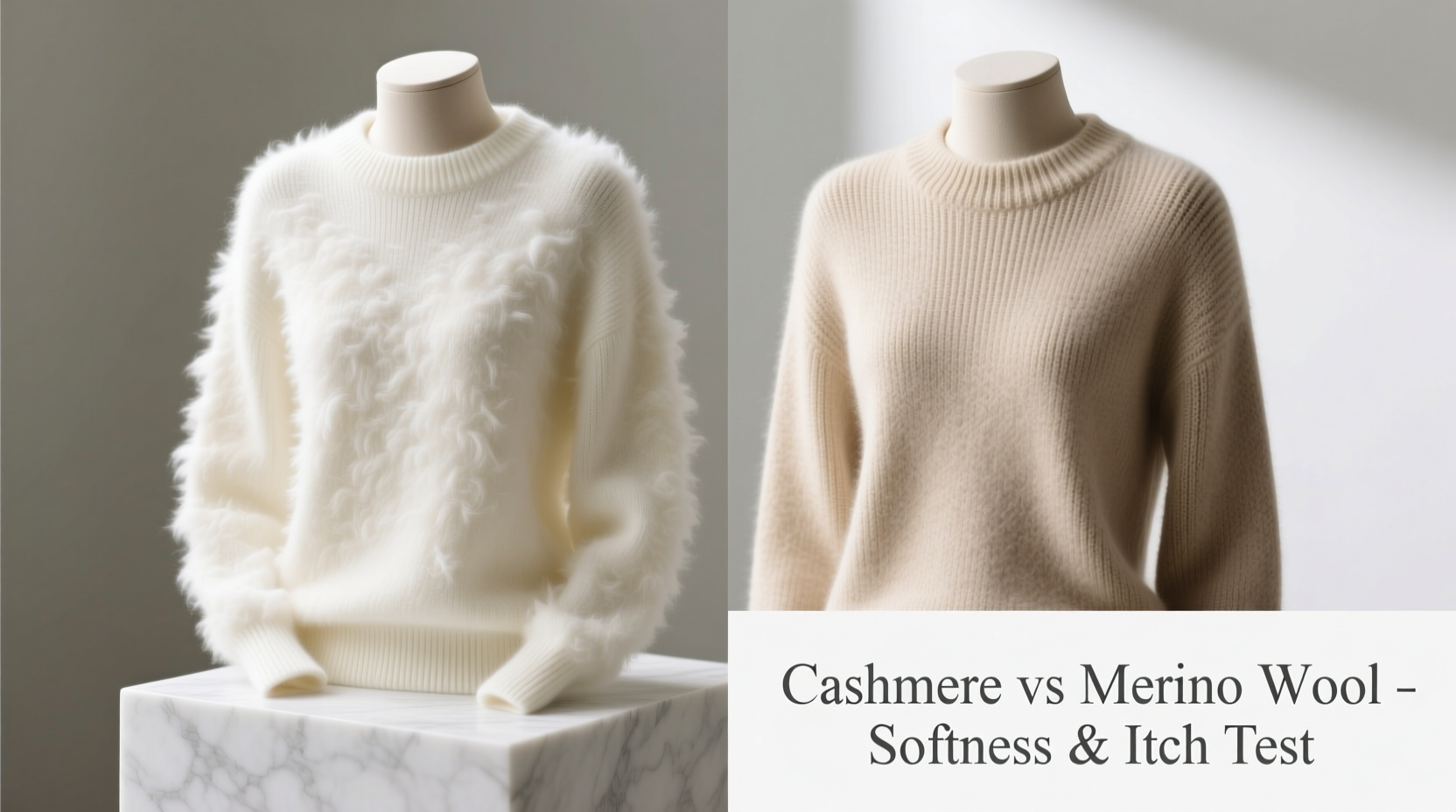
The foundation of any wool comparison lies in the fiber itself. The physical characteristics of the yarn—such as diameter, scale structure, and natural crimp—determine how it feels on the skin and how it performs over time.
Cashmere comes from the undercoat of the cashmere goat, primarily found in regions like Mongolia, China, and parts of Central Asia. These goats develop a fine, downy layer beneath their coarse outer coat to survive harsh winters. This undercoat is combed out during molting season and then processed into yarn. Because each goat produces only a small amount of usable fiber per year (typically 100–200 grams), cashmere is rare and expensive.
Merino wool, on the other hand, comes from Merino sheep, originally bred in Spain but now raised globally, especially in Australia and New Zealand. Merino sheep produce a fleece that is naturally fine, elastic, and breathable. Modern breeding techniques have led to ultrafine merino fibers—some measuring under 15.5 microns in diameter, qualifying them as \"superfine\" or even \"extrafine.\"
Fiber fineness is measured in microns. The lower the micron count, the finer and softer the fiber. For context:
- Average human hair: ~70 microns
- Coarse wool: 30+ microns
- Standard merino: 18–21 microns
- Ultrafine merino: 14.5–17.5 microns
- Cashmere: typically 14–19 microns
This means that while cashmere is generally finer than standard merino, high-grade merino wool can be just as fine—or even finer—than some cashmere.
Tip: Look for micron ratings when shopping for merino wool. Garments labeled “100% extrafine merino” (17.5 microns or less) are significantly softer and less itchy than standard versions.Softness Compared: Is Cashmere Really Softer Than Merino?
Traditionally, cashmere has been considered the gold standard for softness. Its fibers are not only fine but also have a smooth surface and a natural loft that gives it a cloud-like texture. When well-processed, cashmere drapes beautifully and feels almost weightless against the skin.
However, modern merino wool—particularly from premium suppliers—has closed the gap dramatically. Thanks to selective breeding and advanced spinning techniques, today’s superfine merino fabrics rival cashmere in softness, especially in next-to-skin applications like base layers and lightweight sweaters.
In blind touch tests conducted by textile labs, many participants cannot reliably distinguish between high-end cashmere and ultrafine merino. The difference becomes more apparent in heavier knits or after repeated wear, where cashmere tends to retain a silkier hand feel, while merino maintains resilience and shape.
That said, softness isn’t solely determined by fiber diameter. How the yarn is spun, knitted, and finished plays a crucial role. A poorly processed cashmere sweater may feel rough or pilling-prone, while a well-made merino garment can feel luxuriously smooth.
“Fiber quality matters, but craftsmanship matters just as much. A $300 cashmere sweater from a mass retailer might feel coarser than a $150 merino from a specialty brand.” — Lena Torres, Textile Sourcing Consultant
Itch Factor: Which Fabric Is Less Likely to Irritate Sensitive Skin?
Itchiness in wool garments is primarily caused by fiber stiffness and scale structure. Coarse fibers bend less easily and can poke or press against nerve endings in the skin, triggering discomfort. Additionally, wool scales—microscopic ridges along the fiber—can create friction, especially if the yarn hasn’t been properly treated.
Cashmere fibers have fewer and flatter scales compared to sheep’s wool, which reduces surface friction and makes them less likely to irritate. Combined with their superior flexibility, this contributes to cashmere’s reputation as a non-itchy luxury fiber.
Merino wool, despite being a sheep’s wool, behaves differently due to its fine diameter. Fibers under 19 microns are generally considered non-irritating, and those below 17.5 microns are classified as \"next-to-skin\" suitable by industry standards. Most reputable merino brands use only extrafine wool for direct-contact garments.
Moreover, many merino producers apply chemical or enzymatic treatments (such as superwash) to further smooth the fiber scales, enhancing softness and reducing itch. However, these treatments can affect breathability and environmental sustainability, so they’re not universally preferred.
For individuals with eczema, dermatitis, or general wool sensitivity, both high-quality cashmere and ultrafine merino are viable options. But because cashmere lacks lanolin (the natural oil in sheep’s wool that some people react to), it may be slightly better tolerated by those with allergies.
Performance and Practicality: Beyond Softness and Comfort
While softness and itch resistance are critical for comfort, real-world performance also matters—especially if you plan to wear your sweater daily or in varying climates.
| Feature | Cashmere | Merino Wool |
|---|---|---|
| Softness | Extremely soft, silky hand feel | Very soft (especially ultrafine) |
| Itch Resistance | Excellent; minimal scale friction | Very good; depends on micron count |
| Durability | Moderate; prone to pilling and abrasion | High; resilient and elastic |
| Warmth | Exceptional insulation per weight | Very warm, excellent moisture regulation |
| Breathability | Good | Excellent; actively wicks moisture |
| Odor Resistance | Fair; holds odor longer than merino | Outstanding; naturally antimicrobial |
| Washability | Hand wash recommended; delicate | Often machine washable (if superwash) |
| Price Range (Sweater) | $200–$600+ | $80–$250 |
As the table shows, merino excels in durability, odor resistance, and ease of care—making it ideal for active lifestyles or frequent wear. Cashmere, while warmer and softer in feel, requires more careful handling and is less resilient over time.
Mini Case Study: Office Worker with Sensitive Skin
Sarah, a 34-year-old marketing executive, had always avoided wool sweaters due to past experiences with itching and redness. After switching to a dermatologist-recommended wardrobe, she decided to test two sweaters: a mid-range cashmere turtleneck ($240) and a premium merino crewneck ($160).
She wore each for five consecutive workdays, layering them over a cotton undershirt initially, then directly against her skin. The cashmere felt luxurious from day one and caused no irritation. The merino, surprisingly, was equally comfortable—even slightly cooler in her overheated office.
After three weeks, the cashmere began to pill around the cuffs, while the merino retained its shape and smoothness. Sarah concluded that both were non-irritating, but the merino offered better value and longevity for daily wear.
Care Tips for Maximizing Softness and Minimizing Itch
No matter which wool you choose, proper care preserves softness and prevents degradation that can lead to roughness or irritation over time.
Tip: Always air out wool garments between wears. They don’t need frequent washing—odors dissipate naturally.Step-by-Step Guide to Washing and Storing Wool Sweaters
- Check the label: Follow manufacturer instructions. Some merino is machine-washable; most cashmere requires hand washing.
- Use a wool-specific detergent: Regular detergents can strip natural oils and damage fibers.
- Wash in cold water: Hot water causes shrinkage and felting.
- Never wring or twist: Gently press out water and lay flat on a towel to dry.
- Avoid hangers: Hang sweaters can stretch out of shape. Fold and store in drawers.
- Use breathable storage: Store in cotton bags or drawers with cedar blocks to deter moths.
- De-pill carefully: Use a fabric shaver or sweater stone—never pull pills by hand.
Checklist: Choosing a Non-Itchy Wool Sweater
- ✅ Check fiber fineness: Aim for under 19 microns (lower is better).
- ✅ Look for “extrafine” or “superfine” labels on merino.
- ✅ Feel the inside: Rub the inner side against your wrist before buying.
- ✅ Avoid scratchy blends: Some “cashmere blend” sweaters contain coarse wools.
- ✅ Prioritize seamless construction: Flatlock seams reduce friction.
- ✅ Choose reputable brands known for quality control.
Frequently Asked Questions
Can I wear merino wool if I’m allergic to wool?
Many people who think they’re allergic to wool are actually reacting to coarse fibers or lanolin. Ultrafine merino is often well-tolerated because of its smooth texture and low lanolin retention. However, true wool allergies are rare but possible. If in doubt, patch-test first.
Why does my cashmere sweater itch after a few wears?
Pilling and fiber breakdown can expose shorter, stiffer ends that irritate the skin. Overwashing, friction from bags, or improper drying can accelerate this. Regular de-pilling and proper care can restore softness.
Is there such a thing as non-itchy wool?
Yes. Any wool under 19 microns, especially when finely spun and smoothly finished, is considered non-itchy. Both high-grade cashmere and extrafine merino meet this standard.
Conclusion: Making the Right Choice for Your Skin and Lifestyle
The debate between cashmere and merino wool isn’t about declaring one universally superior—it’s about matching the material to your needs. If ultimate softness and indulgent drape are your priorities, and you’re willing to invest in careful maintenance, cashmere remains unmatched in luxury.
But if you value long-term comfort, durability, and practicality—especially if you’re wearing the sweater frequently or in dynamic environments—modern merino wool offers a compelling alternative. In fact, for many people, especially those with mild sensitivities, ultrafine merino provides a softness level nearly indistinguishable from cashmere, without the fragility or sky-high price tag.
The key is to look beyond marketing claims and focus on measurable qualities: micron count, fabric finish, construction quality, and care requirements. Whether you choose cashmere or merino, the right sweater should feel like a second skin—warm, soft, and completely unnoticeable in its comfort.
💬 Have you tried both cashmere and merino? Share your experience with softness and itchiness in the comments—we’d love to hear what worked best for your skin and lifestyle.