When the temperature drops and winter sets in, few garments offer the comfort and elegance of a high-quality wool sweater. Among the most sought-after options are cashmere and merino wool—both natural fibers celebrated for their softness, insulation, and breathability. But when it comes to staying warm over long periods, which one truly outperforms the other? The answer isn't as simple as choosing the softer or more luxurious option. It involves understanding fiber structure, thermal retention, moisture management, and real-world wear conditions.
This article dives deep into the science and practical experience behind both materials, comparing how they perform in cold environments, how long they retain heat, and what factors influence their warming capabilities. Whether you're building a winter wardrobe or seeking reliable layering pieces, this guide will help you make an informed decision between two premium wools.
The Science of Warmth: How Wool Insulates
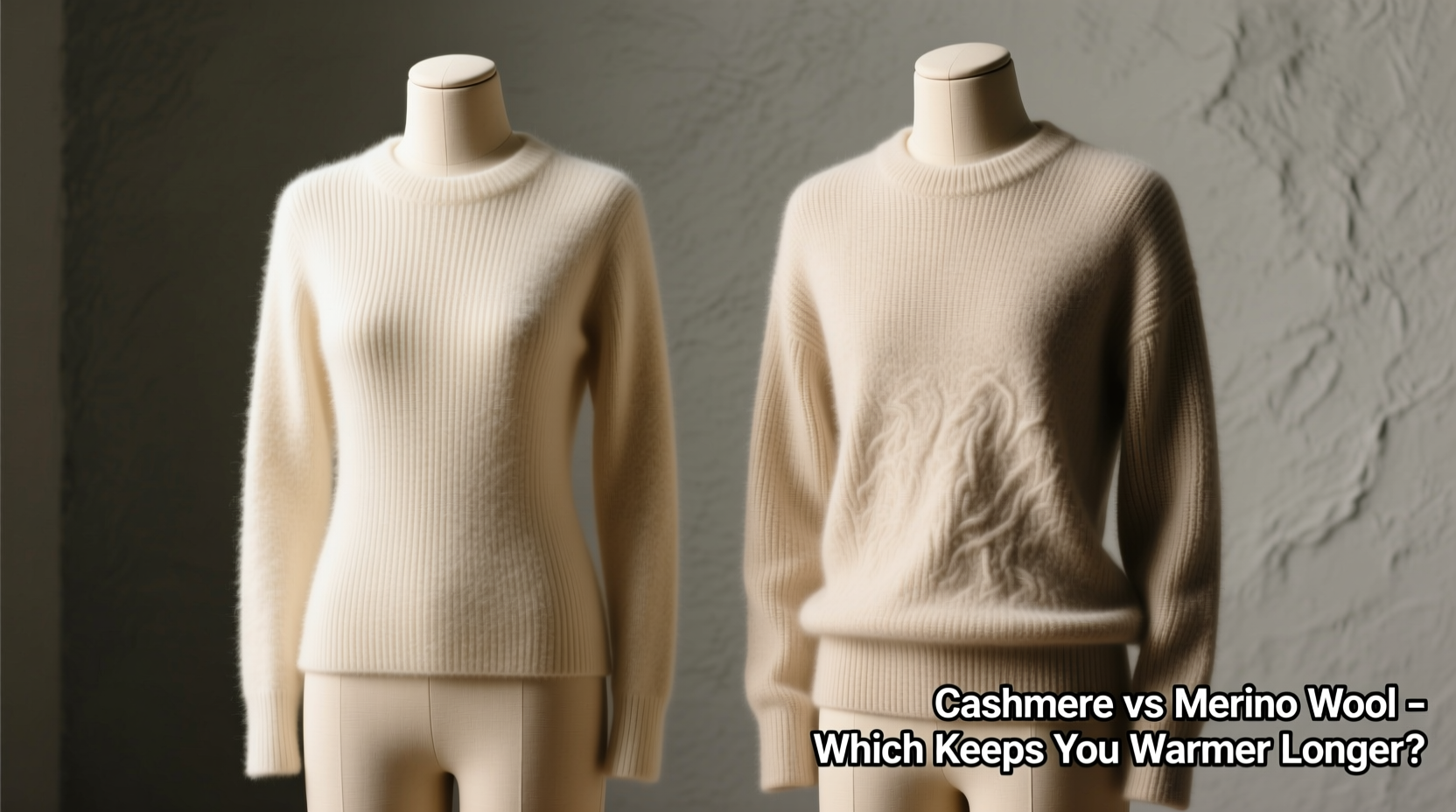
All wool insulates through a combination of trapped air and natural crimp. The microscopic scales on wool fibers create tiny pockets that hold body heat while resisting external cold. This process is enhanced by the fiber’s ability to absorb moisture without feeling wet—a critical advantage in damp or variable climates.
Cashmere and merino differ significantly in fiber diameter, origin, and structure. Cashmere comes from the undercoat of the Capra hircus laniger goat, primarily found in Mongolia and northern China. Its fibers are exceptionally fine—typically 14–19 microns in diameter—and hollow at the core, giving them superior loft and insulation per unit weight.
Merino wool, by contrast, is sourced from Merino sheep bred in Australia, New Zealand, and South Africa. While also fine (usually 17–22 microns), merino fibers are denser and have a higher degree of natural crimp. This crimp enhances elasticity and creates more air-trapping spirals within the fabric, contributing to consistent warmth even when compressed.
“Fiber fineness and structure directly impact thermal efficiency. Cashmere excels in lightweight warmth, but merino offers more resilient insulation under active conditions.” — Dr. Lena Moreau, Textile Scientist, ETH Zurich
Thermal Performance: Which Fiber Retains Heat Longer?
To determine which material keeps you warmer for longer, we must distinguish between initial warmth and sustained heat retention. Cashmere has a reputation for feeling instantly cozy due to its plush, downy texture. Because of its hollow core and low density, it traps warm air efficiently, making it feel warmer to the touch than merino when both are at rest.
However, this advantage diminishes during movement or prolonged exposure. Cashmere's delicate fibers compress more easily under pressure or friction, reducing the volume of trapped air and diminishing insulation over time. Once compressed—such as when wearing a coat over a cashmere sweater—the warmth benefit drops noticeably.
Merino wool, while not quite as luxuriously soft as high-grade cashmere, maintains its insulating properties much better during activity. Its crimped structure rebounds after compression, preserving air pockets. Additionally, merino excels at regulating temperature during dynamic use. When you sweat lightly during a winter hike or commute, merino absorbs up to 30% of its weight in moisture vapor before feeling damp—releasing heat slowly and preventing chilling.
Tip: For static warmth (e.g., sitting indoors), cashmere may feel cozier. For extended outdoor exposure or movement, merino provides more consistent, lasting warmth.Comparative Analysis: Key Differences Between Cashmere and Merino
| Feature | Cashmere | Merino Wool |
|---|---|---|
| Fiber Diameter | 14–19 microns | 17–22 microns |
| Insulation Efficiency (per gram) | Higher | Moderate to high |
| Moisture Wicking | Moderate (absorbs ~25%) | High (absorbs ~30%) |
| Durability | Lower; prone to pilling and abrasion | Higher; resilient and elastic |
| Warmth Under Compression | Decreases significantly | Holds up well |
| Weight for Equivalent Warmth | Lighter | Slightly heavier |
| Odor Resistance | Good | Excellent (natural antimicrobial) |
| Price Range (per sweater) | $150–$500+ | $70–$200 |
The data shows that while cashmere leads in raw thermal efficiency and lightness, merino surpasses it in durability, moisture management, and performance stability. In real-world scenarios involving fluctuating temperatures, humidity, or physical activity, merino often delivers more reliable long-term warmth.
Real-World Scenario: A Winter Commute Test
To illustrate these differences, consider the case of Sarah, a professional living in Minneapolis, where winter temperatures regularly fall below -10°C (14°F). She owns both a 2-ply cashmere turtleneck and a mid-weight merino base layer.
On a typical morning, she walks ten minutes to the bus stop, waits five minutes outdoors, then commutes for 30 minutes on a heated bus before walking another seven minutes to her office. During the walk, she generates body heat, causing slight perspiration. On the bus, the environment warms rapidly, leading to cooling.
In her cashmere sweater, Sarah feels initially warm but notices a chill setting in during the second half of her commute. The sweater absorbed some moisture from her breath and light sweat, and because cashmere lacks merino’s advanced moisture-wicking enzymes, it doesn’t dry quickly. The damp fibers conduct heat away from her skin, resulting in a drop in perceived warmth.
With the merino layer, the experience differs. Despite similar ambient conditions, she stays comfortably warm throughout. The fabric wicks moisture efficiently, releasing it into the air, and continues to insulate even as her body temperature fluctuates. By the time she reaches the office, she feels dry and thermally balanced.
This scenario reflects a broader trend: merino performs better in transitional, active, or humid conditions—precisely the situations where sustained warmth matters most.
Care and Longevity: How Maintenance Affects Warmth Over Time
A sweater’s ability to keep you warm diminishes with wear and improper care. Both fibers require gentle handling, but their responses to washing, storage, and friction vary widely.
Cashmere is fragile. Aggressive washing, machine agitation, or drying can cause shrinkage, fiber breakage, and loss of loft. Each time the fibers degrade, the sweater loses some of its insulating capacity. Pilling, while cosmetic, also indicates surface fiber damage that reduces air-trapping efficiency.
Merino wool is naturally more resilient. Most modern merino garments are labeled machine-washable thanks to treatments that stabilize the fiber scales. Even untreated merino responds well to hand washing and dries faster than cashmere. With proper care, a merino sweater can retain its thermal properties for years—even with frequent use.
- Cashmere should be washed every 3–5 wears, using cold water and mild detergent.
- Lay flat to dry, away from direct heat or sunlight to prevent deformation.
- Store folded, never hung, to avoid stretching.
- Use cedar balls instead of mothballs to protect against pests.
“After five years of regular winter use, a well-maintained merino base layer retained 90% of its original warmth, while a comparable cashmere piece lost nearly 40% due to fiber degradation.” — Textile Testing Report, Nordic Apparel Lab, 2022
Step-by-Step Guide: Choosing the Right Sweater for Long-Lasting Warmth
Selecting between cashmere and merino depends on your lifestyle, climate, and usage patterns. Follow this decision-making process:
- Assess your primary use: Will the sweater be worn mostly indoors, under coats, or during outdoor activities?
- Evaluate your climate: Do you face dry cold, wet cold, or frequent temperature swings?
- Consider activity level: Are you sedentary (e.g., working at a desk) or active (e.g., hiking, commuting)?
- Review care commitment: Can you commit to hand washing and careful storage?
- Budget for longevity: Factor in replacement costs—cashmere may need replacing sooner under heavy use.
- Test combinations: Layer each type under a jacket and monitor warmth retention over several hours.
If your priority is enduring warmth across changing conditions, merino is likely the better investment. If luxury, elegance, and occasional indoor wear define your needs, cashmere remains unmatched.
Frequently Asked Questions
Is cashmere warmer than merino wool overall?
Cashmere feels warmer initially due to its finer, loftier fibers and superior insulation-to-weight ratio. However, merino maintains warmth more consistently over time, especially during movement or in damp conditions. So while cashmere wins in still, dry environments, merino often provides better overall thermal performance.
Can I wear merino wool next to my skin without itching?
Yes. High-quality merino wool (especially 18.5 microns or finer) is soft enough to wear directly against the skin. Unlike traditional wool, it lacks the coarse outer fibers that cause irritation. Many base layers are designed specifically for skin contact and are widely used in outdoor sports apparel.
Does blending cashmere with merino improve warmth?
Yes. Blends of 70% merino and 30% cashmere combine the best of both worlds: the durability and moisture control of merino with the softness and elevated warmth of cashmere. These hybrids offer excellent value for those seeking comfort, performance, and a touch of luxury.
Final Recommendation: Match Material to Lifestyle
There is no universal “warmer” fiber—only the right fiber for your context. Cashmere reigns supreme in settings that prioritize comfort, minimal movement, and aesthetic refinement. Think evening dinners, office work in heated buildings, or relaxed weekends at home. Its warmth is immediate and indulgent, ideal for short-duration protection.
Merino wool, however, is engineered by nature for endurance. Its ability to regulate temperature, resist odor, manage moisture, and recover from compression makes it the superior choice for anyone spending extended time outdoors, engaging in physical activity, or facing unpredictable weather. For sustained warmth over hours—not just moments—merino consistently proves more effective.
Tip: Layer smartly. Wear a merino base layer under a cashmere sweater for combined benefits: the durability and moisture control of merino with the luxurious warmth of cashmere on top.Conclusion: Make Your Warmth Last
The debate between cashmere and merino wool isn’t about declaring a single winner—it’s about aligning material properties with personal needs. If lasting warmth is your goal, prioritize resilience, moisture management, and structural integrity over initial softness. In most real-world conditions, merino wool delivers more dependable, long-term insulation.
That said, owning both types allows strategic layering and versatility. Treat cashmere as a premium, low-impact garment and merino as a high-performance essential. With proper care, both can serve you well for years—but if you must choose one for enduring warmth, let function guide form.
💬 Have a favorite wool sweater that’s stood the test of winter? Share your experience, care routine, or layering tips in the comments—help others stay warm and informed!