When it comes to versatile knitwear, few pieces rival the enduring appeal of the cardigan. But as fashion evolves, so do its forms—particularly in the rise of the cardigan dress. While both styles stem from the same cozy, knitted roots, they serve very different purposes in shaping your silhouette. The real question isn’t just about comfort or trendiness—it’s whether a cardigan dress or a traditional knit cardigan flatters your body more. The answer depends on structure, fit, proportion, and personal shape.
Understanding the Silhouette Differences
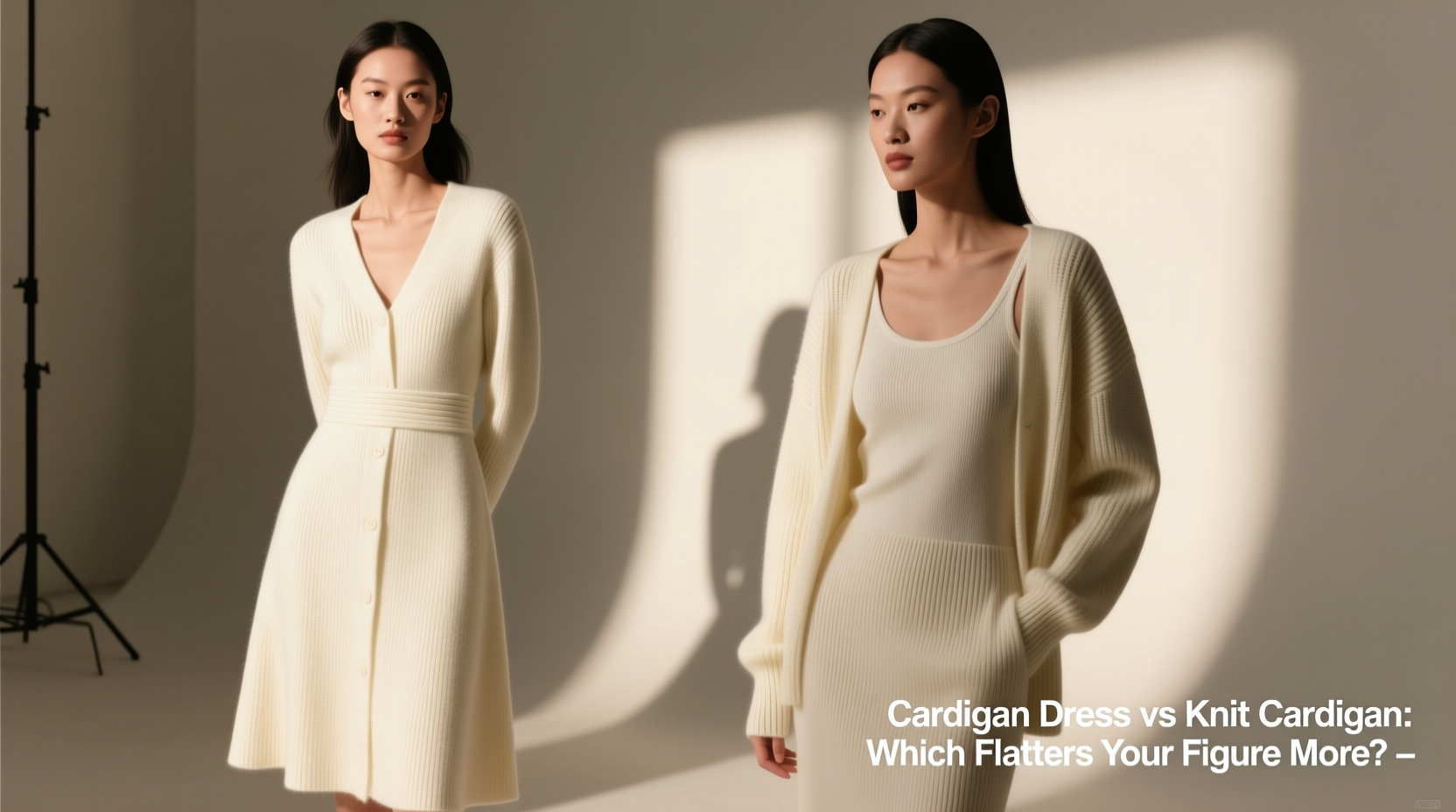
The fundamental difference between a cardigan dress and a standard knit cardigan lies in their intended wear and cut. A knit cardigan is typically designed as an outer layer—worn open or buttoned over tops, dresses, or blouses. It usually ends at the hip or mid-thigh and focuses on upper-body coverage. In contrast, a cardigan dress is a full-length garment meant to function as a standalone piece, often reaching the knees or lower, with shaping that mimics a dress.
This distinction in length and purpose creates divergent effects on the body. A short knit cardigan can visually shorten the torso if worn incorrectly, especially when belted too high or paired with high-waisted bottoms. On the other hand, a well-cut cardigan dress elongates the frame, particularly when it features vertical seams, defined waistlines, or A-line hems.
Tip: If you're petite, opt for a cropped cardigan that hits above the hip to avoid cutting your frame in half.Fabric Weight and Drape: How Knit Affects Fit
Not all knits behave the same way on the body. The fiber blend, stitch density, and weight of the material influence how each garment drapes and contours. Traditional knit cardigans vary widely—from chunky cable knits to fine-gauge merino wool—but most are structured enough to hold shape without clinging.
Cardigan dresses, however, often use lighter, more fluid knits to allow movement and maintain elegance as a full garment. This means they tend to drape closer to the body, sometimes accentuating curves in ways a looser cardigan wouldn’t. For individuals seeking soft definition without tight compression, this can be flattering. But those who prefer more coverage may find certain cardigan dresses too form-fitting.
Heavier knits in cardigans provide volume, which can balance wider hips or add presence to narrower shoulders. Lighter cardigan dresses, meanwhile, offer a streamlined look ideal for layering under coats or wearing solo in transitional weather.
“Knitwear should enhance your natural shape, not fight it. A cardigan dress works best when it follows the body’s lines; a classic cardigan excels when it adds structure where needed.” — Lena Torres, Fashion Stylist & Body Positivity Advocate
Body Shape Considerations: What Works Where
No single garment universally flatters every body type. Success depends on alignment with proportions. Below is a breakdown of how each style performs across common body shapes:
| Body Type | Knit Cardigan Recommendation | Cardigan Dress Recommendation |
|---|---|---|
| Pear (Hips > Shoulders) | Longline, open cardigan with shoulder detail (e.g., funnel neck) to balance lower half | A-line cardigan dress with slight flare from waist down |
| Apple (Waist less defined) | Cropped or 3/4-length cardigan with V-neck to elongate torso | Tunic-length cardigan dress with empire waist or wrap-style closure |
| Hourglass (Balanced bust/hips, defined waist) | Belted cardigan at natural waist to emphasize curves | Fitted cardigan dress with waist cinching and minimal bulk |
| Rectangle (Minimal waist definition) | Structured, double-breasted cardigan to create illusion of curves | Self-belted cardigan dress with seaming at waist |
| Inverted Triangle (Broad shoulders) | Short, boxy cardigan avoided; instead, unstructured open layers ending at hip | V-neck cardigan dress with flowy skirt to draw eyes downward |
Styling Techniques That Make the Difference
Even the most flattering cut can fall flat with poor styling. How you wear these garments often matters more than the garment itself.
A knit cardigan gains dimension when layered strategically. Wearing it open over a long tank or tunic creates vertical lines that elongate the torso. Pairing it with high-waisted pants and a tucked-in top maintains balance. Conversely, wearing a bulky cardigan buttoned up with no waist definition can create a boxy effect.
Cardigan dresses shine when accessorized to define the waist. A thin belt in a contrasting color draws attention to the narrowest part of the torso. Footwear also plays a role—ankle boots elongate legs when worn with knee-length cardigan dresses, while flats can ground the look for casual settings.
Step-by-Step: Flattering Ways to Wear Each Style
- For a Knit Cardigan: Choose a piece that complements your torso length. Open it over a monochrome outfit to create a seamless vertical line.
- Add Structure: Layer over a collared shirt or fitted turtleneck to give upper body polish.
- Define the Waist: Use a slim belt over the cardigan if it’s long enough, or pair with a belted bottom.
- For a Cardigan Dress: Slip on a camisole or slip underneath to prevent cling and add warmth.
- Emphasize Proportions: Cinch at the natural waist with a fabric or leather belt.
- Finish with Shoes: Opt for pointed-toe flats or low heels to extend leg lines.
Real-Life Example: Two Women, Two Styles, One Wardrobe Upgrade
Sophie, 5'4\" with a pear-shaped figure, struggled to find cardigans that didn’t overwhelm her frame. She found that long, open-knit cardigans in medium weight balanced her hips and drew attention upward with their textured shoulders. However, she felt self-conscious in cardigan dresses until she tried an A-line merino version with a slightly raised waistline. The shape skimmed her hips and flowed outward, giving her confidence to wear it to work with knee-high boots.
Meanwhile, Maya, 5'9\" with an hourglass build, loved the elegance of a tailored cardigan dress in cashmere blend. She wore it belted at the waist with minimalist jewelry and loafers, turning it into a polished office look. Yet, she found most traditional cardigans too short to layer effectively. Her solution? A rare knee-length, fine-gauge cardigan she buttons only at the top two closures, creating a draped effect that still highlights her waist.
Their experiences show that preference isn’t just about body type—it’s about how the garment integrates into lifestyle and personal expression.
Checklist: Choosing Your Most Flattering Knitwear
- ✅ Determine your dominant body shape (pear, apple, hourglass, etc.)
- ✅ Assess your torso-to-leg ratio—shorter torsos benefit from longer cardigans or dresses with high slits
- ✅ Try both styles on with typical under-layers (tanks, tees, slips)
- ✅ Look for vertical details like ribbing, seams, or button plackets that elongate
- ✅ Avoid excessive bulk around the midsection unless intentionally used for balance
- ✅ Test movement—does the knit stretch or distort when seated?
- ✅ Ask: Does this make me feel supported, or swallowed?
FAQ
Can a cardigan dress replace a regular dress?
Yes, especially in casual or smart-casual settings. Opt for refined fabrics like merino wool or cotton blends, and style with structured accessories to elevate the look.
Are oversized cardigans ever flattering?
They can be—if balanced with fitted bottoms. An oversized knit cardigan works best when it ends at mid-thigh and is worn open over leggings or slim jeans. Avoid overly long or wide cuts if you’re under 5’5”.
How do I prevent my cardigan dress from looking like a robe?
Add definition. Use a belt, choose versions with side slits or front ties, and ensure the neckline has structure (like a shawl or V-neck). Avoid overly loose weaves that lack shape.
Conclusion: It’s Not One Over the Other—It’s About Intention
The debate between cardigan dress and knit cardigan isn’t about superiority—it’s about suitability. One doesn’t inherently flatter more than the other. Instead, the key lies in understanding how length, drape, and construction interact with your unique proportions. A cardigan dress offers cohesion and ease, ideal for days when you want to look put-together with minimal effort. A knit cardigan provides versatility, allowing endless layering combinations that adapt to season and setting.
The most flattering choice is the one that aligns with your body’s natural lines, your lifestyle needs, and the message you want to convey. Whether you reach for a flowing cardigan dress on a crisp morning or drape a favorite open-knit cardigan over your shoulders, let intention guide your selection—not trends alone.
💬 Have a favorite cardigan style that changed your wardrobe game? Share your experience below—your insight could help someone else find their perfect fit.