Tight jeans have long been a staple in modern wardrobes, celebrated for their sleek silhouette and fashion-forward appeal. From skinny to ultra-slim fits, these garments are worn daily by millions. Yet beneath the stylish exterior lies a growing concern among health professionals: can consistently wearing tight denim negatively impact posture and nerve function? The answer, supported by clinical observations and biomechanical research, is increasingly pointing toward yes—especially when tight jeans become the default rather than the occasional choice.
The human body thrives on movement, alignment, and unrestricted circulation. When clothing restricts natural motion or compresses key anatomical structures, even subtle changes can accumulate over time. This article explores how tight jeans may influence spinal alignment, pelvic positioning, and peripheral nerve health—particularly focusing on the femoral and sciatic nerve pathways. More importantly, it offers practical solutions to maintain both comfort and confidence without compromising long-term well-being.
How Tight Jeans Alter Pelvic Alignment
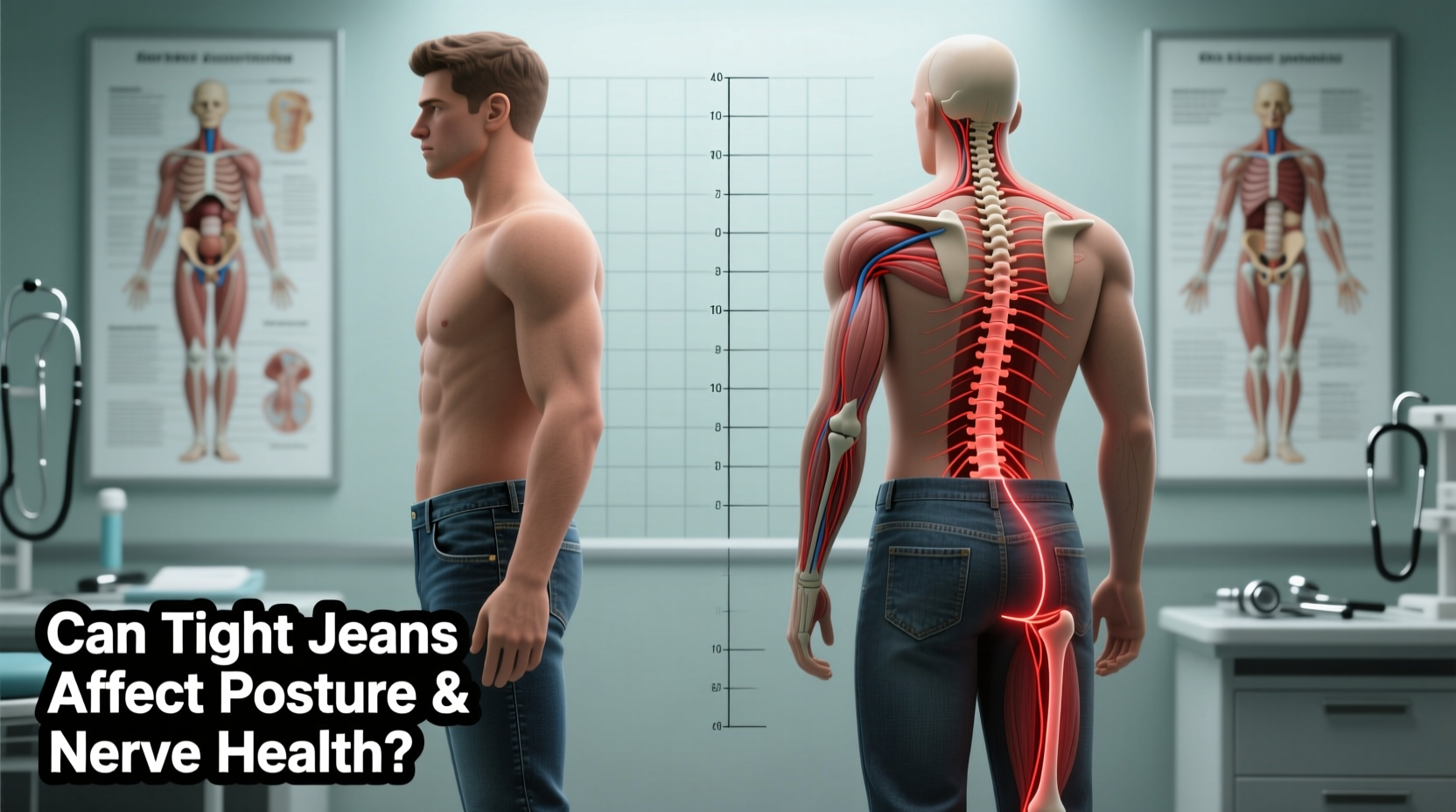
The pelvis serves as the foundation of the spine and plays a crucial role in maintaining proper posture. When jeans fit too tightly around the hips and waist, they can exert continuous pressure that subtly shifts pelvic orientation. Over time, this can lead to an anterior or posterior pelvic tilt, depending on where the restriction occurs.
A posterior pelvic tilt—where the top of the pelvis rotates backward—is commonly observed in individuals who wear high-waisted, compressive jeans. This shift flattens the natural curve of the lower back (lumbar lordosis), leading to compensatory stiffness in the thoracic spine and increased strain on the hip flexors. Conversely, low-rise tight jeans may encourage an anterior tilt, exaggerating the arch in the lower back and contributing to chronic lower back pain.
This misalignment doesn’t just affect appearance; it disrupts muscle balance. The glutes may become underactive, while the hip flexors and lower back muscles overwork to stabilize the compromised posture. As these imbalances persist, they contribute to poor movement patterns during walking, sitting, and standing.
Tip: Perform a daily posture check in front of a mirror—if your hips appear tucked under or excessively arched, consider loosening your waistband or switching to more flexible fabrics.Nerve Compression: The Hidden Risk of Denim
Beyond posture, tight jeans pose a direct risk to nerve health, particularly through a condition known as meralgia paresthetica. This neurological disorder results from compression of the lateral femoral cutaneous nerve, which runs from the pelvis down the outer thigh. Unlike motor nerves, this sensory nerve only transmits feeling—not movement—so damage manifests as numbness, tingling, or burning pain along the upper leg.
Wearing jeans with a snug waistband—especially those made from non-stretch denim—can press directly on this nerve as it passes through the inguinal ligament near the hip bone. Prolonged sitting, squatting, or repetitive bending exacerbates the pressure, making office workers and drivers particularly vulnerable.
“Patients often don’t realize their clothing is the culprit until we eliminate other causes. I’ve seen cases where simply switching to looser pants resolved months of unexplained leg discomfort.” — Dr. Lena Torres, Neurologist at Pacific Spine Institute
In extreme cases, chronic nerve compression can lead to hypersensitivity or even permanent sensory changes. While rare, such outcomes underscore the importance of recognizing early warning signs: persistent pins-and-needles sensations, localized warmth, or skin that feels “dead” after removing jeans.
Common Symptoms of Nerve Compression from Tight Clothing
- Tingling or “pins and needles” in the outer thigh
- Burning sensation below the waistline, often on one side
- Increased discomfort after prolonged sitting or walking
- Temporary relief upon removing restrictive clothing
- Hypersensitivity to light touch in affected areas
Impact on Digestion and Breathing Patterns
While less discussed, the effects of tight jeans extend beyond musculoskeletal and neurological systems. A waistband that digs into the abdomen can interfere with diaphragmatic breathing—the deep, rhythmic breaths essential for oxygen exchange and core stability. Instead of expanding the belly during inhalation, individuals may resort to shallow chest breathing, which increases stress hormone production and reduces postural control.
Additionally, abdominal compression can impair digestive function. The stomach and intestines require space to contract and move food efficiently. Chronic pressure from tight denim may contribute to acid reflux, bloating, and reduced motility. Some gastroenterologists refer to this phenomenon informally as “jean-induced dyspepsia,” particularly in patients reporting worsened symptoms after meals while wearing form-fitting bottoms.
| Body System | Effect of Tight Jeans | Potential Long-Term Consequence |
|---|---|---|
| Musculoskeletal | Pelvic misalignment, altered gait | Chronic lower back pain, joint wear |
| Nervous | Femoral nerve compression | Meralgia paresthetica, sensory loss |
| Respiratory | Restricted diaphragm movement | Shallow breathing, increased tension |
| Digestive | Abdominal organ compression | Bloating, reflux, constipation |
| Circulatory | Reduced blood flow in thighs | Swelling, varicose veins, fatigue |
Real-Life Case: Office Worker Develops Thigh Numbness
Sarah M., a 32-year-old graphic designer from Portland, began experiencing a strange tingling sensation on the right side of her thigh. At first, she attributed it to sitting too long at her desk. Over six weeks, the numbness intensified, spreading from her hip to mid-thigh, accompanied by a dull burning sensation after lunch meetings.
After visiting a neurologist and undergoing nerve conduction studies, Sarah was diagnosed with meralgia paresthetica. MRI scans showed no spinal issues, and her work ergonomics were sound. The breakthrough came when the doctor asked about her clothing habits. Sarah admitted wearing high-waisted, stretch-denim jeans five days a week—often skipping lunch breaks and remaining seated for hours.
Her treatment plan didn't involve medication or physical therapy initially. Instead, she was advised to switch to mid-rise trousers with elastic waistbands and take standing breaks every 45 minutes. Within three weeks, her symptoms decreased significantly. By week six, the numbness had resolved entirely.
Sarah now keeps a pair of relaxed-fit cotton pants at her office and reserves tighter jeans for short outings. “I never thought my jeans could cause nerve damage,” she said. “Now I choose comfort just as much as style.”
Step-by-Step Guide to Reducing Risks
If you're not ready to give up jeans altogether, you can still minimize health risks with mindful choices and habits. Follow this five-step approach to protect your posture and nerve health:
- Assess Fit Objectively: If you can't comfortably place two fingers under your waistband, the jeans are too tight. Avoid styles that leave deep marks on your skin after removal.
- Limit Wear Time: Reserve tight jeans for events lasting under four hours. Avoid wearing them during long commutes, flights, or extended sitting.
- Choose Smart Fabrics: Opt for denim blends with 2–4% elastane or spandex. These offer flexibility without constant constriction.
- Practice Posture Resets: Every hour, stand up, engage your core, squeeze your glutes, and gently tilt your pelvis forward and back to restore neutral alignment.
- Stretch Key Areas Daily: Focus on hip flexors, quadriceps, and lower back. A simple kneeling lunge stretch helps counteract pelvic tightening caused by restrictive clothing.
Checklist: Healthy Denim Habits
Use this checklist to evaluate whether your jeans support—or sabotage—your physical health:
- ✅ I can breathe deeply without feeling restricted at the waist
- ✅ My hips move freely when walking or climbing stairs
- ✅ No visible indentations or red lines on my skin after removal
- ✅ I do not experience numbness, tingling, or burning in my legs
- ✅ I alternate between tight and relaxed fits throughout the week
- ✅ I avoid wearing tight jeans during travel or long sedentary periods
- ✅ I incorporate daily stretches for hips and lower back
FAQ: Common Questions About Jeans and Health
Can tight jeans cause sciatica?
Not directly. True sciatica originates from nerve root compression in the spine, often due to disc herniation or spinal stenosis. However, tight jeans can mimic sciatica symptoms by aggravating the sciatic nerve pathway or compressing nearby nerves like the piriformis muscle. This is sometimes called \"pseudo-sciatica\" and typically resolves with looser clothing and movement.
Are stretch jeans safer than rigid denim?
Generally, yes—but with caveats. Stretch denim provides more give, reducing immediate pressure points. However, if the garment still fits too tightly overall, the constant low-level tension can still alter posture and restrict circulation. Look for moderate stretch (not ultra-compression) and ensure the fabric returns to shape without digging in.
How long does it take for nerve damage to occur from tight jeans?
There’s no fixed timeline. Some people report symptoms within hours of wearing extremely tight jeans, especially after prolonged sitting. Others develop issues gradually over months of daily use. Early signs like temporary numbness should be taken seriously, as repeated micro-trauma can lead to chronic nerve irritation.
Conclusion: Style Shouldn’t Come at the Cost of Health
Fashion evolves, but so does our understanding of how clothing interacts with the body. While tight jeans remain popular, awareness of their potential impact on posture and nerve health is growing. The goal isn’t to demonize a wardrobe favorite, but to encourage informed choices—ones that honor both aesthetics and physical well-being.
You don’t need to abandon jeans entirely. Instead, adopt a balanced approach: prioritize fit over trend, listen to your body’s signals, and make room for movement-friendly options in your daily rotation. Small adjustments today—like choosing a slightly looser cut or setting a reminder to stand and stretch—can prevent years of discomfort tomorrow.
💬 Your turn: Have you experienced discomfort from tight clothing? Share your story or tips in the comments—your insight could help others find healthier ways to stay stylish.