
Sunglasses are more than a fashion statement—they're essential eye protection. Yet, many people assume that any pair with dark lenses will do the job. The truth is, not all sunglasses are created equal. Wearing cheap, low-quality sunglasses can actually do more harm than good. While they may block visible light and make the world appear darker, they often fail to filter out dangerous ultraviolet (UV) radiation. In fact, in some cases, they can increase your risk of eye damage. Understanding what to look for before purchasing sunglasses is crucial for maintaining long-term eye health.
How Cheap Sunglasses Can Harm Your Eyes
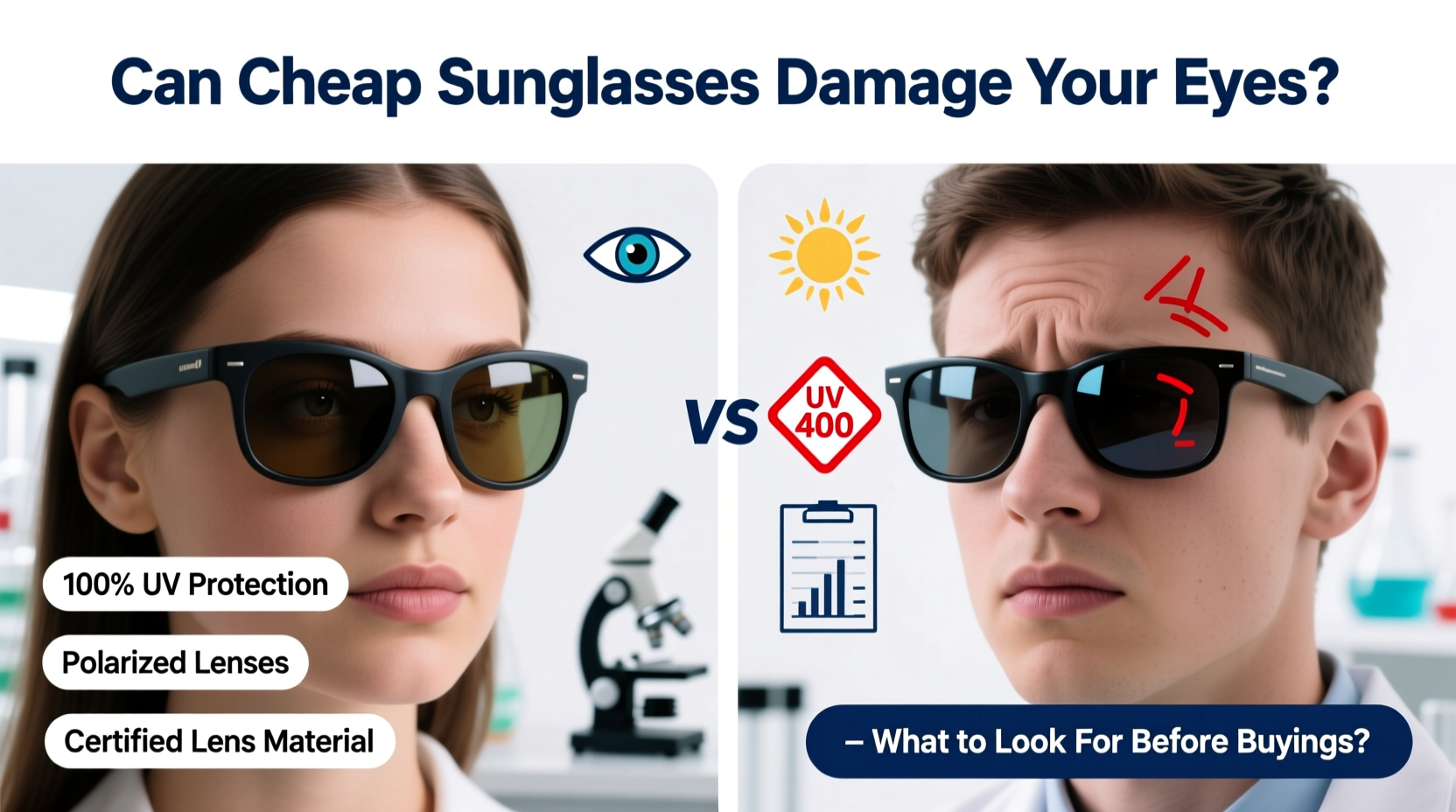
When you put on sunglasses, your pupils naturally dilate to let in more light—this is a reflexive response because the lenses reduce brightness. However, if those lenses lack proper UV protection, your eyes end up exposed to more harmful UVA and UVB rays than they would be without any sunglasses at all. This increased exposure occurs precisely when your pupils are widest, allowing more radiation to penetrate deep into the eye.
Prolonged exposure to UV radiation is linked to serious eye conditions, including cataracts, macular degeneration, photokeratitis (sunburn of the cornea), and even cancers of the eyelid. The World Health Organization estimates that up to 20% of cataracts may be caused or worsened by extended UV exposure. Cheap sunglasses often skip critical protective coatings to cut costs, putting wearers at risk without their knowledge.
Tip: Never assume dark lenses mean UV protection. Always verify the label or certification.What to Look for in Quality Sunglasses
Not all expensive sunglasses are effective, and not all affordable ones are bad—but there are specific features that separate safe, functional eyewear from risky accessories. Here’s what matters most:
1. 100% UV Protection (UV400 Rating)
The most critical feature is full UV protection. Look for labels that say “100% UV protection” or “UV400,” which means the lenses block all light rays with wavelengths up to 400 nanometers—the range that includes both UVA and UVB rays. This specification is non-negotiable for eye safety.
2. Lens Material and Clarity
Polycarbonate lenses are ideal—they’re lightweight, impact-resistant, and naturally block UV rays. Glass lenses offer excellent optical clarity but are heavier and more fragile. Avoid flimsy plastic lenses that distort images or have bubbles and imperfections, as these cause eye strain and reduce visual accuracy.
3. Polarized Lenses (For Glare Reduction)
Polarization reduces glare from reflective surfaces like water, snow, and roads. While polarization doesn’t provide UV protection on its own, it enhances visual comfort and clarity, especially during driving or outdoor sports. Note: Polarized lenses are not necessary for everyone, but they are highly beneficial in high-glare environments.
4. Lens Tint and Darkness
The darkness of the lens does not indicate UV protection. Gray, brown, and green tints are best for true color perception. Amber or yellow tints enhance contrast in low-light conditions but aren’t suitable for bright sunlight. Avoid extremely dark lenses unless they also carry UV400 protection.
5. Wraparound Frames and Coverage
A well-designed frame should limit peripheral light entry. Wraparound styles or close-fitting frames prevent UV rays from entering from the sides or top, offering superior protection. Large lenses or oversized frames also help shield sensitive skin around the eyes, reducing the risk of sun-related skin damage.
“Just because sunglasses are dark doesn’t mean they’re protecting your eyes. I’ve seen patients with early cataracts who wore $5 sunglasses for years thinking they were doing something healthy.” — Dr. Lena Patel, Optometrist and Vision Health Specialist
Checklist: What to Verify Before Buying Sunglasses
- ✅ Labels clearly stating “100% UV protection” or “UV400”
- ✅ Lens material: polycarbonate or high-quality glass preferred
- ✅ No visual distortions when looking through the lenses
- ✅ Adequate coverage—lenses and frame should shield eyes from multiple angles
- ✅ Polarization (if needed for driving or water/snow activities)
- ✅ Reputable brand or retailer with verifiable product standards
- ✅ Price point that reflects quality—extremely low prices raise red flags
Common Myths About Sunglasses Debunked
Several misconceptions lead people to make unsafe choices when buying sunglasses. Addressing these myths is key to making informed decisions.
Myth 1: Darker Lenses Mean Better Protection
False. Lens darkness only affects visible light, not UV filtration. A clear lens with UV400 coating offers more protection than a pitch-black one without it.
Myth 2: All Sunglasses Sold in Stores Are Safe
Unfortunately, no. Studies have found that up to 30% of sunglasses sold in discount stores or online marketplaces lack adequate UV protection. Even some branded counterfeit sunglasses fail basic safety standards.
Myth 3: You Don’t Need Sunglasses on Cloudy Days
Up to 90% of UV rays can penetrate cloud cover. UV exposure is cumulative, so consistent protection—even on overcast days—is vital.
Myth 4: Kids Don’t Need Sunglasses
Children’s eyes are more transparent to UV light than adults’. The American Academy of Ophthalmology recommends that children wear UV-protective sunglasses whenever outdoors.
Tip: Teach kids early about eye protection. Make sunglasses part of their outdoor routine, just like sunscreen.Real-World Example: A Cautionary Tale
Mark, a 38-year-old construction supervisor, spent summers on job sites wearing a pair of $8 sunglasses he bought at a gas station. They looked sleek and made everything appear comfortably dim. Over five years, he developed increasing light sensitivity and occasional blurred vision. During a routine eye exam, his optometrist discovered early signs of cataract formation—unusual for someone his age. When asked about sun protection, Mark proudly showed his shades. A quick test revealed zero UV filtering capability. His pupils had been wide open under intense sun, flooding his lenses with unfiltered UV radiation. With proper sunglasses and regular checkups, this progression could likely have been delayed.
This case isn’t rare. Occupational workers, beachgoers, drivers, and outdoor athletes are especially vulnerable when relying on cosmetic rather than protective eyewear.
Comparison Table: Features of Safe vs. Risky Sunglasses
| Feature | Safe Sunglasses | Risky/Unsafe Sunglasses |
|---|---|---|
| UV Protection | 100% UV or UV400 labeled | No label or vague claims like “sun protection” |
| Lens Darkness | Moderate to dark with proper UV filter | Very dark without UV protection |
| Lens Quality | Clear optics, no distortion | Bubbles, warping, or blurry vision |
| Frame Design | Wraparound or close-fitting | Small frames with large gaps on sides |
| Price Range | $30+ (often higher for premium brands) | Under $10, especially from unknown sellers |
| Polarization | Clearly marked if present | Claimed but ineffective or missing |
Step-by-Step Guide: How to Choose Safe Sunglasses
- Set a realistic budget. Expect to spend at least $30–$50 for a reliable pair with verified UV protection.
- Shop from trusted sources. Buy from optical stores, reputable online retailers, or authorized dealers—not random street vendors or unverified websites.
- Inspect the label. Ensure it explicitly states “100% UV protection” or “UV400.” Terms like “cosmetic shading” or “sun style” are red flags.
- Test the lenses. Look through them at a straight line or digital screen. Move the glasses side to side—if the image wobbles or distorts, the lenses are poor quality.
- Check fit and coverage. The frame should sit snugly on your face, blocking light from the sides and top.
- Ask for verification. Some opticians have handheld UV testers. Ask if they can confirm the lenses block UV light.
- Consider your lifestyle. Drivers benefit from polarized lenses; mountaineers or skiers need mirrored coatings; everyday users should prioritize comfort and consistent wear.
Frequently Asked Questions
Can wearing cheap sunglasses cause permanent eye damage?
Yes. Prolonged use of sunglasses without UV protection can accelerate conditions like cataracts, macular degeneration, and corneal damage due to increased UV exposure when pupils are dilated. While one day won’t cause harm, habitual use over years can contribute to irreversible issues.
Do expensive sunglasses always offer better protection?
Not necessarily. While high-end brands often invest in quality materials and testing, price alone doesn’t guarantee UV protection. Always check for the UV400 label regardless of cost. Some mid-range brands offer excellent protection backed by independent testing.
How often should I replace my sunglasses?
Every two years, or sooner if the lenses are scratched, coated improperly, or show signs of degradation. UV-blocking coatings can wear off over time, especially with frequent exposure to sunlight, sweat, and cleaning chemicals.
Final Thoughts: Protect Your Vision Like You Protect Your Skin
We routinely apply sunscreen to guard against UV damage, yet many overlook the importance of shielding our eyes. Sunglasses are not optional accessories—they are medical devices that safeguard one of your most vital senses. Choosing a pair based solely on appearance or price can compromise your long-term eye health. Investing in quality sunglasses with verified UV protection is a small step with lifelong benefits.
Don’t be misled by style over substance. Whether you're walking the city streets, driving, hiking, or lounging at the beach, ensure your eyes are truly protected. Your future self—and your optometrist—will thank you.
🚀 Take action today: Inspect your current sunglasses for a UV protection label. If it’s missing, consider upgrading to a certified pair. Share this knowledge with family and friends—because healthy vision shouldn’t come with hidden risks.