In recent months, a quiet but unmistakable shift has taken place in the world of accessories. From Paris runways to New York street style, the camellia brooch has emerged as a signature accent—replacing or redefining the traditional floral lapel pin. Once considered a niche emblem tied to luxury heritage, the camellia is now pinned proudly on blazers, coats, and even handbags. But what explains this sudden resurgence? And how does it compare to other floral lapel choices? This article explores the cultural weight, aesthetic evolution, and symbolic power behind the camellia’s ascent—and why it may be more than just a passing trend.
The Camellia’s Historical Roots: More Than Just a Flower
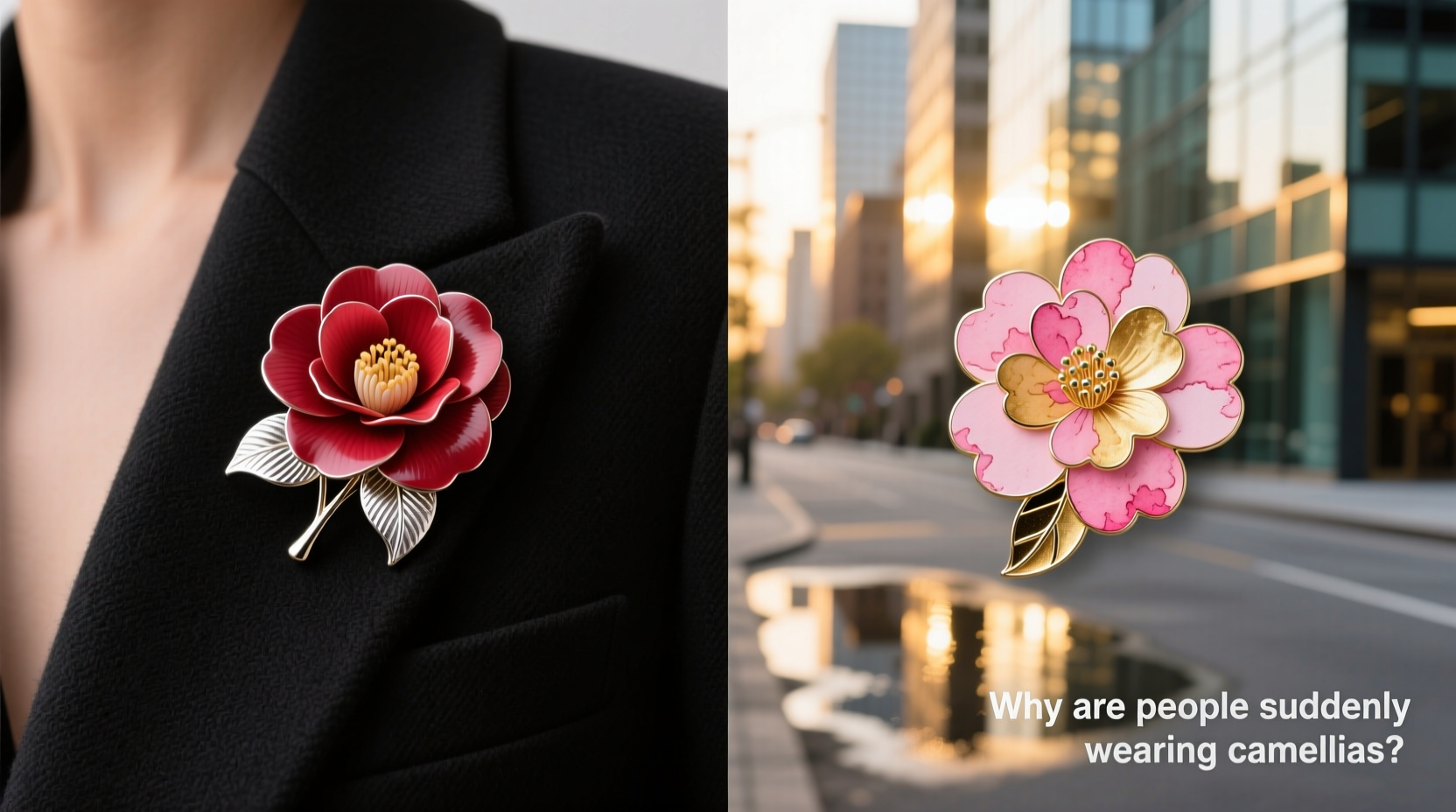
The camellia isn’t merely a decorative flourish; it carries centuries of meaning across cultures. Native to East Asia, particularly Japan and China, the camellia has long symbolized perfection, longevity, and restrained elegance. In Japanese tradition, the flower represents divine beauty and is often associated with the samurai class for its clean, bold form and ability to fall intact from the stem—a metaphor for a noble death.
However, the camellia entered Western consciousness most notably through one figure: Gabrielle “Coco” Chanel. In the 1930s, she adopted the camellia as her personal emblem after being captivated by its symmetry and lack of scent—qualities she associated with modern femininity. Unlike roses or lilies, which exuded romanticism and sensuality, the camellia felt controlled, architectural, and powerful. Chanel used it across her designs: in jewelry, prints, and accessories, cementing its association with independence and refined taste.
“The camellia was never about softness. It was about strength disguised as simplicity.” — Dr. Lila Moreau, Fashion Historian, Sorbonne University
Camellia Brooch vs. Floral Lapel Pin: A Comparative Breakdown
While both serve as sartorial accents, the camellia brooch and general floral lapel pin differ significantly in symbolism, design, and cultural resonance. Below is a detailed comparison:
| Feature | Camellia Brooch | Floral Lapel Pin (General) |
|---|---|---|
| Symbolism | Refinement, resilience, timeless elegance | Varies by flower (e.g., rose = love, carnation = fascination) |
| Design Language | Structured, symmetrical, often monochrome | Organic, flowing, colorful |
| Cultural Association | Chanel legacy, Japanese aesthetics, feminist iconography | Traditional gifting, formal events, seasonal wear |
| Material Use | Frequently crafted in silk, metal, enamel, or resin | Often fabric, real dried flowers, or plastic |
| Durability | High—designed as heirloom pieces | Variable—some are disposable or seasonal |
| Gender Neutrality | Increasingly unisex, especially in minimalist styles | Often perceived as feminine or ceremonial |
This contrast reveals why the camellia stands out: it transcends mere ornamentation. It functions as a statement piece with historical depth, while many floral lapel pins remain decorative accessories without deeper narrative weight.
The Modern Revival: Why Now?
The camellia’s current popularity isn’t accidental. Several converging forces have propelled it into the mainstream.
First, there’s a growing appetite for “quiet luxury”—a movement that values understated quality over logos and flashiness. The camellia fits perfectly within this ethos. Its presence is subtle but unmistakable to those who recognize it, making it a signal of taste rather than wealth.
Second, Gen Z and younger millennials are re-engaging with vintage symbolism and heritage brands. TikTok and Instagram have become archives of fashion history, where clips explaining Coco Chanel’s life or the meaning behind her favorite flower go viral overnight. As a result, the camellia has transformed from a relic into a meme-worthy emblem of empowerment.
Third, sustainability concerns have shifted consumer behavior toward timeless accessories. A well-made camellia brooch can last decades, unlike fast-fashion lapel pins made from synthetic materials. Consumers are investing in pieces they can pass down—not discard after a season.
Tip: When choosing a camellia brooch, look for solid metal bases and hand-finished petals—these details ensure longevity and authenticity.Real-World Influence: A Case Study in Symbolic Styling
Consider the case of Mira Chen, a 29-year-old policy advisor in London. After attending a retrospective exhibition on Coco Chanel at the V&A Museum, she purchased a vintage-inspired camellia brooch from a small independent jeweler. She began wearing it regularly on her wool coat during parliamentary meetings.
“At first, I wore it because I liked how it looked,” Chen said. “But then colleagues started asking about it. I found myself explaining its connection to female autonomy in fashion history. It became a conversation starter—about women’s roles, about legacy, about intentionality in dressing.”
Within three months, two coworkers had acquired their own camellia pins. One adapted it into a wedding accessory; another wore it during a keynote speech on gender equity. What began as a personal style choice evolved into a shared symbol within a professional circle.
This micro-movement reflects a broader pattern: the camellia is not just worn—it’s *invoked*. People use it to communicate values: self-possession, intellectual elegance, resistance to fleeting trends.
How to Wear a Camellia Brooch With Intention
Unlike generic floral pins, the camellia demands thoughtful styling. Here’s a step-by-step guide to integrating it meaningfully into your wardrobe:
- Choose the Right Finish: Matte black or white resin evokes classic Chanel; gold-toned metal adds warmth; oxidized silver gives an antique edge.
- Pair With Minimalist Outerwear: Let the brooch stand out by placing it on a tailored blazer, trench coat, or structured dress with clean lines.
- Align With Your Values: If you value heritage, pair it with vintage clothing. If you lean modernist, wear it on monochrome athleisure for contrast.
- Consider Placement: Traditional placement is the left lapel, but experiment with collar corners, hat brims, or even bag straps for contemporary flair.
- Layer Thoughtfully: Avoid overcrowding. The camellia works best when it’s the focal point, not part of a cluster of pins.
Checklist: Selecting Your First Camellia Brooch
- ✅ Research the brand’s craftsmanship—avoid mass-produced imitations
- ✅ Decide on color: white (purity), red (passion), black (mystery)
- ✅ Check clasp quality—should feel secure and smooth
- ✅ Consider size—larger brooches make bolder statements; smaller ones suit daily wear
- ✅ Reflect on why you’re drawn to it—is it aesthetic, symbolic, or nostalgic?
Frequently Asked Questions
Is the camellia brooch only for women?
No. While historically associated with women’s fashion due to Chanel’s influence, modern interpretations are increasingly gender-neutral. Designers like Haider Ackermann and Rick Owens have styled camellia pins on male models, emphasizing emotional sophistication over gendered norms.
Can I wear a camellia brooch casually?
Absolutely. Try pairing a small, enamel camellia with a denim jacket or knit sweater. The contrast between rugged texture and delicate design creates visual interest and modern irony.
What if I don’t like the Chanel connection?
The camellia existed long before Chanel. You can honor its Japanese roots, botanical uniqueness, or structural beauty independently of any brand. Many artisans today create non-branded camellia pieces inspired by nature, not fashion houses.
Final Thoughts: Beyond the Trend
The camellia brooch’s rise isn’t just about fashion—it’s about storytelling. In an era saturated with digital noise and disposable aesthetics, people are seeking symbols with substance. The camellia offers clarity: a flower that doesn’t wilt, a shape that doesn’t falter, a history that refuses to be forgotten.
When you pin a camellia to your coat, you’re not just accessorizing. You’re aligning yourself with a lineage of women and men who valued precision, silence, and strength. You’re choosing an object that lasts—physically and culturally.
💬 Do you wear a camellia brooch—or plan to? Share your story or styling tip in the comments. Let’s grow this quiet revolution together.